
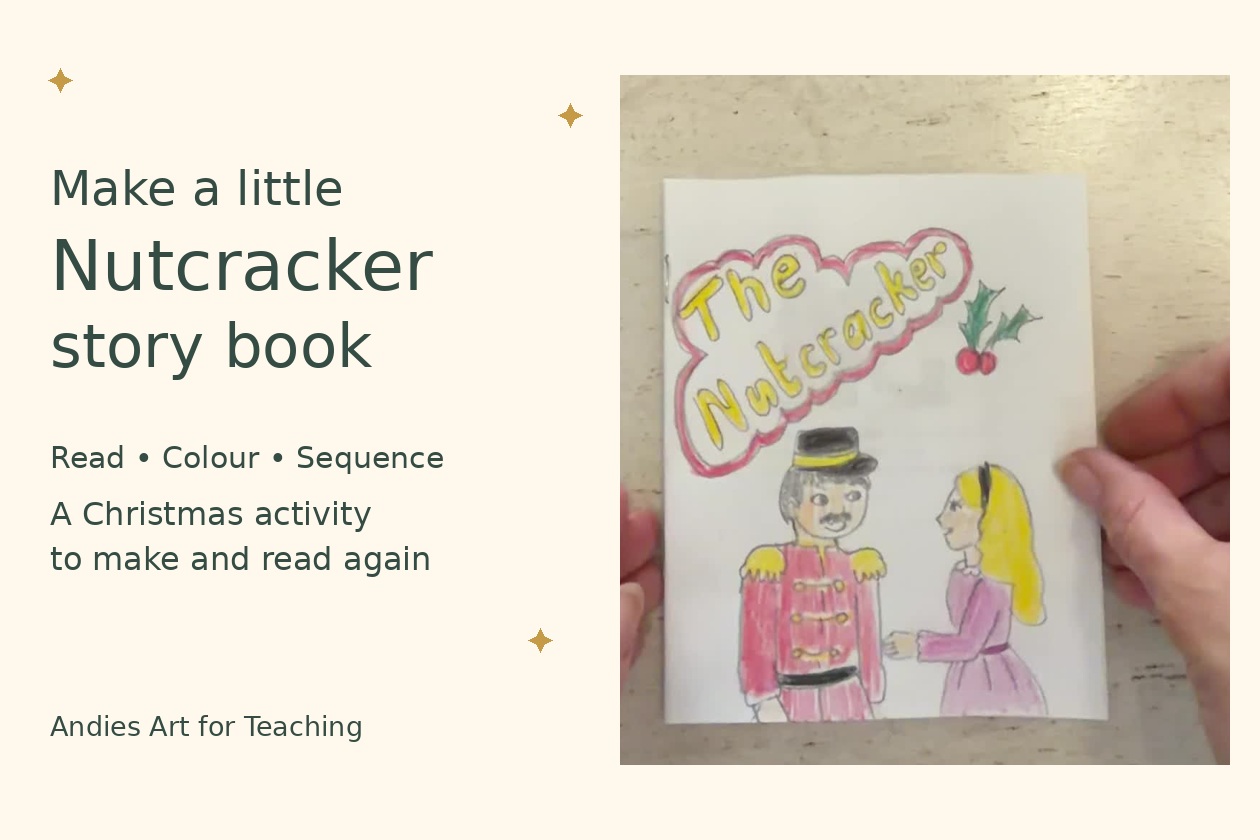
There is something lovely about turning a sheet of paper into a little book. Add coloured pencils, a magical Christmas story and a few carefully ordered pictures, and children have something they can proudly take home and read again.
In this activity, I use my Nutcracker Read & Sequence pack to make a hand-coloured storybook. It brings reading, sequencing and creative work together, with a finished book that gives children a reason to revisit the story.
A Christmas activity with a reading purpose
Before the glue comes out, children need to think about what happens first, what happens next and how the story ends. The pictures give them something to point to as they explain their choices, while the short text keeps reading at the heart of the activity.
The pack is suggested for ages 5–8, with adult support as needed. It can work as a shared classroom activity, a small-group reading task or a cosy afternoon project at home.
What you will need
• The Nutcracker Read & Sequence printable
• Plain paper for the little book
• Colouring pencils or crayons
• Scissors and a glue stick
Print the resource on A4 paper in landscape orientation at actual size. Follow the illustrated make-a-book guide in the pack, and help with cutting and folding where needed.
1. Read and talk about the story
Start by reading the larger illustrated story panels together. Pause to notice the characters and talk about what is happening. Invite children to make a prediction before revealing the next part.
Try asking: “What do you think Clara will do next?” or “Which picture helps you understand this part?” Children who are not yet reading independently can join in through the illustrations and conversation.
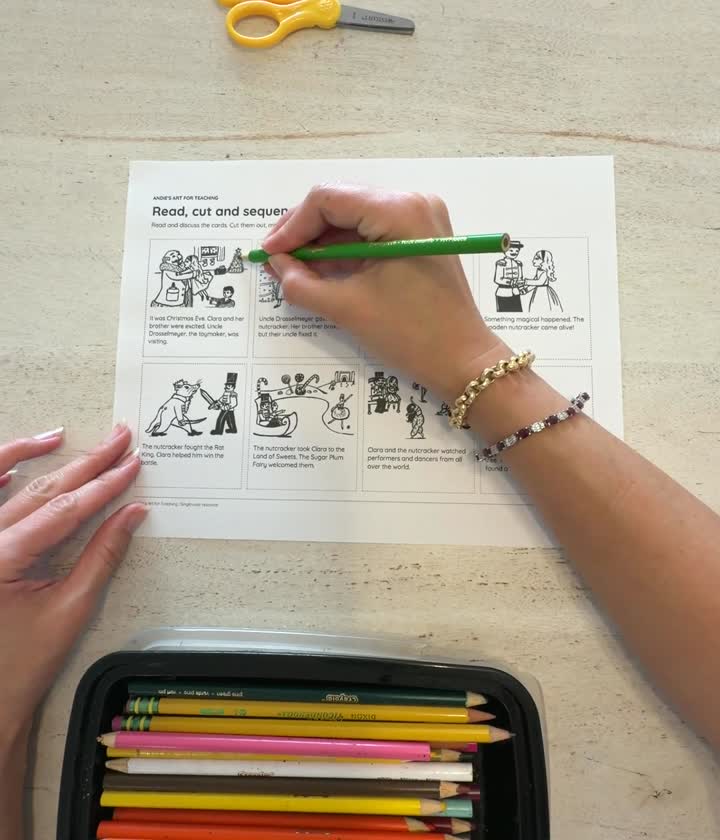
2. Colour and cut the story cards
Colour the shorter picture-and-text cards before cutting them apart. This is a good opportunity to look closely at each scene and talk about the details children choose to include.
There is no need to rush the colouring or make every book look the same. The children’s own choices are part of what makes the finished books special.
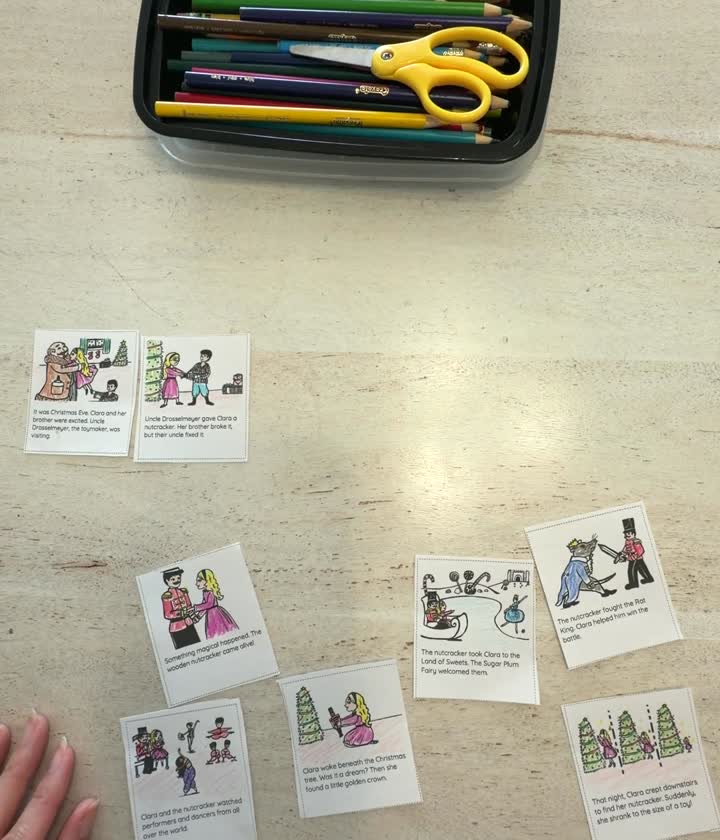
3. Put the story in order
Mix up the eight cards and arrange them on the table. Read the captions together and decide where each card belongs. Keep the glue aside until children have checked their sequence.
Useful prompts include:
• Which part happens first?
• What happened just before this?
• How do you know these two cards belong in this order?
• Can you tell the story using “first”, “next”, “then” and “finally”?
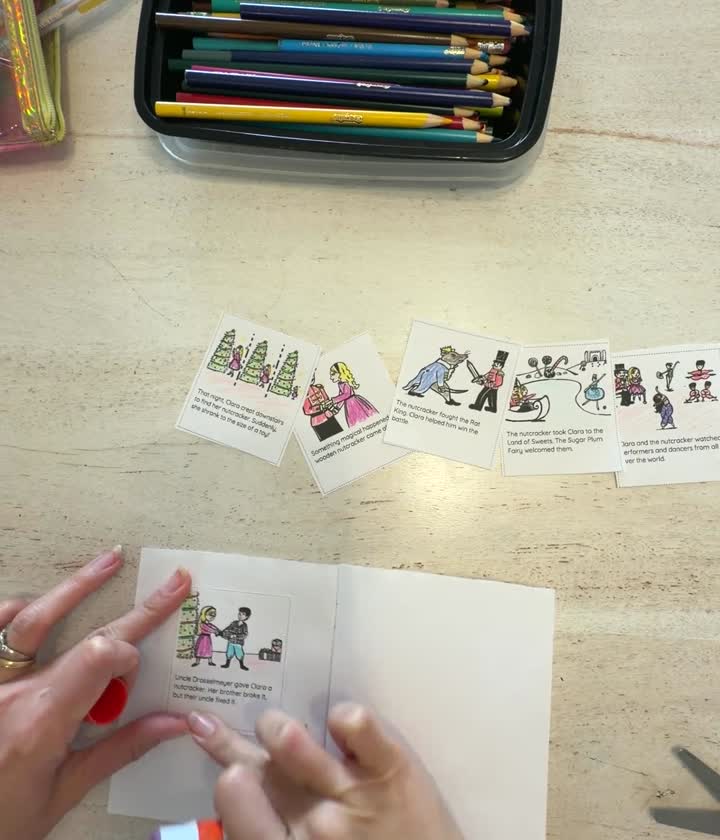
4. Make the book
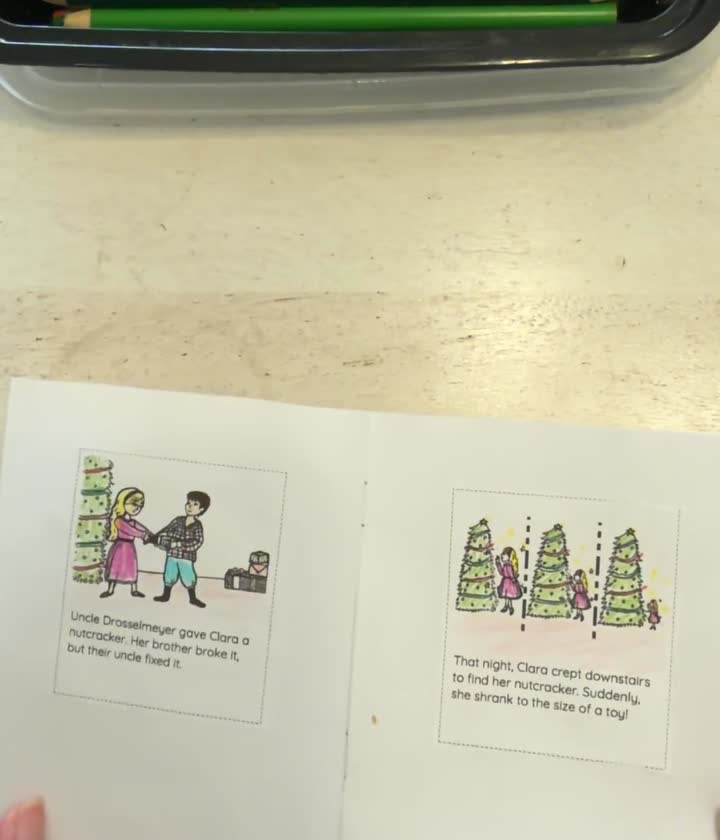
Use the illustrated folding guide to prepare the book, then arrange the cards across the pages before sticking them down. Check that the story still runs in the right order as you turn the pages.
Leave space for a cover. Children can add the title, draw their favourite characters and decorate it in their own style. In my example, I used Clara and the Nutcracker with a little festive holly.
5. Read it again—and share it
The finished book is a lovely starting point for partner reading or oral storytelling. Children can read the captions, use the pictures to retell the story, or share a page at a time with an adult.
Try asking them to choose their favourite scene and explain why. For an extra challenge, invite them to describe a character’s feelings or suggest a different ending aloud.
Make it work for your children
For children who need more support, read each card aloud and offer a choice between two possible next events. You can also prepare the folded book or cut out the cards in advance so they can concentrate on reading and ordering.
For more confident readers, ask them to justify their sequence using the captions, then retell the story without looking at the words. The same materials can support different levels of independence.
Ready to make your own?
The Nutcracker Read & Sequence pack includes larger illustrated reading panels, eight shorter story cards, a matching sequencing page and an illustrated make-a-book guide. The student activity pages are black and white for easy printing and colouring.
Explore the Nutcracker Read & Sequence pack here.A little colouring, some thoughtful sequencing and a story children can hold in their hands—ready for another read.