

The words "HACCP plan" make most small food makers want to close the laptop. It sounds like something for factories, written in a language nobody speaks.
It isn't. At its heart, HACCP is a simple idea: know what could make your food unsafe, stop it happening, and write down that you did. Here's what a small maker in Scotland actually needs.
What HACCP means
HACCP stands for Hazard Analysis and Critical Control Points. UK food law requires every food business to have food safety procedures based on HACCP principles. For a small business, that usually means a short written plan, not a 50-page manual.
Food Standards Scotland publishes CookSafe, a free HACCP-based manual designed for small catering businesses. It's a good starting point, but it's built around cafes and kitchens, so makers of chocolate, baking or preserves often have to adapt it.
The 5 records most small makers need
- Your HACCP plan. Each step from buying ingredients to selling, the hazards at each step and how you control them.
- Temperature logs. Fridge and freezer checks, plus cooking or tempering temperatures where they matter for safety.
- Cleaning schedule. What you clean, how often and with what.
- Allergen matrix. Which of the 14 major allergens are in every product, including those in bought-in ingredients.
- Supplier and traceability records. Where each ingredient came from and which batch went into which product.
Allergens: where small businesses get caught out
UK law names 14 allergens that must be declared, including milk, eggs, nuts, peanuts, gluten-containing cereals, sesame and soya. The risk for small makers is usually not the recipe; it's the swap. You change a brand of chocolate chips, the new one contains milk, and your label is now wrong.
Check the allergen information every time a supplier or product changes, and update your matrix and labels the same day.
Stock and cash flow: the records that keep you in business
Food safety records keep your customers safe. Stock and cash flow records keep your business alive. Knowing what you have, what it cost and when money comes in and goes out is the difference between a hobby and a business.
What your environmental health officer will look for
After you register, your council will inspect you. Officers want to see that you understand your hazards, that your records are real and kept up to date, and that your labels are correct. Scotland uses the Food Hygiene Information Scheme, where businesses are rated Pass or Improvement Required.
Neat, honest records filled in regularly matter more than a beautiful folder.
Your next step
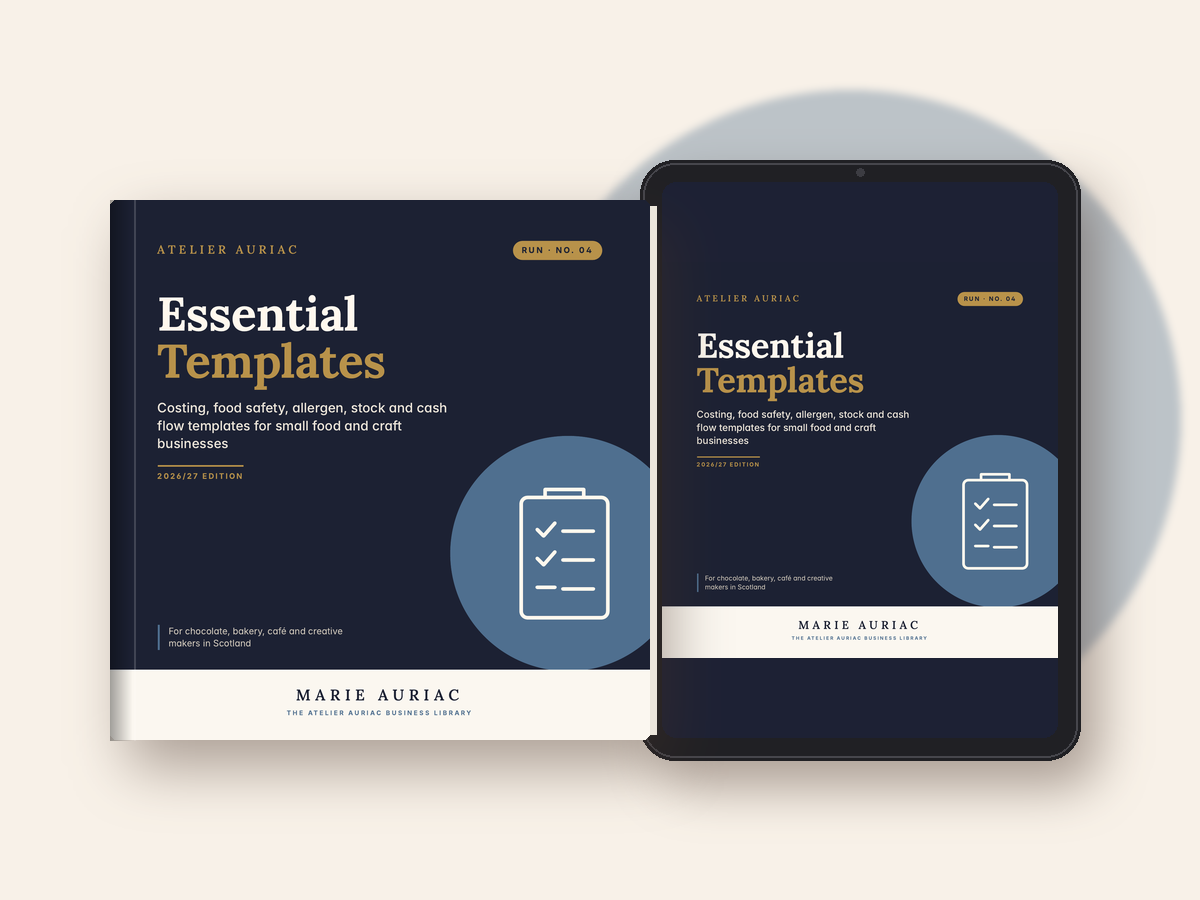
You don't have to start from a blank page. Essential Templates: Costing, HACCP, Allergen, Stock and Cash Flow Templates gives you editable versions of every record in this article, with worked examples for small makers and an Excel workbook that does the costing and cash flow maths for you.
Get Essential Templates for £29.99
Just starting out? Start Your Maker Business walks you through registration, labelling and your first year.
Read next : How to start a food business from home in Scotland · Wholesale pricing for makers
This article is general information. Always check your plan with your local environmental health team.