

Sunday evening. The dread arrives on schedule. You sit at a desk all week, staring at a screen, doing work that doesn't feel like yours, and you keep thinking about the thing you'd rather be making.
I know that feeling well. I've sold chocolate at Lindt and Hotel Chocolat, worked in HR at the University of Edinburgh, and run my own chocolate shop. I've changed direction more than once, sometimes well and sometimes painfully. Here's what I've learned about doing it without blowing up your life.
1. Don't quit yet: build the bridge first
The romantic version is handing in your notice and following your passion. The realistic version is keeping your income while you test whether people will pay for what you make.
In the UK you can be employed and self-employed at the same time. Your evenings and weekends can become a small, legal business while your salary covers the bills. Check your employment contract for any clause about outside work first.
2. Name what you're actually leaving
Write down exactly what drains you about your current job. Is it the screen? Being told what to do? The routine? The office? Work that doesn't feel meaningful?
This matters because a creative business can recreate the same problems. If you hate admin, a business that is 70% admin won't free you. Your list tells you which kind of business will actually feel different.
3. Turn your skills into an offer
Most career changers underestimate what they already bring. Customer service teaches you sales. Office work teaches you systems. HR teaches you people. List your skills, then ask: what could I make, teach or sell that combines these with what I love?
4. Test with real money, small and fast
An idea is only validated when a stranger pays for it. Before you invest in branding, a website or stock:
- Make a small batch or a simple version of your offer
- Sell it to 10 people who aren't your friends
- Write down what they said, what they paid and what they asked for next
5. Know your number
Work out the monthly income you need to replace before you can reduce your hours. Then work out how many sales that takes. That number turns a scary leap into a target you can track.
6. Step down gradually
Once the business reliably earns a part of that number, consider a stepping-stone: fewer days in your job, or a job closer to your field. A gradual transition protects your family and gives your business time to grow.
Your next step
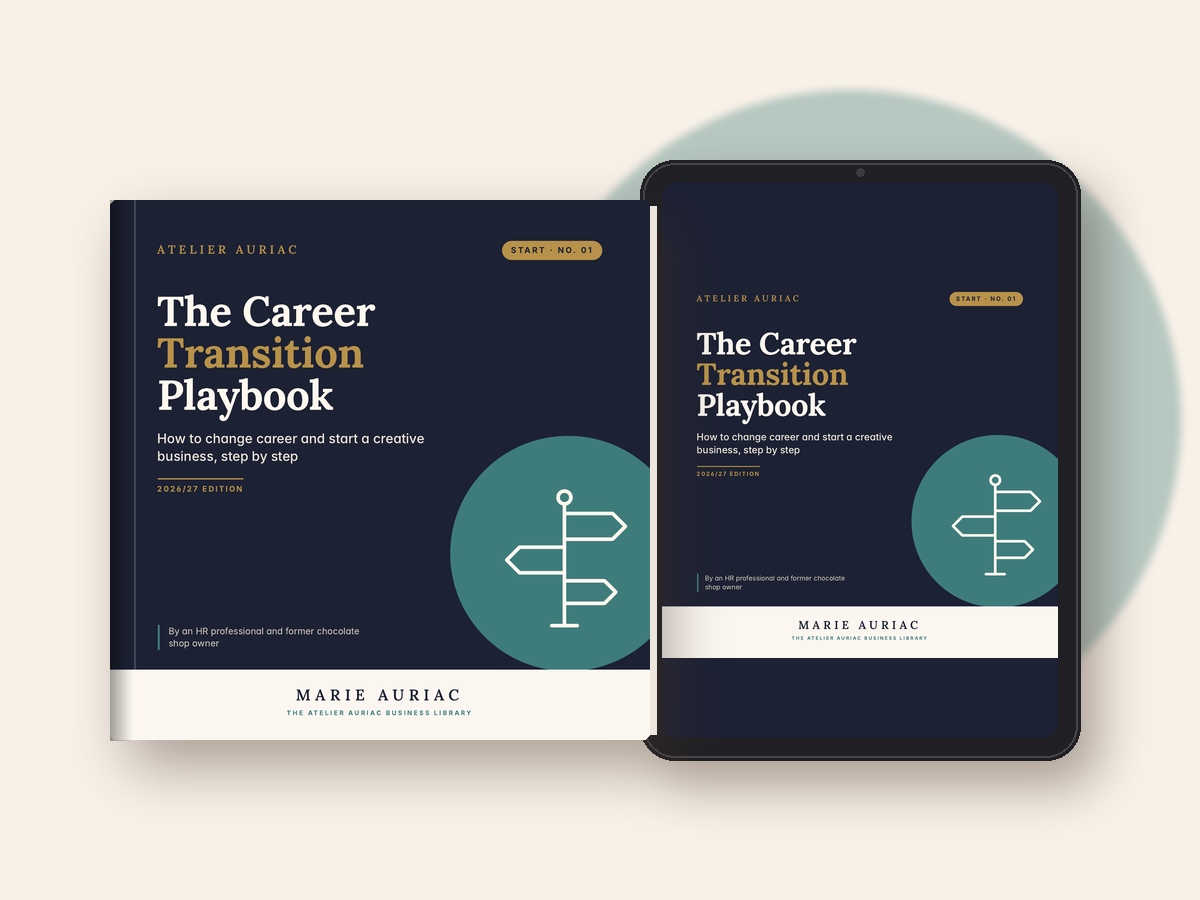
Changing career is a project, not a leap of faith. I've turned it into a step-by-step plan in The Career Transition Playbook: How to Change Career and Start a Creative Business, Step by Step, with worksheets for your skills audit, your number and your transition timeline.
Get The Career Transition Playbook for £14.99
Ready to make it official? Start Your Maker Business covers the legal steps for launching in Scotland.
Read next : How to start a food business from home in Scotland · How to price your products for wholesale