

You make something people love. Friends ask for your tablet at Christmas, your brownies sell out at the school fair, and someone has finally said it: "You should sell these."
The good news is that you can start a food business from your own kitchen in Scotland. The less good news is that nobody hands you the rulebook. I learned that the hard way when I opened my own chocolate shop in Edinburgh. Here are the seven steps I wish someone had explained to me on day one.
1. Register with your council at least 28 days before you sell
Every food business in Scotland must register with the environmental health service at its local authority at least 28 days before opening, and registration is free (Food Standards Scotland). That includes home kitchens, online sellers and market stall traders.
In Scotland you register with your council directly, not through the English online service. Search "[your council] food business registration" to find the form.
Don't register too early, either. The 28 days is a minimum notice period, so register when you are about a month from your first sale.
2. Check your home is allowed to be a business
Before you register, check three things:
- Planning: most small kitchen businesses don't need planning permission, but customers collecting from your door or a big change in use might. Your council's planning team can tell you.
- Your mortgage or tenancy: many leases and mortgages restrict business use. Ask before you start, not after.
- Insurance: home insurance rarely covers business activity. You will also want product liability cover.
3. Get food hygiene training
You don't need a specific certificate by law, but you must be trained to a level that fits what you make. An online Level 2 Food Hygiene course is the usual starting point and takes an afternoon. Your environmental health officer will ask about it at your first inspection.
4. Write your food safety system
Every food business needs written food safety procedures based on HACCP principles: what could go wrong at each step, how you prevent it, and how you record it. Food Standards Scotland publishes CookSafe, its free food safety manual for small businesses.
This is the part most home producers put off, because a blank HACCP form is intimidating. (If that's you, my Essential Templates pack has filled-in examples for small makers.)
5. Label your food correctly, especially allergens
Any food you sell must declare the 14 major allergens. If you sell pre-packed products, you also need a full ingredients list, a best-before or use-by date, the net weight and your business name and address. Getting labels wrong is one of the most common problems found at first inspections.
6. Tell HMRC once you earn over £1,000
If your self-employed income goes over the £1,000 trading allowance in a tax year, you must register for Self Assessment by 5 October after the end of that tax year (MoneyHelper). You can be employed and self-employed at the same time, so a day job doesn't change this.
Open a separate bank account for the business from day one. It makes your tax return far easier.
7. Price for profit, not for friend
The most common mistake I see is pricing at "what feels fair". Cost every ingredient, your packaging, your time and your fees. Then add profit. If the price feels too high, the problem is usually the product size or the sales channel, not your courage.
Your next step
These seven steps get you legal. Running a food business you love takes more: choosing a business structure, finding your first stockists, costing recipes properly and planning your first year.
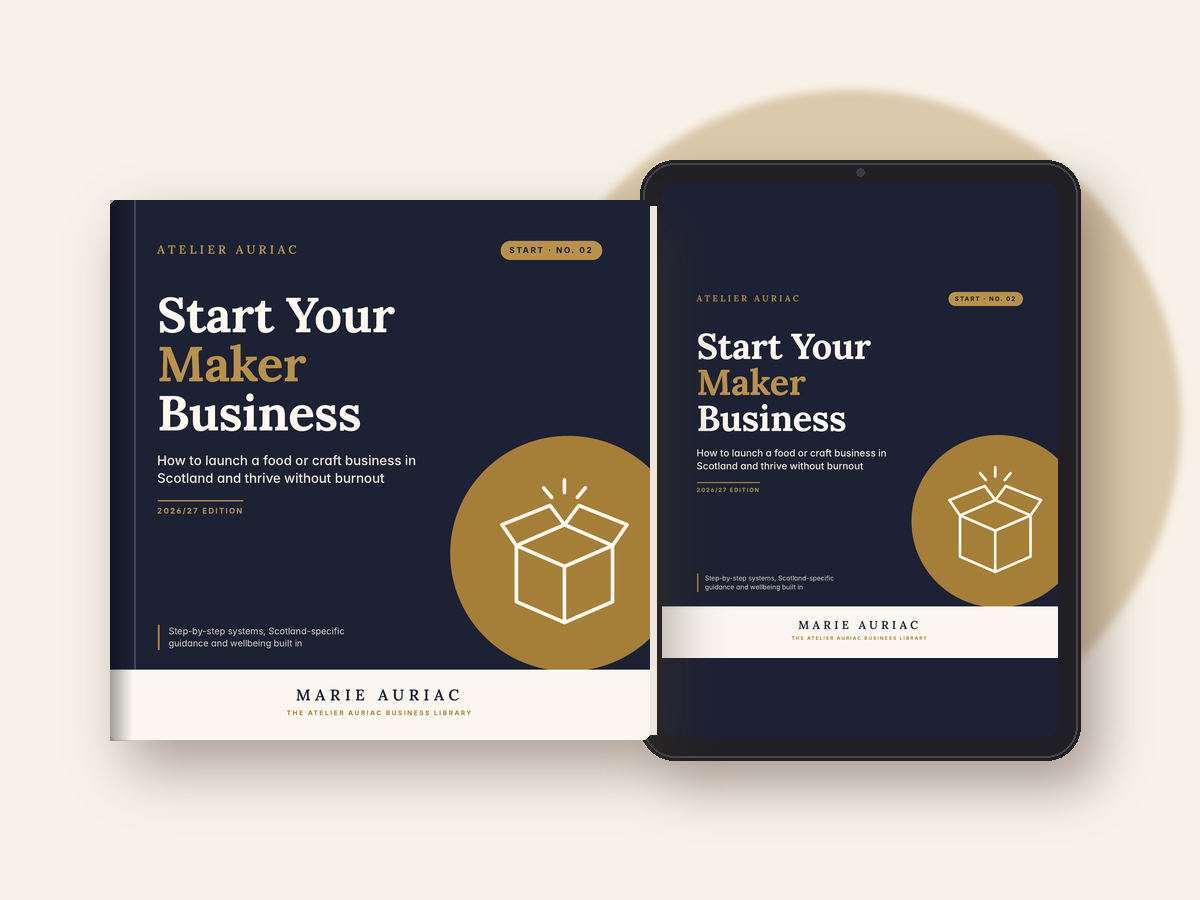
That's exactly what I cover in Start Your Maker Business: How to Launch a Food or Craft Business in Scotland. It's the guide I wish I'd had: Scotland-specific, checked against official sources, and written by someone who has run a food shop in Edinburgh.
Get Start Your Maker Business for £24.99
Read next : How to price your products for wholesale · HACCP and allergen records made simple
This article is general information, not legal advice. Rules were checked in October 2026; always confirm with your local council.