

When I took on my own chocolate shop in Edinburgh, signing the lease felt like the moment the dream became real. It was also the moment I took on obligations I didn't fully understand.
A commercial lease is not like renting a flat. Scotland has its own property law and its own taxes, and much of the advice online is written for England. Here's what to check before you sign.
1. Know who pays for repairs
Many commercial leases are "full repairing and insuring", meaning you, the tenant, pay for repairs and insurance, sometimes including problems that existed before you moved in. Ask for a photographic schedule of condition to be attached to the lease, so you're not paying to fix the landlord's old damage when you leave.
2. Look up the rateable value before you agree the rent
Business rates can add thousands a year. Every property has a rateable value, which you can look up on the Scottish Assessors website. For 2026-27 the basic rate is 48.1p for every pound of rateable value (City of Edinburgh Council).
The Small Business Bonus Scheme can reduce this. From 1 April 2026, a single property with a rateable value up to £12,000 can get 100% relief, tapering down for values up to £20,000 (Highland Council). Apply to your council: relief isn't automatic.
3. Check whether you owe LBTT
In Scotland, commercial leases can be subject to Land and Buildings Transaction Tax (LBTT), paid to Revenue Scotland. Tax is due only when the net present value of the rent over the lease term goes above £150,000 (Brodies).
The catch most small tenants miss: if your lease needs an LBTT return, you must file a review return every three years, even if the rent hasn't changed and no tax is due. Penalties can apply if you forget (Brodies).
4. Negotiate a break clause
A break clause lets you leave before the lease ends. For a new business, this is your safety net. Check exactly what conditions you must meet to use it: some require the rent to be fully paid and the property in perfect repair on the break date.
5. Understand rent reviews
If your lease is longer than a few years, it will likely include rent reviews. Find out how often, and whether the rent can only go up ("upwards only").
6. Check the permitted use
The lease will say what the property can be used for. If you plan to make food, run workshops or sell online from the unit, make sure all of it is allowed. You may also need planning permission or a building warrant for changes.
7. Get a solicitor, and ask for the landlord to pay
Always have a Scottish solicitor review a commercial lease. You can sometimes negotiate for the landlord to contribute to your legal costs, or for a rent-free period while you fit out.
Your next step
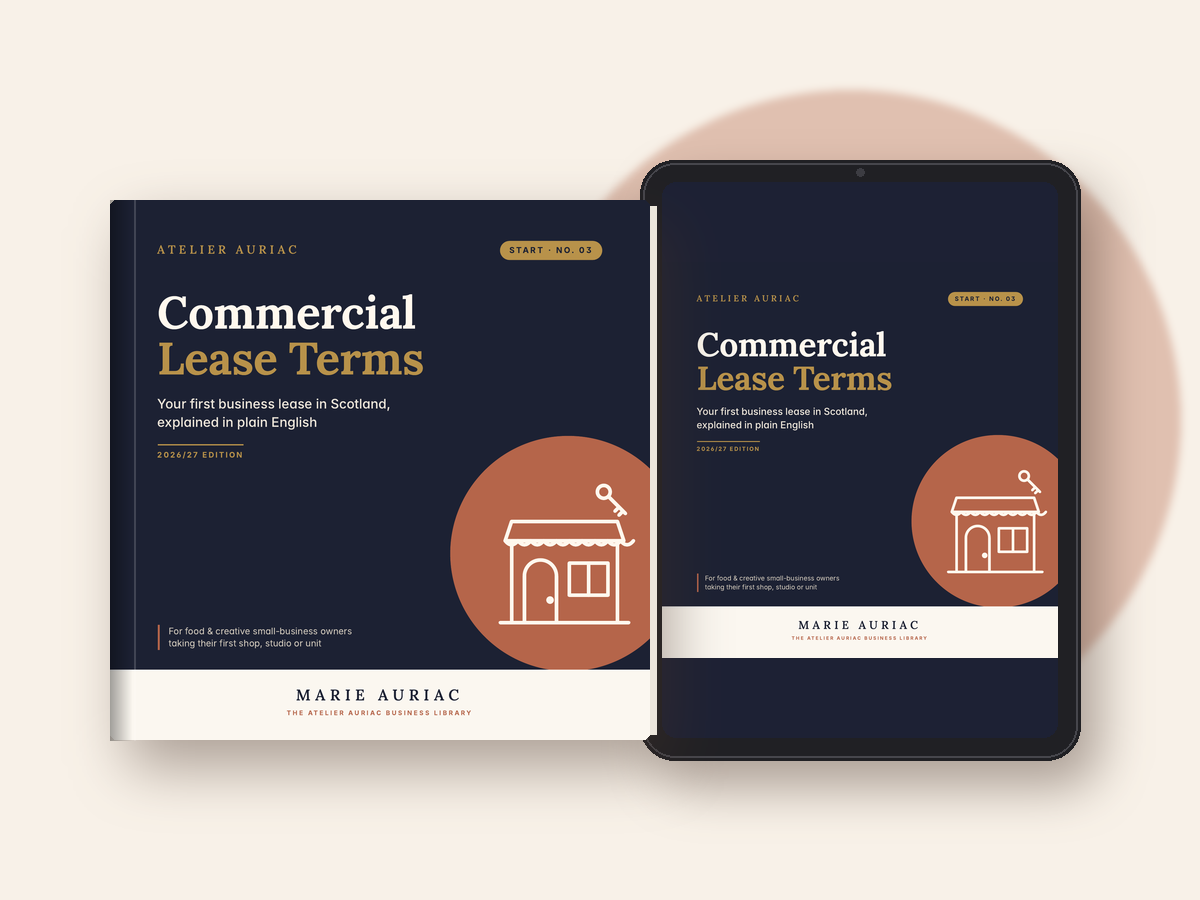
Solicitors are expensive by the hour, so arrive knowing what to ask. My guide Commercial Lease Terms: Your First Business Lease in Scotland explains every common clause in plain English, with a checklist of questions to take to your viewing and your solicitor.
Get Commercial Lease Terms for £19.99
Read next : Hiring your first employee in Scotland · How to start a food business from home in Scotland
This article is general information, not legal advice. Figures checked October 2026; business rates change every April.