
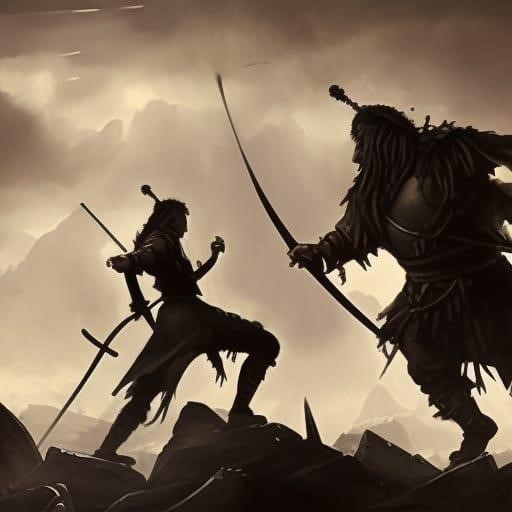
One of the most difficult parts of running a D&D adventure, at least to my mind, is balancing the combat. Make it too easy and it lacks satisfaction, or a sense of conquest, make it too hard and you get the dreaded TPK (For the uninitiated, or the lucky, that's a Total Party Kill).
I was once in a campaign, playing as a rogue, along with a bard, a sorcerer and a warlock. Possibly poor planning, but the GM wanted us to be who we wanted, and we didn’t know each other to coordinate. The GM should have kept in mind how squishy we were, but didn't, instead sticking to the encounter as published. We got TPK'ed. In the first session, during our second encounter. So ended the campaign, with sadness and ruffled feathers, a sense of time wasted.
Fudging roles and on the fly changes can help for sure, but getting the planning right is the best approach, so maybe some points to consider;
APL and CR ratings
The APL (Average Party Level) and CR (Creature Rating) are often used to calculate the encounter balance, with the consideration "one monster of CR equal to the party's level is a moderate challenge for a party of four characters" being a good starting point. But this is only a starting point, and more needs to be taken into account. Tools like dndbeyond.com/encounter-builder and koboldplus.club can be used to make this judgement at face value.
I'd also like to note that in our adventures we have started adding advice for modifying the listed combatants based on APL.
Not just maths
It doesn't always come down to the numbers, other factors such as skills and Feats come into play and often aren't considered in the numbers. Multi-attack is common and suddenly feels like fighting more opponents, and pack tactics can make a massive difference to hit rates. These do impact the CR, but what and how many feats, alongside how many combatants have them, is a big deal.
Invulnerable to weakness
Another big consideration is resistance, vulnerabilities and immunities. “Resistance to bludgeoning” might not seem too bad, but if all your party has are clubs and staff then that would be a bigger deal. Comparing these skills to party ability and items is a good idea.
Critical considerations.
Mo' dice can mean mo' dead. Just because the dice are low, if the number of them is higher than one or two, a critical can suddenly mean 6d4s, giving up to 24 damage. This may be a personal bugbear of mine as I lost a character to this scenario at level 1, instant death. Ouch
If all else fails. Fudge
As the GM, you rule. If you want them to live, no reason to let 'em die. Change the numbers, play bad tactics, have them give up and go home. Or a friendly NPC shows up and ninja kicks them all!
This goes for the reverse too, if the party is doing too well, up the tactics, bring in wave two!
My biggest take away is to remember it is all for fun, so thus it depends on who is in your party. Some love to live near the edge and don't mind rerolling characters, some want to smash it, crush the enemy into smooshy little puddles. Session 0 (blog to follow) should cover much of this and set expectations.
Keep on rollin,
Dalekhead
Comments ()