
You see these wonderful colourful creations in January each year. Temperature blankets, scarves, snakes in crochet or knitting and you think, yes I'm going to do one of those. You work out your temperature range, get the yarn and often the first month it goes well, then life gets in the way and keeping up with the creation gets more challenging and rather than enjoying it it becomes a chore.
I've created a couple of temperature blankets, one crochet, one knitting and have just started one for 2026. I choose to do high and low temperatures for each day, done a couple of rows for each as this tends to keep the size under control (depending on the stitch and yarn you use). To keep momentum going or to take a break without feeling guilty I have regular sessions of keeping the data written up in a simple chart. Writing down the high and low temperatures and assigning their colours means when I do pick it up to start again I know exactly what I'm doing. It also means you can plan carrying up yarn along the side which can save lots of ends (and we like saving ends don't we).
Having between 8 and 12 colours works well. More or less and you either end up with lots of blocks of colour or lots of yarn left over of little used ranges, such as high or low. To decide on your range I go to previous years and scan through temperatures, looking for the highest and lowest then writing out an even spread of those between. I use Accuweather for my temperatures. I've found them to be pretty accurate and they hold data which means if I'm not quite on it I have time to work back and write it out. They seem to have a good spread of data locations so I'm happy that what I'm doing is reflective of the temperatures we experience here in Cullompton.
For 2026 I am doing the following.
-1 and below - Aubergine
0-3 - Pink
4-8 - Lavender
9-13 - Dark Blue
14-17 - Light Blue
18-21 - Blue/green
22-26 - Light green
27-31 - Mid Green
32+ - Dark Green
You can of course do the more traditional rainbow of colours or choose a hue like I have working through pink to blue to green. Choose the colours that you like, they don't have to follow on from one to the other. You can also add extras like a silver embroidery thread held with the yarn to show up special dates such as birthdays or anniversaries. There are no rules when it comes to temperature creations. Do what suits you when it comes to how many colours, what colours and what it shows.
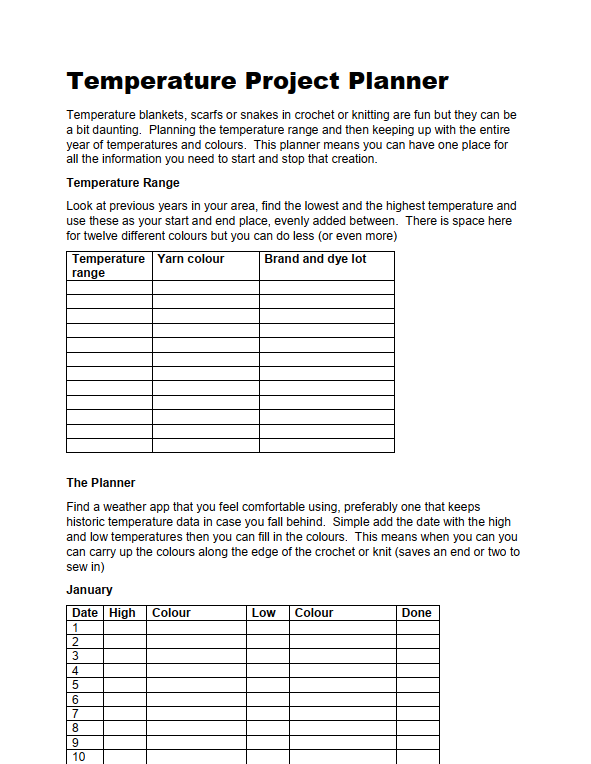
So, to help get you started and more importantly keep you going I've created this very simple pdf with charts for you to add your temperature range, colours and yarn details and then a simple month by month table enabling you to add your high and lows together with yarn colours and the most important done box so you can tick it all off.
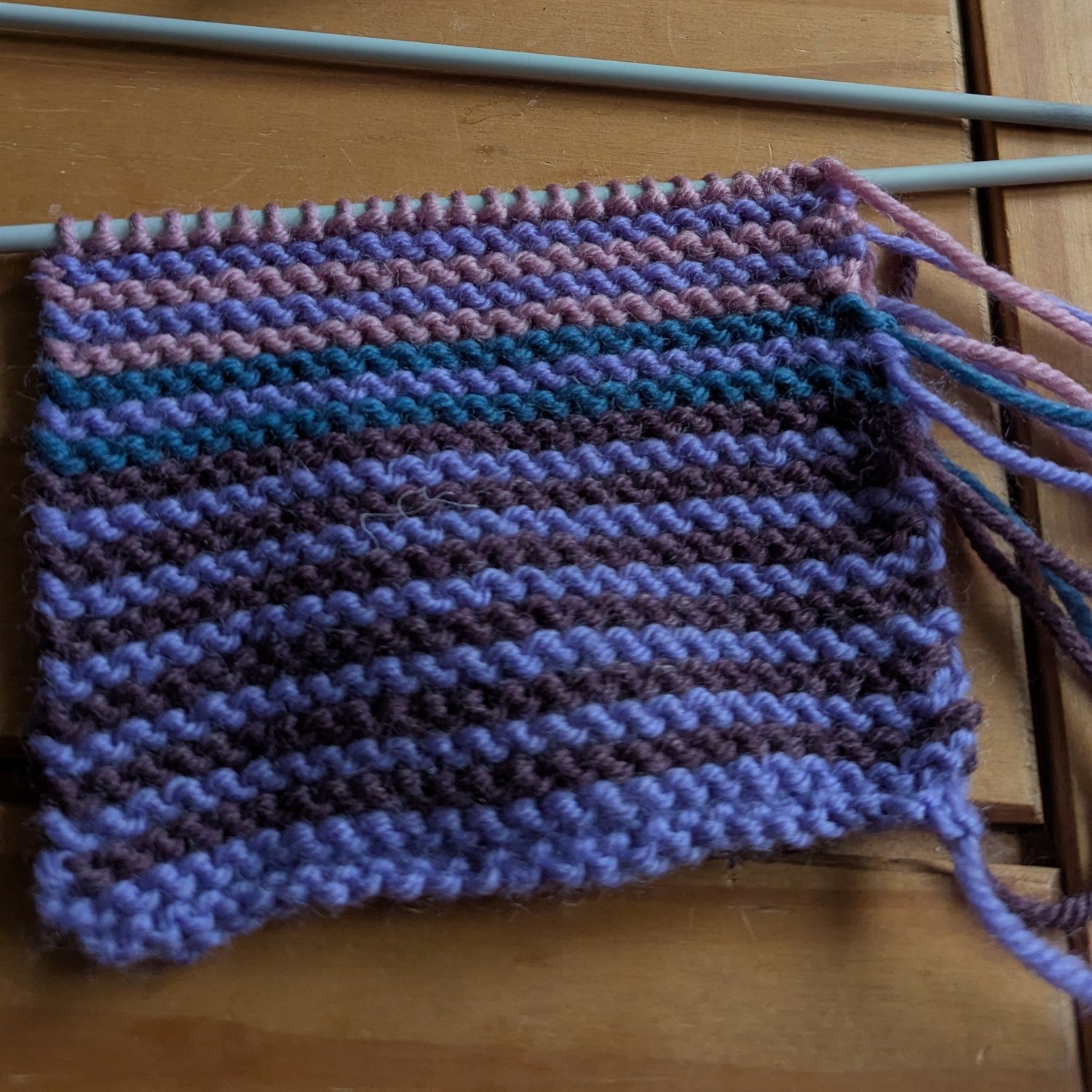
The image at the top is my 2026 temperature creation. I'm using Hobbii yarn in 100% wool to continue my sustainability drive, it's a double knit. I've casted on 25 stitches on 4mm needles and do two rows per colour each day. I'm going to end up with 11cm by 28cm stripes that I'm labelling until I've worked out how I'm going to put them together. I think it'll end up as a nice lap blanket with a fleece back to save sewing in all those ends!
Hope this helps.