
Today is Thursday. On paper, this is still a normal week. She would’ve been with her dad anyway, I would’ve gone through my usual routine, nothing about today should feel different. And in a lot of ways, it doesn’t. But what’s normal on paper doesn’...
Read More
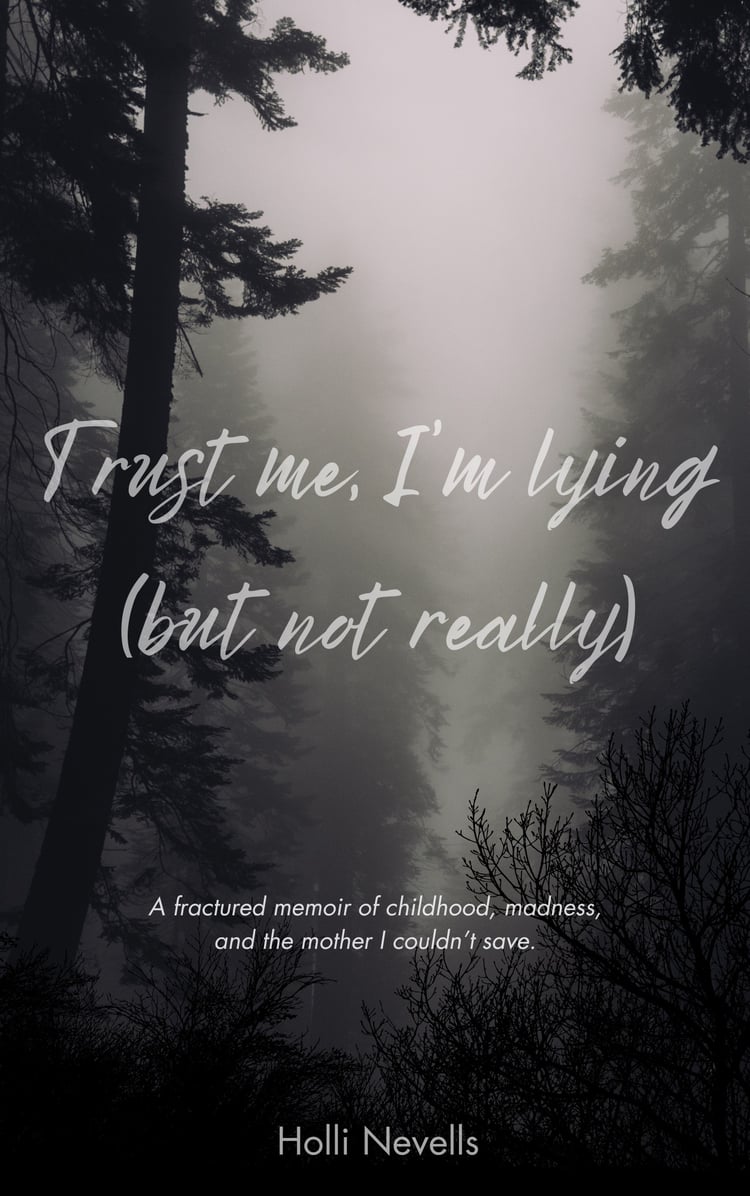
📚Paperback Bundle Deal
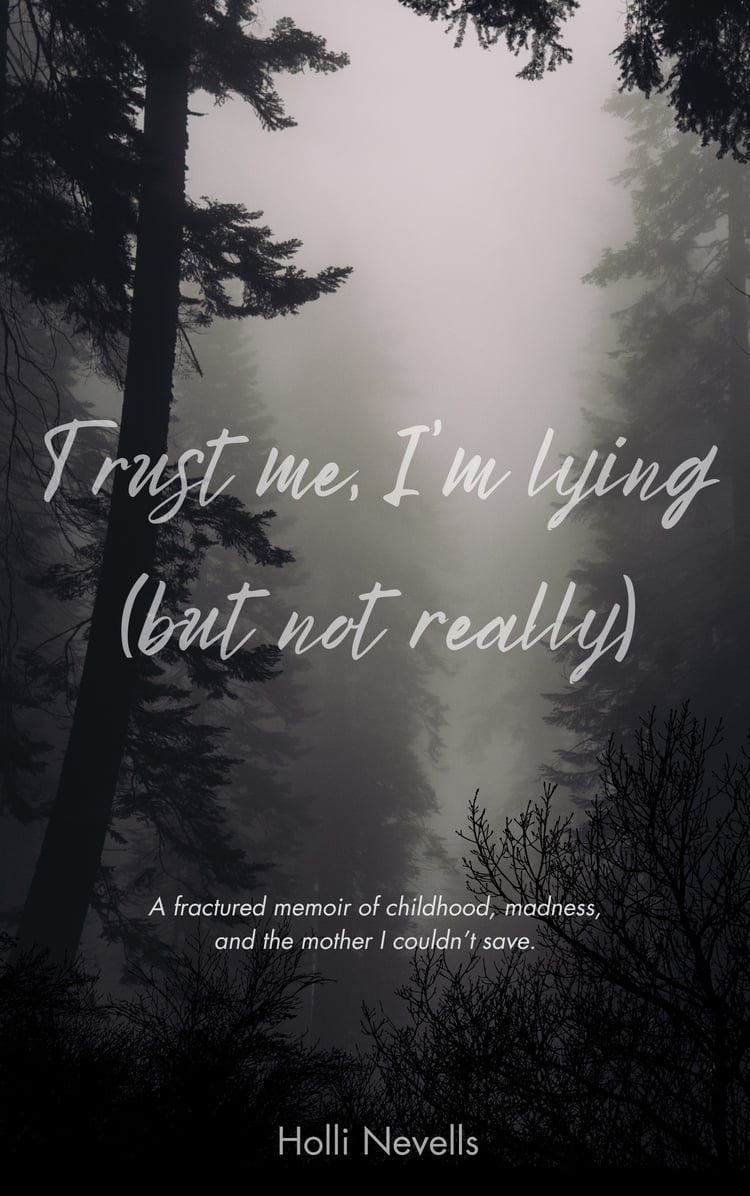
Add Trust Me, I’m Lying (but not really) to your cart, and you’ll be prompted to add the rest of the 6-book bundle for just $50 — that’s 33% off the regular price!
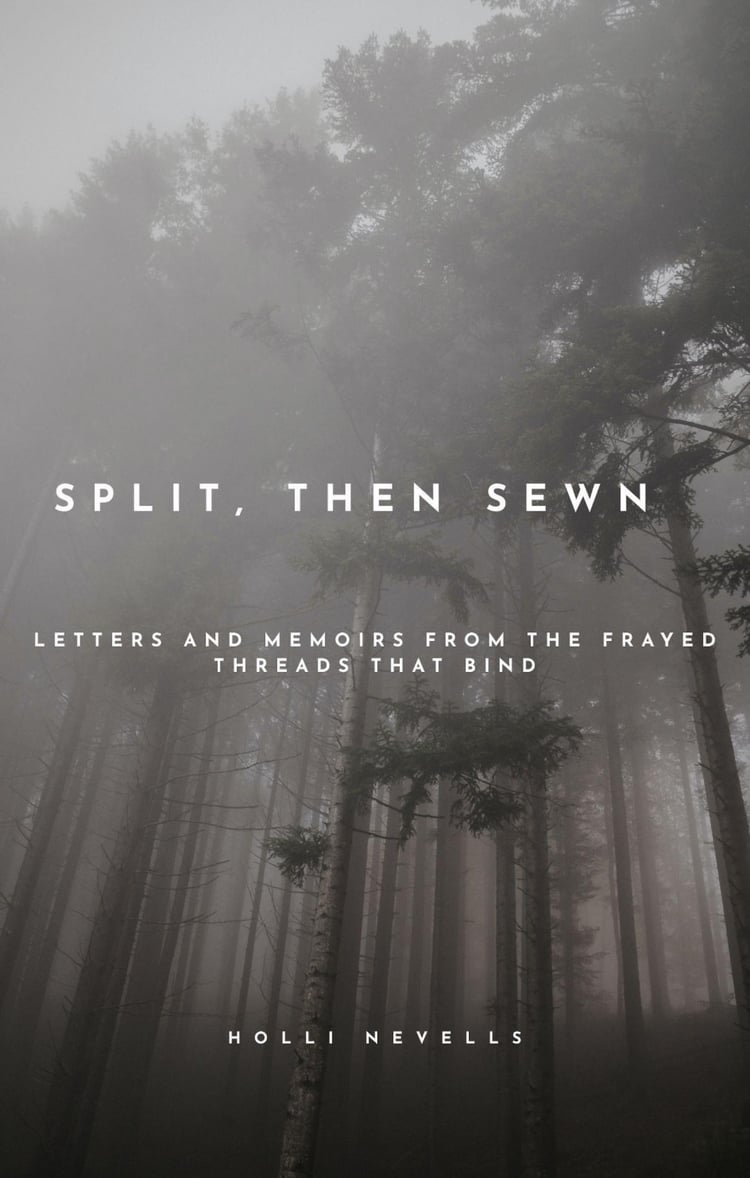
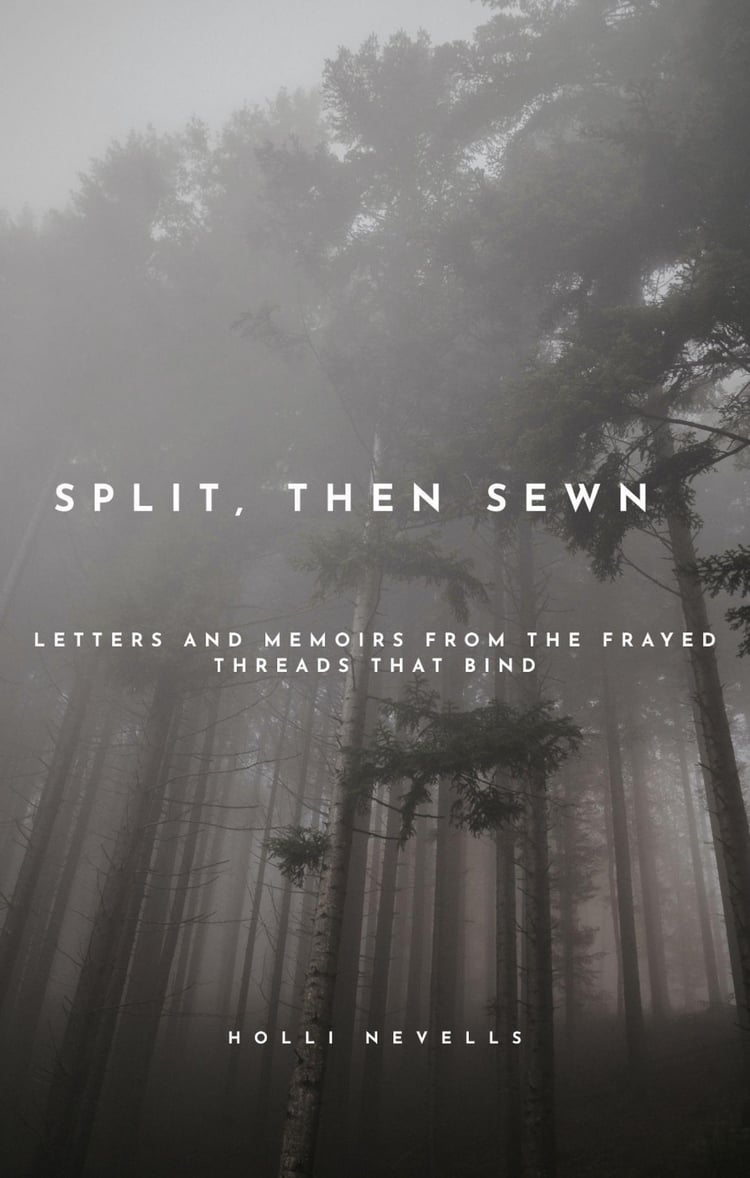
Split, Then Sewn (Ebook)
From $5.00
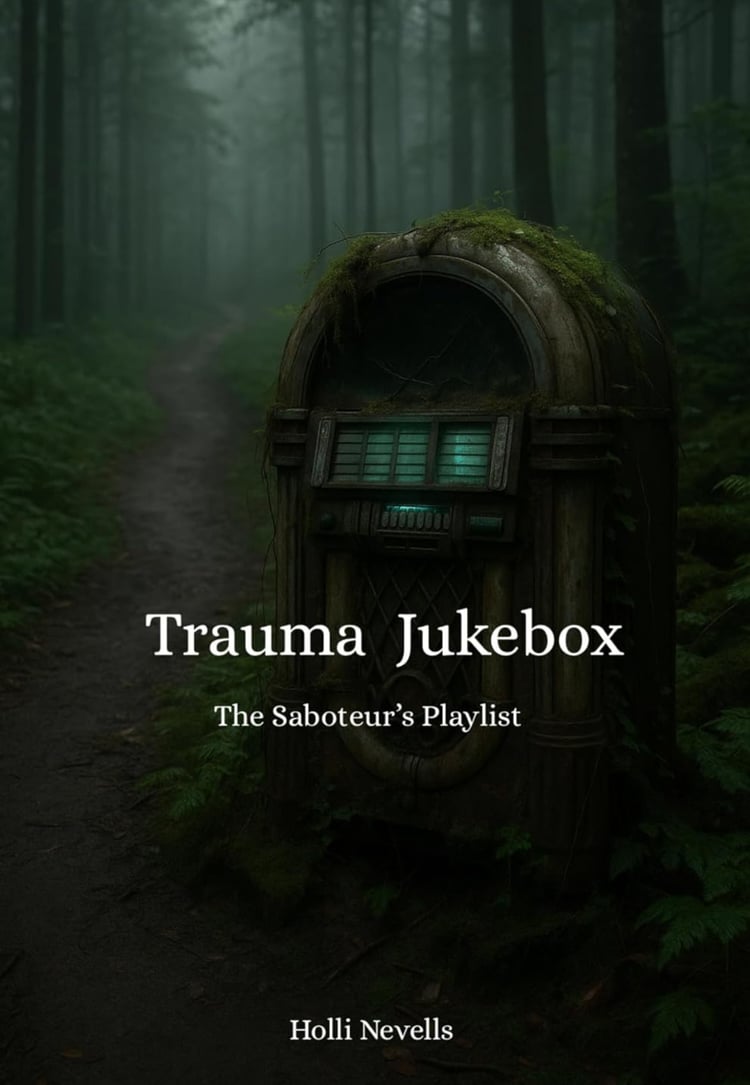
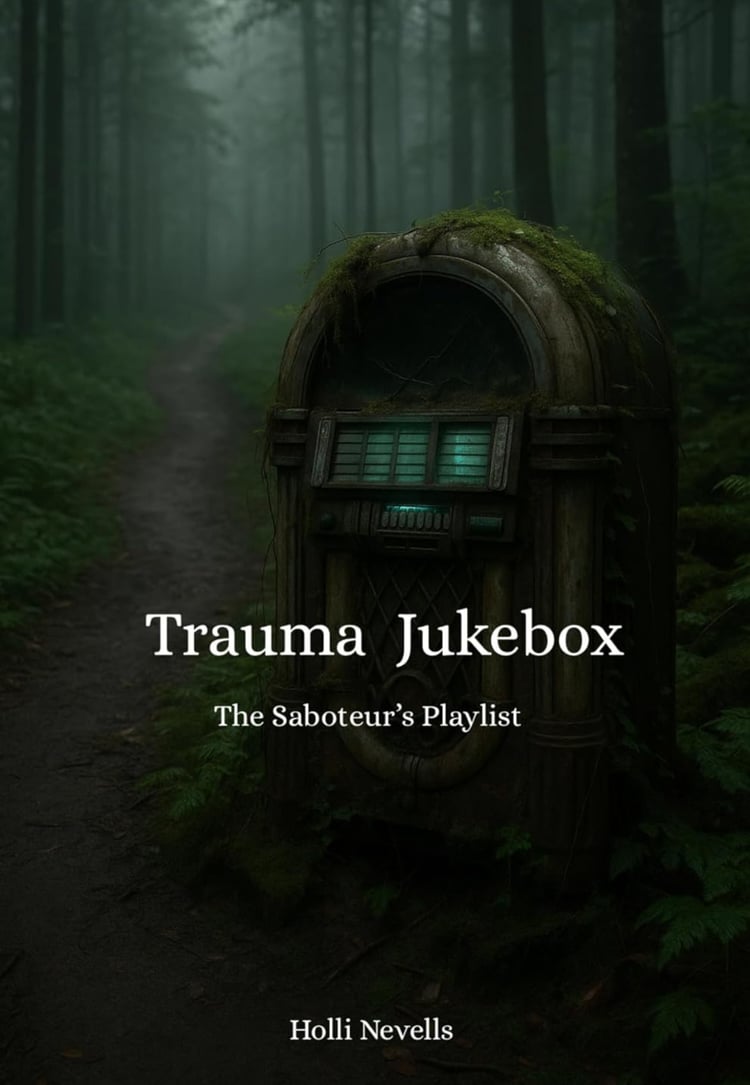
Trauma Jukebox (Ebook)
From $5.00
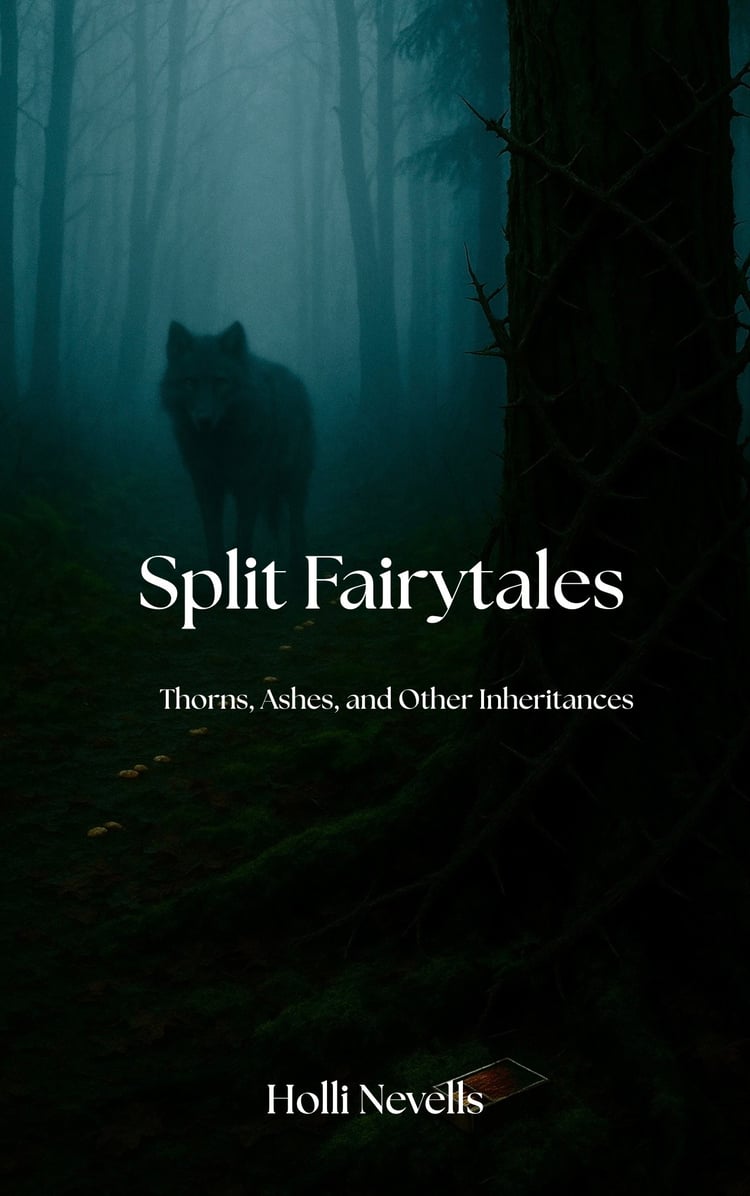
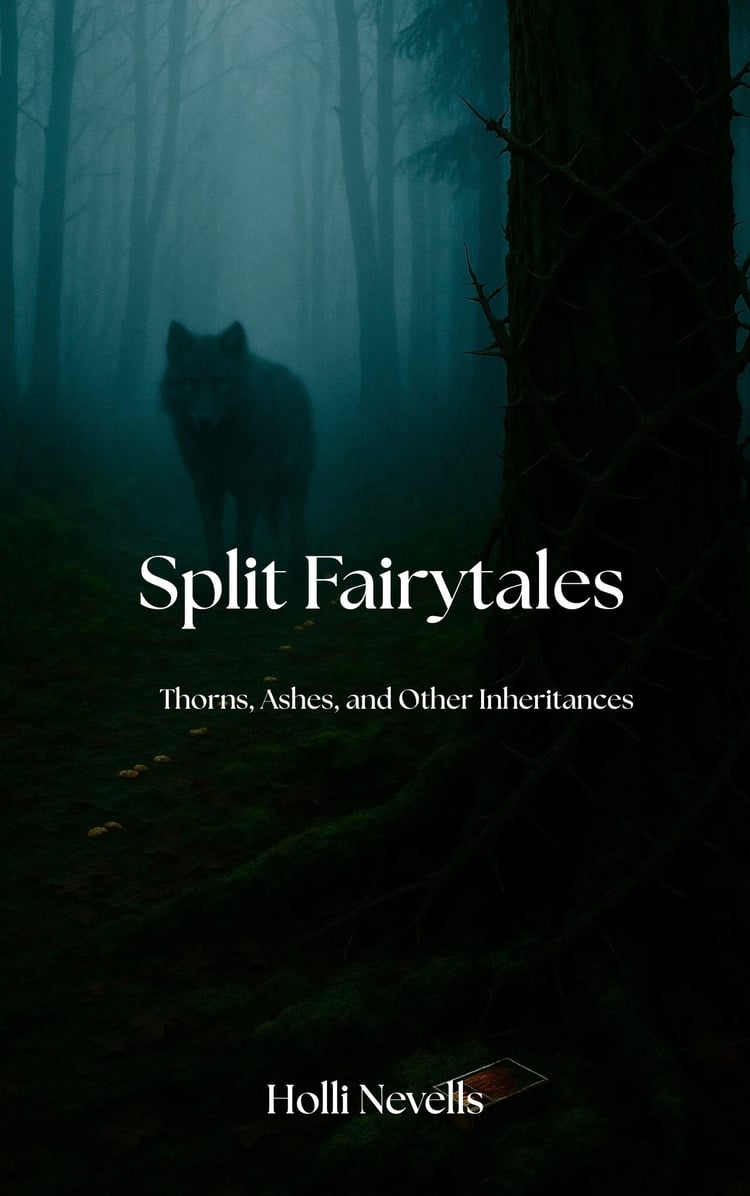
Split Fairytales (Ebook)
From $5.00
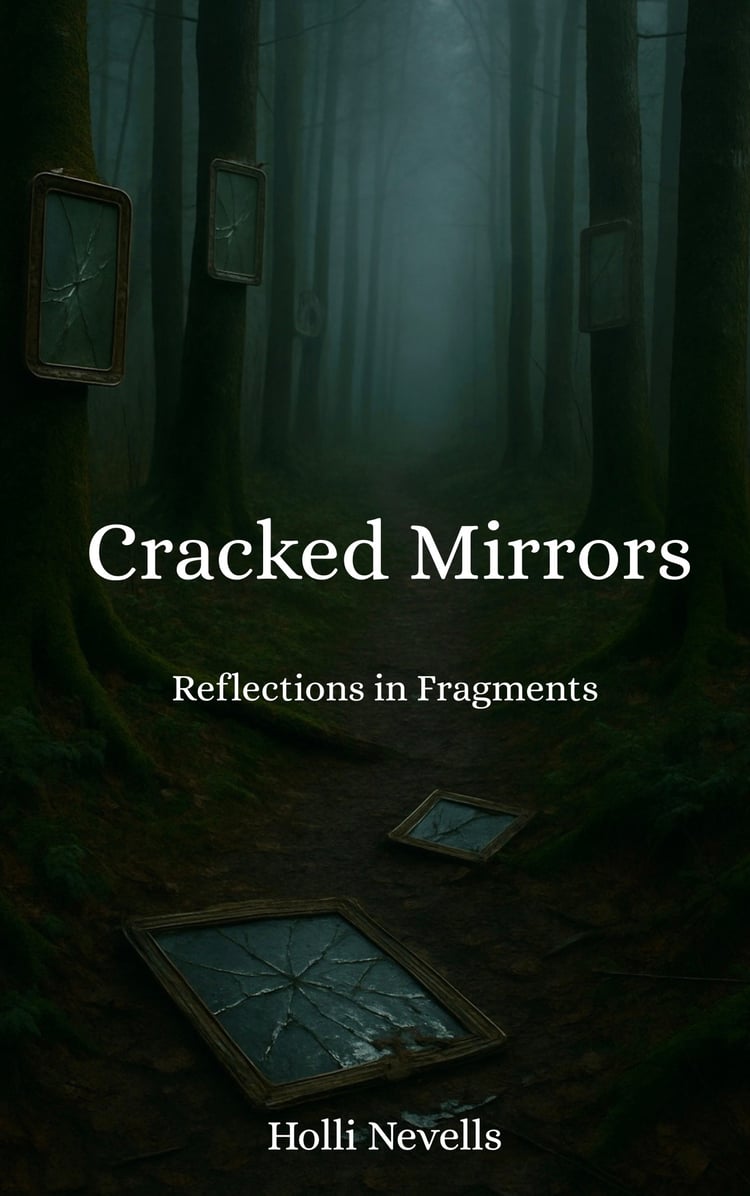
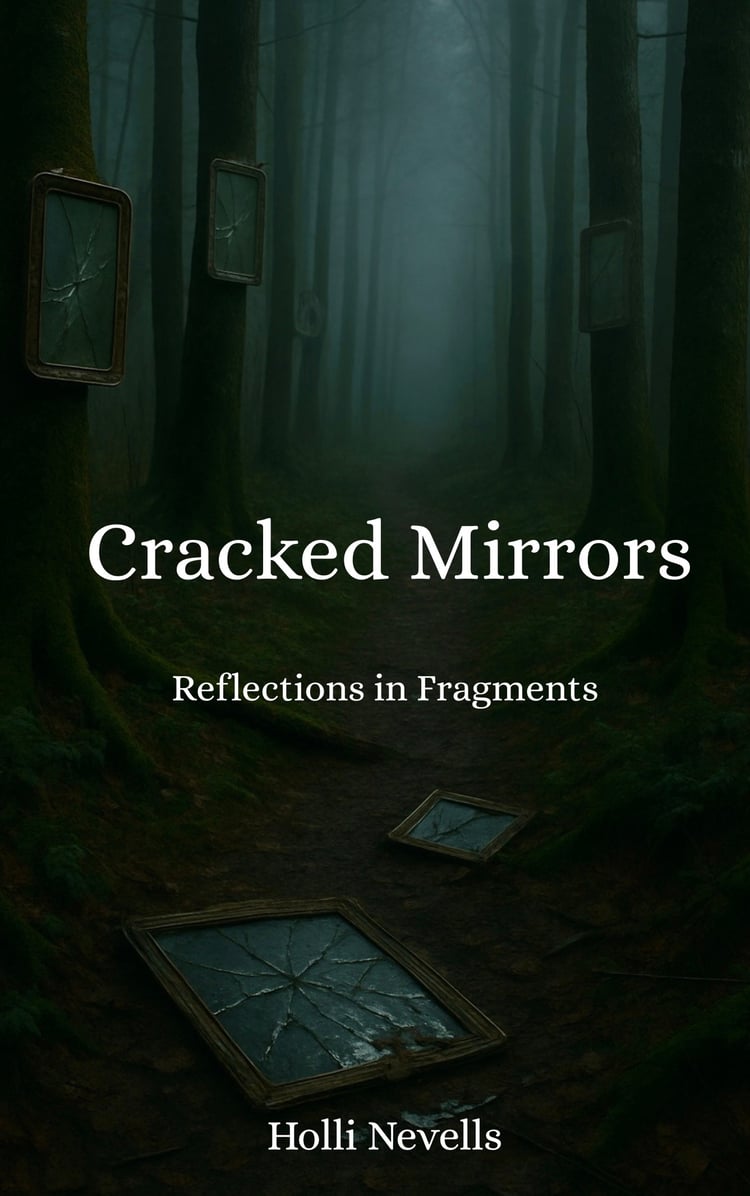
Cracked Mirrors (Ebook)
From $5.00
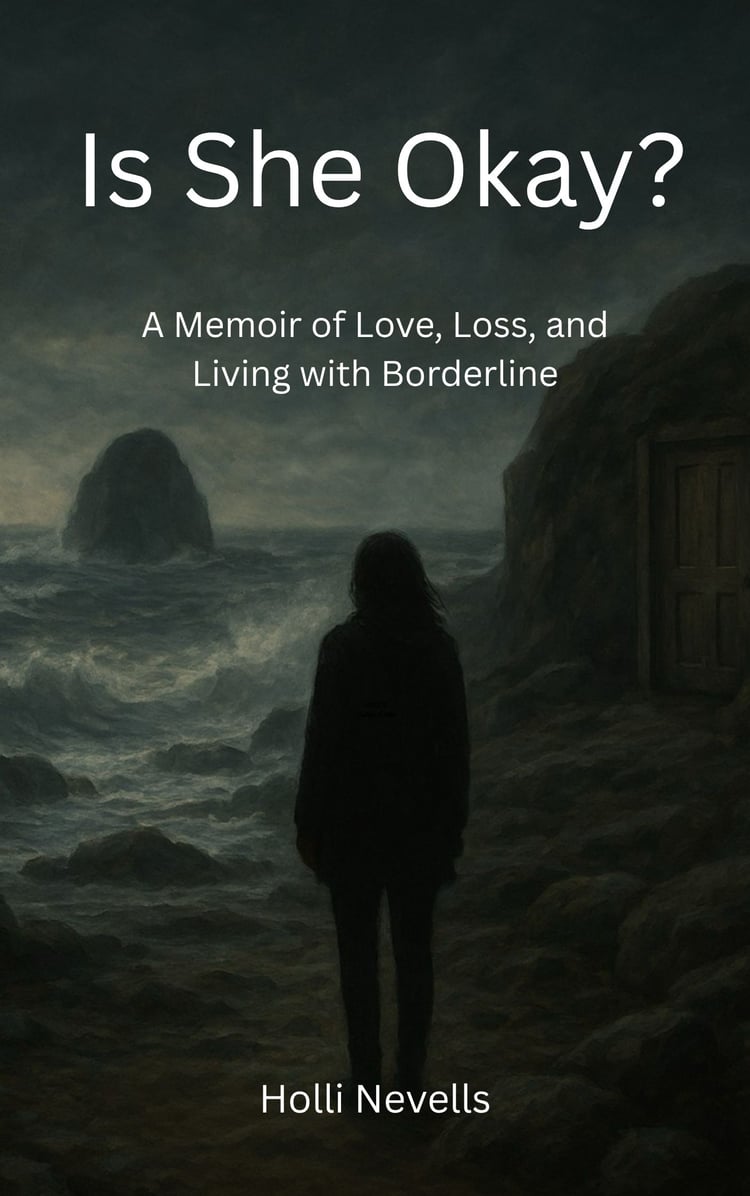
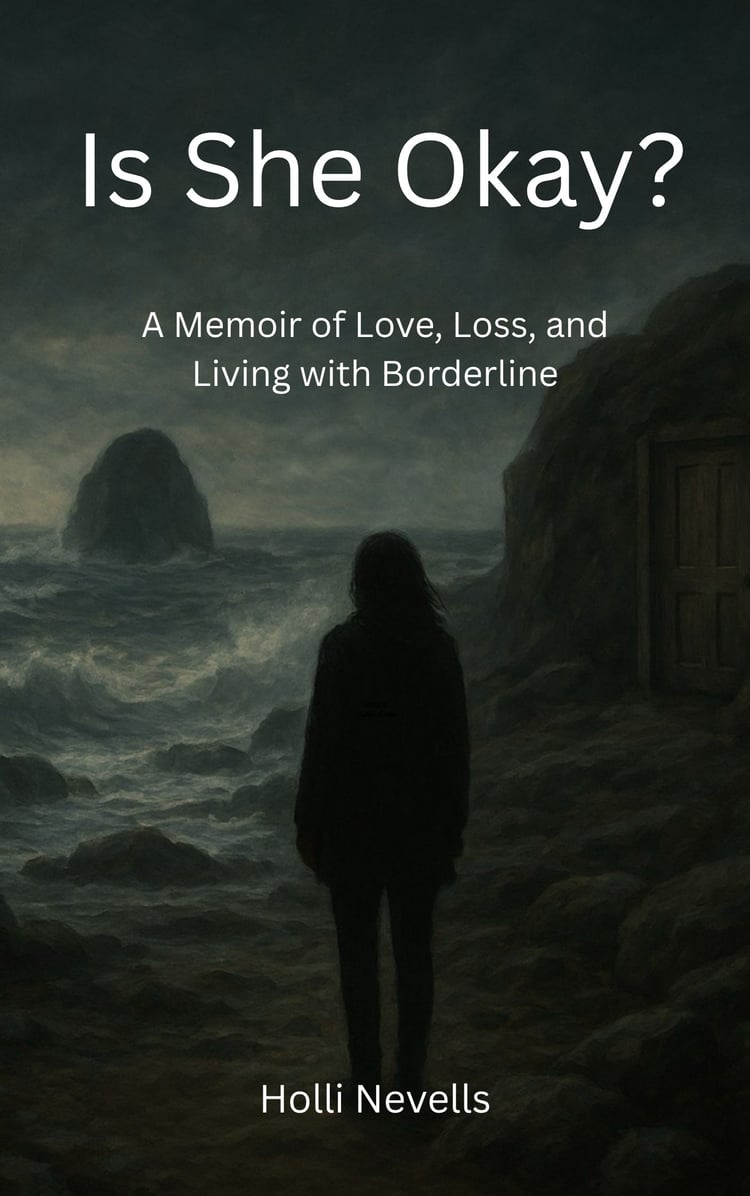
Is She Okay? (Ebook)
From $5.00
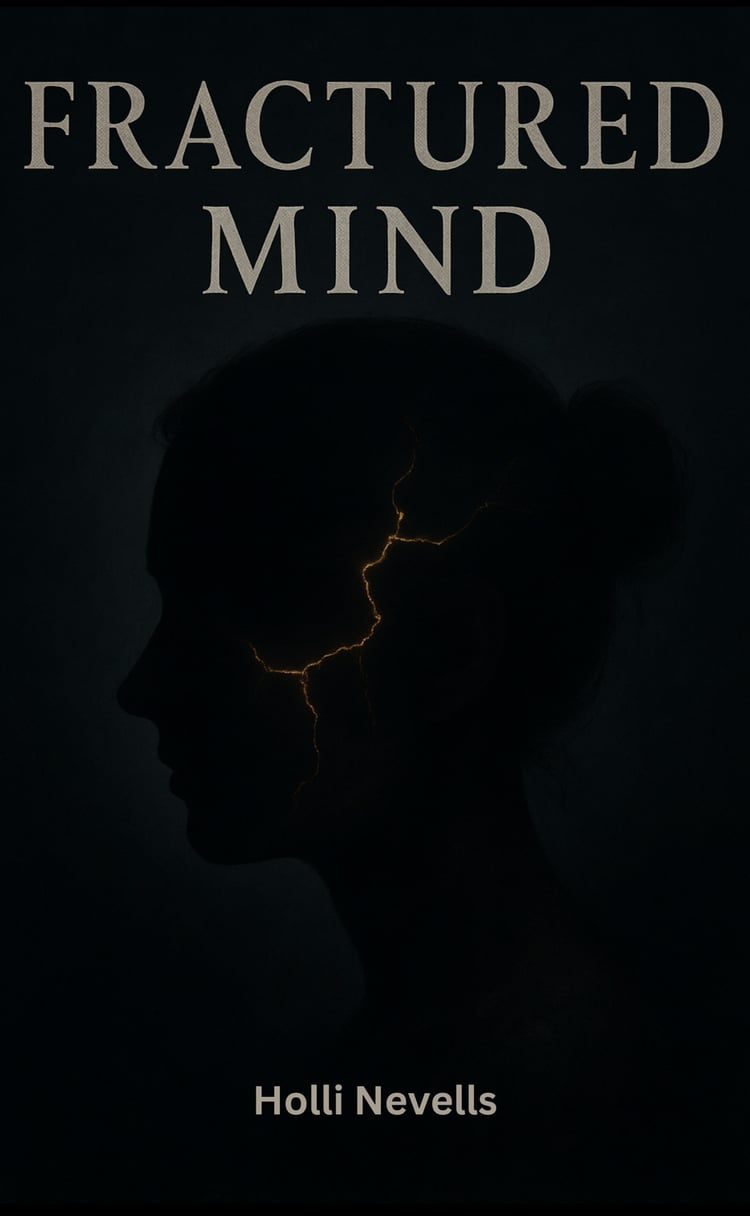
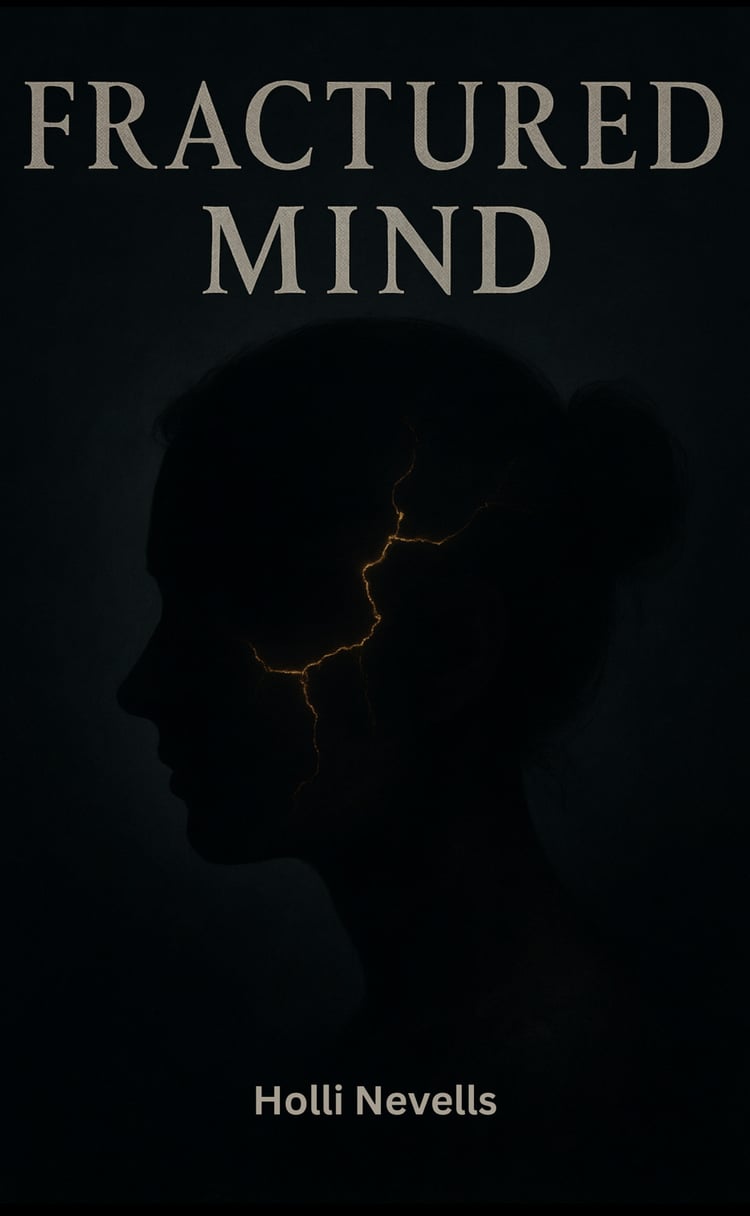
Fractured Mind (Ebook)
From $5.00
My Blog of Scattered Thoughts

Last night started out like every other night. I was in my room doing what I usually do before bed, watching a movie and winding down while the house settled into its nighttime quiet. Then my daughter came downstairs. She stood in the doorway and sa...
Read More
This morning feels heavier than it should. The house is quiet in that strange way houses get when something is about to change. Nothing looks different. The kitchen is the same. The coffee tastes the same. The sun came up like it always does. But in...
Read More
I do not just see a flower. I see the way its petals curl toward the sun, trusting that the light will always return. I watch the shadows dance along its stem and notice the way dew clings to its edges, tiny prisms of color catching the morning. In ...
Read More
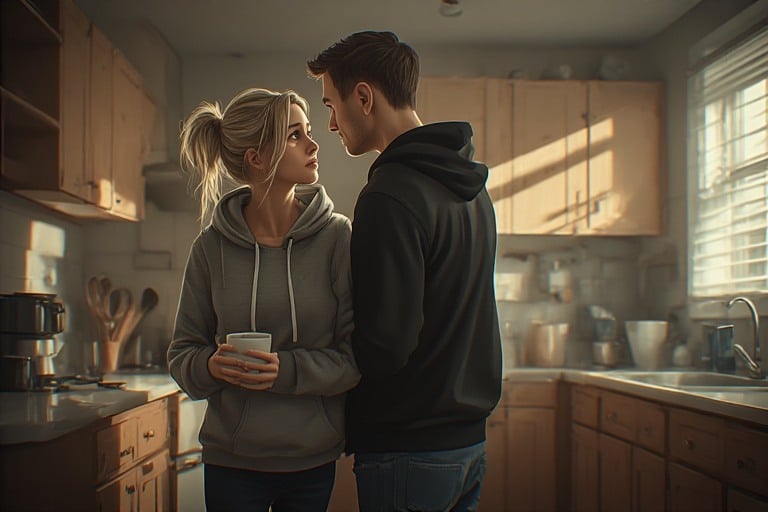
I’ve written about dreams before. I thought I understood them. I thought I had named them, dissected them, tucked them neatly into the category of “subconscious noise.” But some things circle back. Especially on mornings when you wake up ready to bu...
Read More
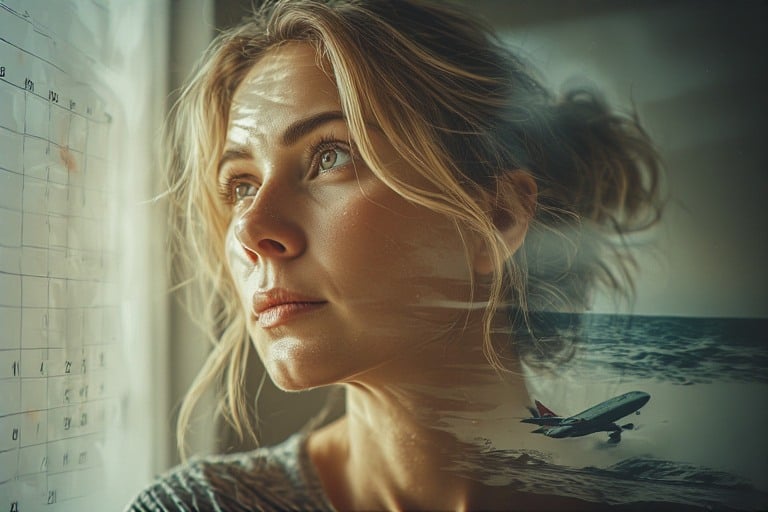
Today is my day off… And I don’t feel good. The ick that’s been building finally caught me. My head still hurts, day 419… which sounds dramatic until you realize I’m not exaggerating. At this point the headache feels like background noise. Like a st...
Read More
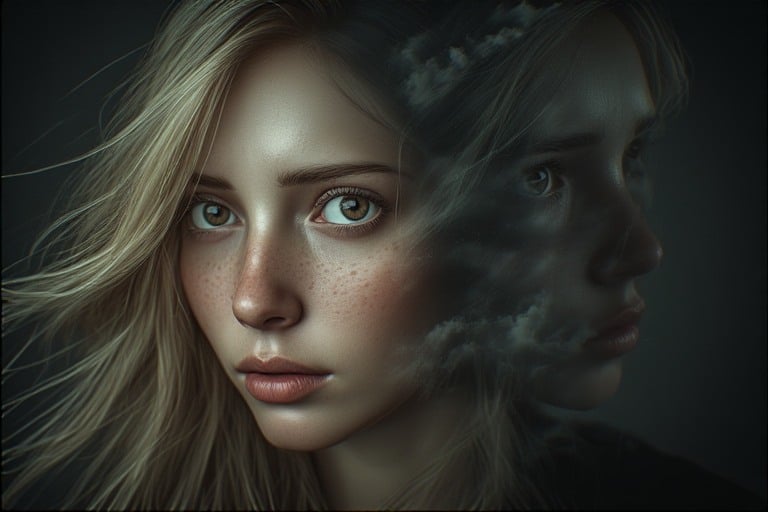
There’s a moment most of us with BPD know too well. You feel the shift. It might be a tone change, a delayed reply, a plan that gets canceled, a look that lingers a second too long. Suddenly your chest tightens, your thoughts speed up, your stomach ...
Read More
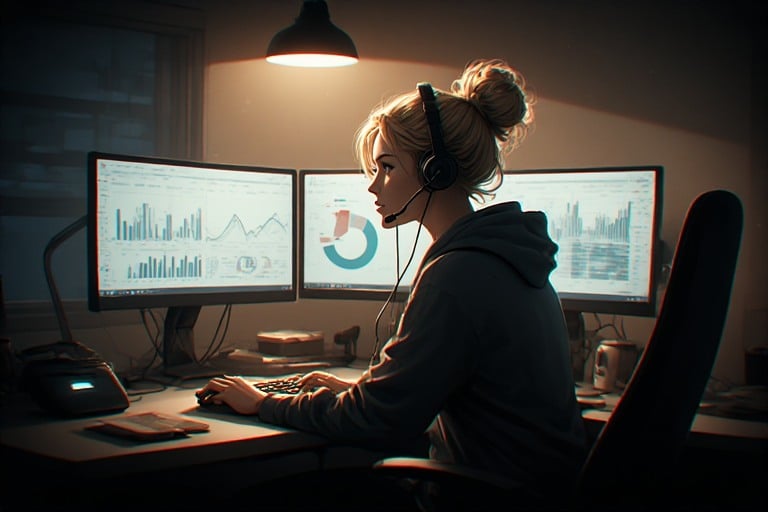
I’ve been in production for about ten days. Ten days out of training and I’m already in the top two for sales in my department. Managers have called me a rockstar. Here’s the weird part, I’ve never even met my manager in person. The praise just show...
Read More
Another work week wrapped up. Four more days of nesting and practice before I’m officially on production, and I can feel that strange mix of readiness and nerves settling in. I’m learning a lot. Processes are starting to click. Policies, coverages, ...
Read More
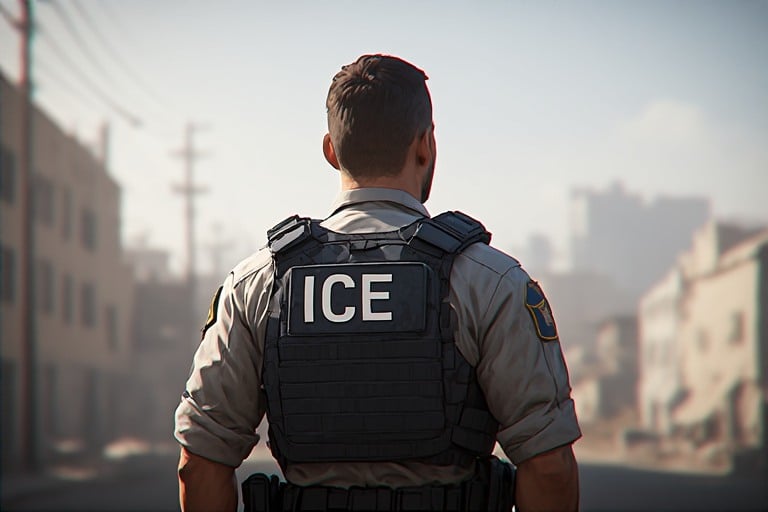
I watch the news… Sometimes I read the articles… Sometimes I scroll through social feeds. I have friends who lean red, and friends who lean blue. No one seems to sit in the middle anymore. But when it comes to law enforcement, especially ICE, here’s...
Read More
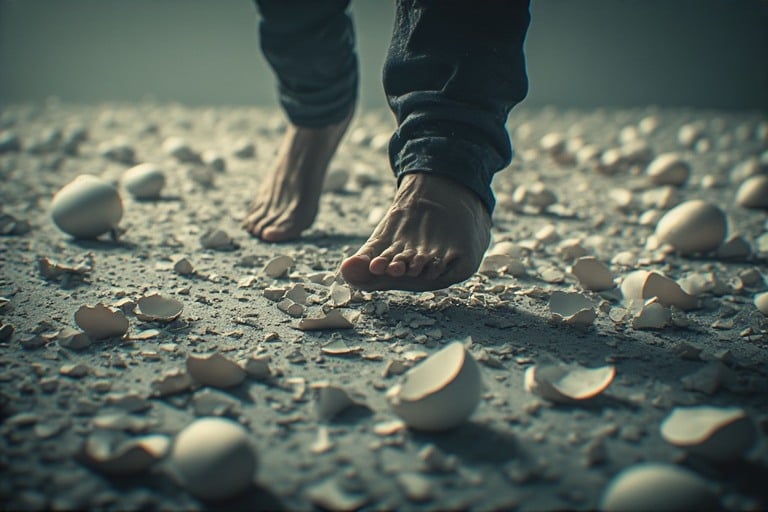
I want to talk about something that’s been on my mind for a long time: Walking on Eggshells. You see it recommended all the time in BPD groups, “this helped me understand my loved one,” people say. And I get it. For some, it probably does. But I nee...
Read More
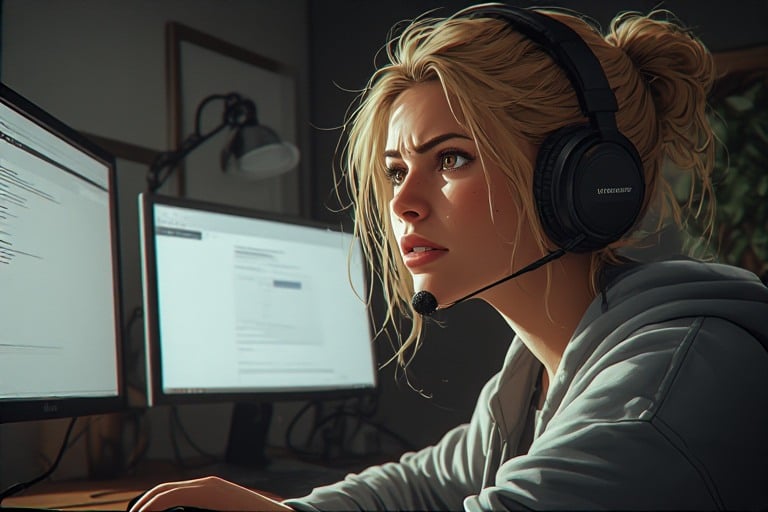
Midway through my shift, I already knew it was going to be one of those days. No sales today, not because I wasn’t trying and not because I don’t know what I’m doing, but because the systems were struggling. I was still showing up, still taking call...
Read More
I haven’t blogged in for a few days, and this is why. Work has been eating at me in a way that’s hard to explain unless you’ve lived inside broken systems that still expect performance. I’m in sales. The pressure to close is constant, but lately the...
Read More
Nesting day one has come and gone, and if training was standing at the top of a high dive… yesterday was the jump. It was not a swan dive. It was a bellyflop. The day started with our huddle, the meeting meant to gently usher us into our first real ...
Read More

Five weeks of training, or maybe four and a half, thanks to a couple of holiday-shortened weeks, are officially over. It’s been intense: policies, procedures, scripts, acronyms, and enough material to make your head spin. Farmers Insurance is the bi...
Read More
Saturday started as a rare, bright slice of joy. My daughter and I spent the day together, starting with Avatar: Fire and Ash. Sitting beside her in the theater, watching her eyes light up, hearing her little reactions ripple through the dark, I fel...
Read More
There’s something symbolic about Fridays. The end of the workweek, the collective exhale, the permission to say “I made it.” Except the last couple of weeks haven’t really earned that feeling. Holiday days off broke up the flow, turning workweeks in...
Read More
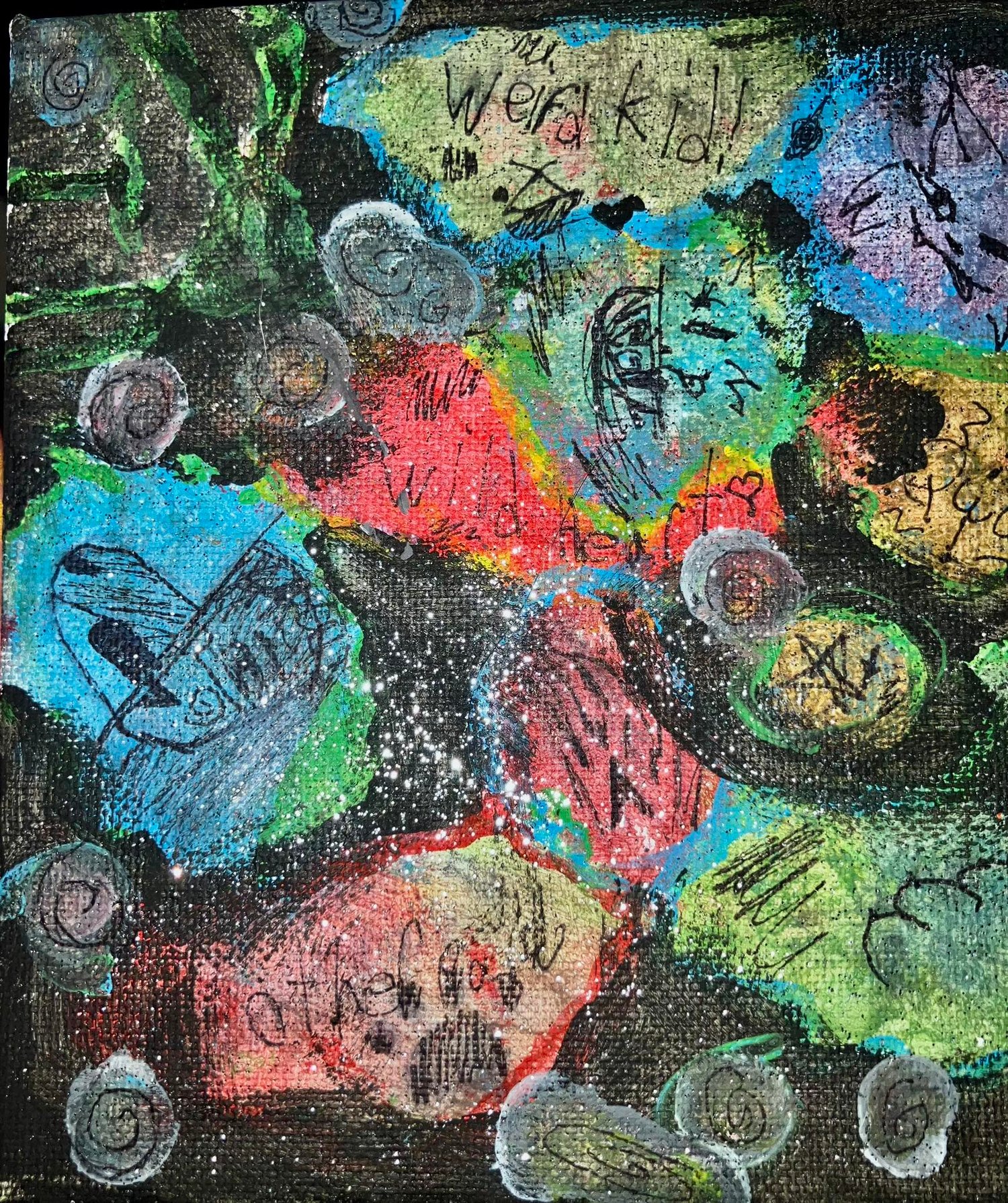
I’ve been staring at the picture my daughter sent me last night, over and over. I keep looking at it, noticing something new each time. I shared it on Facebook, not as a “look what my kid did on the fridge” post, but because this is real art. She’s ...
Read More
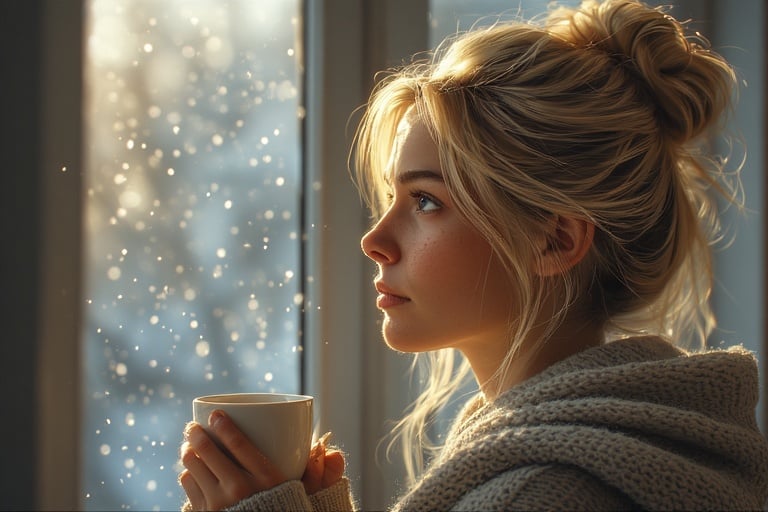
School was canceled today, not because the snow is dramatic or dangerous, but because it’s steady, the kind that doesn’t announce itself loudly but quietly makes a mess of roads and timelines all the same. It’s beautiful out there. That’s already be...
Read More
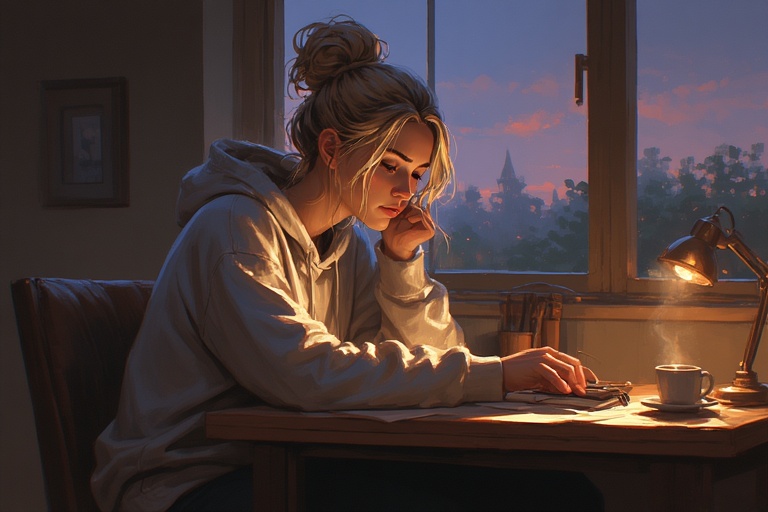
Monday morning arrived quietly, carrying weight I could feel in my chest. The past two weeks had stretched time into something unrecognizable. Sleep didn’t follow rules. Meals were reactive, not intentional. Days bled into each other without edges. ...
Read More
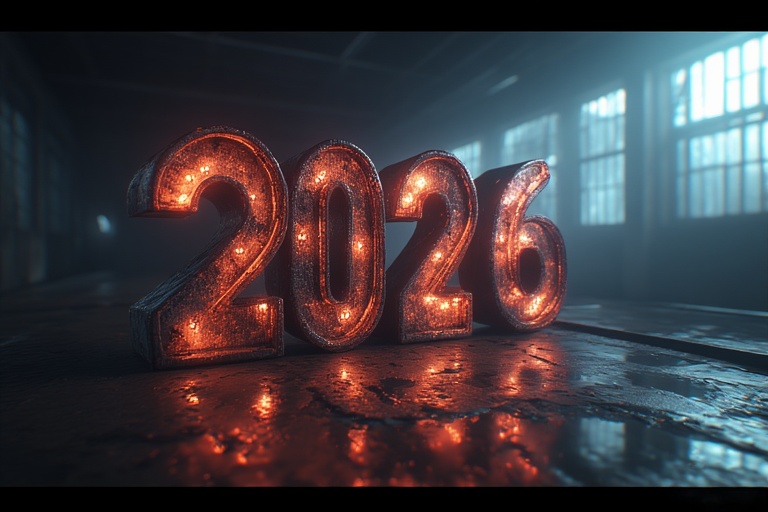
The calendar flipped quietly, without ceremony. No fireworks in my head, no resolutions taped to the fridge. Another year behind me, and somehow, still me, worn in places, stronger in others, acutely aware of how much the universe likes to test its ...
Read More
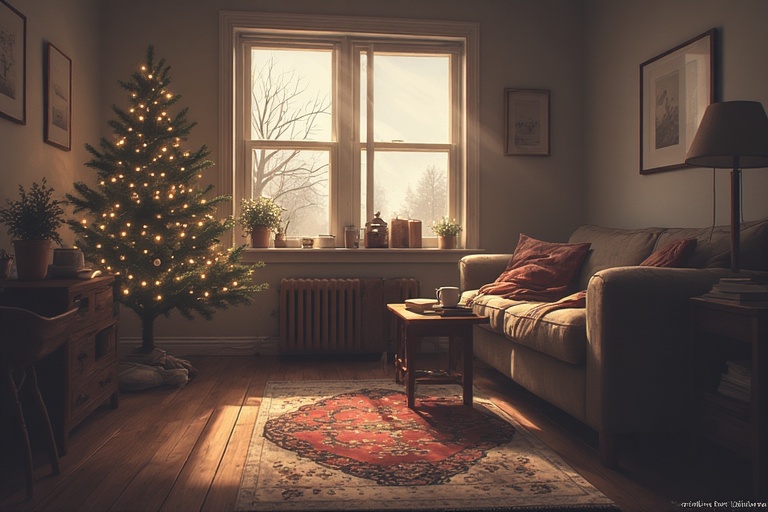
Three days after Christmas, and it’s Sunday morning. I’ve opened this page a few times since Christmas morning, then closed it again. I wrote once, about an unexpected walk, about cold air and movement and a moment that felt like a breath. What I di...
Read More
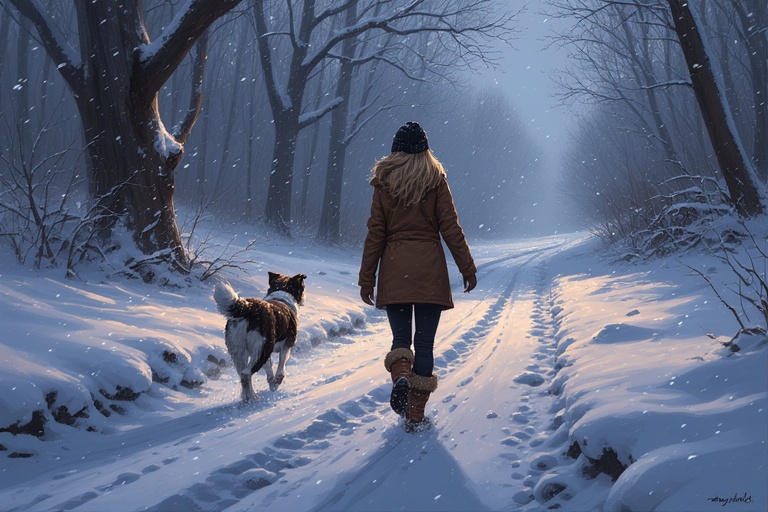
This morning, I made the decision to lace up my Bear Paw boots, the ones I’ve had for six years now. I got them from Nordstrom Rack using Afterpay, a payment plan that made them manageable without breaking the bank. At $250, they’re my pride and joy...
Read More
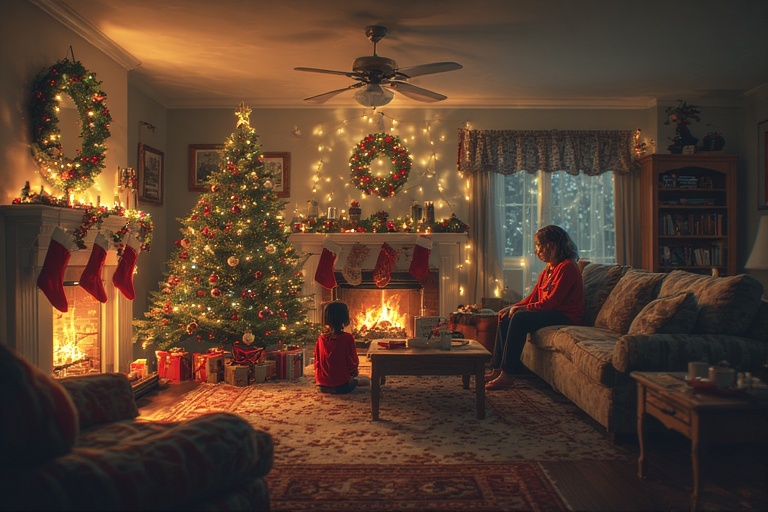
I’m sitting here with my coffee, waiting for the snow to stop. It’s falling steadily, the kind of snow that doesn’t make a scene but still slows everything down. The roads will clear eventually. The day will move when it’s ready. For now, there’s ti...
Read More
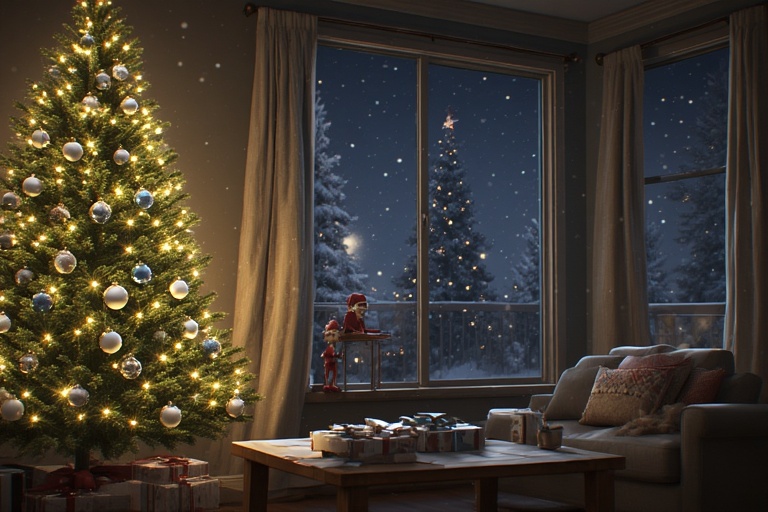
Tonight is the eve of Christmas Eve. That quiet hinge in the calendar where we can almost exhale. The rush hasn’t fully loosened its grip, but it’s easing. The lists are shorter now. What’s left feels manageable instead of menacing. I still have a f...
Read More
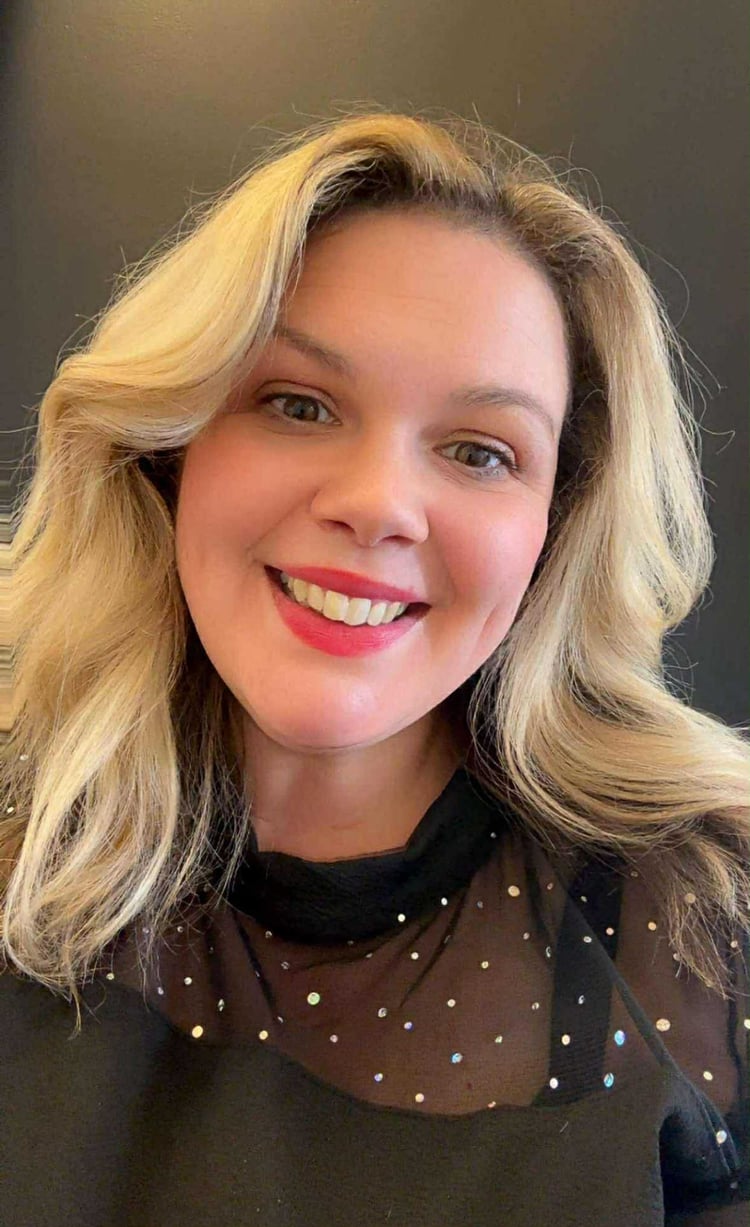
Hi, I'm Holli
A writer, storyteller, and chronicler of life’s messy, unfiltered moments. I write memoirs, reflections, and darkly humorous explorations of trauma, mental illness, and survival...often through the lens of Borderline Personality Disorder.
My books aren’t polished fairy tales; they’re raw, honest, and sometimes uncomfortable, but always meant to connect, resonate, and maybe even make you laugh in the middle of the chaos. Each story I share is a piece of my journey, a way to break cycles, and a reminder that no one is truly alone in their struggles.
Thank you for stopping by my store. I hope you find something here that speaks to you, challenges you, or simply makes you feel seen.
The Creators’ Showcase
Bobbi Roberts
My sister has always had a way of turning imagination into something you can hold... a story, a painting, a moment that feels brighter than before. She writes for children with the kind of heart that remembers what wonder feels like. She’s an artist I admire deeply, and someone whose creativity has shaped me more than she knows.
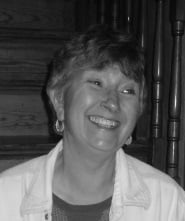
Ruth Fenton
Let me introduce my dear friend, whose book gave me the courage to find my own voice. Her presence is impossible to ignore... bold, inspiring, and unforgettable. Her words linger, sparking thought, laughter, and courage all at once. Sharing her work here feels like celebrating a voice that has truly shaped mine.
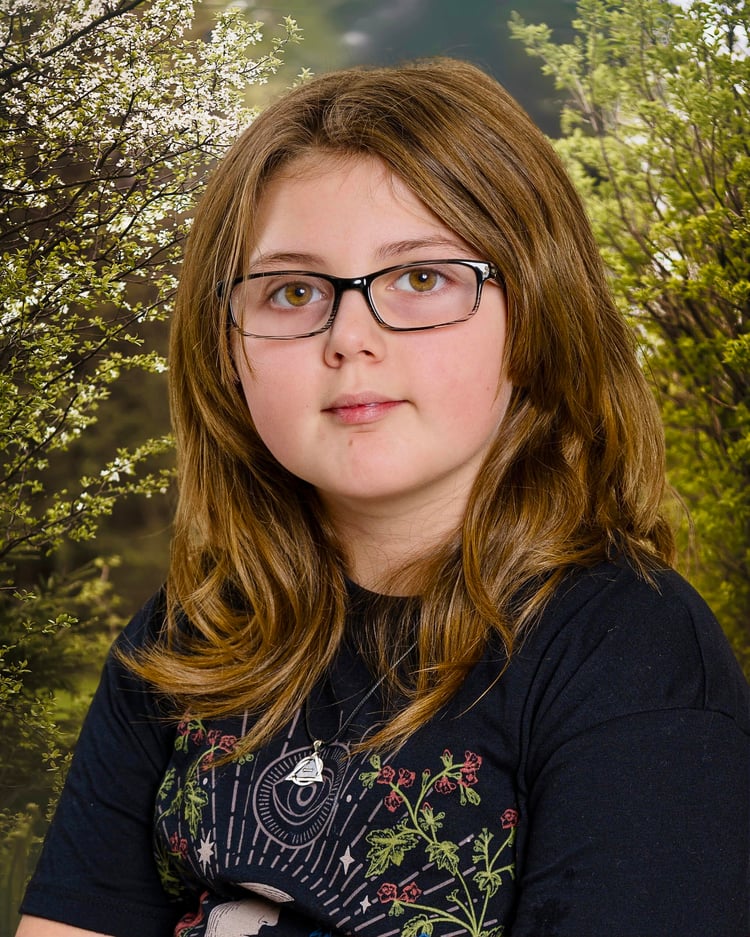
Gwendolyn Gayle
At just 10, my daughter has a gift for turning thoughts into art. Her creativity flows naturally, fearless and unrestrained, reminding us all of the wonder that comes with seeing the world through a child’s eyes. Her work shows courage, curiosity, and a spark of brilliance that can’t be taught... only discovered.
Meet Someone Special… Across the Pond
I’m excited to share the next section with you! This is where I get to shine a light on a friend across the pond whose work, creativity, and passion I truly admire. Honestly, I sometimes wonder if they’re secretly a superhero in disguise.
Take a look below and see for yourself—you’ll understand why I can’t stop raving about them.
The Chronically Offline Podcast
This isn't just another Discord server; it's a digital crypt where the terminally ironic, aesthetically chaotic and unreasonably opinionated meet.
The Chronically Offline Podcast Real talk for the terminally online mental health, politics & internet madness live
Unfiltered chats on life, mental health, relationships & internet drama. Hosted by izzy reminding you to touch grass
Between the Pages: BPD in Literature
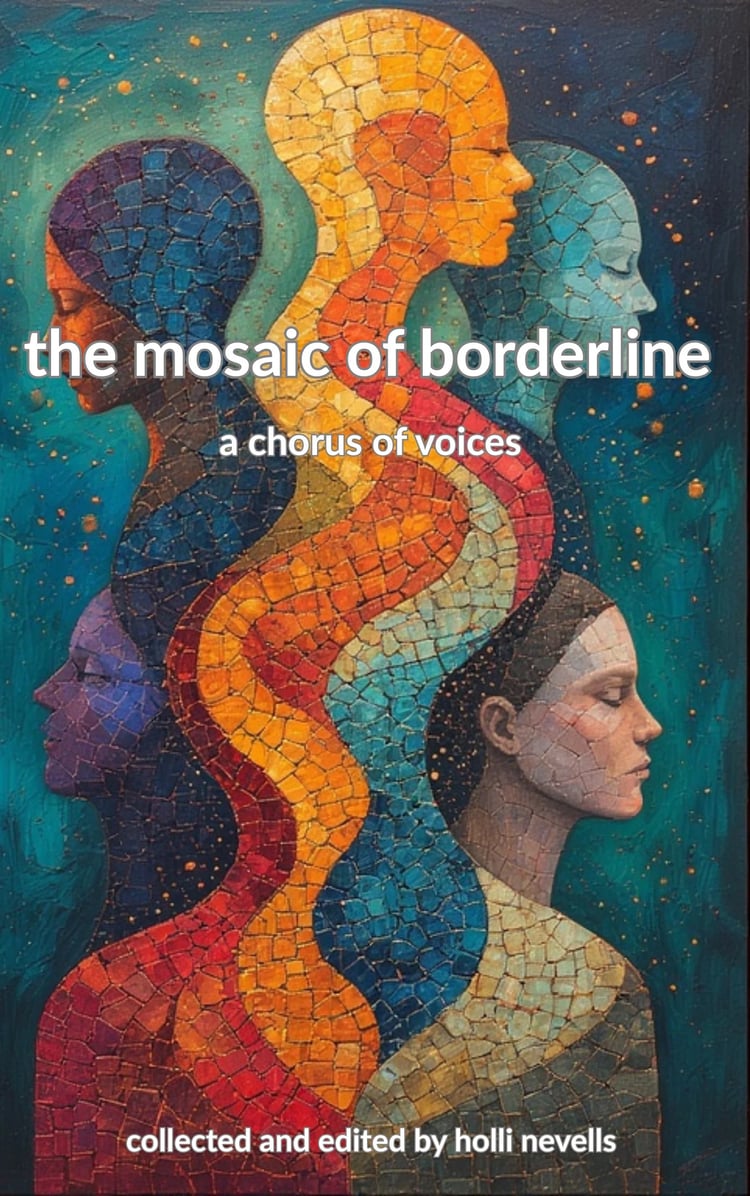
I’m joining Izzy’s podcast where we talk about my books and how they capture the chaos, creativity, and complexity of living with Borderline Personality Disorder and navigating relationships. From fiction to memoir, we explore the stories that reflect our reality — and the power of seeing ourselves on the page.
Chapters Brought To Life- Swipe to step inside each story
-
Breaking The Chain
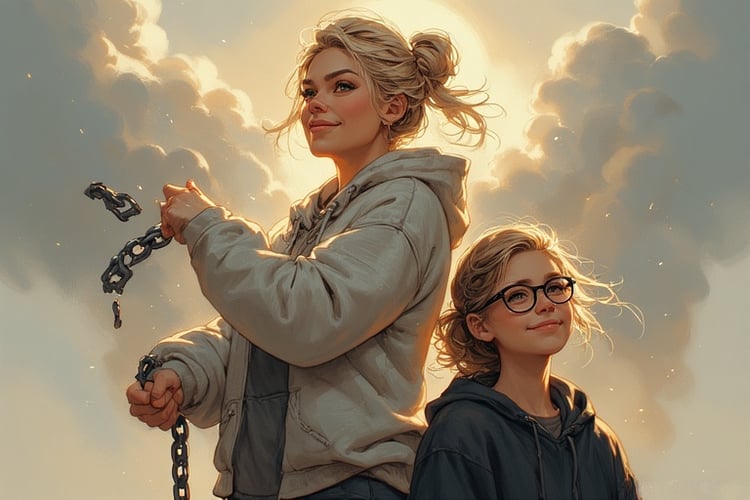
They say mothers with borderline personality disorder can’t really love their children. That we’re too wrapped up in ourselves, too unstable, too hungry for validation to give real, steady love.
But I know that’s bullshit.
I love my daughter more than I hate myself. I would give her my last breath if it meant she could take one more. I would burn down my own life to keep hers safe.
She’s ten years old, but she’s already had to grow up in ways I wish she hadn’t. There were nights I had to pull her aside and whisper to her that her father had been drinking too much, that she should stay in her room and keep the door closed. She learned too young how to read the signs in his eyes, how to watch his mood like a weather report.
She saw him put his hands around my throat, slam my head against the wall, the floor, the hearth. She heard the things he said about me when he thought she wasn’t listening, and the things he said to her about me when he knew she was. She’s watched me fall apart, even when I tried to be strong for her.
And God, I tried.
Because I know what it feels like to grow up in a war zone where the people who are supposed to protect you are the ones you need protection from.
I remember being her age. I remember lying in bed, hearing my mother scream from the other room—not words, just rage. I remember staring at the ceiling, holding my breath, waiting for the footsteps to come down the hall. The cold terror of knowing she was in a mood and I might be next, and I didn’t even know why.
I was always too much, or not enough. Too loud, too sensitive, too “dramatic.” I learned to fold myself into silence, to disappear inside myself. And still—still—it was never safe.
I was told I was lucky to be clothed and fed. That love was something earned, and I hadn’t earned it yet.
No one ever said, “You belong here.” No one ever looked at me and made me feel like just existing was enough.
So that’s what I fight against now. Every single day.
When I’m splitting, the pain is unbearable. The voice in my head tells me I’m worthless—that my daughter deserves better than a broken, messy mother like me. The thoughts creep in, dark and passive, whispering that maybe I’m not the one who should be here.
But then I look at her.
I see her face, the way she curls into my side, the way her eyes look to me for safety even when I don’t feel safe in myself.
And I’m terrified to leave her behind.
So I keep fighting. I keep breathing. I keep showing up.
Because even when my mind wants to give up, my love won’t let me.
I fight against the voice in my head that tells me I’m fucking this all up. That I’m broken and she deserves better. I fight the ghosts of my past that sneak out in my tone, in my temper, in the moments where I hear my mother’s voice coming out of my mouth.
I’m not always gentle. I have days where I snap too fast, where the overwhelm closes in and I say something sharp before I can catch myself. But I apologize. I always apologize. I hold her and tell her the truth—that I’m trying, that I’m still learning how to be the mother she deserves.
And she sees that.
She sees that I’m not perfect, but I’m present.
She sees that I keep showing up.
She sees that even when I’m tired and stretched thin and screaming inside, I still pack her lunch, still braid her hair, still tuck her in and tell her that she is loved.
That she is so loved.
I might not have had a mother who made me feel safe, but I will be that mother for her. I will build what I was never given.
It’s hard. Sometimes it feels impossible—like dragging myself barefoot through broken glass just to give her a floor she can stand on.
But I do it anyway. And I’ll keep doing it.
Because the chain ends with me.
Whatever it costs—my comfort, my pride, my blood—I will not pass this pain down. I will not let her grow up wondering if she is wanted.
She is wanted. She is worthy. She is safe.
And if all I ever do in this life is break the cycle and let her grow up whole, then I’ve already won.
-
How I Ruin Everything
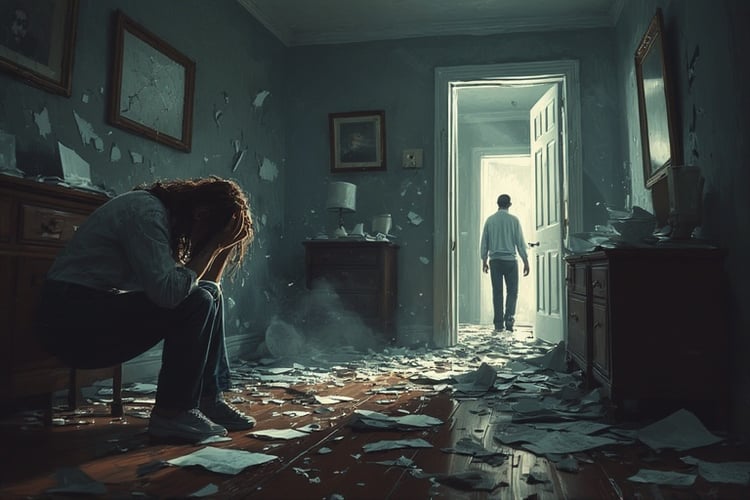
I’ve ruined every relationship I’ve ever had—not because I wanted to, but because I couldn’t tell what was real and what was just fear dressed up as truth.
I would swear—swear—that someone was pulling away from me. That their silence was proof. That their tired eyes meant resentment. That a one-word reply was them screaming, I’m done with you.
I’d watch someone walk across the room to grab their phone or get a glass of water, and I’d feel my chest cave in like I’d just been abandoned. My heart would start racing, my stomach would drop, and my brain would fill in the blanks with the worst possible narrative—because if I don’t know what’s happening, my mind makes sure it’s something terrible.
I don’t just think it—I feel it in my bones.
Like the air shifts. Like the temperature drops. Like love has died and nobody told me.
I know it sounds dramatic. I know it doesn’t make sense. But in that moment, logic isn’t even in the room. The fear takes over. The story in my head becomes louder than the person in front of me.
“They don’t want you.”
“They’re leaving.”
“They’re disgusted by you.”
It doesn’t come in gentle. It crashes.
And I react like someone just set fire to the foundation of my world—because that’s what it feels like.
So I act. I spiral. I accuse them of things they haven’t done. I beg them to stay, or I ice them out before they get the chance to go. I throw grenades into the middle of our connection and dare them to prove they’ll pick up the pieces.
I want proof that they still love me, but I test them in ways that feel like punishment. I want them to hold me, but I push them so hard they flinch. I watch their faces change—confused, hurt, scared—and I hate myself instantly.
But by then, it’s already happened.
That’s the hell of it: the mind lies, but it lies in my own voice.
The thoughts don’t come in as maybe or what if. They show up as certainty.
“This is definitely happening.”
“They’re gone.”
“You blew it.”
And I react like someone just slammed a door I’ll never get to open again.
I destroy the connection in the name of protecting it.
I try to control the damage by causing the damage—because at least then, I’m the one breaking it. At least then, I’m not sitting in that unbearable, shapeless fear.
And the worst part? I know.
I know what’s happening as it’s happening.
I can hear the voice of reason faintly begging me to stop. I can see the fear in their eyes. I can feel the weight of what I’m doing, but I can’t stop. Because to pause—to question the story I’ve already committed to—would mean opening the door to the grief underneath.
And that grief feels like death.
So instead, I break things.
I scream. I disappear. I poke the wound until the bleeding starts and then I cry about the blood.
I push people away so they can’t leave. I blame them so I don’t have to blame myself. I convince myself they never really loved me, because that lie is easier to survive than the truth:
That they did.
And I didn’t know how to believe it.
I’ve lost good people. Beautiful people. People who were trying. People who didn’t want to leave—but I made it so painful to stay, they had no choice.
Not because they stopped loving me.
But because I couldn’t tell the difference between their silence and goodbye.
-
Survival By Scrubbing
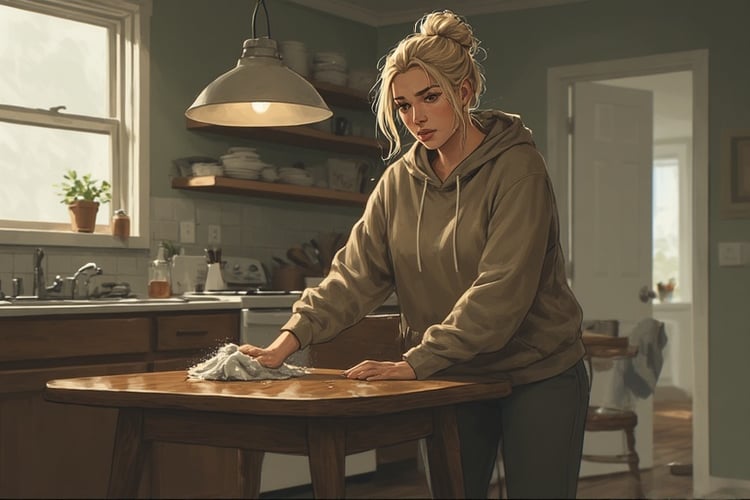
I don’t think people understand what cleaning means to me. It’s not just dishes or vacuum lines — it’s survival. It’s how I keep chaos at bay, how I silence the noise in my head. When I clean, I feel like I’m doing something right, something useful. Something that keeps me from falling apart. Maybe that sounds dramatic. But when you grow up in a house where mess meant punishment — or worse, where you had to parent yourself — keeping things in order becomes the only thing that makes sense.
Sometimes I think I was trained, not raised. Notes on the table after school with chore lists, expectations. There was no warmth in the routine — just orders. And when I didn’t follow them exactly, there were consequences. Not always big, but sharp. Sharp enough that I still feel them now.
When my mom was married to my dad, she had migraines frequently. Most of the time, if I wanted breakfast, lunch, or dinner, I had to make it myself. Somehow, that’s when I fell in love with cooking. We had four channels on the TV, and PBS was my favorite. I’d watch Great Chefs of the World, most often in French, not understanding a word but soaking it all in. Then I’d try it myself, frying eggs and talking out loud to myself in that quiet kitchen, pretending I was a chef. I was six years old. Cooking became my escape — my secret little world where I could create something just for me.
But neat and tidy? That wasn’t my thing. My room looked clean only because I shoved everything under my bed. Out of sight, out of mind. But it never worked. Mom always found it. When she did, it wasn’t a quick cleanup. It was an entire day of pulling everything out, sorting, scrubbing, and re-cleaning. That happened over and over again because I never really learned how to keep things clean the way she wanted. I just didn’t get it.
Sometimes I feel like cleaning is its own kind of mental disorder. I stress over backpacks being dropped in the middle of the kitchen floor, chargers lying around. Don’t even think about using my dining room table as a catchall for stuff you don’t want to put away at that moment. But here’s the thing — I don’t ask my girls to do any chores around this house. I clean everything. Bathrooms, floors, kitchen, living room, dusting, windows — all of it. The only thing I ask of them is to keep their rooms tidy. Not spotless — just no dirty clothes on the floor, throw away your trash, and make your bed. I even have a strict “no food upstairs” rule. Part of it is about obedience, sure, but mostly, I just don’t want a bug infestation. Some days I wonder if I’m being a drill sergeant or just trying to teach them a little responsibility — but I know it’s also about control. About keeping one part of this life in order so the rest doesn’t fall apart.
As a teenager, I dropped out during senior year. I went to get my GED, but when they looked up my transcripts, they told me I was only seven credits away from my diploma. Somehow, that sounded better to me than a GED — like maybe I hadn’t completely let go of the finish line. So I went back, took night classes, and earned my diploma while working two steady babysitting jobs and helping out in the kitchen of a Vietnamese restaurant.
Even then, I was still expected to clean the house and cook. And if I earned money babysitting, it didn’t really feel like mine. I was guilt-tripped into giving it up for bills because my stepfather was always between jobs. The guy had a mouth that got him fired more times than I can count.
Now I look around my house, and it would never be featured in Better Homes and Gardens. It’s lived-in, real, sometimes messy. But if someone knocked on my door unexpectedly, any moment of the day, I wouldn’t feel embarrassed by what they saw. It’s mine. I’m not rebelling against cooking or cleaning. Maybe I never needed to. Maybe it’s just the one thing I learned to do to survive — and somehow, it became a part of who I am.
But the truth is, there are days when I just don’t want to do anything. I want to quit cleaning for a week — just to see what happens, to let people notice what I really do around here. Not because I need a gold star or applause. I don’t. But some kind of quiet validation would be nice.
I know my partner in this world appreciates me. He’s said more than once that since he moved into my life, he feels less stressed. There’s no clutter. I do everything for him, and he tells me he sees it, he appreciates it. But some days, that’s not enough for me.
Sometimes, I feel like I have to keep this persona going — the one who always has the dishes done, the floors clean, the house in order. Because maybe the day I don’t do the dishes is the day he’s going to leave me.
That’s the borderline inside me, whispering in the back of my mind, feeding my anxiety and self-doubt. It turns cleaning from a chore into a lifeline — a way to hold onto the one person who’s steady, who sees me. But it’s exhausting, and it’s lonely.
So I clean. And I cook. And I keep everything in its place — because sometimes, that’s the only way I know how to survive.
It’s not just about being proud of my clean house. It’s about control. It’s about showing the world — or maybe just myself — that I can keep everything from falling apart. That I can be good enough to be chosen. To be stayed for.
But the truth is, I’m starting to see it — he’s not going to break up with me because I didn’t do the dishes. He’s not keeping tally marks somewhere, waiting for me to slip up. The pile of clean clothes that’s been sitting on the bed in the office-slash-spare-room isn’t some ticking time bomb.
We all know it takes three to five business days, minimum, for laundry to get folded around here. Sometimes longer if life gets heavy. Out of sight, out of mind — it’s still one of my oldest tricks. Shut the door and pretend the pile doesn’t exist for a while.
And you know what? He doesn’t care. He still kisses me goodnight. Still tells me he feels calm here, safe here. Still thanks me, not just for what I do, but for who I am.
I’m starting to believe it’s not the dishes or the vacuum lines or the clutter-free counters that make him stay. It’s me.
And that’s a hard thing to believe when you’ve spent your whole life thinking love is conditional. But I’m trying. I really am.
-
Second-Degree Lessons
I was in first grade the first time I burned myself.
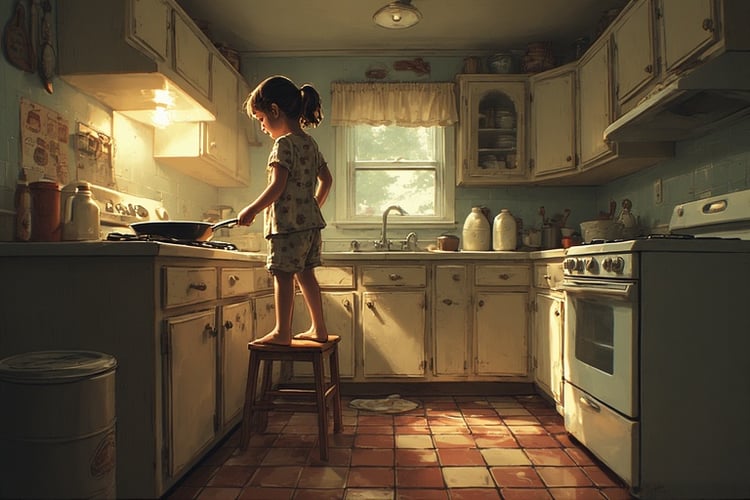
I was trying to cook eggs before school, using the small pan on the front burner. My dad was probably at work. My mom was still asleep. I was getting myself ready, like always. I liked my eggs over medium. I’d seen it done on PBS and figured out how to flip them without breaking the yolk. I cracked the eggs into the pan, just like I’d seen on TV, and reached for the handle—without realizing how close it had been sitting to the flame. When my skin met the scalding metal, pain shot up my arm like lightning. I jerked back, causing the yolks to break—guess I was having scrambled eggs now—shaking out my hand, trying to pretend it wasn’t what it was. But it was already red and swelling. Already blistering. At school, the pain wouldn’t stop. I went to the office to see the nurse. She examined my hand, pressed her lips into a line, and picked up the phone. I sat on the bench outside the office, swinging my feet and staring at the carpet. Waiting. Wait time feels different when you’re a kid. Especially when you’re dreading something. The tick of the clock feels louder. The walls closer. I knew she was coming, and I wanted her to—because it hurt—but I also didn’t. Because I knew what would come after. When she finally arrived, I followed her to the car and we drove to the doctor’s office. I had a second-degree burn. I don’t remember her words on the ride there or the ride back, but I remember the tone. Harsh. Clipped. Like I’d embarrassed her. Like this was something I’d done to her. She got called out that day—by a nurse, by a doctor, by people with questions about why a six-year-old was cooking her own breakfast before school. And when we got home, I got in trouble. Not for the burn. For being seen.
The second time I burned myself, I was in third grade. By then, we had finally gotten hooked up to town water. Before that, we didn’t have any running water at all. No well. No pipes. For the first few years of my life, we filled rinsed-out milk jugs at a store in town that had an outdoor spigot. We’d line them up by the back door like soldiers and ration them for drinking, washing, and flushing the toilet. It wasn’t glamorous—it was survival. We still didn’t have a hot water heater, so to do dishes, we boiled water on the stove. That was the routine. That was the job. I was eight. And that night, the job was mine alone. The dishes were done daily. Sometimes my sister washed and rinsed while I dried and put them away. Sometimes we switched. But that evening, it was just me, dragging a chair up to the stove and trying to keep things orderly. I wanted to do it right. I always wanted to do it right. I don’t remember what was in the sink—probably greasy pans or a pile of plates—but I remember the pot. It was heavy and hot, and I lifted it carefully, trying to steady it just like I’d seen adults do. I didn’t understand physics yet. I didn’t know that if the pot was facing me, and the stream of water hit the curve of a spoon, it could send boiling water shooting straight back. And it did. The water bounced off the spoon and onto my stomach, burning through my shirt, branding my skin. I almost dropped the pot. It clanged against the sink. I stood there, stunned, my breath locked in my throat, looking over my shoulder to make sure nobody heard—my shirt clinging to me like a second skin. I peeled it off and looked at the angry, bubbling wound blooming across my stomach. And then I did what I was taught to do. I didn’t cry. I didn’t scream. I didn’t tell. I didn’t change my shirt, because I would’ve had to walk through the living room—past my mother—and answer questions. So I finished the dishes. The next day at school, the burn was too painful to ignore. Every time I sat or leaned forward, it screamed. So I went to the nurse. She lifted my shirt and drew in a quiet, startled breath. Another phone call. Another pick-up. Another long car ride where silence was louder than shouting. Another second-degree burn. And again, I got in trouble. Not for being clumsy. Not for being careless. But for making it known. For being visible. For being a kid with blisters on her stomach and adults asking questions. I wasn’t reckless. I wasn’t stupid. I was just a child doing the job of someone who should have been looking out for me. And when the consequences came, I bore them alone. That’s the thing about fire. It leaves a mark, but it also teaches. It teaches you not just to fear the heat—but to fear what happens if someone finds out you touched it. What I learned was simple: if I got hurt, I had better learn to hide it. Not because no one cared—but because they did. And it made them uncomfortable. It made them angry. My pain made their shame too visible. So I burned. And I stayed quiet. And I learned how to carry that silence with me, like a scar only I could feel.
-

Little Red Riding Hood Didn’t Get Lost
Forget the fairy tales—the cape, the forest, the wolf. That bullshit was never for me. Those stories are sugar-coated lies so the world can pretend monsters only live in the dark woods, not inside your own skin.
No.
The woods I walked were an inferno. The wolves weren’t hiding; they were ripping me apart from the inside out, tearing my insides to shreds, chewing through my ribs like I was their prey—and sometimes, I was.
I was the fire and the fuel.
The smoke and the ash.
The hunter and the hunted.
Every damn day was a war zone. And the bullets were the voices—harsh, biting, relentless—shooting through my mind with words sharpened like broken glass.
You’re worthless.
You’re a mistake.
You deserve every bit of this pain.
They weren’t whispers. They were screams.
The monster wasn’t some shadow in the bushes. It was the venom dripping from my own teeth.
The wolf inside me was a savage beast clawing at the door to my sanity, snarling and snapping until the world faded and only the chaos remained.
I have burned through every last scrap of self-love I ever tried to hold onto. I have watched it turn to smoke in my lungs, suffocating, choking me until I was drowning in my own hate.
I have screamed until my throat was raw, begging for relief, begging for a moment without the thunder of rage crashing in my head.
But relief doesn’t come for people like me.
Because sometimes the rage isn’t anger at the world—it’s a storm of hate directed inward, so fierce it sets your whole being on fire from the inside out.
I hate her—the girl who makes the wrong choices over and over like it’s some sick joke. The girl who lets the wolf win just because she’s tired of the fight. The girl who knows every cut, every scar, every failure like a twisted map tattooed on her skin.
I hate her with the kind of fury that rattles my bones and shatters what’s left of my hope.
And I hate myself for hating her.
It’s a black hole of fury and despair where no light can survive.
Some days, I want to crawl into that hole and let it swallow me whole.
Because fighting the war inside is like trying to hold back a tidal wave with your bare hands.
Because the wolf’s teeth sink deeper every time I blink.
Because the voices—oh, the voices—tell me I’m already dead inside, a walking corpse rotting from the inside out.
And the sickest truth?
I almost believe it.
I almost want to.
Because believing the wolf feels easier than dragging myself out of the wreckage.
Because sometimes surviving feels like slowly bleeding out while wearing a crown of thorns made of my own mistakes.
But here’s the brutal fucking truth nobody wants to say:
Survival isn’t pretty.
It’s not a fairy tale with a prince or a magic wand.
It’s a fucking war—messy, violent, and ugly as hell.
It’s dragging your shattered body through the flames, falling apart and putting yourself back together over and over, even when every piece you pick up cuts your hands.
It’s screaming into the void so loud your own echo scares the hell out of you.
It’s raging until your lungs burn, because the only way to keep going is to set your own goddamn soul on fire.
I am still that girl—wild, broken, screaming at the sky.
I am still the wolf and the fire and the ashes.
And if that scares you, good.
Because maybe now you’ll understand what it really means to live with the wolf inside you—how it feels to burn from the inside out and somehow still stand, bleeding, angry, and alive.
-
The Mirror Tells It Ugly
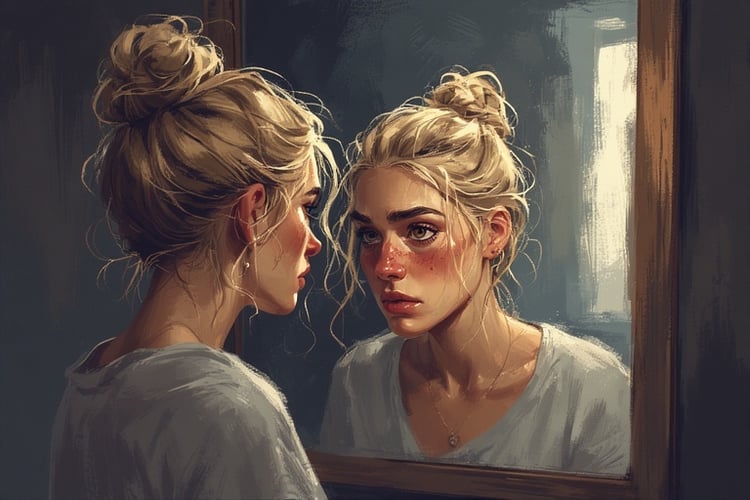
Some mornings the dark circles tell me everything — how I slept, how I didn’t, how the years are creeping in like they’re shoving me down a flight of stairs and I’m too tired to catch myself.
I look in the mirror and don’t recognize the woman staring back. Not really. She’s familiar, sure — but there’s a weight there that wasn’t always, a set of lines carved by silent wars and heartbreaks nobody saw coming. The glass holds her steady, but I want to smash it. I want to break it into shards so sharp they cut through the numbness, through the years I wasted pretending I could outrun time or pain.
And then there’s the worst part. Some days — some goddamn cruel mornings — I see my mother in me. Not like a sweet memory or a gentle ghost. But like a warning. A reminder. Like she’s shouting from some dark corner of the past, “You’re her. You’re exactly her.”
And it’s not that I hate it. No, it’s worse. It terrifies me.
Because I see the same tired eyes that carried too much grief. I see the same stubborn jaw that clenched through all the bullshit. I see the same goddamn fight, but also the same weariness — the slow unraveling that no one talks about.
I hate how my body remembers her. How my face folds into hers when the light hits just right, mocking me with the truth I don’t want to admit: time doesn’t heal, it only changes the shape of your scars.
I want to scream at the mirror. I want to rage at the woman who looks back with that tired, worn-out stare. I want to shake her awake and tell her to stop pretending she’s fine — because she’s not. Not really. Not ever.
But she doesn’t move. She just watches, and I realize she’s me. All of me — raw, flawed, and broken in ways I’m still trying to understand.
I think about all the mornings I’ve spent trying to hide behind makeup, coffee, the dog’s silly antics. The mornings I put on a smile like armor and pretended the dark circles didn’t scream at me with every blink. The mornings I wished I could rewind, do it over, say something different, be someone better.
But the mirror doesn’t give second chances. It only shows what is — no matter how much you want to look away.
Some days, I think the mirror is a cruel joke, a tool designed to remind you of every mistake, every scar, every ugly truth you’re trying to bury. Other days, I think it’s a mirror for the soul — a place where the bullshit falls away and you’re left staring at the raw, unfiltered you.
And the raw truth? It’s brutal.
I’m tired. I’m scared. I’m angry. Angry at the world, at time, at myself for surviving but not thriving. For carrying my mother’s ghosts like chains around my neck, dragging me down every time I try to breathe.
I’m tired of pretending that growing older is graceful or that scars fade. The truth is, the cracks deepen. The pain gets quieter but no less sharp. The weight presses harder against your ribs until you wonder if you’ll ever catch your breath again.
But here’s the thing — I’m still standing.
Even when the mirror shows me a woman who looks like she’s been through hell and back, I’m still here. Still breathing. Still fighting. Still raw and unapologetic in my pain and my survival.
I don’t need the mirror to tell me I’m broken. I know. I wear it like a badge of honor — every dark circle, every line, every flicker of exhaustion etched on my face is proof I lived, that I endured, that I refused to disappear.
Because disappearing would be easier.
Easier than facing the quiet mornings alone with a reflection that never lies. Easier than feeling the weight of a mother I lost too soon pressing down on my skin like a second skin I can’t peel off. Easier than owning the parts of me that are ugly, messy, and terrifyingly real.
But I don’t disappear.
I stay. I look. I endure. I rage and cry and keep coming back to the mirror every damn day.
Because somewhere in that glass — beneath the tired eyes and stubborn jaw — there’s a woman who refuses to be erased.
-
Mother Nature’s Wrath
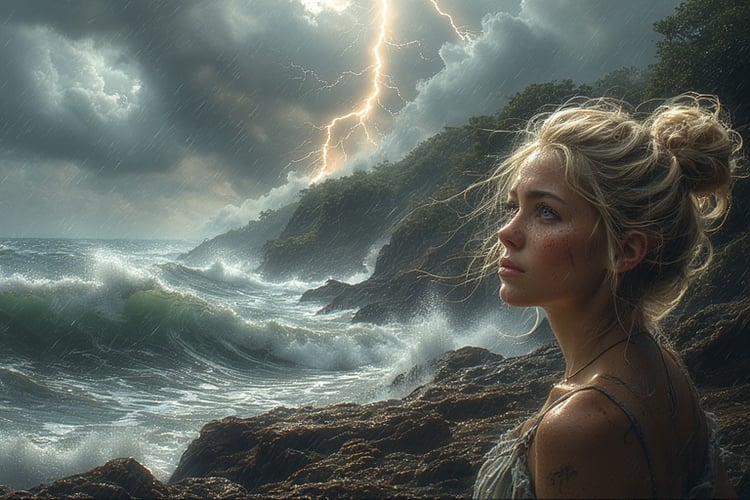
There are days when I swear storms are the only thing that make sense to me. The thunder, the lightning, the chaos, the destruction, the beauty. They demand respect. They do not ask for permission. They do not explain themselves. They simply arrive, and you have to deal with them. I think I’ve always admired that, probably because I’ve never had much control over what storms rage inside me.
When I was fourteen, I was in a group home for a few months, and the one thing I remember more than anything else from that time was my obsession with wanting to be a storm chaser. Part of it was because Twister had come out the year before. We didn’t get the VHS until 1997, and I’m pretty sure I watched it until the tape felt thin, rewinding and playing it again and again. While other kids were sneaking music videos or late-night cable, I was rewinding Dorothy flying through a tornado. It didn’t feel like a movie to me. It felt like a calling.
One of the staff members at the group home used to joke with me about it. “You better get some good running shoes if you’re gonna chase storms,” he’d say, smirking at me like he thought it was just another teenage phase. He couldn’t know that I wasn’t joking. I wasn’t playing around. I was deadly serious. Almost thirty years later, I still kick myself for never pursuing meteorology or the sciences. If I had, maybe I would have found a place where my chaos and Mother Nature’s chaos could live side by side.
But instead, I stayed in Maine, where we get scraps of storms, watered-down versions of the real thing. Living on the coast for so many years, the weather was wild enough to keep me fascinated, but hurricanes rarely arrived in their full force. The waters up here are colder, and by the time a hurricane makes its way north, it usually softens into a tropical storm and spins back out into the Atlantic. What we got were tantrums—strong winds that rattled windows, sheets of rain, and an angry ocean that smashed against the rocks hard enough to make you feel small.
Those storms could take out the dead standing trees in one good blow. I remember watching from my window as one snapped in half, the view opening up where I had once been closed in. There were perks to the destruction—sometimes you saw more sky, more horizon—but mostly it was just a reminder that nature makes the rules.
It was different, though, from the coast compared to the interior. On the coast, the air was cooler, breezier, less humid. That kept most of the big thunderstorms away, and when they did show up, they didn’t always have the teeth I wanted them to. Moving inland gave me something the ocean never could: humidity. My hair hates it, frizzes up like it’s fighting its own private war. But me? I love it. Because humidity means thunder. Humidity means the sky is heavy and waiting. And when a storm does break, the thunder doesn’t just clap—it rumbles, low and long, deep enough that I can feel it in my chest. Like it’s knocking on the door of my ribcage, asking to be let in.
I’ve always watched storms with the kind of intensity most people reserve for emergencies. The small thunderstorms that make other kids shrug? I’m leaning out the window, heart hammering, adrenaline flickering through my veins. Sometimes I think of Lieutenant Dan in Forrest Gump, yelling, You call this a storm? Come and get me, you’ll never take me alive! That would be me. The monster inside me would be right there, snarling, insisting that the wind and rain are enough to level towns. Even a little hum of a thunderstorm feels monumental when you’ve lived with your own internal chaos, when every gust of wind is a reminder that the world is bigger and louder than your cage.
I remember one night when my second husband told me about his fourteenth birthday. He grew up in western Massachusetts, and on that day an F4 tornado tore through part of the Berkshires. He was sitting on the deck of a relative’s house, eating barbecue, and he said the sky turned green. Everything had that strange, unreal hue—like a filter was pulled over the world. The tornado didn’t touch down close to them, so they weren’t in immediate danger, but they were still there. They saw it. They felt it.
I should have been glad he was safe, grateful he lived to tell the story, but what I felt instead was jealousy. Not anger, not resentment toward him, but this deep, gnawing jealousy that he got to see what I have only ever dreamed of. I wanted to be there in 1995, sitting on that deck, watching the sky bruise into something unnatural, feeling the green light press down on my skin, waiting to see what might drop out of it. That kind of awe stays with a person. And I wanted it to stay with me.
It sounds ridiculous, maybe even heartless, to admit I’ve wished to be closer to something so destructive. I know tornadoes are not playthings. I know they devastate whole communities, take lives in an instant, and leave nothing but rubble and grief. I do not wish that loss on anyone. But still, there’s something about their power that speaks to me. The unpredictability, the chaos, the way they demand your attention and strip everything bare. I recognize that. Because it feels like looking in the mirror.
Inside me, there is a storm that never quite ends. A monster, sleeping sometimes, raging other times. And much like the weather, I can’t always predict when it will break. It can be quiet one moment, then roaring the next. People don’t always understand why the sky in my chest changes without warning, why a single shift in tone or a delay in a text message feels like lightning splitting me in two. They don’t hear the conversations I have in my head, whispering with the monster, bargaining with it, telling it that the people I love aren’t villains just because they didn’t text back fast enough. That they’re busy, that they’re working, that it doesn’t mean I’ve been abandoned. I try to be the meteorologist of my own storm, explaining to myself that this is just weather, that it will pass.
Sometimes it works. Sometimes the thunder quiets, and the skies clear, and I can breathe again. Other times, I lose power just the way a house does in a storm, sitting in the dark, waiting for the lights to come back on.
The thing about storms is that they don’t apologize. They don’t check in to see if it’s a good time. They don’t care what else is going on in your life. They just arrive, and they make you deal with the wreckage. I think that’s why I both fear and admire them. They have no shame in their destruction, no guilt in their force. They are what they are, unapologetically.
Sometimes I wonder if my fascination with them is just me looking for a way to make peace with myself. If I can respect the wrath of nature, maybe I can learn to respect the wrath inside me, too. Maybe I can stop fighting the storms and instead learn how to watch them, endure them, and, when I’m lucky, even find something beautiful in them.
Because storms, for all their fury, always pass. The skies always clear. And maybe that’s the real lesson in all my chasing and longing. Not that I need to stand in the path of a tornado to feel alive, but that I need to remember the chaos will never last forever. The monster may rage, the sky may bruise, the trees may snap in two—but the calm always comes back, too.
And maybe, just maybe, I can learn to live with both.
-
It's Not Bipolar, Thanks
Stop telling me I have bipolar disorder.
You don’t know what you’re talking about.
You watched a TikTok. You read a tweet. You heard I had mood swings and decided that was enough evidence to armchair-diagnose me like some kind of WebMD vigilante. Except you’re wrong. Loudly. Repeatedly. And honestly, I’m tired of explaining it.
So let’s do this one more time — for the people in the back.
Bipolar disorder is a mood disorder. It’s based in biology — a neurological, chemical imbalance in the brain that causes distinct, prolonged episodes of depression and mania. Not minutes. Not hours. Episodes. Days. Weeks. Months. The kind of depression that makes you catatonic. The kind of mania that keeps you awake for three days and makes you believe you’re invincible, euphoric, impulsive, or completely out of touch with reality.
It’s not a reaction to being hurt.
It’s not a bad week.
It’s not “dramatic.”
And it doesn’t flip on and off like a light switch.
Borderline Personality Disorder? Entirely different beast.
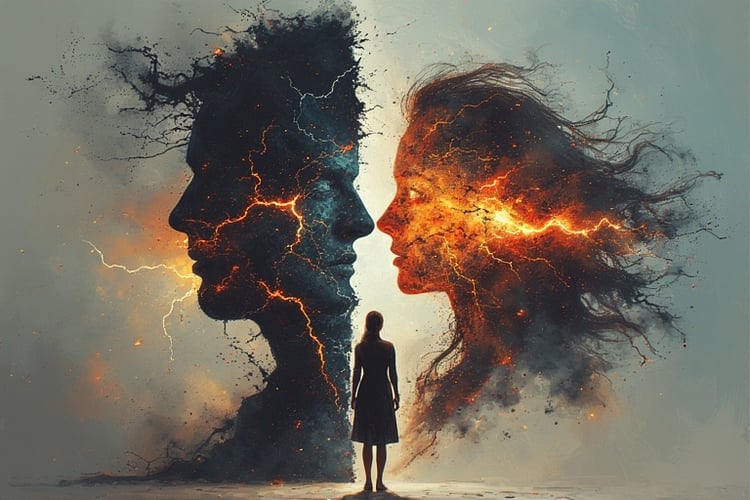
It’s not a chemical disorder — it’s a trauma disorder. A relational disorder. A wiring of the self that was shaped in chaos and fear and abandonment. It’s about identity, attachment, rejection sensitivity, emotional dysregulation, black-and-white thinking, impulsivity, and a desperate, relentless need for connection… that we sometimes destroy ourselves.
We don’t have episodes — we have triggers.
We don’t cycle — we react.
Instantly. Sometimes wildly. Sometimes silently. Sometimes both in the same hour.
It’s like your entire nervous system is covered in third-degree burns. Every touch, every shift in tone, every perceived slight feels like someone’s pouring acid on your skin. And you’re expected to smile. To be normal. To act like the fire doesn’t hurt.
With BPD, your sense of self is fragile. Who you are can shift depending on who you’re with. You can feel adored at 10 a.m. and discarded by 10:03. A word, a look, a tone of voice can spiral you into panic or rage. And yeah — that looks like “mood swings” to someone who doesn’t know the difference. But they are not the same thing.
People with bipolar might go manic and max out their credit cards on delusions of grandeur.
People with BPD might go into a shame spiral because their partner took too long to text back and now they’re sobbing, convinced they’re unlovable, and wondering if they should just disappear altogether.
Bipolar looks like climbing the highest mountain in your mind only to fall off the other side into the deepest pit.
BPD looks like clinging to the edge of a cliff with bloody fingers, praying someone will pull you up — and the second they do, panicking and pushing them away.
People with bipolar can’t control their manic or depressive episodes — they need medical treatment to stabilize the brain chemistry that’s misfiring.
People with BPD often can’t control how they interpret reality — because our brains are constantly scanning for signs that love is leaving. That we’re too much. That we’ll be abandoned. And when we sense it? We split. From love to hate. From everything to nothing.
You know how many of us have been misdiagnosed?
How many have been medicated for the wrong thing, while our actual needs went ignored or dismissed?
Too many.
Because someone — a therapist, a doctor, a friend — said “bipolar” and called it a day. Because “mood swings” are easier to spot than the invisible damage of trauma. Because nobody wanted to look closer. Because people still think trauma has to look like bruises to be real.
You know what the real difference is?
I don’t owe you this explanation.
But I wrote it anyway.
Because the truth deserves more than your lazy diagnosis.
Because I deserve more than being stuffed into the wrong story.
And because someone out there is reading this and realizing — maybe for the first time — they’re not crazy.
Just wounded.
Just surviving.
Just human.
FAQs
-
Right now, I handle fulfillment within the U.S. because international shipping costs are often higher than the books themselves. Until I can find a fair and reliable way to ship overseas, I’m keeping orders domestic to make sure everything arrives safely and affordably.
-
Orders printed on demand and are shipped through Amazon. Once I receive your tracking number, I’ll add it to your order so you can follow your package. This is typically 10-14 days.
-
Orders cannot be changed or canceled once they’ve been placed, so please double-check your information before confirming your purchase.
-
Yes! There’s an additional option you can add to your cart for a signed or personalized copy. Please note that these take about an extra week to ship. Amazon prints and ships the books to me first, and then I sign and mail them directly to you, which is why there is an additional cost for this service.
-
In the order they’re listed on my website. While the books aren’t written in a strict chronological timeline, that’s the order I wrote them—and it follows a natural emotional progression. Reading them that way lets you experience the same evolution I did while writing them.
-
Yes, many of my pieces explore trauma, grief, and mental health. I try to approach those subjects with honesty and care. If you’re in a tender place emotionally, take your time, step away if you need to. Healing isn’t linear.
-
Everywhere. Conversations I’ve had, people I’ve loved, mistakes I’ve made, things I wish I’d said. I don’t chase inspiration, it usually finds me when I’m still enough to listen.
-
Usually early morning with coffee in hand. It’s quiet, just me and my thoughts. I talk into my phone more than I type...so it’s funny to call it “writing” when no pen ever touches paper. But that’s how most of my work starts: raw voice notes that eventually turn into something that feels like me.
-
I’m truly honored that my work resonates and makes you feel seen. I’m not a licensed therapist, I’m not a recovered Borderline, and I’m not qualified to give personal advice. I’m just a messy human sharing my words. Because of that, I can’t provide one-on-one guidance or therapy. I hope my books and website still offer a space where you feel heard.
-
If you are struggling or experiencing thoughts of self-harm, it’s important to reach out immediately. Here are some resources you can contact for support:
- National Suicide Prevention Lifeline (U.S.): Call or text 988, available 24/7.
- Crisis Text Line (U.S.): Text HOME to 741741, available 24/7.
- International Support: You can find hotlines worldwide at https://findahelpline.com.
You do not have to face this alone. Reaching out is a sign of strength, and trained professionals are ready to listen and help.