
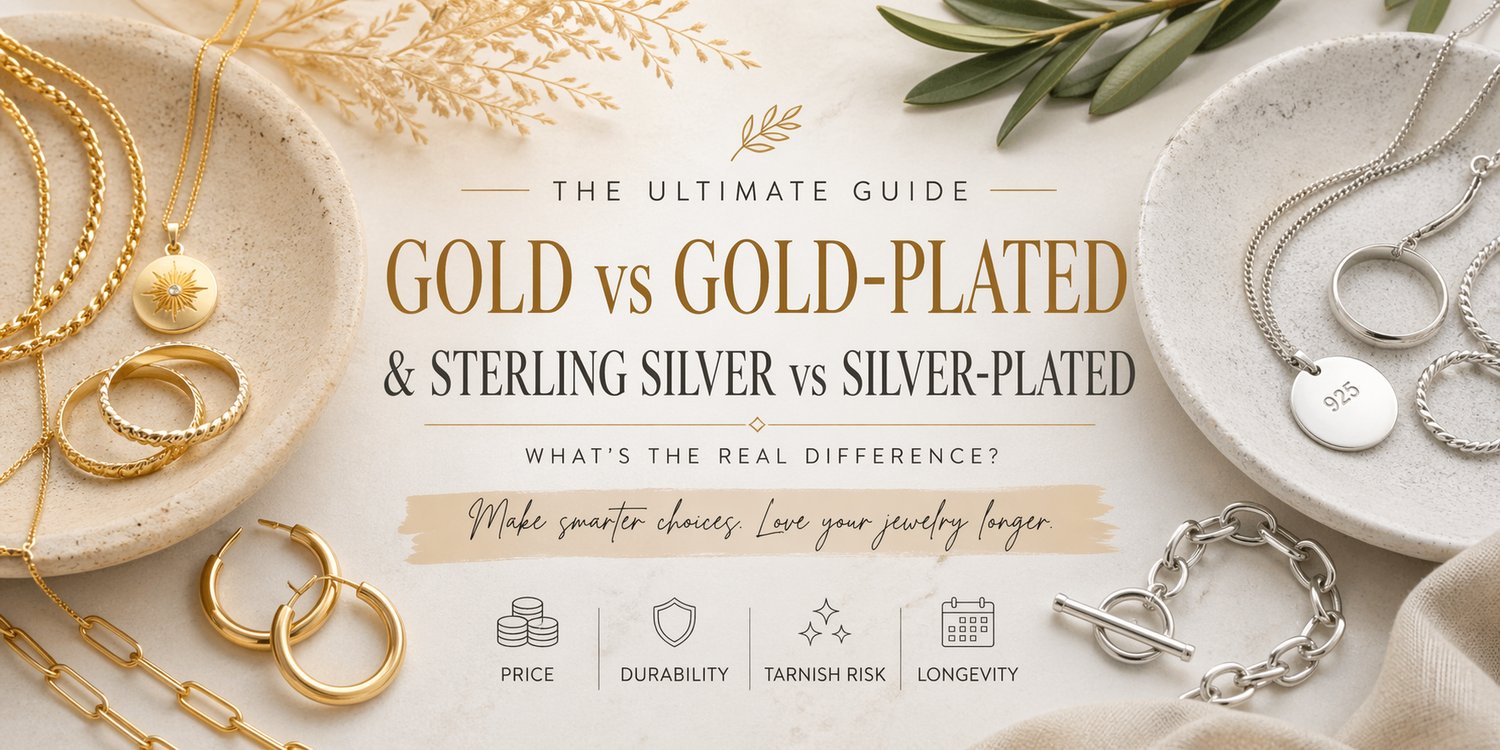
When shopping for jewelry, you’ve probably seen terms like gold-plated, sterling silver, or 14K gold—but what do they actually mean? And more importantly, which one is right for you?
In this guide, we’re breaking it all down in a simple, no-nonsense way so you can shop smarter, care for your jewelry properly, and choose pieces that truly fit your lifestyle.
✨ Gold Jewelry: Plated vs Solid
🟡 Gold-Plated Jewelry
What it is:
A thin layer of gold bonded over a base metal like brass or copper.
Pros:
- 💰 Budget-friendly (great for trend pieces)
- ✨ Looks like real gold at first glance
- 🎨 Wide variety of styles and designs
- 🧡 Perfect for occasional wear
Cons:
- ⏳ Can tarnish or fade over time
- 💧 Sensitive to water, sweat, perfumes
- 🔄 May need replacing after heavy use
Best for:
Fashion-forward shoppers, seasonal styles, and affordable everyday looks.
🟡 Solid Gold Jewelry
What it is:
Jewelry made entirely of gold alloy (not just coated).
Pros:
- 🕰 Long-lasting (can last generations)
- 💧 Won’t tarnish or corrode
- 💎 Higher resale and investment value
- 🌿 Hypoallergenic (especially higher karats)
Cons:
- 💸 Expensive
- ⚖️ Softer metal (can scratch, especially 18K+)
Best for:
Heirloom pieces, wedding jewelry, and long-term investment.
🟡 Types of Gold (Karats & Colors)
- 24K Gold: Pure gold (very soft, deep yellow)
- 18K Gold: 75% gold (rich color, slightly more durable)
- 14K Gold: 58.3% gold (most popular—durable + beautiful)
- 10K Gold: 41.7% gold (strongest, more affordable)
Gold Colors:
- Yellow Gold: Classic, warm tone
- White Gold: Mixed with metals like nickel/palladium, often rhodium-plated
- Rose Gold: Copper alloy gives it that romantic pink hue
🌙 Silver Jewelry: Plated vs Sterling
⚪ Silver-Plated Jewelry


What it is:
A thin coating of silver over a base metal.
Pros:
- 💰 Very affordable
- ✨ Bright, shiny appearance
- 🎁 Great for trendy or gift items
Cons:
- ⚫ Tarnishes faster than sterling
- 🧴 Sensitive to chemicals and moisture
- 🔄 Wears off with time
Best for:
Cost-effective fashion pieces and occasional wear.
⚪ Sterling Silver Jewelry
What it is:
An alloy made of 92.5% silver + 7.5% other metals (usually copper). Often stamped “925.”
Pros:
- 💎 High quality at a reasonable price
- 🧼 Can be cleaned and restored easily
- ✨ Beautiful shine that lasts
- 🧡 Hypoallergenic for most people
Cons:
- ⚫ Tarnishes over time (but reversible)
- 🧽 Needs occasional polishing
Best for:
Everyday wear, long-term use, and quality-conscious buyers.
Care Tips
H2: How to Make Your Jewelry Last Longer
- Keep jewelry dry (avoid water & sweat)
- Store in a soft pouch or jewelry box
- Avoid perfumes and lotions on pieces
- Clean gently with a soft cloth
💡 How to Choose (Simple Rule of Thumb)
- Want affordable & trendy? → Go plated
- Want longevity & value? → Go solid gold or sterling silver
- Selling tip for your brand:
- Position plated jewelry as “fashion flexibility” and sterling/sold gold as “timeless investment pieces”
There’s no “one-size-fits-all” answer—just the right choice for the moment. Whether it’s a statement piece for a beach day or a keepsake that lasts a lifetime, understanding these materials helps customers buy with confidence.
At Dakota Hill Designs, we believe jewelry should match your lifestyle—whether that’s an affordable piece you wear for a season or something you treasure for years to come.
Understanding the difference between materials helps you choose pieces you’ll truly love—and wear with confidence.