

February has always been the month that tricks me.
On paper, nothing is happening yet. The garden is asleep. The weather is unpredictable. The days are still short. And yet, every year around this time, I feel this gentle restlessness — the desire to prepare, to set something in motion, to make sure I’m not behind when spring eventually arrives.
For a long time, that restlessness turned into pressure. I’d scroll seed catalogs at night, add things to carts I didn’t need, and tell myself that if I didn’t start now, I’d somehow miss my chance. It felt productive, but it wasn’t calm.
Now, February looks different in my home.
I don’t plant (unless it brings me joy). I don’t rush. I don’t buy much of anything.
Instead, I prepare my container garden slowly — and I’ve come to see this as one of the most loving things I do for my future self.
Why February Is the Month I Prepare, Not Plant
February sits in a quiet pause between intention and action. Nothing is demanding my attention yet, which makes it the perfect time to give attention gently.
Preparing now means that when spring comes: - I’m not scrambling to find pots - I’m not overspending out of excitement - I’m not overwhelmed by decisions
This is what calm at home looks like for me — doing small things early so later seasons feel lighter.
Now keep in mind, I always have something growing. Herbs on the windowsill, a potted plant in the corner, a lemon tree by the door. I am talking about the annual need to prepare for the larger spring cleanup and planting. I also do start some seeds indoors in February. But these are things I know I want to plant outside for the end of March and do this every year. There is no stress with this, it's just a part of my planting routine that I have developed over the years.
Step One: I Start With What I Already Have
I pull out every container I own. All of them.
The ones that match. The ones that don’t. The chipped terracotta pot I keep meaning to replace. The plastic container I said I’d only use “for one season.”
I line them up and take an honest look.
I ask myself: - Does this still hold soil well? - Does it drain properly? - Do I actually enjoy using it?
This isn’t about aesthetics. It’s about function and honesty. Keeping containers that frustrate me only creates stress later.
Anything that’s cracked beyond use gets recycled or repurposed. Anything usable stays — even if it isn’t pretty.
Step Two: I Refresh Instead of Replace
Soil can feel like one of those things you’re supposed to replace every year. For a long time, I believed that.
Now, I reuse what I can.
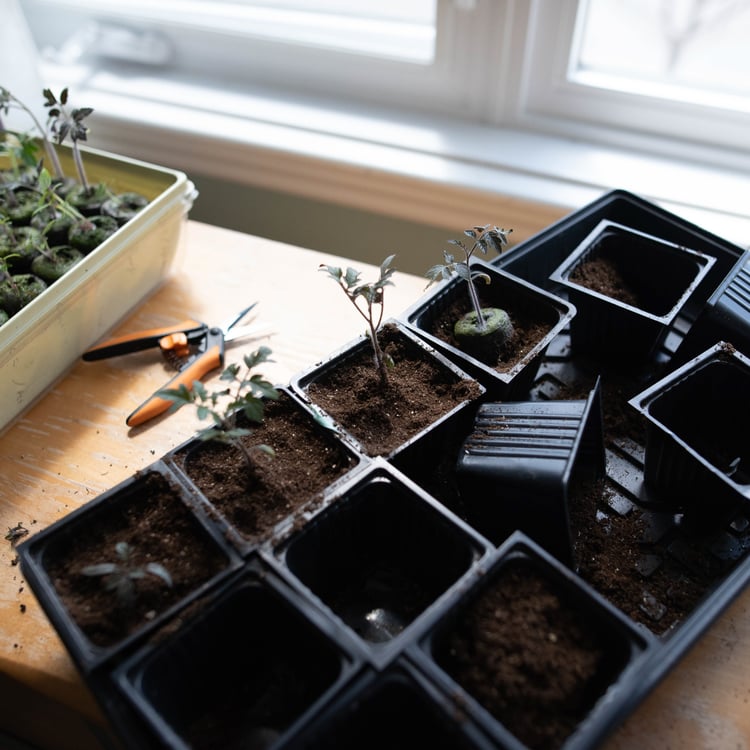
I dump old soil into a large bucket, pull out dead roots, and break up compacted clumps. If it looks healthy, I refresh it with compost or a small amount of new potting mix.
This step saves money every single year.
It also reminds me that not everything needs to be new to be useful — something I try to remember in other areas of my home too.
Step Three: I Decide Where Things Will Live
February is when I decide placement, not planting.
I think about: - Which herbs I want close to the kitchen - Which containers are too heavy to move once full - Which spots get full sun versus partial shade
I don’t create elaborate diagrams. I make a simple list or rough sketch.
Making these decisions now means fewer rushed choices later — and fewer plants dying because I put them in the wrong place.
Step Four: I Take Inventory Before I Spend
This step protects both my home and my budget.
Before I buy anything, I check: - Seeds I already own (and forgot about) - Containers that are duplicates - Tools that just need cleaning instead of replacing
Almost every year, I realize I already have more than enough.
February preparation keeps spring spending intentional.
Step Five: I Put Everything Away Calmly
When I’m done, I don’t leave piles sitting around.
I stack pots neatly. I label seed packets. I store soil where it won’t spill or freeze solid. This final step is important — it turns preparation into peace.
When spring arrives, I know exactly where everything is.
Why This Feels Like Love
Preparing my container garden in February isn’t about productivity. It’s about care.
It’s choosing to make future seasons easier. It’s trusting that small, quiet actions matter. And it’s proof that love doesn’t have to be loud to be meaningful.