January has a reputation problem.
Every year, it shows up quiet, gray, and demanding answers. What are your goals? What are you fixing? Who are you becoming? And if you don’t have confident answers by January 2nd, it can feel like you’re already behind.
I used to fall for that pressure hard. New planners, fresh journals, reset checklists, big promises to myself that this would be the year everything finally clicked. And every year, by mid-January, I felt tired, irritated, and strangely guilty—like I had failed a month that had barely started.
It took me a long time to realize this: January isn’t asking you to reinvent yourself. It’s asking you to recover—and to be supported while you do.
That shift changed everything.
Why January Feels So Heavy (And Why That’s Normal)

January comes after one of the most demanding seasons of the year. Even if you love the holidays, they’re still loud, expensive, emotional, and full of expectations.
By the time January arrives, most of us are:
- Mentally overstimulated
- Financially stretched
- Running on borrowed energy
- Craving quiet but unsure how to take it
And then we’re told now is the time to optimize everything.
No wonder January feels heavy.
From a calm-mind perspective, this is a mismatch between biology and culture. Winter naturally asks us to slow down. Less daylight, colder weather, and fewer external rewards all signal rest. But culturally, January demands productivity and transformation.
Nothing is wrong with you for feeling off in January. You’re responding normally to an unrealistic expectation.
When New-Year Tools Help—and When They Hurt
There’s nothing wrong with planners, journals, vision boards, or reset pages. In fact, the right tools can be incredibly grounding—when they’re used to support you instead of pressure you.
Where January often goes sideways is when those tools are framed as fixes.
When a planner feels like a test you might fail, it creates stress. When a journal feels like another thing to keep up with, it adds weight instead of relief.
But when tools are framed as containers—places to hold thoughts, routines, and emotions—they do the opposite. They create calm.
From a Domestics & Dollars lens, tools are meant to:
- Reduce decision fatigue (Calm Mind)
- Support daily flow (Calm Home)
- Bring clarity instead of avoidance (Calm Money)
- Create a sense of safety and rhythm (Cozy Life)
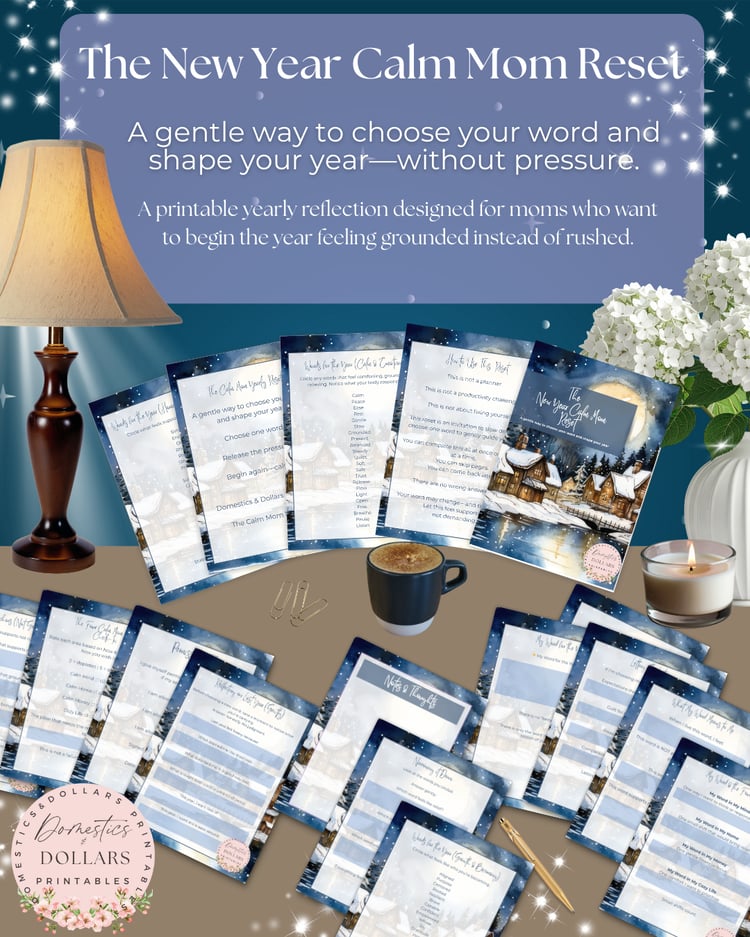
Check out our new year reset
January doesn’t need high-pressure systems. It benefits from gentle structure.
Instead of asking:
What should I become this year?
Try asking:
What do I need help holding right now?
That’s where intentional tools actually shine.
Reframing January as a Recovery Month
Once I stopped expecting January to be exciting, it became surprisingly kind.
Recovery doesn’t mean doing nothing. It means doing fewer things with support.
A recovery-style January focuses on:
- Stabilizing routines instead of overhauling them
- Repeating what already works
- Using simple tools to reduce mental load
From a Calm Money standpoint, January recovery might look like:
- Looking at numbers without judgment
- Using a budget or tracker as information—not a weapon
- Letting the month settle before making big changes
From a Cozy Life standpoint, it might look like:
- Leaning into quiet evenings
- Creating warmth with what you already have
- Letting your home be a place to rest, not perform
January isn’t empty. It’s protective.
Simple January Practices That Actually Help
These aren’t resolutions. They’re supports.
1. Lower the Bar (Intentionally)
Decide ahead of time what enough looks like this month. Tools like gentle planners or reflection pages can help you define that without overthinking it.
2. Repeat Instead of Reinvent
Eat the same breakfasts. Use familiar routines. Write things down once instead of holding them in your head.
3. Do Small Daily Resets
One cleared counter. One short list. One calm check-in. Small systems create steadiness.\
4. Reflect Without Pressure
January is a good time to notice patterns—what drained you last year, what supported you—without demanding immediate fixes. Having a quiet place to reflect makes this easier.
A Calm January Rhythm (Real Life Version)
I don’t follow strict schedules in January. I use anchors—and I usually write them down so I don’t have to remember everything.
- Morning: light, warmth, simple plan
- Midday: easy meals, minimal decisions
- Evening: predictable wind-down, earlier rest
No perfect routines. Just gentle structure.
This kind of rhythm supports all four pillars:
- Calm Mind: fewer decisions
- Calm Home: steadier flow
- Calm Money: less impulse spending
- Cozy Life: emotional safety
January Doesn’t Need a New You
January doesn’t need you to hustle your way into a better version of yourself.
It benefits from support—simple tools, gentle structure, and permission to move slower than the world expects.
You don’t need to prove anything this month. You just need a place to land.
Let January be quiet. Let it be steady. Let it hold you.
Everything else can come later.
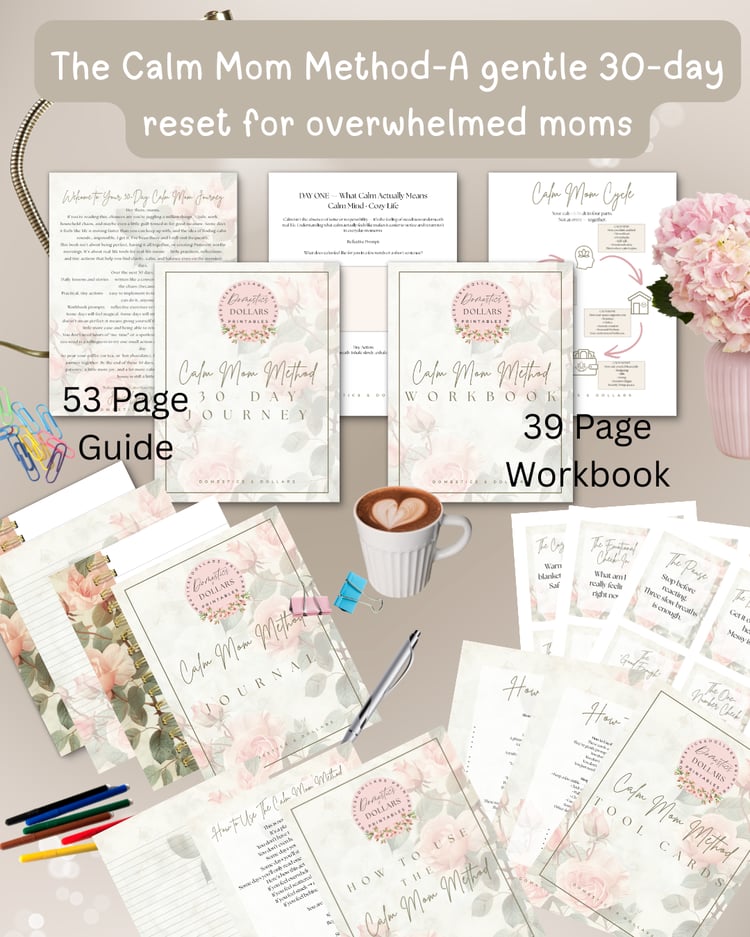
Looking for more gentle guidance? Check out the Calm Mom Method HERE