
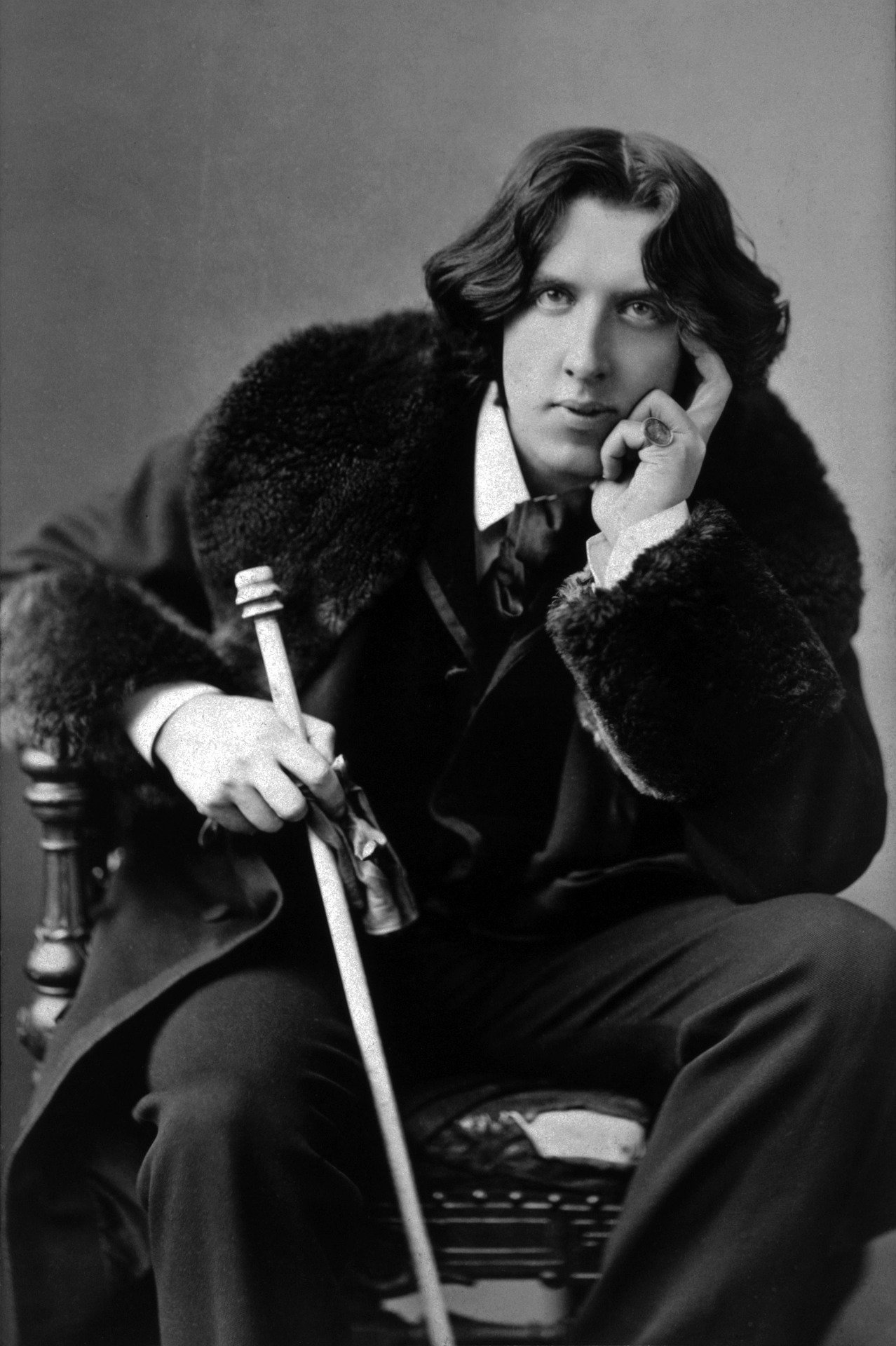
The Portrait That Keeps Updating: Narcissism and the Ageing Process
(4–5 minute read)
Oscar Wilde’s The Picture of Dorian Gray gives us an extraordinary split.
Dorian remains apparently unchanged.
His portrait does not.
While Dorian continues to see the familiar young face in the mirror, the portrait hidden away records what is actually happening. Time passes. Experience accumulates. Actions have consequences. The picture keeps receiving new information.
Dorian’s portrait keeps updating. Dorian doesn’t.
And that may offer us a much more useful way of thinking about narcissism and the ageing process than many of the predictions we encounter online.
Spend enough time reading about narcissism and you will eventually be told what happens to narcissists when they grow old.
They lose their looks.
They lose their status.
They become desperate for admiration.
They become bitter and dependent.
Eventually, we are told, they return to old partners, old friends and former “sources of supply” because they can no longer attract new ones.
It is neat.
It is dramatic.
And real human beings are rarely that predictable.
Perhaps the more interesting question is not what narcissistic people inevitably become as they age.
Perhaps it is:
How easily can a person update their version of themselves when reality changes?
We All Carry a Picture of Ourselves
All of us have an internal representation of who we are.
I am competent.
I am attractive.
I am independent.
I am funny.
I am a parent.
I am successful.
I am the person people come to when things go wrong.
Ordinarily, that picture is revised throughout life.
Not without protest, necessarily.
Most of us have encountered a photograph and wondered who on earth invited our grandmother.
Ageing can be bloody rude.
But gradually we incorporate new information.
We may no longer be as physically strong as we were.
Our face changes.
Our position within the family changes.
We retire.
Children who once depended upon us become adults with expertise of their own.
People younger than us begin occupying positions we once held.
Sometimes we become dependent in ways we never expected.
A reasonably flexible sense of self can accommodate those changes.
The portrait is continually repainted.
I am still me, but the meaning of being me has changed.
When Updating the Portrait Becomes Difficult
Narcissistic functioning can make that process more complicated.
If self-esteem has depended heavily upon maintaining a particular representation of oneself, contradictory information may be unusually difficult to absorb.
That representation will not necessarily involve appearance.
This is where the usual discussion of narcissism and ageing can become rather superficial.
We assume ageing must be devastating because somebody is losing their youth or attractiveness.
But what if attractiveness was never the central portrait?
One person may have built their identity around professional importance.
Another around intellectual superiority.
Another around sexual desirability.
Another around money.
Another around physical strength.
Another around being the family authority.
Another around being indispensable.
Another around always knowing best.
These things are not inherently narcissistic. Plenty of psychologically healthy people value achievement, beauty, intelligence, competence or independence.
The important question is how much the person’s psychological stability depends upon the picture remaining intact.
Because ageing keeps sending updates.
And some of them are difficult to ignore.
The Portrait Receives the Information Anyway
This is where Dorian becomes interesting.
Putting the portrait in the attic does not stop it changing.
Reality continues without his cooperation.
Ageing does something similar.
Retirement happens even if someone still experiences themselves primarily through professional status.
Adult children develop their own authority even if a parent continues to experience them as subordinate.
Bodies change even if desirability has been central to identity.
Physical capability alters.
Social circles change.
Partners die.
New generations arrive.
Knowledge moves on.
The world gradually stops reflecting precisely the same person back to us.
The psychologically difficult part may therefore not be ageing itself.
It may be the growing distance between the person someone understands themselves to be and the person their current circumstances are asking them to recognise.
What Happens to the Contradictory Information?
If updating the internal portrait is difficult, something has to happen to information that does not fit it.
It may be dismissed.
The younger colleague isn’t actually more knowledgeable; standards have fallen.
The adult child isn’t making an independent decision; somebody has influenced them.
The relationship didn’t fail because of anything the person did; the other person became unreasonable.
The loss of social influence isn’t a change in circumstances; people simply don’t appreciate quality anymore.
Or the old identity may be defended more vigorously.
Past achievements are repeated.
Status is emphasised.
Authority is asserted.
Old stories become increasingly important.
Other people may be recruited to continue reflecting the preferred version back.
This can look like increasing narcissism.
Sometimes it probably is an intensification of existing traits.
But another possibility is worth considering.
The portrait has become harder to maintain because reality is supplying more contradictory information.
Some People Find New Mirrors
And yet this still does not mean that narcissistic people inevitably become bitter, desperate or isolated.
Human beings adapt.
Some people find other ways of maintaining a valued identity.
The retired professional becomes the family expert.
The person who valued beauty becomes an exceptionally stylish older person.
Someone who once gained recognition through work may find it through community activity, hobbies, storytelling, mentoring or social life.
Some discover completely new interests.
Some mellow.
Some develop greater perspective.
Some become more rigid.
Some become more difficult.
Some remain remarkably similar to the people they have always been.
Because narcissism was never the whole portrait.
There Was Always More in the Picture
A person may be narcissistic and funny.
Controlling and intelligent.
Self-centred and generous.
Manipulative and knowledgeable.
Entitled and capable of attachment.
Difficult and enormously entertaining.
Narcissistic traits do not erase everything else about a human being.
And ageing happens to the whole person.
That matters because two people with apparently similar narcissistic traits at forty may look completely different at seventy.
One may have enough other sources of identity, pleasure and connection to accommodate enormous change.
Another may experience the same changes as intolerable assaults upon who they believe themselves to be.
The diagnostic label cannot tell us which.
We have to look at the person.
Beware the Portrait We Paint for Them
There is another portrait worth being careful about.
Ours.
If we decide that narcissistic people inevitably become lonely, bitter, desperate and abandoned in later life, we have created our own fixed picture of them.
Then we start fitting reality into it.
An older person is lonely: proof.
They are angry: proof.
They reconnect with an old partner: hoovering.
They talk about past achievements: narcissistic grandiosity.
They need help: loss of narcissistic supply.
Eventually almost anything can be made to confirm the portrait.
And at that point we have committed precisely the error we are trying to understand.
We have stopped updating our picture when new information arrives.
Open the Attic Door
Ageing asks all of us to revise ourselves.
That may be one of its most psychologically demanding tasks.
Who am I when I am no longer doing the job that defined me?
Who am I when my children no longer need me in the same way?
Who am I when my body changes?
Who am I when somebody younger knows more than I do?
Who am I when the qualities that once brought recognition no longer command the same response?
For someone whose self-esteem depends heavily upon maintaining a particular answer to those questions, ageing may present a substantial challenge.
But it still does not tell us what that person will become.
We need to know which portrait they were protecting in the first place.
We need to know how much of their identity depended upon it.
We need to know what else exists in their personality.
And perhaps most importantly, we need to watch what happens when life presents them with new information about themselves.
Do they incorporate it?
Adapt around it?
Find another source of identity?
Fight it?
Blame somebody for it?
Or hide the evidence in the attic and continue behaving as though nothing has changed?
The question, then, is not:
“What do narcissists become when they get old?”
It is:
“What happens when reality updates the portrait, but the person finds it difficult to update the version of themselves they carry inside?”
Dorian Gray’s problem was never simply that time passed.
**The portrait changed with it.
He could not.**