
Knowing Your Body Is an Act of Self-Care
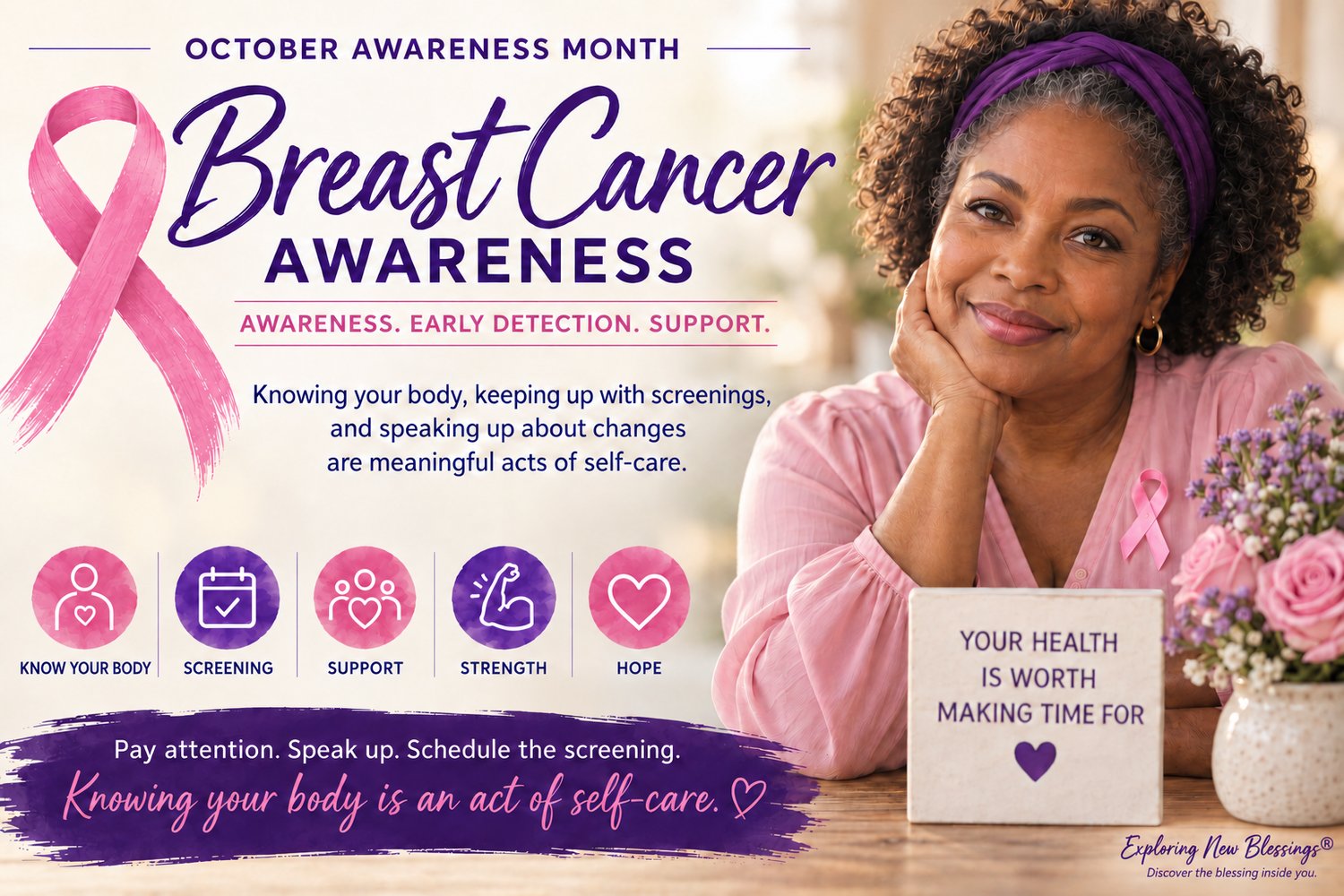
October is Breast Cancer Awareness Month—a time to spread knowledge, encourage routine screenings, support those affected by breast cancer, and remember the importance of paying attention to our bodies.
Many of us spend our days caring for everyone around us. We keep up with family responsibilities, work, appointments, and everything else life brings. In the middle of it all, it can be easy to place our own health at the bottom of the list.
But caring for yourself is not selfish. Knowing what is normal for your body and speaking up when something changes are important parts of protecting your well-being.
Know What Is Normal for You
Breast self-awareness means becoming familiar with how your breasts normally look and feel. It does not require living in fear or constantly worrying. It simply means paying enough attention to recognize when something appears or feels different.
Possible changes that deserve attention may include:
- A new lump in the breast or underarm
- Thickening or swelling in part of the breast
- Changes in the size or shape of a breast
- Dimpling, irritation, redness, or other skin changes
- Changes around the nipple
- Unusual nipple discharge
- New or unexplained breast pain
These changes do not automatically mean someone has breast cancer. However, they should be discussed with a qualified healthcare provider instead of being ignored.
Don’t Wait for Symptoms
Breast cancer does not always cause noticeable symptoms in its early stages. That is one reason routine screening can be so important.
A mammogram may identify changes before they can be seen or felt. When and how often you should be screened can depend on your age, family history, personal medical history, breast density, and other risk factors.
Talk with your healthcare provider about the screening schedule that is appropriate for you. If you have been putting off that conversation or an appointment, let this month be your reminder to take the next step.
Learn About Your Family History
Knowing whether breast or ovarian cancer has affected members of your family can provide valuable information about your possible risk.
When possible, ask questions and write down what you learn. Share that information with your healthcare provider, including which relatives were affected and how old they were when diagnosed.
We cannot control every part of our health history, but having the right information can help us make more informed decisions.
Support Matters Too
Breast cancer affects more than the person who receives the diagnosis. It can also affect partners, children, relatives, friends, and caregivers.
Supporting someone does not require having the perfect words. Sometimes it means listening without trying to fix everything. It may mean delivering a meal, helping with transportation, sitting beside someone during an appointment, praying with them, or continuing to check in after everyone else has stopped asking.
Small acts of love can help someone feel less alone.
Your October Wellness Step
Take a few minutes this week to ask yourself:
- Am I familiar with what is normal for my body?
- Have I noticed a change that I have been avoiding?
- Am I due for a screening or medical appointment?
- Do I know my family’s breast cancer history?
- Is there someone affected by breast cancer whom I can support?
You do not have to do everything today. Choose one step and follow through.
Your body communicates with you in many ways. Learning to pay attention is not living in fear—it is choosing awareness, self-respect, and care.
If you're ready to take better care of yourself but you're overwhelmed by where to begin, you don't have to change everything at once.
That's exactly why I believe in starting simple.
Begin here with Exploring New Blessings, and let's identify your first realistic steps together.
You don't need to do it perfectly.
You just need to begin.
Exploring New Blessings®
Discover the blessing inside you.
Wellness Disclaimer
The information shared in this blog is for educational and informational purposes only and is not intended to diagnose, treat, cure, or prevent any disease or medical condition.
Always consult your physician or another qualified healthcare provider before making changes to your diet, exercise routine, supplements, medications, or healthcare plan.
Wellness coaching through Exploring New Blessings is designed to support healthy lifestyle habits and complement—not replace—the care of your licensed healthcare providers.