

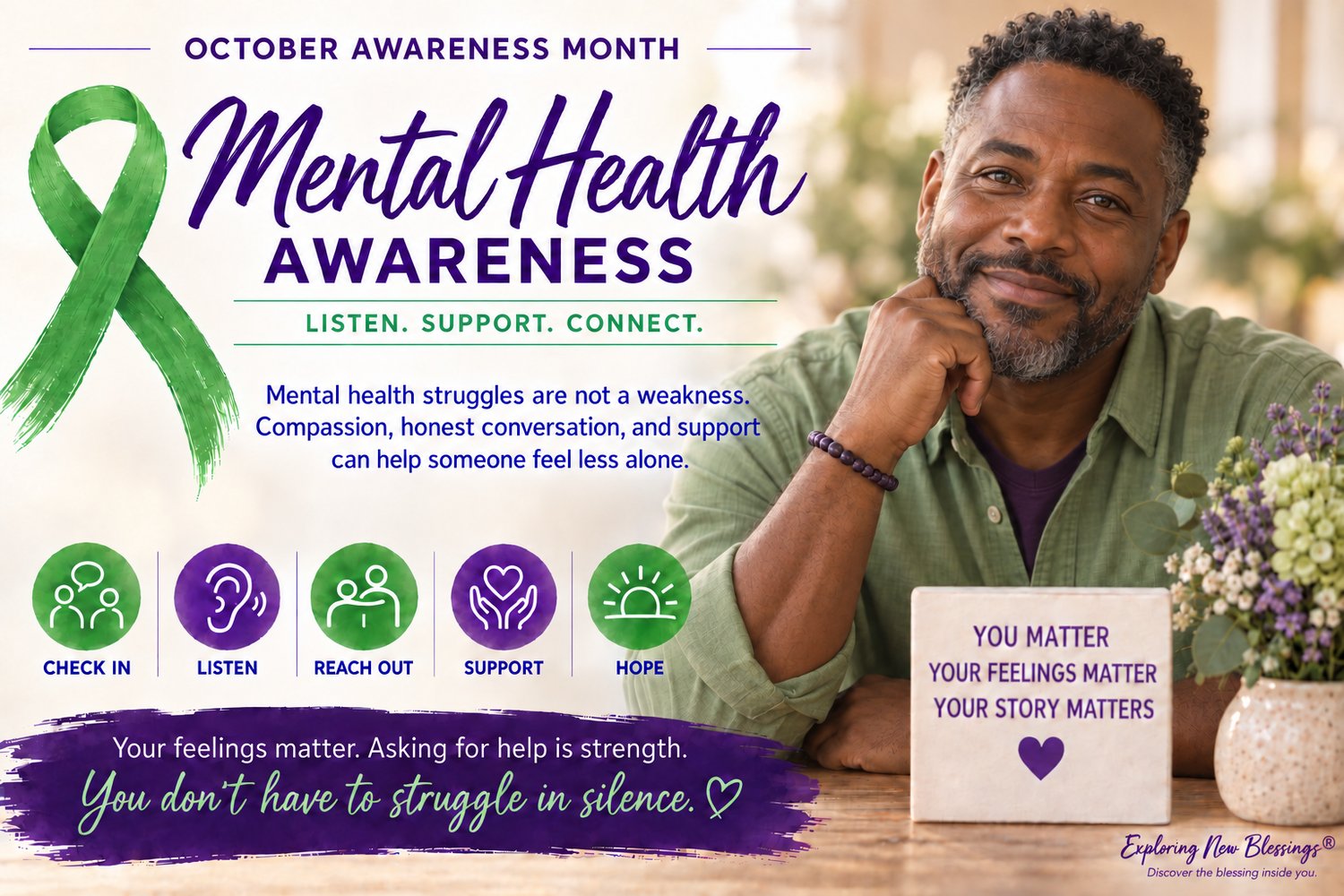
You Don’t Have to Struggle in Silence
October brings attention to mental health and depression—two subjects that many people still find difficult to discuss openly.
Mental health is part of our overall health. It affects how we think, feel, respond to stress, relate to others, and move through everyday life. Yet many people continue to hide what they are experiencing because they fear being judged, misunderstood, or viewed as weak.
Struggling with your mental health is not a personal failure. Depression is not something a person can always overcome by simply thinking positively, staying busy, or being told to “snap out of it.”
Sometimes the strongest thing a person can do is admit that they are not okay and allow someone to help.
Depression Can Look Different for Everyone
Depression does not always look like crying or visible sadness. Someone may continue working, caring for their family, laughing with friends, and appearing fine while privately feeling exhausted, empty, disconnected, or hopeless.
Signs that someone may need additional support can include:
- Ongoing sadness, emptiness, or hopelessness
- Losing interest in activities they once enjoyed
- Feeling unusually tired or lacking energy
- Changes in sleep or appetite
- Difficulty concentrating or making decisions
- Increased irritability, frustration, or restlessness
- Pulling away from family and friends
- Feeling worthless, guilty, or like a burden
- Physical discomfort without an obvious explanation
- Thoughts of death, self-harm, or suicide
Not everyone will experience the same symptoms, and having one difficult day does not automatically mean someone has depression. However, symptoms that persist, worsen, or interfere with everyday life deserve attention from a qualified healthcare or mental health professional.
You Don’t Have to Explain Everything Perfectly
One reason people stay silent is that they don't know how to describe what they are feeling.
You don't need the perfect explanation before reaching out.
You can begin with something as simple as:
- “I haven’t felt like myself lately.”
- “I’m having a hard time managing everything.”
- “I feel overwhelmed, and I think I need support.”
- “I don’t know exactly what is wrong, but I know I’m not okay.”
- “Can you sit with me and listen?”
Those few words can open the door to an important conversation.
Reaching out might mean speaking with a trusted friend, family member, faith leader, physician, counselor, therapist, or another qualified professional. The right first step will not look the same for everyone. What matters is deciding that you do not have to carry everything alone.
How to Support Someone Who Is Struggling
It can be hard to know what to say when someone shares that they are struggling. You may be afraid of saying the wrong thing or feel pressure to solve the problem.
You do not have to fix everything. Begin by listening.
You might say:
- “I’m glad you told me.”
- “You are not a burden.”
- “I may not understand everything, but I’m here.”
- “What kind of support would feel helpful right now?”
- “Would you like me to help you find someone to talk to?”
Avoid dismissing the person’s feelings, comparing their pain with someone else’s, or telling them to be grateful because others have it worse. Compassion means allowing someone’s experience to be real without judgment.
Continue checking in, even if they do not respond immediately. A simple message saying, “I’m thinking about you,” can remind someone that they matter.
Everyday Wellness Can Offer Support
Daily wellness practices may help us care for our emotional well-being. These can include:
- Following a regular sleep schedule
- Eating nourishing meals
- Staying hydrated
- Spending time outdoors
- Moving your body in ways that feel appropriate
- Writing down your thoughts
- Praying or meditating
- Limiting things that increase stress
- Making time for supportive relationships
- Taking breaks before reaching complete exhaustion
These practices can be meaningful parts of a wellness routine, but they are not replacements for professional mental health care when it is needed.
There is no shame in working with a therapist, taking prescribed medication, attending a support group, or using several forms of support together. Healing may include physical, emotional, mental, and spiritual care.
Your October Wellness Step
Take a quiet moment this week and honestly ask yourself:
- How have I really been feeling?
- Am I constantly overwhelmed, exhausted, or disconnected?
- Have I been pretending to be okay when I am not?
- Is there someone safe I can talk to?
- Who in my life may need me to check in?
Choose one simple action. Write down what you are feeling, contact someone you trust, schedule an appointment, or check on someone who has been unusually quiet.
You do not have to solve everything today. You only need to take the next safe step.
Immediate Support Is Available
If you or someone you know is experiencing emotional distress, a mental health crisis, or thoughts of suicide, call or text 988 in the United States to reach the 988 Suicide & Crisis Lifeline. Support is available 24 hours a day. If there is immediate danger, call 911 or go to the nearest emergency room.
If you're ready to take better care of yourself but you're overwhelmed by where to begin, you don't have to change everything at once.
That's exactly why I believe in starting simple.
Begin here with Exploring New Blessings, and let's identify your first realistic steps together.
You don't need to do it perfectly.
You just need to begin.
Exploring New Blessings®
Discover the blessing inside you.
Wellness Disclaimer
The information shared in this blog is for educational and informational purposes only and is not intended to diagnose, treat, cure, or prevent any disease or medical condition.
Always consult your physician or another qualified healthcare provider before making changes to your diet, exercise routine, supplements, medications, or healthcare plan.
Wellness coaching through Exploring New Blessings is designed to support healthy lifestyle habits and complement—not replace—the care of your licensed healthcare providers.