

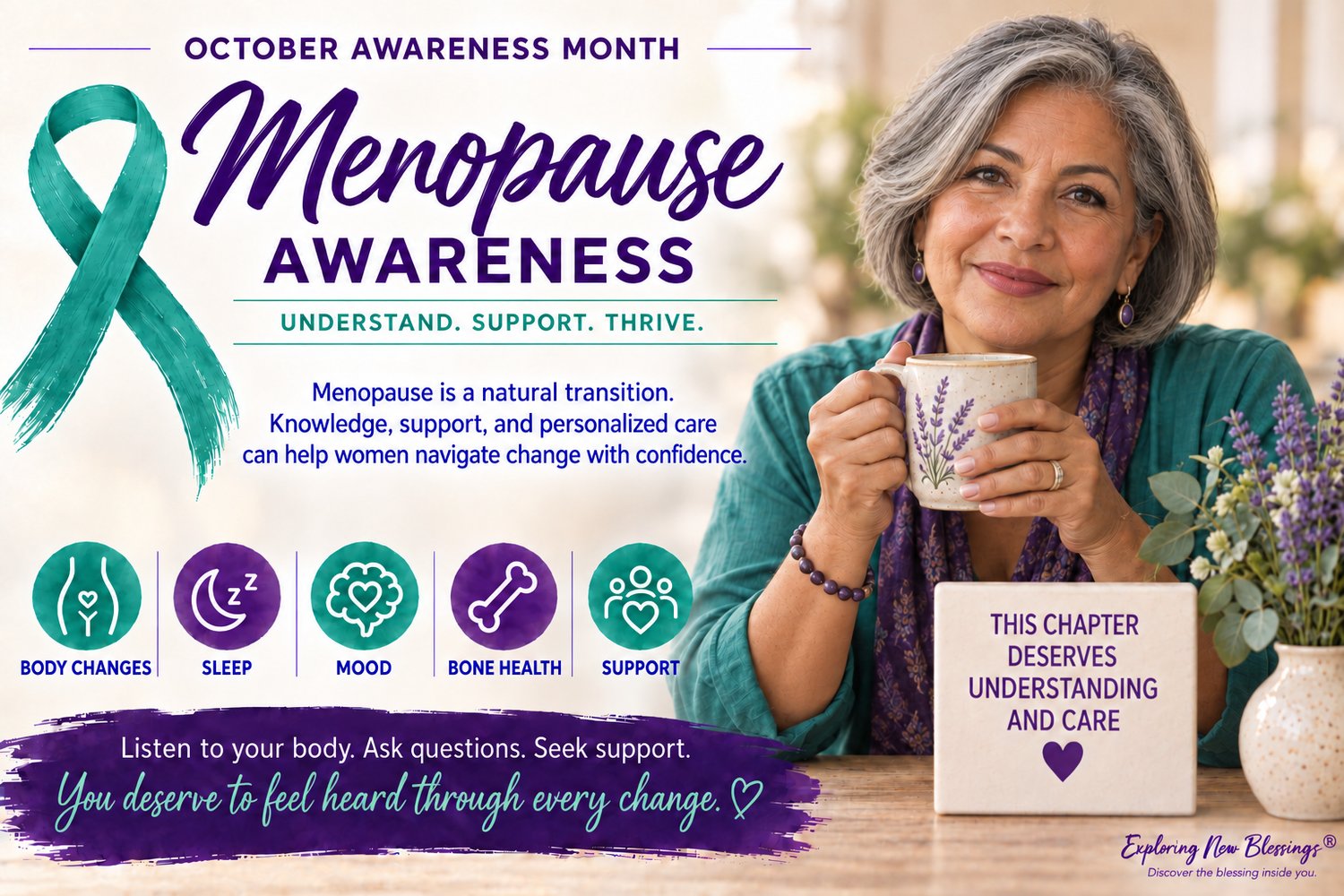
Menopause Is More Than Hot Flashes
Hot flashes and night sweats are commonly associated with menopause, but they are only part of the experience.
Possible changes can include:
- Irregular, heavier, or lighter periods
- Hot flashes or sudden temperature changes
- Night sweats
- Difficulty falling asleep or staying asleep
- Mood changes, irritability, anxiety, or sadness
- Difficulty concentrating or forgetfulness
- Low energy or ongoing fatigue
- Headaches
- Muscle or joint discomfort
- Vaginal dryness or discomfort
- Changes in sexual desire
- Weight or body-composition changes
- Changes in skin, hair, or bladder health
Not every symptom experienced during midlife is caused by menopause. Thyroid conditions, vitamin deficiencies, medication effects, sleep problems, stress, and other health concerns may cause similar symptoms.
That is why it is important to discuss new, persistent, or disruptive changes with a qualified healthcare provider instead of assuming that you simply have to live with them.
Your Emotional Wellness Matters
Hormonal shifts, interrupted sleep, physical discomfort, work demands, caregiving responsibilities, changing relationships, and other midlife challenges can all affect emotional wellness.
Some women describe feeling unlike themselves. They may become more irritable, emotional, anxious, overwhelmed, or disconnected. Others may begin questioning their identity, confidence, or purpose.
These feelings should not be dismissed.
This stage of life can invite you to pay closer attention to your needs. You may need more rest, different boundaries, emotional support, or a conversation with a qualified healthcare or mental health professional.
You are not weak for needing support. You are responding to real changes, and you deserve to feel heard.
Support Your Whole Body
Healthy daily habits may support overall wellness during and after the menopause transition.
Helpful areas to consider include:
- Eating balanced, nourishing meals
- Including adequate protein in your eating plan
- Staying hydrated throughout the day
- Participating in appropriate strength and weight-bearing activity
- Protecting your sleep routine
- Using relaxation practices to help manage stress
- Maintaining supportive relationships
- Avoiding smoking
- Discussing alcohol use with your healthcare provider
- Keeping up with recommended medical screenings
Hormonal changes during and after menopause can also affect bone and heart health. Talk with your healthcare provider about your personal history, risk factors, symptoms, and which screenings may be appropriate for you.
Wellness is not about finding one perfect food, supplement, or routine. It is about creating consistent habits that support your body while working with qualified professionals when additional care is needed.
Learn to Advocate for Yourself
You know when something feels different in your body. If your concerns are dismissed or you leave an appointment feeling unheard, it is okay to ask more questions or seek another professional opinion.
Before an appointment, consider writing down:
- The symptoms you are experiencing
- When they began
- How often they occur
- How they affect your daily life
- Any medications or supplements you take
- Questions you want answered
You might ask:
- Could these symptoms be related to perimenopause or menopause?
- Could another health condition be contributing?
- What treatment or support options are available?
- What are the possible benefits and risks of those options?
- Are there screenings I should consider at this stage of life?
There is no single approach that is right for every woman. Treatment and support should be based on your symptoms, medical history, personal risks, needs, and preferences.
Your October Wellness Step
Take a few quiet minutes this week and ask yourself:
- Have I noticed changes that I have been ignoring?
- Am I getting the rest and support I need?
- Do I feel comfortable discussing my symptoms?
- Is there an appointment or screening I have been delaying?
- What is one small habit that could better support me right now?
Choose one realistic action. Write down your symptoms, schedule an appointment, improve one part of your sleep routine, drink more water, or speak honestly with someone you trust.
You do not have to understand or change everything at once. Start by listening to your body and honoring what it needs today.
If you're ready to take better care of yourself but you're overwhelmed by where to begin, you don't have to change everything at once.
That's exactly why I believe in starting simple.
Begin here with Exploring New Blessings, and let's identify your first realistic steps together.
You don't need to do it perfectly.
You just need to begin.
Exploring New Blessings®
Discover the blessing inside you.
Wellness Disclaimer
The information shared in this blog is for educational and informational purposes only and is not intended to diagnose, treat, cure, or prevent any disease or medical condition.
Always consult your physician or another qualified healthcare provider before making changes to your diet, exercise routine, supplements, medications, or healthcare plan.
Wellness coaching through Exploring New Blessings is designed to support healthy lifestyle habits and complement—not replace—the care of your licensed healthcare providers.