

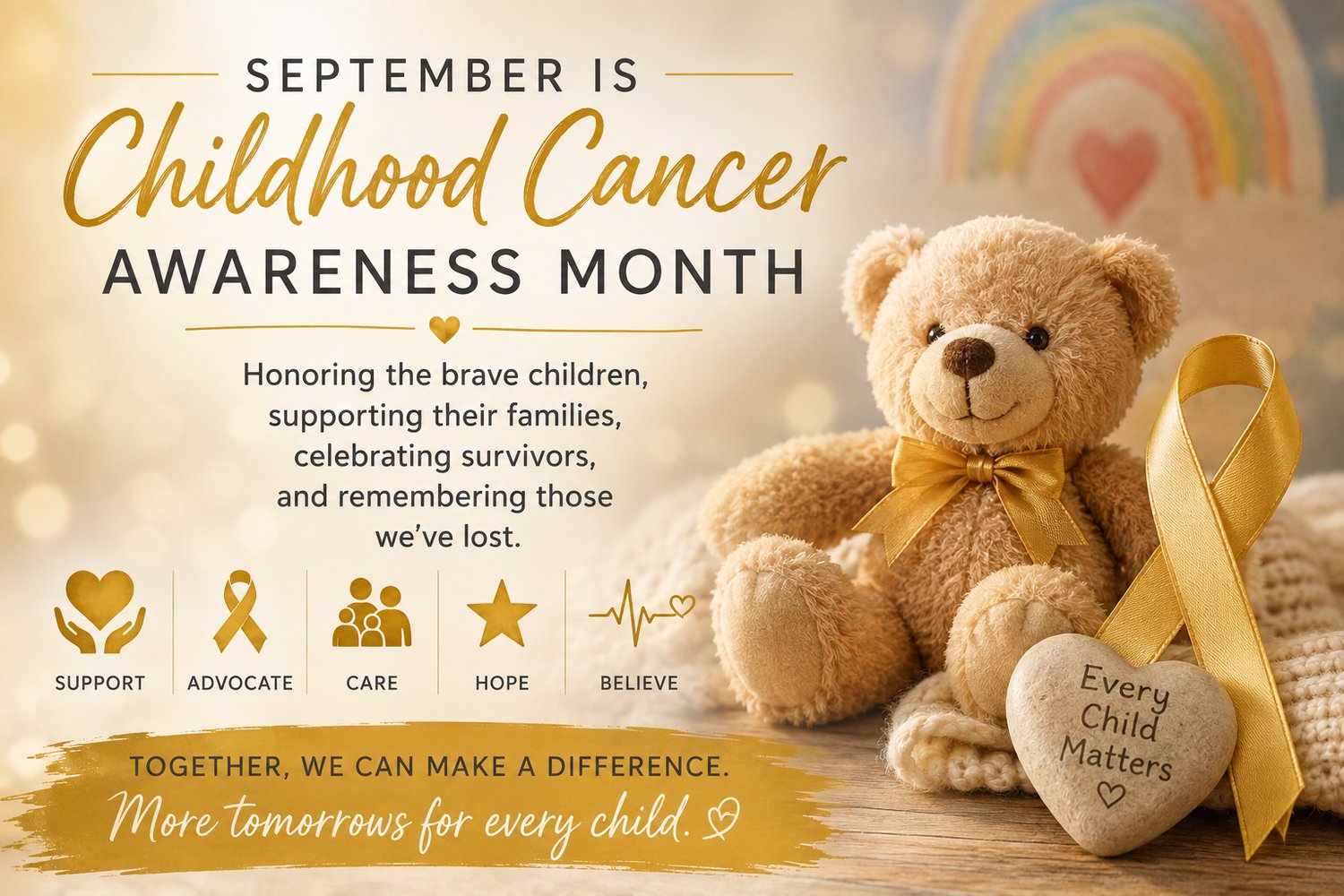
September is Childhood Cancer Awareness Month, a time to honor children and adolescents affected by cancer, recognize survivors, remember those we've lost, support families and caregivers, and bring attention to the continued need for research and better treatments.
The gold ribbon is widely recognized as a symbol of childhood cancer awareness.
But behind that ribbon are real children.
Real families.
Real fears.
Real courage.
And stories that deserve to be heard.
This week, we're not simply bringing awareness to a disease.
We're bringing awareness to the children and families living through it.
Childhood Cancer Is Not Just Adult Cancer in a Smaller Body
One of the first things we need to understand is that childhood cancers are different from many cancers that occur in adults.
Cancer in children can occur in different parts of the body and includes several types of disease.
Among the more common childhood cancers are leukemias, brain and other central nervous system tumors, and lymphomas. Children can also develop solid tumors such as neuroblastoma, Wilms tumor, bone cancers, and others.
Unlike many adult cancers, childhood cancers generally aren't strongly linked to lifestyle or environmental risk factors that parents could have controlled.
That matters because when a child becomes seriously ill, parents can carry enormous guilt.
"Did I miss something?"
"Did I do something wrong?"
"Could I have prevented this?"
For most childhood cancers, there was nothing a parent could simply have eaten differently, purchased differently, or done differently to prevent their child's diagnosis.
Families need support—not blame.
Sometimes the Signs Can Look Like Ordinary Childhood Problems
One challenge with childhood cancer is that some possible symptoms can also occur with many common childhood illnesses.
Depending on the type of cancer, signs might include unusual swelling or a lump, unexplained paleness or loss of energy, easy bruising or bleeding, persistent pain, an unexplained fever or illness that doesn't go away, frequent headaches with vomiting, sudden vision changes, or unexplained weight loss.
Having one of these symptoms does not automatically mean a child has cancer.
But persistent, unusual, or concerning changes deserve medical attention.
Parents and caregivers know their children.
If something doesn't seem right or isn't improving, it's appropriate to speak with the child's healthcare provider.
A Diagnosis Changes Life for the Whole Family
When a child is diagnosed with cancer, life can suddenly revolve around things the family never expected to learn.
Appointments.
Tests.
Medications.
Treatment schedules.
Hospital stays.
Lab results.
Insurance.
Transportation.
School arrangements.
Childcare for siblings.
Work schedules.
And waiting.
So much waiting.
Parents may be trying to stay strong for their child while privately feeling terrified themselves.
Siblings may feel scared, confused, overlooked, guilty, or unsure why everything at home has changed.
Grandparents and extended family may be trying to help while carrying their own fear.
Childhood cancer doesn't happen to only one person.
The entire family feels its impact.
Treatment Is Individualized
Childhood cancer treatment depends on the type of cancer, how advanced it is, the child's age and health, and many other individual factors.
Treatment may include chemotherapy, surgery, radiation therapy, immunotherapy, targeted therapy, stem cell transplantation, or combinations of treatments.
Children with cancer are often cared for by teams of healthcare professionals with expertise in pediatric cancer.
Research has made important progress, and many children with cancer now survive their disease.
But survival rates vary greatly depending on the type of cancer, and some childhood cancers remain extremely difficult to treat.
That's why continued research matters.
Every improvement in diagnosis, treatment, supportive care, and long-term follow-up means another child has more tomorrows.
Caring for the Whole Child
A child with cancer is still a child.
They still need comfort.
Play.
Connection.
Laughter.
Education.
Friendships.
Creativity.
Love.
And moments where life doesn't revolve completely around cancer.
Medical treatment addresses the disease, but children can also need emotional, social, educational, and developmental support throughout treatment.
Some may benefit from child-life specialists, counselors, social workers, teachers, support groups, and other members of the healthcare team who help children and families navigate what they're experiencing.
Whole-person support doesn't mean replacing medical treatment.
It means remembering that there's a person experiencing that treatment.
Nutrition and Wellness During Childhood Cancer
Because Exploring New Blessings talks so much about nutrition and holistic wellness, I want to be especially clear here.
Food, juicing, herbs, supplements, essential oils, or other wellness practices do not replace childhood cancer treatment.
Children receiving cancer treatment can have very specific nutritional needs.
Treatment may affect appetite, taste, swallowing, digestion, weight, hydration, or the body's ability to handle certain foods.
Some supplements and herbs can also interfere with medications or cancer treatments.
Make nutrition decisions with the child's pediatric oncology team and, when appropriate, a registered dietitian experienced in pediatric oncology.
Supporting wellness during childhood cancer isn't about finding a miracle food.
It's about helping the child receive the individualized care and support they need.
Emotional Support Matters for Children Too
Children may understand illness differently depending on their age.
Some may be frightened by procedures.
Some may worry about pain.
Some may wonder whether they did something to cause their illness.
Older children and teenagers may worry about changes in appearance, missing school, friendships, sports, independence, fertility, or whether their lives will ever feel normal again.
It's important to give children age-appropriate opportunities to ask questions and express what they're feeling.
Sometimes courage isn't a child smiling through everything.
Sometimes courage is saying:
"I'm scared."
Children shouldn't have to pretend they're okay to make the adults around them feel better.
Their feelings deserve space too.
Survivorship Is Part of the Story
Finishing cancer treatment can be an incredible milestone.
But the story doesn't necessarily end on the final treatment day.
Some childhood cancer survivors may experience health concerns months or years later related to the cancer itself or its treatment. These are often called late effects.
That's why long-term follow-up care can be important.
Survivorship may include monitoring physical health, emotional well-being, learning, development, and other areas based on the treatments someone received.
We should absolutely celebrate survival.
But we should also recognize that some survivors continue carrying parts of their cancer journey long after treatment ends.
And We Remember the Children We've Lost
Childhood Cancer Awareness Month also has to make room for families whose stories didn't end the way they prayed they would.
Some children die from cancer.
There aren't words big enough for that kind of loss.
We don't need to rush grieving families toward a positive message.
We don't need to tell them everything happens for a reason.
Sometimes the most compassionate thing we can do is simply acknowledge:
Their child mattered.
Their child's life mattered.
Their child's story matters.
Their grief matters.
And remembering their child isn't something we should be afraid to do.
Awareness includes honoring them too.
How Can We Support Families?
People often want to help but don't know what to do.
Support doesn't always require a grand gesture.
Bring a meal if the family wants one.
Help with groceries.
Offer transportation.
Help with siblings.
Mow the lawn.
Send a thoughtful message without expecting a response.
Remember important treatment dates.
Check in after the initial wave of support has quieted down.
Listen without trying to fix everything.
Ask:
"What would make this week a little easier?"
And respect the answer.
Sometimes families need help.
Sometimes they need space.
Sometimes they just need someone who will keep showing up.
Awareness Should Lead to Action
A gold ribbon can start a conversation.
But awareness can go further.
Learn about childhood cancer from credible sources.
Support reputable childhood cancer research and family-support organizations.
Donate blood or platelets if you're eligible and able.
Advocate for continued pediatric cancer research.
Support families in practical ways.
Be mindful of what you say to parents.
And remember that a child's diagnosis doesn't erase everything else about who they are.
Children with cancer are not simply patients.
They're artists.
Gamers.
Athletes.
Readers.
Jokesters.
Dancers.
Big brothers.
Little sisters.
Friends.
Dreamers.
Kids who still deserve as much childhood as possible.
This Week's Reflection
This week, I want us to think beyond the gold ribbon.
Think about the child sitting in a hospital room who would rather be home.
The parent trying to stay calm while waiting for test results.
The sibling whose world changed too.
The survivor learning how to move forward.
The healthcare teams caring for these children.
And the family remembering a child they would give anything to hold again.
Then ask yourself:
How can I turn awareness into compassion?
Maybe it's learning.
Maybe it's donating.
Maybe it's giving blood.
Maybe it's supporting research.
Maybe it's helping a family.
Maybe it's simply becoming more thoughtful about how you speak to someone walking through something you cannot imagine.
We can't take every family's pain away.
But we can choose not to look away.
This September, let's honor the children.
Let's support the families.
Let's celebrate the survivors.
Let's remember the children we've lost.
Let's continue advocating for research and better treatments.
And let's hold onto hope for a future where more children get the opportunity to simply grow up.
Every child deserves to be seen.
Every family deserves support.
Every story deserves to be remembered.
And every child deserves the possibility of more tomorrows.
Exploring New Blessings
Discover the blessing inside you.
Wellness Disclaimer
The information shared in this blog is for educational and informational purposes only and is not intended to diagnose, treat, cure, or prevent any disease or medical condition.
Always consult your physician or another qualified healthcare provider before making changes to your diet, exercise routine, supplements, medications, or healthcare plan.
Wellness coaching through Exploring New Blessings is designed to support healthy lifestyle habits and complement—not replace—the care of your licensed healthcare providers.