

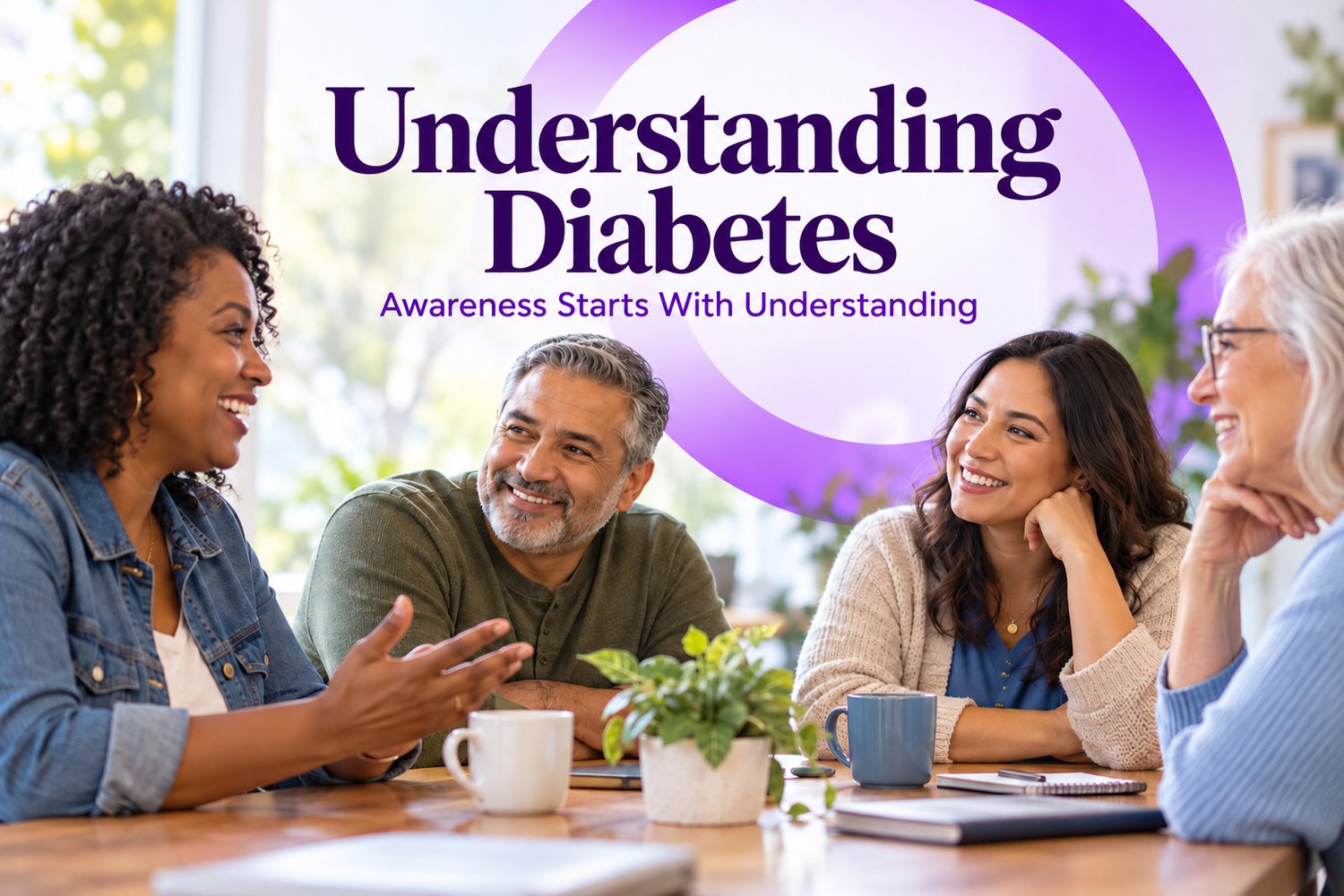
November Diabetes Awareness — Week 1
When you hear the word “diabetes,” what comes to mind? Perhaps it’s sugar, food restrictions, medication, or checking blood sugar. While those things may be part of the experience, they don’t tell the whole story.
Diabetes affects people with different backgrounds, routines, and needs. Behind every diagnosis is someone balancing their health with work, family, relationships, and daily responsibilities.
This November, we’re making space for education, encouragement, and practical conversations about diabetes. Whether you’re living with diabetes, supporting someone who is, or learning about your own risk, understanding is a meaningful place to begin.
Diabetes awareness is personal to me. I was diagnosed at 28, and I’m now 60. For 32 years, diabetes has been part of my life. My starting A1C was 14.1, and today it is 5.5.
I’m still on my healing journey. I won’t tell you it's been easy. It takes consistency, patience, and a willingness to keep showing up for yourself—even when it feels hard. My progress has reminded me that meaningful change is possible and that every realistic step deserves recognition.
I’m sharing my progress to offer encouragement. Each person’s journey, treatment needs, and results will be different, but you deserve support as you work toward your own goals. I’m still learning and still growing, and that experience is part of why diabetes awareness matters so much to me.
Through Exploring New Blessings, I want to create space for honest conversations about the challenges, the progress, and the daily work of caring for ourselves. You don’t have to have everything figured out before taking your first step.
What Is Diabetes?
Your body uses glucose, also called blood sugar, for energy. Insulin is a hormone that helps glucose move from your bloodstream into your cells.
Diabetes develops when the body does not make enough insulin or cannot use it effectively, allowing blood sugar to become too high. Over time, elevated blood sugar can affect your heart, kidneys, eyes, and nerves. Managing diabetes can help reduce these risks. NIDDK
That explanation is simple, but living with diabetes can involve many decisions. Understanding the condition helps us appreciate why care needs to be personal.
Understanding the Different Types
Type 1 diabetes is an autoimmune condition in which the immune system attacks the cells that produce insulin. It can develop at any age. People living with type 1 diabetes need insulin to survive.
Type 2 diabetes occurs when the body does not use insulin effectively and cannot produce enough to maintain healthy blood sugar levels. It can affect children and adults.
Gestational diabetes develops during pregnancy. It often resolves after delivery, but follow-up is important because the risk of developing type 2 diabetes later is higher. NIDDK
Knowing these differences helps us avoid treating every diagnosis as the same experience. Someone else’s routine, meal plan, or treatment may not fit you.
What About Prediabetes?
Prediabetes means blood sugar is higher than normal but below the range used to diagnose type 2 diabetes. It often has no clear symptoms, which makes it easy to overlook.
A diagnosis of prediabetes is an opportunity to seek support. A structured lifestyle change program can help reduce the risk of developing type 2 diabetes. CDC
You do not have to figure out every next step alone. Start by asking your healthcare provider what your results mean and what support is available.
Recognizing Possible Signs
Diabetes symptoms can include increased thirst, frequent urination, fatigue, blurred vision, and unexplained weight loss. Some people experience few or no noticeable symptoms. NIDDK
These changes deserve attention, but symptoms alone cannot confirm diabetes. Blood tests are used to diagnose the condition. If you notice changes or have concerns about your risk, talk with your healthcare provider about testing. CDC
Try bringing a short list of questions to your appointment:
- What do my blood sugar results mean?
- What should my personal goals be?
- Would diabetes education or nutrition counseling help me?
- What is one realistic step I can take before our next visit?
You deserve explanations you understand and a plan that fits your life.
There Is a Person Behind the Numbers
A blood sugar reading can carry a lot of emotion. It may bring relief, worry, disappointment, or confusion.
If you are living with diabetes, remember that a number does not measure your worth. You can use your health information to ask questions and make decisions without turning it into a judgment about yourself.
Give yourself room to learn. Write down what feels confusing. Tell your care team when a recommendation is difficult to follow because of cost, time, food access, or family responsibilities. Those details belong in the conversation.
A useful plan starts with your actual circumstances.
Support Begins With Listening
If someone you love has diabetes, you may want to help immediately. Begin by asking what support would feel useful.
Try saying, “Would you like me to listen, help you prepare questions for your appointment, or join you in a new routine?”
Avoid assuming you know what someone should eat or how they should manage their condition. Advice about their plate, body, or medication can feel discouraging when it comes without an invitation.
Support can be simple: share a meal, make time for an appointment, or listen without trying to fix everything. Let the person guide you toward what they need.
Choose Your First Realistic Step
You do not need to overhaul your life to participate in Diabetes Awareness Month. Begin with one action that makes understanding or caring for your health a little easier.
Perhaps you will schedule a conversation with your healthcare provider, write down your questions, learn about your diagnosis, or ask a loved one how you can support them.
As this series continues, we’ll explore diabetes myths, eating habits that support blood sugar management, meaningful support, and emotional wellbeing.
For this week, give yourself permission to start where you are—with the information, resources, and energy you have today.
Begin here with Exploring New Blessings, and let's identify your first realistic steps together.
You don't need to do it perfectly.
You just need to begin.
Exploring New Blessings®
Discover the blessing inside you.
Wellness Disclaimer
The information shared in this blog is for educational and informational purposes only and is not intended to diagnose, treat, cure, or prevent any disease or medical condition.
Always consult your physician or another qualified healthcare provider before making changes to your diet, exercise routine, supplements, medications, or healthcare plan.
Wellness coaching through Exploring New Blessings is designed to support healthy lifestyle habits and complement—not replace—the care of your licensed healthcare providers.