
Helping Children Feel More Steady Through Daily, Weekly, and Monthly Planning
Start With Yourself
Think about a time when life felt scattered. Maybe the house was messy. Maybe your schedule was full. Maybe you had too many things in your head at once. Maybe you kept remembering things right before they were due.
When life feels unorganized, it can create a quiet kind of stress. Not always big stress. Sometimes it just feels like:
- “I’m behind.”
- “I’m forgetting something.”
- “I don’t know where to start.”
- “I have too much to do.”
Most adults know this feeling well. And often, the answer is not doing more. It is creating a simple rhythm that helps us see what matters, what is coming, and what needs our attention.
A routine does not have to be strict. It does not have to control every minute.
A good routine gives us a little more steadiness. It helps us come back to ourselves.
Connect To Your Child
Children need rhythm too. They may not say: “I feel overwhelmed because I don’t understand what’s coming next.”
Instead, they may...
- Melt down before school
- Resist bedtime
- Forget what they need
- Rush through homework
- Get upset when plans change
- Feel anxious about something that seems small
For children, routines help create a sense of predictability. They help children know:
- “What happens next?”
- “What do I need to do?”
- “What can I expect?”
- “What is my part?”
When children have simple routines, they do not have to hold everything in their minds at once. The routine helps carry some of that weight.
Lesson Explanation
The lesson is not that every day should look the same. Life changes. Plans shift. Families get busy. Some days are smooth, and some days are not.
The lesson is that simple planning can help us feel more prepared and less overwhelmed.
Daily planning helps children notice what needs to happen today.
Weekly planning helps them see what is coming soon.
Monthly planning helps them understand bigger goals, events, and responsibilities.
This gives children a sense of time. It also teaches them that growth happens through small repeated actions. A child does not become more responsible all at once. They learn responsibility by practicing small routines over time.
- Pack the backpack
- Put shoes in the same place
- Choose clothes the night before
- Read for ten minutes
- Clean up one small area
- Check the calendar
- Name one goal for the week
These small actions build confidence. They teach children:
- “I can take care of things.”
- “I can prepare.”
- “I can follow through.”
- “I can grow one step at a time.”
Parent Application
Start simple.
A routine should help your family, not overwhelm it. Instead of building a full schedule for the whole day, begin with one part of the day that often feels stressful. Maybe mornings. Maybe bedtime. Maybe homework. Maybe Sunday nights. Maybe getting ready for the week.
Ask yourself: “What part of our day feels the most rushed or chaotic?”
Then create a simple rhythm around that moment. For example:
Before school:
- Get dressed
- Eat breakfast
- Brush teeth
- Pack backpack
- Shoes on
Before bed:
- Pajamas
- Brush teeth
- Pick tomorrow’s clothes
- Read
- One thing I’m grateful for
For the week:
- What is coming up?
- What do we need to remember?
- What is one thing we want to work on?
- What is one fun thing we can look forward to?
For the month:
- What events are coming?
- What goal do we want to keep practicing?
- What habit are we building?
- What progress do we want to notice?
The goal is not perfection. The goal is rhythm. And when the routine falls apart, that does not mean the family failed. It simply means you begin again.
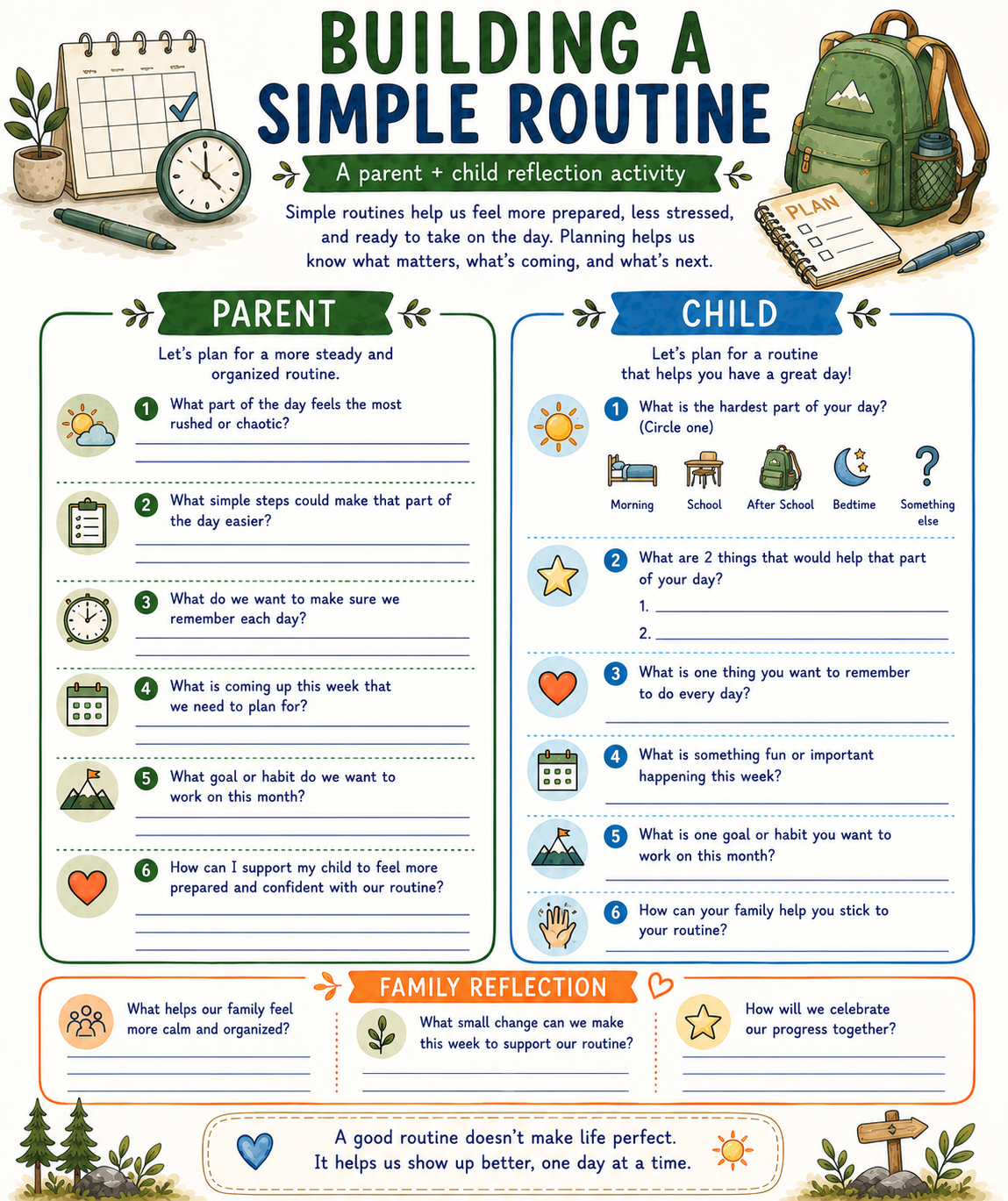
Workbook Connection
This week’s activity is called:
Building a Simple Routine
You and your child will each think about the routines that help you feel more organized, calm, and ready.
Together, you’ll explore:
- What part of the day feels hardest
- What simple steps could make that part easier
- What you want to remember each day
- What is coming up this week
- What goal or habit you want to practice this month
- How your family can support each other
This activity helps children see planning as something kind and helpful. Not pressure. Not control. Not another thing to get right.
Just a simple way to make life feel a little more steady.
Because when children learn how to build small routines, they begin to understand that they are capable of caring for themselves, preparing for what is ahead, and growing one step at a time.
Comments ()