
Helping Children Notice Their Strengths and See Themselves With Kindness
Start With Yourself
Think about how easy it can be to notice what you wish you did better. Maybe you wish you were more patient. More organized. More confident. More present. More consistent. More calm. More something.
Most adults can name what they want to improve pretty quickly. But when asked, “What do you like about yourself?” many of us pause.
Not because there is nothing there. But because we are not always used to saying those things out loud. We may worry it sounds arrogant. We may brush past our strengths because they feel ordinary to us. We may focus so much on what needs fixing that we forget to notice what is already good.
Loving yourself does not mean believing you are perfect. It means being able to see yourself honestly and kindly at the same time.
Connect To Your Child
Children need this too. They may hear praise from adults, but that does not always mean they know how to recognize their own strengths.
A child might be kind, creative, brave, thoughtful, funny, persistent, or caring, but if they do not learn to notice those qualities, they may only see what they struggle with. They may focus on...
- The test they missed
- The sport they are not good at yet
- The friend who did not include them
- The thing they wish they could change
Just like adults, children can become more fluent in self-criticism than self-kindness. That is why helping them name what they like about themselves matters.
Not as empty praise. As practice.
Lesson Explanation
The lesson is not: “Think you are amazing at everything.”
The lesson is: “Learn to see what is good, strong, and true about yourself.”
Self-love is not something children automatically know how to do. It is something they learn through repetition, reflection, and relationship.
When a child can say:
- “I am kind.”
- “I am learning.”
- “I am creative.”
- “I am a good friend.”
- “I keep trying.”
They begin to build an inner voice that can support them when life gets hard. An inner voice of their own, not of your voice (for another time).
And sometimes, children also need to hear what others see in them. Not because their worth depends on approval, but because loving reflection from people they trust can help them recognize strengths they may have missed.
Parent Application
This week, try asking your child: “What is something you like about yourself?”
They may answer quickly. They may shrug. They may say, “I don’t know.”
That is okay. Give them time. Then share something you see in them. Be specific.
Instead of: “You’re great.”
Try: “I notice how thoughtful you are when someone feels left out,” or “I love how curious you are when you’re learning something new,” or “I saw you keep trying even when that was hard.”
Then answer the question yourself. Let your child hear you name something you like about yourself, too. You might say: “One thing I like about myself is that I try to keep learning,” or “One strength I have is that I care deeply about people.”
This helps children understand that noticing their own strengths is healthy. It is not bragging. It is awareness.
Workbook Connection
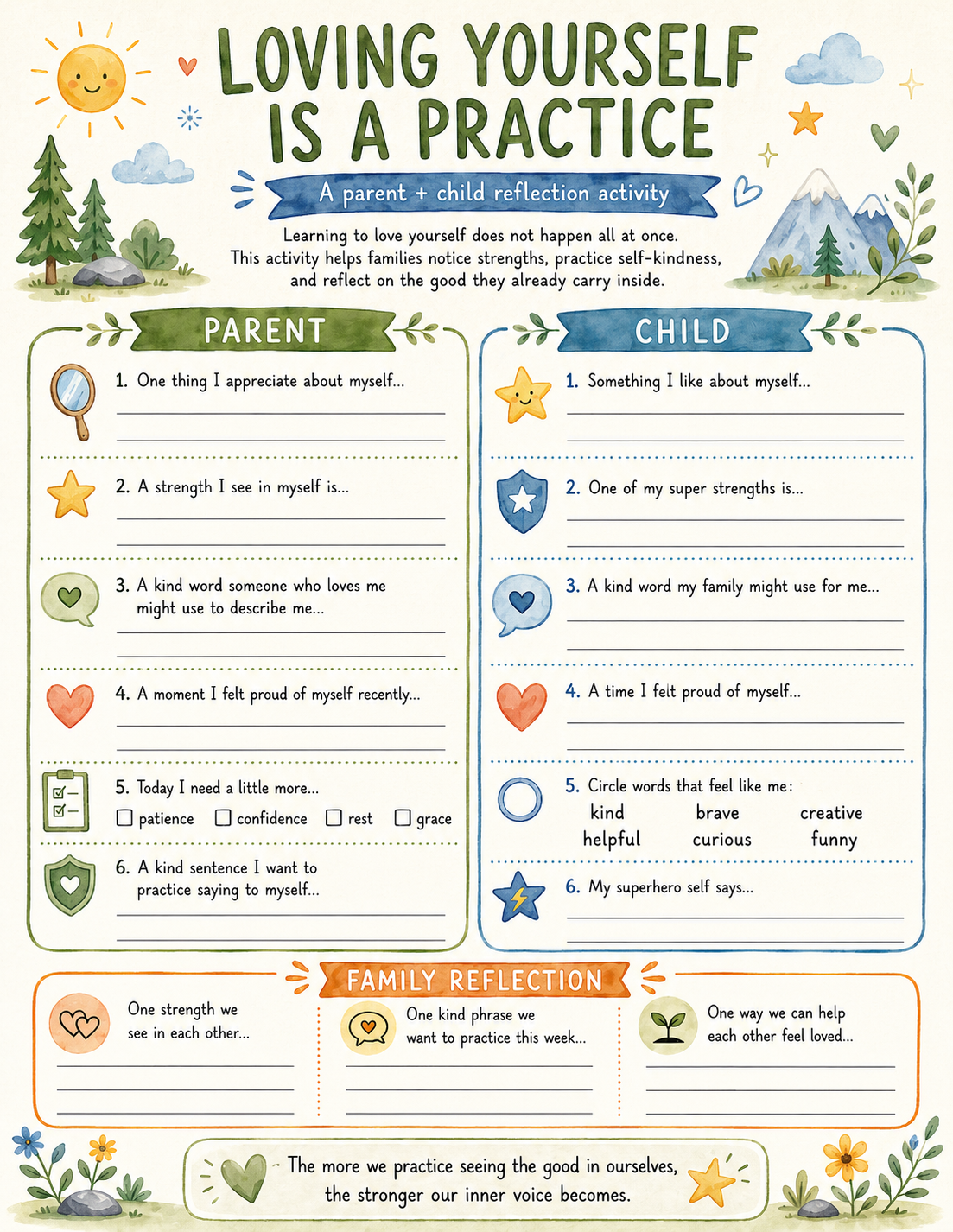
This week’s activity is called:
Loving Yourself Is a Practice
You and your child will each reflect on:
- Things you like about yourself
- Strengths you already have
- Kind words others might use to describe you
- Strengths you see in each other
- One kind statement you want to practice saying to yourself
The goal is not to force confidence. The goal is to practice seeing yourself with honesty and care.
Because children do not build self-love from one compliment. They build it through small, repeated moments of noticing what is already good inside them.
And sometimes the most powerful thing a parent can do is sit beside them and practice the same thing.
Comments ()