
Helping Children Understand Joy, Play, Energy, and Emotional Balance
Start With Yourself
When was the last time you had real fun? Not productive fun. Not multitasking fun. Not “I finally got everything done” relief. Real fun.
The kind where you lose track of time. Where your shoulders drop. Where you laugh without thinking about what is still on your to-do list.
As adults, fun often becomes the first thing we push aside. We always find a way to make something more important.
- Work
- Laundry
- Bills
- Schedules
- Errands
- Responsibilities
And because fun can seem optional, it often disappears quietly. But when we go too long without joy, life can start to feel heavy. We may become more irritable, less patient, less creative, less connected, or less like ourselves.
Fun is not just a reward for when everything else is done. Fun is part of emotional balance. It helps us reset. It helps us reconnect. It reminds us that life is not only something to manage.
It is something to experience.
Connect To Your Child
Children need fun too. That may sound obvious, but it is easy to forget. Kids today can have packed schedules, school pressure, structured activities, performance expectations, and constant comparison. Even play can become organized, scored, or evaluated.
Sometimes children are not missing discipline. They are missing joy. They are missing imagination. They are missing moments where they can simply be themselves without trying to perform, achieve, or improve.
When children have fun, they are not wasting time. They are learning, exploring, building confidence, practicing creativity, releasing stress, and discovering what makes them feel alive.
Fun gives children room to breathe.
Explain The Lesson
The lesson is not that life should always be fun. Children still need responsibility. They need structure. They need to learn how to do hard things. But they also need to understand that joy matters.
Fun helps create emotional balance.
When children make space for joy, they begin to learn what helps them recharge. They learn what brings them energy. They learn what activities help them feel like themselves. They learn that taking care of their emotional life is not only about calming down when something is wrong. It is also about noticing what makes life feel good.
That is an important part of self-awareness.
Parent Application
This week, instead of asking only: “What do we need to get done?”
Try also asking: “What would be fun?”
That question matters. You might ask your child:
- “What was the most fun part of your day?”
- “What do you wish we did more often?”
- “What makes you laugh?”
- “What activity makes you feel most like yourself?”
Then answer those questions too. Let your child see that adults need joy as well. You might say:
“I realized I haven’t done much just for fun lately," or “I feel better after being outside, ” or “I forgot how much I enjoy playing a game together.”
These conversations help children understand that fun is not childish. It is human. It is part of staying connected to ourselves and each other.
Workbook Connection
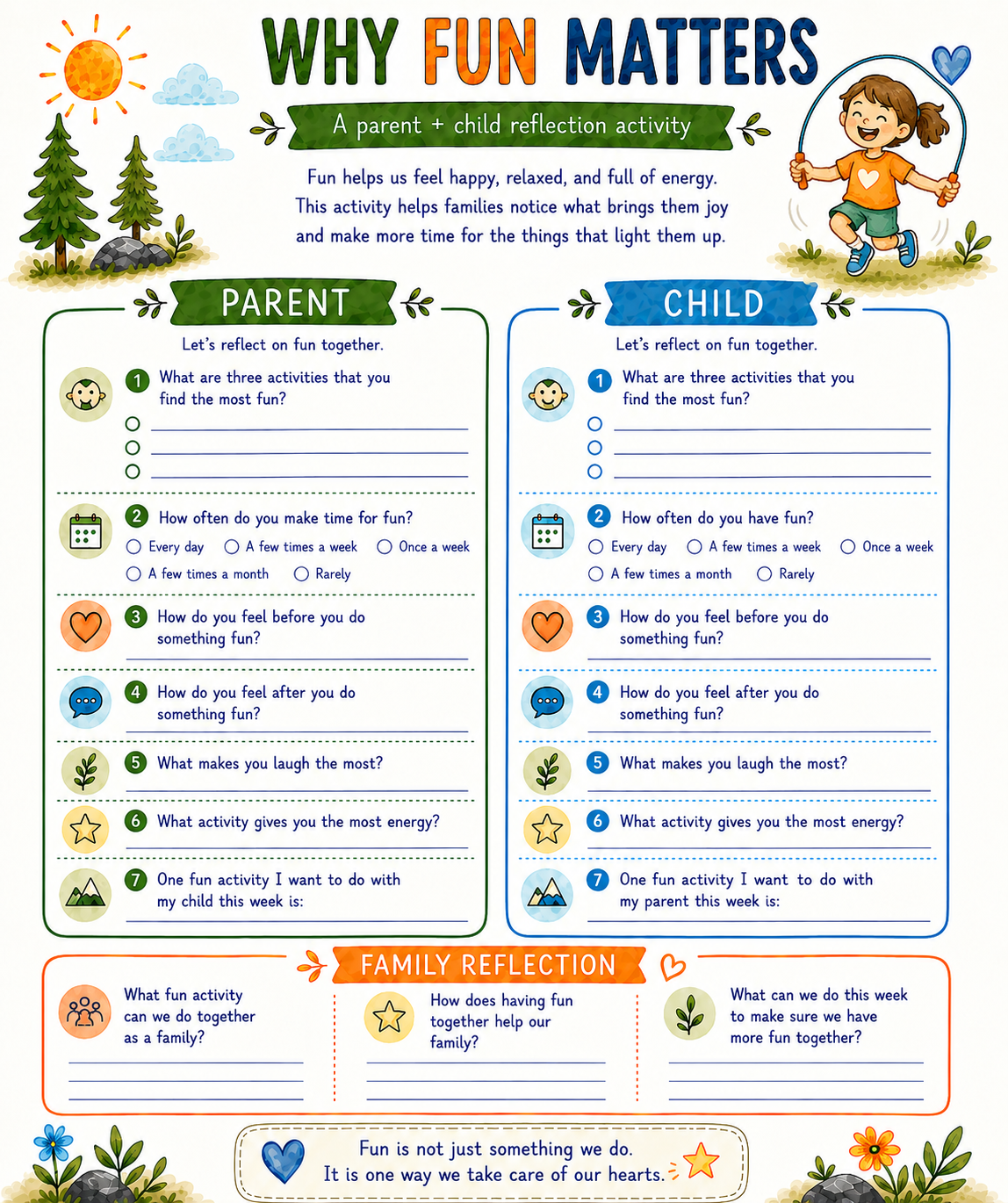
This week’s activity is called:
Why Fun Matters
You and your child will each reflect on what brings you joy, how often you make space for fun, and how you feel before and after doing something playful, creative, or relaxing.
Together, you’ll explore:
- What activities feel fun
- What makes you laugh
- What helps you feel energized
- What helps you feel relaxed
- One fun activity you can do together this week
The goal is not to add another task to the list. The goal is to remember that joy belongs in the rhythm of family life.
Because fun is not just something children do. Fun is one way families reconnect, recharge, and remember what it feels like to enjoy each other.
Comments ()