
Helping Children Understand Positive Relationships and Emotional Support
Start With Yourself
Think about the people in your life who help you feel steady. Not the people who need you to perform. Not the people who only see what you accomplish. Not the people who make you feel like you have to explain yourself perfectly.
The people who help you feel safe.
Maybe it is a friend who listens without immediately trying to fix everything. Maybe it is a partner, sibling, parent, coworker, mentor, therapist, coach, or neighbor. Maybe it is someone who helps you feel more like yourself when life feels heavy.
These relationships matter. They remind us that we are not meant to carry everything alone.
As adults, many of us get used to being the support person for everyone else. We hold the schedule. We manage the emotions. We solve the problems. We keep moving. But even adults need people who help us feel grounded, seen, and supported.
This becomes especially important when stress builds. When we are overwhelmed for too long, everything can start to feel heavier. Small problems feel bigger. Patience gets thinner. Sleep can suffer. Our thoughts can become harder to manage. We may isolate, snap, shut down, or convince ourselves we just need to push through.
Having supportive people in our lives does not erase stress, anxiety, sadness, or hard seasons. But it can help us carry them differently. A safe person can help us slow down when our mind is racing. They can help us name what we are feeling when everything feels tangled. They can remind us of what is true when stress makes our thoughts feel bigger than they are. They can help us feel less alone, which matters deeply for our emotional and mental well-being.
Emotional strength does not mean needing nobody. Sometimes strength means knowing who helps you come back to yourself.
Connect To Your Child
Children need this same kind of support. When kids feel scared, embarrassed, angry, overwhelmed, or unsure, they often look for a safe person before they can calm down. Sometimes they run to a parent. Sometimes they look for a teacher. Sometimes they want a sibling, grandparent, coach, counselor, or friend.
A safe person is not someone who makes every problem disappear. A safe person helps a child feel less alone inside the problem.
That matters because children are still learning how to handle big feelings. They do not always need a lecture. They do not always need a solution right away. Sometimes they first need connection.
They need to feel:
- “You are here with me.”
- “You are listening.”
- “You are not mad at me for having feelings.”
- “I do not have to face this by myself.”
Lesson Explanation
The lesson is that positive relationships help us regulate, reflect, and grow. When children know who their safe people are, they learn that asking for support is healthy. They learn that emotions are not something they have to hide. They learn that strong people still need connection.
This is important because some children may believe they have to handle everything alone. Others may feel ashamed when they need help. Some may not know how to ask for support until their emotions have already become too big. Naming safe people gives children a plan before the hard moment happens.
It teaches them:
- “When I feel overwhelmed, I can reach for support.”
- “When I feel scared, I can talk to someone.”
- “When I feel unsure, I do not have to figure it out alone.”
Positive relationships do not remove every challenge. But they help children move through challenges with more trust, steadiness, and confidence.
Parent Application
As parents, one of the most helpful things we can do is talk openly about support before our children need it. You might ask:
- “Who helps you feel calm?”
- “Who listens well?”
- “Who makes you feel like you can be yourself?”
- “Who could you talk to at school if you felt nervous?”
- “Who helps you feel safe when something feels hard?”
Then share your own answers too.
You might say: “When I feel overwhelmed, talking to a friend helps me slow down.” Or: “When I’m having a hard day, going for a walk with someone I trust helps me feel better.”
This shows your child that support is not weakness. It is part of being human. You can also help your child understand what safe support feels like.
A safe person:
- Listens
- Stays kind
- Helps you feel calmer
- Does not make fun of your feelings
- Helps you think clearly
- Wants what is good for you
This gives children the language they can use to understand the relationships around them.
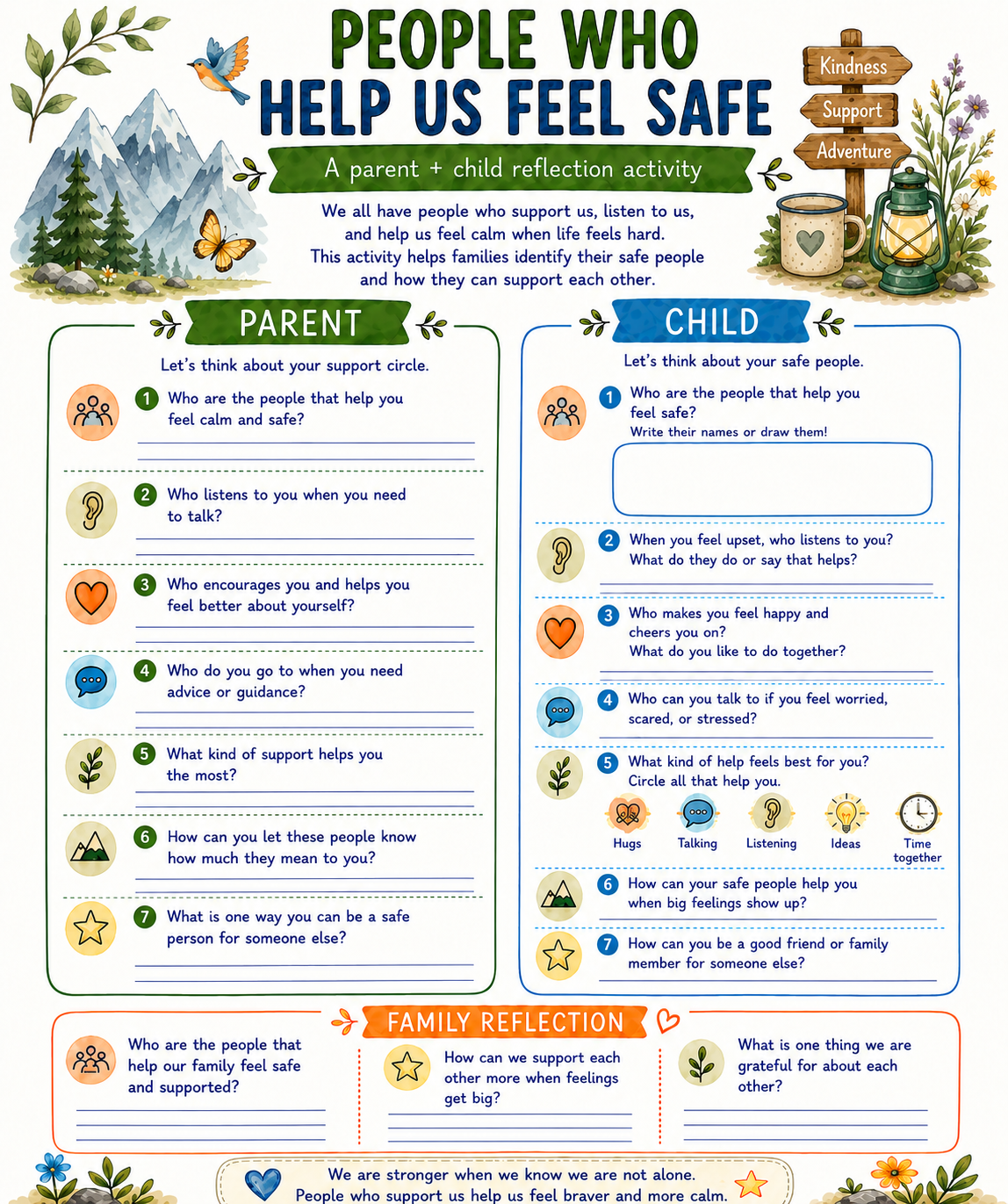
Workbook Connection
This week’s activity is called:
My Support Circle
You and your child will each identify the people who help you feel supported, calm, encouraged, and safe.
Together, you’ll explore:
- Who helps you feel like yourself
- Who you can talk to when feelings get big
- Who helps you feel encouraged
- What kind of support helps most
- How your family can support each other better
The goal is not to create a perfect list. The goal is to help your child see that they are not alone. Because everyone needs people who help them feel steady. Everyone needs someone they can turn to.
And sometimes one of the greatest gifts we can give our children is helping them know who is in their corner.
Comments ()