
Helping Children Learn That Courage Is Sometimes About Showing Up for Someone Else
Start With Yourself
Think about a time when someone around you was struggling. Maybe a friend was going through a difficult season. Maybe a coworker seemed overwhelmed. Maybe someone in your family needed support.
You probably wanted to help. But maybe you weren't sure what to say, or you got nervous from your inner thoughts...
- What if I make it worse?
- What if they don't want to talk?
- What if I say the wrong thing?
Sometimes courage isn't about facing our own fears.
Sometimes it's about stepping toward someone else's pain.
That can feel uncomfortable. It can feel awkward. It can even feel scary. But often, what people remember most isn't that we had the perfect words.
It's that we showed up.
Connect To Your Child
Children experience this too. They may notice a classmate sitting alone at lunch. A friend who seems sad. Someone being left out at recess. A teammate who made a mistake. A sibling who is having a hard day.
Most children want to help. But they may also wonder:
- "What if they don't want me there?"
- "What if someone laughs at me?"
- "What if I don't know what to do?"
Fear can quietly convince children to walk away instead of walking toward someone who needs support.
That doesn't make them unkind.
It simply means they are learning what courage looks like.
Lesson Explanation
Many people think courage means not being afraid. But real courage often looks very different.
- Courage is feeling uncertain...and choosing kindness anyway.
- It is noticing someone who needs a friend...and walking over to say hello.
- It is seeing someone left out...and making room for them.
- It is standing beside someone when it would be easier to stay silent.
Children don't need to solve every problem. They don't need the perfect advice. Sometimes the greatest gift they can offer is simply helping another person feel less alone.
Parent Application
The next time your child tells you about someone who is having a hard time, resist the urge to immediately solve it for them.
Instead, ask questions like:
- "What do you think that person might be feeling?"
- "If that were you, what would help you feel supported?"
- "What's one small thing you could do?"
Help them see that kindness doesn't have to be big.
It might be:
- Sitting next to someone.
- Asking them to play.
- Writing a kind note.
- Sharing a smile.
- Simply saying, "I'm glad you're here."
You can also model this in your own life. Tell your child about a time you checked on a friend, brought someone a meal, sent an encouraging message, or simply listened.
Children learn courage by watching courage.
Workbook Connection
This week's activity is called:
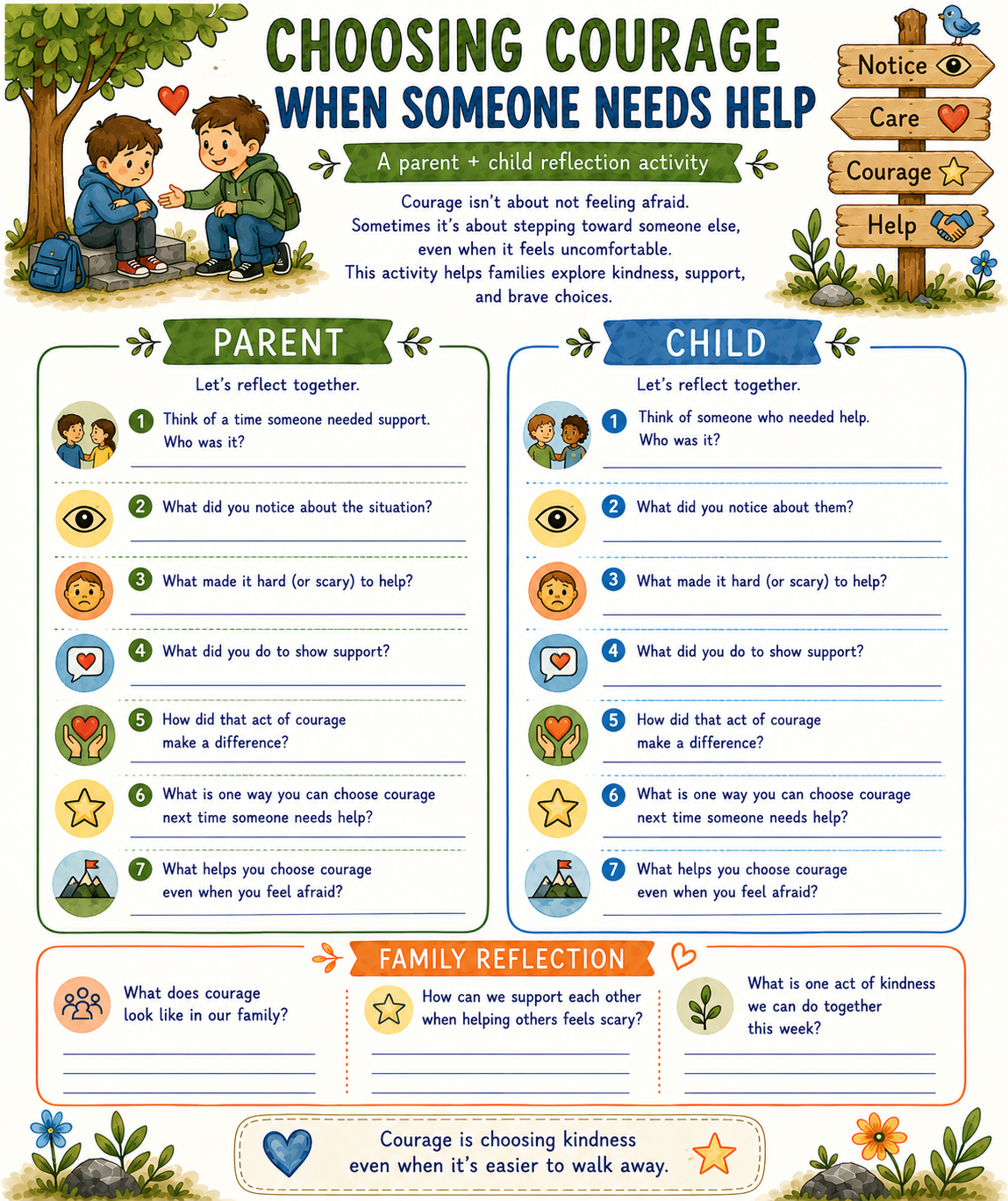
Choosing Courage When Someone Needs Help
You and your child will each think about a time someone needed support.
Together, you'll explore:
- Who needed help
- What you noticed
- What made helping feel difficult
- One small act of courage you chose, or could choose next time
- How helping others can make both people stronger
The goal is not to teach children that they are responsible for fixing everyone. The goal is to help them understand that kindness often begins with noticing.
Because courage isn't always loud. Sometimes courage is simply choosing to walk toward someone who needs a friend instead of walking away.
Comments ()