
Helping Children See What They Have Instead of Only What They Wish Was Different
Start With Yourself
Have you ever caught yourself thinking:
- If only I had more time.
- If only I were more confident.
- If only I looked different.
- If only I had started sooner.
- If only I were better at this.
Most of us have. As adults, “if only” thinking can sneak into our lives quickly and quietly. It often shows up when we compare ourselves to someone else, feel insecure, or believe that life would be easier if one thing about us or our circumstances were different.
Sometimes those thoughts are small. Sometimes they become heavy.
We start focusing on what we lack instead of what we already have. We focus on the person we wish we were instead of the person we are still becoming.
And when that happens, we can miss the strengths, progress, and possibilities already in front of us.
Connect To Your Child
Children fall into the “if only” trap, too. It may sound like:
- If only I were taller.
- If only I were faster.
- If only I were smarter.
- If only I were popular.
- If only I were better at sports.
- If only I looked like them.
To a parent, these comments may seem small or temporary. But to a child, they can feel very real. When children focus too much on what they wish were different, they may start believing they are not enough as they are. They may begin comparing themselves to classmates, siblings, teammates, or friends.
And slowly, their confidence can become tied to becoming someone else instead of learning how to value who they already are.
Lesson Explanation
The lesson is not that children should never want to grow, improve, or change. Growth is good. Goals are good. Wanting to become stronger, kinder, braver, or more skilled can be healthy.
The problem happens when growth comes from the belief:
“I am not good enough unless this changes.”
That belief can turn motivation into self-criticism.
Instead, we want to help children learn a healthier truth:
You can want to grow and still be enough right now.
Both can be true.
- A child can want to get better at reading and still be proud of their effort.
- A child can want to make the team and still value who they are if they don’t.
- A child can want to be braver and still know that feeling scared does not make them weak.
Growth should expand a child’s sense of self, not erase it.
Parent Application
When your child says something that sounds like “if only” thinking, try not to rush past it. Instead of saying:
- “Don’t say that,"
- “That’s not true.”
Try getting curious. You might ask:
- “What makes you wish that was different?”
- “What do you think would happen if that changed?”
- “Do you think there’s anything about you right now that is already strong or good?”
This helps your child slow down and examine the thought instead of becoming trapped inside it. You can also model this yourself.
You might say:
- “Sometimes I catch myself thinking, ‘If only I were better at this.’ But I’m trying to remember that I can learn and still appreciate where I am right now.”
That kind of language teaches children that growth and self-acceptance can exist together. We are allowed to improve. But we do not have to dislike ourselves in order to grow.
Workbook Connection
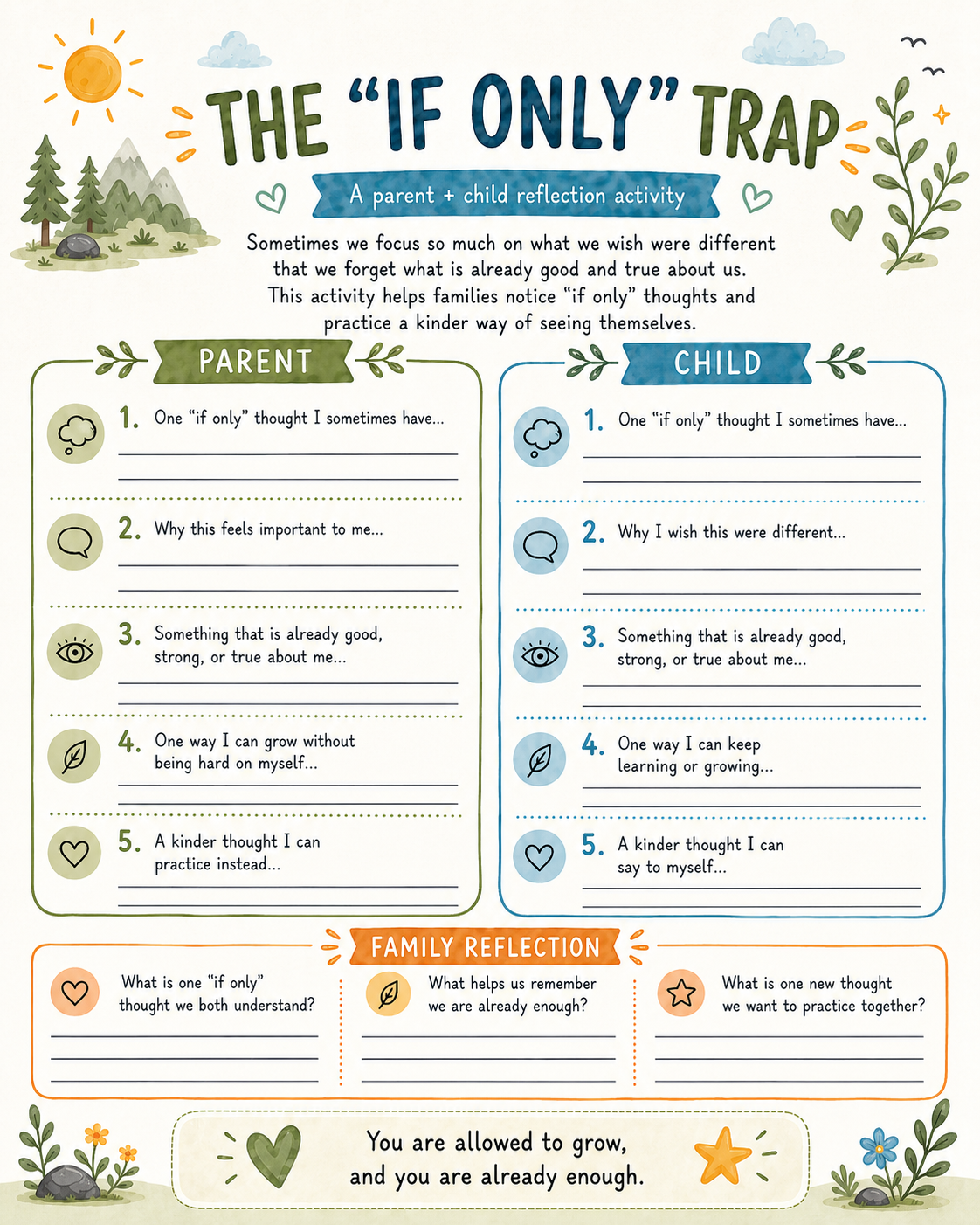
This week’s activity is called:
The “If Only” Trap
You and your child will each reflect on one “if only” thought you sometimes carry.
Together, you’ll explore:
- What you wish were different
- Why that feels important
- What is already good, strong, or true about you right now
- One way you can grow without being hard on yourself
- A kinder thought you can practice instead
The goal is not to eliminate every “if only” thought. The goal is to notice when those thoughts are making us forget our worth.
Because wanting to grow is healthy. But believing you are not enough until you change is a heavy burden for any child to carry.
And sometimes the most powerful thing we can help our children understand is this:
You are allowed to become more. But you are already enough.
Comments ()