
Sometimes Growth Starts by Simply Asking, “How Am I Doing?”
Start With Yourself
When was the last time you honestly checked in with yourself? Not the quick version.
- Not: “I’m fine.”
- Not: “Busy.”
- Not: “Tired, but okay.”
A real check-in.
- How happy do I feel right now?
- How often am I making time for fun?
- Am I taking care of my body?
- Am I taking care of my mind?
- Do I feel connected to the people I love?
- Am I noticing the good things around me?
- Am I showing up for others?
Most adults move through life answering everyone else’s needs before asking what’s happening inside themselves.
We check calendars. We check emails. We check bank accounts. We check homework folders.
But we rarely pause to check in with our own lives.
And when we don’t pause, we can miss important signals. We may not notice that we’re overwhelmed until we snap. We may not notice we’re disconnected until we feel lonely. We may not notice we’ve stopped having fun until life starts to feel heavy.
A life check-in doesn’t solve everything. But it helps us notice. And noticing is where growth begins.
Connect To Your Child
Children need this same skill. They may not always know how to explain what they’re feeling, but they are constantly experiencing shifts in happiness, confidence, connection, stress, and self-worth.
Sometimes a child who says, “I don’t know,” really means: “I don’t know how to explain what’s happening inside me.”
Sometimes a child who melts down isn’t trying to be difficult. They may be tired. Overwhelmed. Disconnected. Discouraged. Or unsure how to ask for what they need.
That’s why regular check-ins matter. They help children build language for their inner world. They help them recognize patterns. They help them understand that feelings are not problems to hide. They are signals to listen to.
Lesson Explanation
The lesson here is simple: We can’t grow from a place we haven’t honestly looked at.
If we want our children to become more self-aware, we need to help them practice asking thoughtful questions.
- How am I feeling?
- What is going well?
- What feels hard?
- What do I need more of?
- What do I want to work on?
These questions teach children that they are allowed to pause and reflect. They also teach them that life is not only about performance. It’s not just about grades, sports, behavior, or achievements.
It’s also about joy. Connection. Kindness. Health. Gratitude. Friendship. Love. And learning how to notice what’s happening inside of themselves.
Parent Application
Instead of waiting until something is wrong, try creating small moments of reflection with your child. At dinner. Before bed. During a walk. In the car.
You don’t have to make it serious or formal. You can simply ask (open-ended questions):
- “What felt good today?”
- “What felt hard today?”
- “What made you smile?”
- “What is something you’re proud of?”
- “What do you need more of this week?”
Then answer the questions too. That part matters.
When your child hears you reflect honestly, they learn that self-awareness is not just something kids are supposed to practice. It’s something families can practice together.
You might say: “I realized I haven’t made much time for fun this week.”
Or: “I noticed I felt better today after going outside.”
Or: “I think I need to be more patient with myself.”
These moments teach children something powerful: We are all learning how to take care of ourselves.
Workbook Connection
This week’s activity is called:
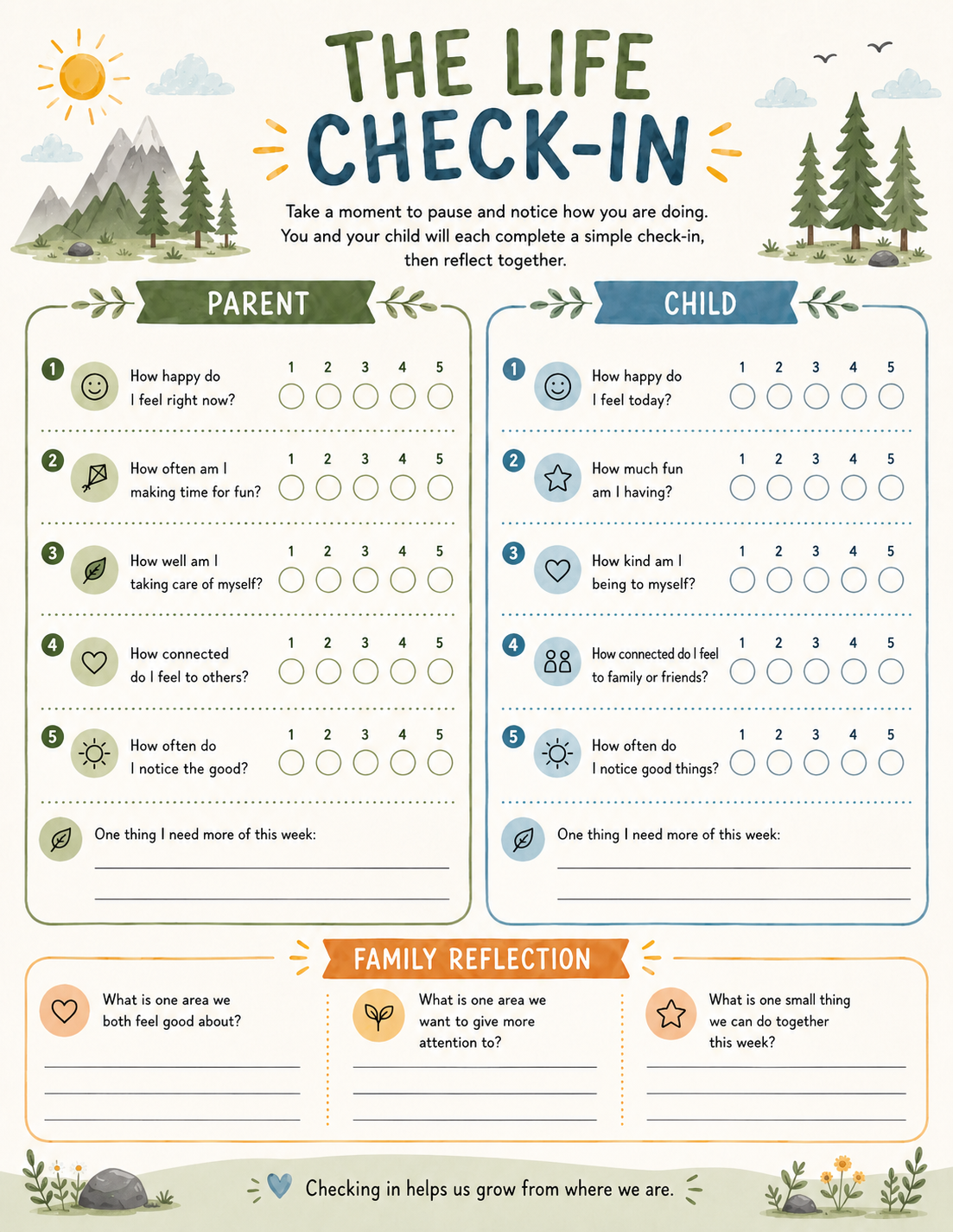
The Life Check-In
You and your child will each take a few minutes to reflect on different parts of your life. You’ll look at things like happiness, fun, self-care, relationships, gratitude, and helping others.
The goal is not to get a perfect score. The goal is to notice.
- What feels strong right now?
- What needs more attention?
- What is one small thing we can do this week to feel more connected, balanced, or supported?
Because sometimes becoming your best self doesn’t start with a big change. Sometimes it starts with one honest question:
“How am I really doing?”
Comments ()