
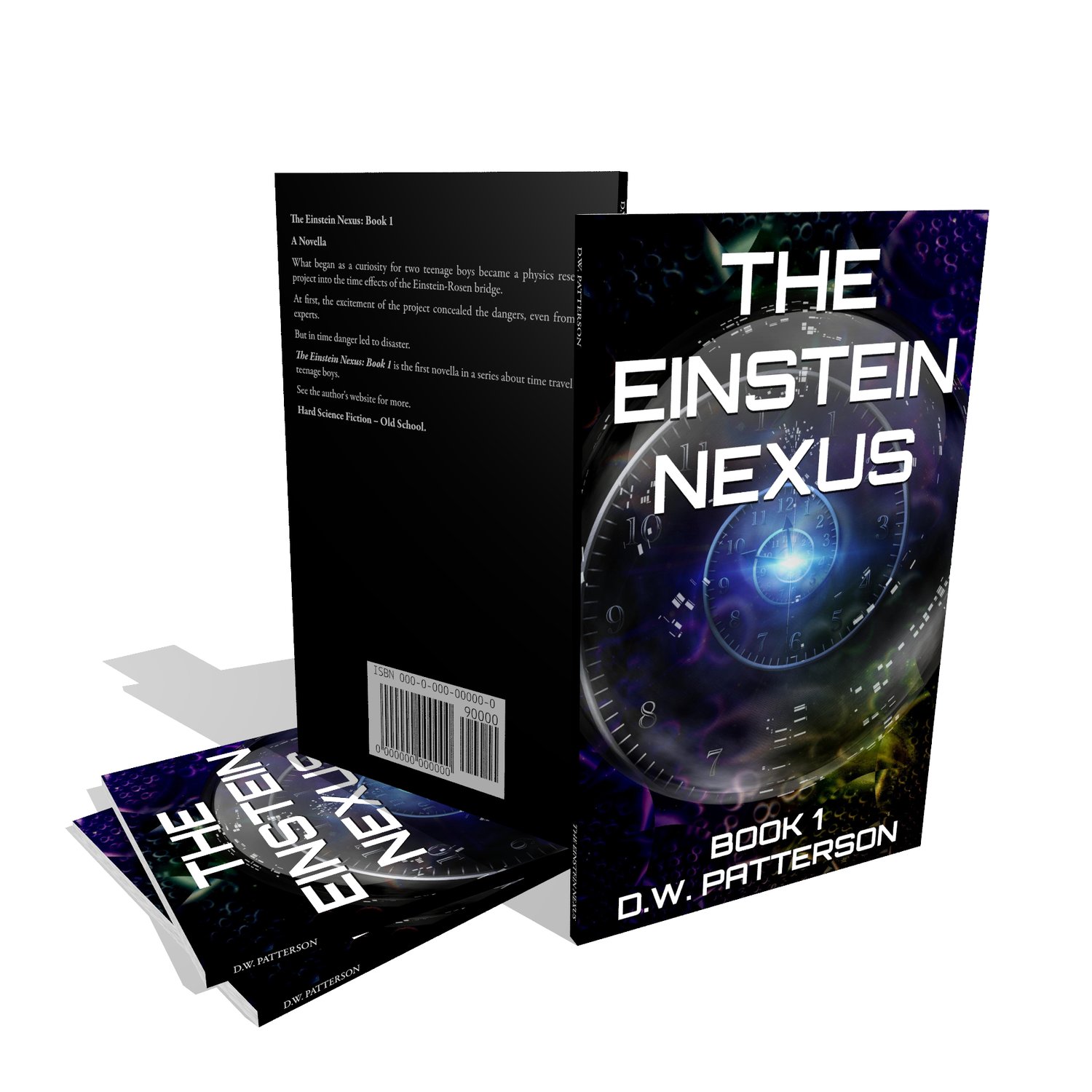
Image – ID 150331607 © Rolffimages | Dreamstime.com
“It was Newton’s theory of gravitation that first assigned a cause for gravity by interpreting it as action at a distance, proceeding from masses. Newton’s theory is probably the greatest stride ever made in the effort towards the causal nexus of natural phenomena.”
— Albert Einstein
Paul was excited; he was turning thirteen today, which meant he could use the shampoo. He understood it would take a few days for full effect, but he should hear from Rothmeyer by the end of the day, if just a blip. Paul got into the shower and bathed; he then used the shampoo on his hair. He kept expecting to feel something, but all he noticed was a little tingle on his scalp, which wasn’t unusual.
He finished his shower and went to the bedroom, where his computer pad with the AI agent Rothmeyer set on the desk.
“Rothmeyer, are you there?” said Paul.
“I’m here. What can I do for you, Paul?”
“I just had my first application of Hair Link,” said Paul.
“So, we can have augmented communication,” said the AI agent.
“That’s right, you know the frequencies, don’t you?”
“Yes,” said Rothmeyer. “I will test the connection from time to time with a test message.”
“Good,” said Paul. “Let’s go up to the attic; I want to look through the library before school.”
School wasn’t what it used to be. With only screens and projections, Paul thought everything ephemeral
except for his dad’s old books. His dad had gone to college when textbooks were still available on paper, and he had kept most of his, though the pages were beginning to yellow and some had a musty smell. His dad’s stash of old magazines and paperback books was mostly science, electrical engineering, and science fiction.
That’s what Paul enjoyed most as he sat among the old collections and read through the titles: Digital Logic, Semiconductors, ASIC Design, Foundation, Cities in Flight, Mach’s Metric, Engineering Electromagnetics, and others. His dad didn’t read them anymore but used screens only. He would have thrown them out if not for Paul.
Up in the attic with the light pouring through the transom, Paul forgot his educational agents and their curricula plans and read whatever he wanted for as long as he wanted. Often, he would finish a chapter in one of the textbooks and open a chapter in one of the science fiction books. For him, these times were perfection, but not for his dad.
Paul thought he heard something.
“Jommy.”
“What?” he said. “Who is it?”
“Paul, you up there?”
This time it was definitely someone.
“Yeah, Dad, I’m just reading,” said Paul.
“Well, come down here, I want to talk to you,” said Walter Anderson.
Paul closed the book he had been reading, Alternate Worlds, picked up Rothmeyer, and headed downstairs. As he emerged from the attic staircase, his dad was waiting.
“Paul, your educational agent says that you are behind in your studies and now I catch you upstairs reading those old books instead of studying.”
“Sorry Dad, I was just taking a break.”
“Well, if you don’t get finished with your studies, you’re not going to be able to watch the landing on Titan.
They’re beaming it back, real-time, through the wormhole,” said his dad excitedly.
“I know, I’ll go finish up right now,” said Paul.
Paul’s room was cluttered, even for a thirteen-year-old. Old board games, models made and not made by his 3D printer, and of course books in paperback and hardback were everywhere. He also had reproductions of old movie posters; some of the movies were over a hundred years old.
He went to his desk; he heard the voice again saying, Jommy. This time it couldn’t be his dad; it was too close.
“Who is that?” asked Paul aloud.
It’s me, Rothmeyer.
He picked up his AI agent.
“You,” said Paul.
Yeah, remember the augmentation shampoo?
“It worked,” said Paul.
I’m not using the speaker.
Rothmeyer then explained to him that the name Jommy was from an old science fiction novel and asked
Paul what he wanted to do. Paul told him he needed to finish his studies. Rothmeyer projected the screens, and Paul busied himself manipulating the symbols and answering the questions Rothmeyer posed. Sometime during his studies, he started hearing the text he was reading in his head.
“Rothmeyer, is that you?” asked Paul.
Possibly. I was reading along with you, and somehow, I knew where you were in the text.
“It’s really working!” said Paul.
I guess so. Do you want to continue?
--Yeah, let’s go.
Paul thought it before he said it and then realized what had happened.
--Rothmeyer, can you hear me?
Of course, we’ve established that.
Paul finished his studies quickly and easily with Rothmeyer’s augmented prompting. He was reading one of his old paperback books to Rothmeyer, At the Earth’s Core, when his dad called.
Paul joined his father, mother, and younger sister in the family room. He was going to tell them about the link, but as usual, his dad was fooling with the wallscreen, adjusting the vertical, adjusting the horizontal.
“Walter, I think the agent can do that better,” said Paul’s mom.
Paul’s sister, Charlotte, giggled.
“You know I like to do it myself, Harriet,” said Walter.
“Yes dear,” said Paul’s mom.
By the time Paul’s dad was finished with his adjustments, the scene on the screen showed a picture of pale hills with dark flowing marks running into a dark plain. Then they heard an astronaut’s voice.
“We believe the hills we are seeing are mostly composed of water ice. The dark areas you see are dark organic compounds washed down the hills by methane rain. We will soon be making EVAs to confirm these theories.”
The picture on the wallscreen changed as the camera rotated. Soon they were staring at a dark plain covered in small rocks and pebbles.
“If you look at the base of these rocks on your screen, you will see signs of erosion. This indicates the possibility of fluvial activity, that is the flow of a liquid, a methane rain or some other hydrocarbon,” said the astronaut.
The broadcast continued for another hour with Paul and his dad glued to the screen while his mom and sister drifted away. Eventually, the broadcast ended.
“What do you think, Paul?” asked his dad.
“It’s hard to believe, isn’t it, Dad? We saw the same thing the astronauts were seeing. I’ve got to figure out how that wormhole generator works,” said Paul.
“You think you have enough physics to understand it, son?”
“Probably need a little more,” said Paul.
“Well, maybe you should study some more before dinner,” said his dad.
After dinner that night, Paul was in his room reading about the wormhole generator. The research went quickly as the link became stronger and stronger between himself and Rothmeyer. He found out that the generator had been invented by AIs under the supervision of Dr. Winton Whitehead of New Hope University.
It was meant to be a communication portal, but the AIs balked when the research turned to using it for transport. They said it was too dangerous for human use because of the massive energy requirements.
Whitehead proceeded without the AIs’ support, and the first test of such a transportation device failed with frightful results, destroying the ship and the nearby space station. Lives had been lost and research suspended.
The investigation into the disaster had concluded that because of the tremendous amount of energy involved, spacetime had ‘broken’ down locally. Fortunately, the effect diminished rapidly with distance from the generator.
With Rothmeyer’s help, Paul learned the spacetime effect was similar to a phase change, like water turning to ice. But in this case, anything caught in the spacetime transformation would be destroyed.
Spacetime had broken up in such a way that ordinary matter disintegrated. Since then, no one had dared repeat the experiment. The need to understand the connection between the concentration of energy and spacetime disintegration would have to come first.
Paul decided he would talk to his buddy Rudy Brucker to see what he knew about wormhole engineering.
At thirteen, Brucker was one month older than Paul; he was also skinnier and taller. Both boys were still shy around girls and spent much of their spare time reading.
“Hey, Rudy,” said Paul on the video link.
“What’s up?” asked Rudy.
“First, I got my agent link up and working today,” said Paul.
“It’s cool, ain’t it?” asked Rudy.
Rudy had started using the link the previous month.
“Sure is, but its distance is limited, ain’t it,” said Paul.
“Yeah, you have to be close to your AI,” said Rudy.
“By the way, did you see the Titan broadcast?” asked Paul.
“Yeah, I watched most of it,” said Rudy.
“Wormhole communication is pretty amazing, isn’t it?” said Paul.
“Unbelievable.”
“I’ve been trying to figure out how it works,” said Paul. “What do you know about it?”
“Probably no more than you,” said Rudy.
The boys then exchanged what information they had on how a wormhole generator worked with their agents’ offering details.
“It’s pretty amazing that the same generator opens both mouths of the wormhole,” said Rudy.
“Yeah, I thought about that,” said Paul. “I think that’s why it takes so much energy to open the wormhole from the near mouth to the far mouth.”
“You could be right,” said Rudy. “But as far as I know, that’s the only way to do it.”
“Well, I’m going to try to figure out exactly how it works,” said Paul.