





THE UNESCO HISTORIC MONUMENTS OF KYOTO
THE UNESCO HISTORIC MONUMENTS OF KYOTO
Published May 2026 · Heritage Travel Asia
PDF & e-zine link (Both links re-delivered by email after purchase - RSVP rupak@heritagetravelasia.com)
THE UNESCO HISTORIC MONUMENTS OF KYOTO examines Kyoto's 17 UNESCO World Heritage monuments through the lens of professional urban planning, architecture, and heritage regeneration. It delivers heritage intelligence covering sacred landscape planning, heritage cluster analysis, a five-day strategic itinerary, accommodation intelligence, and visit protocols — written by an urban planner, architect, and heritage regeneration specialist with 25 years of international experience.
What this Brief covers:
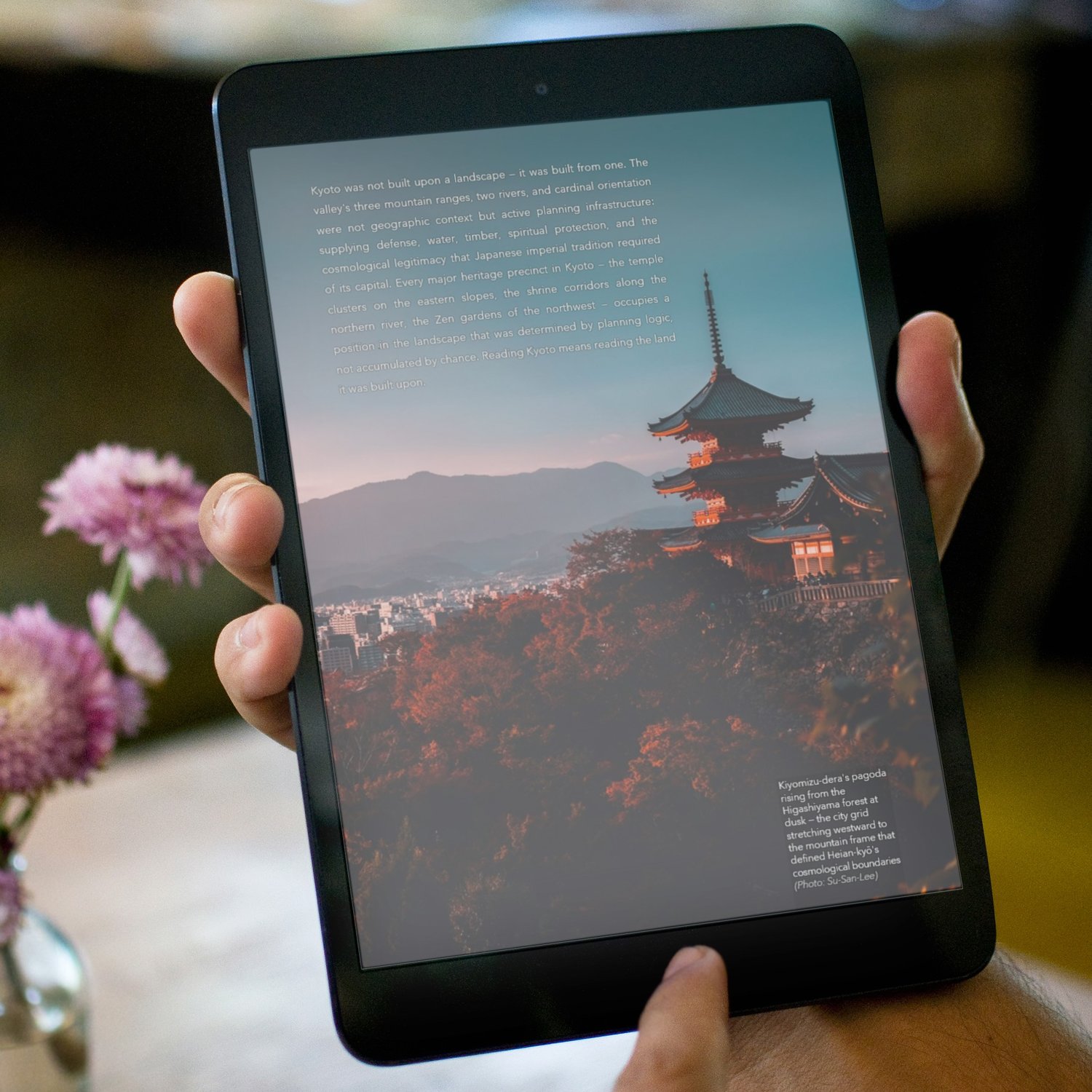
Why Emperor Kammu chose this specific valley in 794 and how the original Heian-kyo grid still governs the city's structure today. How temples were deliberately excluded from the city core and repositioned on mountain slopes as spiritual guardians. Why the Kamo River was a more consequential planning element than the grid itself. How four distinct heritage clusters — the Eastern Mountain Precinct, the Northern Shrine Circuit, the Imperial and Zen Core, and the Outlying Precincts of Arashiyama, Uji, and Otsu — each represent a different layer of the city's planning history.
What you receive:
A 60-page A4 professional document covering eight sections: the founding of the imperial capital, UNESCO inscription criteria and authenticity, sacred landscape analysis, heritage cluster planning intelligence, conservation framework and contemporary context, seasonal visiting strategy, a five-day strategic itinerary sequenced by planning logic, accommodation intelligence across three tiers, and insider access protocols including reserved sites and restricted heritage properties.
Who this Brief is for:
Travellers who study monuments to understand how power, faith, and spatial intelligence intersect — not merely photograph them. Luxury travel advisors preparing culturally sophisticated client itineraries. Anyone visiting Kyoto who wants to understand what they are looking at and why it was placed where it is.
About the author:
Rupak Chatterjee is an architect, urban planner, and heritage precinct regeneration specialist with more than 25 years of international experience across historic cities, cultural landscapes, and conservation programmes. He is the founder of Heritage Travel Asia.
Hospitality and travel advisor enquiries — rupak@heritagetravelasia.com