
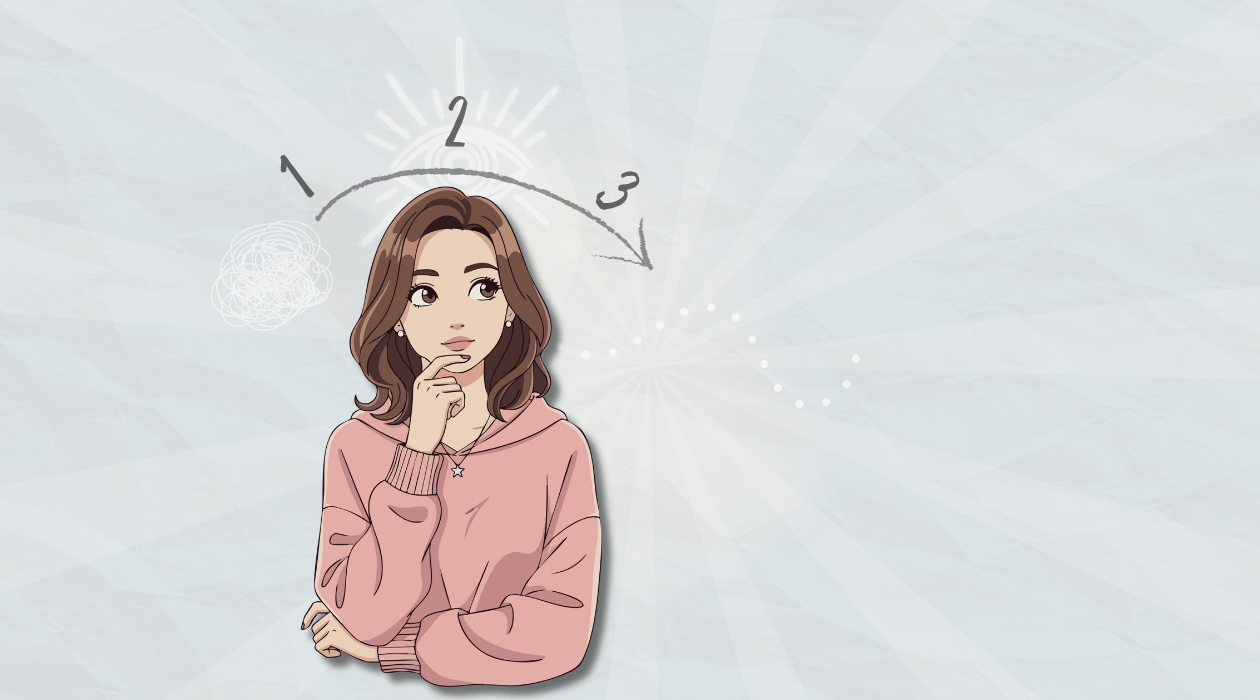
You know that moment — your toddler starts melting down out of the blue (again), and suddenly you start to scream, “WHAT DO YOU WANT FROM ME?!” 😩
It’s not your proudest moment, but let’s be honest — toddler parenting can sometimes make even the most zen parent lose it.
But here's the thing, it's something my Montessori training taught me, and years of real-life experience with toddlers continually confirmed:
👉 If you can step back (emotionally, and sometimes physically) and start seeing their behaviors as clues instead of personal attacks, everything changes.
Because once you learn to see the why beneath the behavior — not just how it’s showing up — you can actually figure out how to help🌿
Learning to do this isn't just good for them, it's also good for you.
Why Observation Is Parenting Magic
Your toddler’s brain is still under construction.
The prefrontal cortex — the part that controls logic, impulse, and emotional regulation — won’t be fully developed for years. It's growing and learning, but it's not quite there yet, especially in those "terrible twos".
The emotional part of their brain (the amygdala🚨) is fully online and running the show — pretty much operating the way it has since birth.
That’s why when they’re overwhelmed, frustrated, or just desperate to get their way, they don’t talk it out — they explode.
Combine that with the fact that they don’t fully understand language, their emotions, or how to effectively communicate yet, and it's no wonder things can spiral fast.
But here’s the mistake many toddler parents make: 🚒They react to the surface behavior (“Stop screaming!” “What do you want?!”), trying to stop the noise instead of responding to the need.
Sound familiar? If it does, don't feel bad; it's a very common reaction.
There's just one little problem...
When that happens, your own stress response kicks in. 🚨🚨🚨
Your body floods with cortisol and adrenaline — the “fight-or-flight” chemicals — which shut down your prefrontal cortex, the part of your brain responsible for calm, logic, and empathy.
In that state, it’s almost impossible to respond helpfully.
Shifting into observation👀 mode does the opposite — it helps your body calm down instead of gear up.
When you 🧘♀️pause and focus on watching instead of reacting, your nervous system gets the signal that you’re safe.
Your breathing slows, your heart rate steadies, and your prefrontal cortex reactivates — putting you back in charge of your emotions.
That’s when you can actually start to see what your toddler needs, instead of just what they’re doing. 🌿
Observation helps you slow down enough to find the why behind the behavior — tiredness, hunger, overstimulation, lack of structure — instead of getting pulled into the emotional storm.
It’s not about ignoring them or being coldly detached; it’s about calmly noticing patterns, triggers, and cues that help you respond in a way that addresses the behavior by dealing with the root cause. 🧠
And it all starts with you.
When you calm yourself, step back, and observe, you shift from reacting to your child to learning about them.
When you learn to do that, you'll start seeing your toddler not as a problem to solve, but as a little evolving person whose development you can support. 💛
Try This Method Today: 🛑Stop–👀See–🦺Support
1️⃣ 🛑Stop and get neutral: Pause, breathe, give yourself a moment, and don't instantly react. Don’t let your emotions hijack your perception. Tell yourself to "stop" out loud if you have to; this engages your prefrontal cortex and helps to keep you "in the moment". Remind yourself: this behavior is a signal, not a threat. 🌬️
2️⃣ 👀See what’s really happening: Shift into observation mode. Watch, listen, and look for clues about why the behavior might be happening.
- Are they tired?
- Hungry?
- Overstimulated?
- Frustrated?
- Did their routine change?
- Is something different?
- Are they testing a limit?
- Or just having a hard time accepting "no"? 👀
Seeing means trying to notice what might be the cause beneath the chaos — not the noise, but the need.
3️⃣ 🦺Support the need, instead of fighting the noise: Once you spot what’s driving the behavior, respond with calm and connection:
- Offer a snack if they’re hungry.
- Give a quiet space if they’re overstimulated.
- Get outside if they’re restless.
- Hold your boundary if they’re testing it — with calm consistency.
When you support instead of trying to suppress, you’re helping them cope — rather than demanding the impossible (for them to stop a behavior they can't control, yet).
When you do this, you teach your toddler that emotions are safe, problems can be solved without panic, and that you are an ally, not an aggressor, and they can trust you. 💛
And here's a little something special just for you, to help remember the lesson:
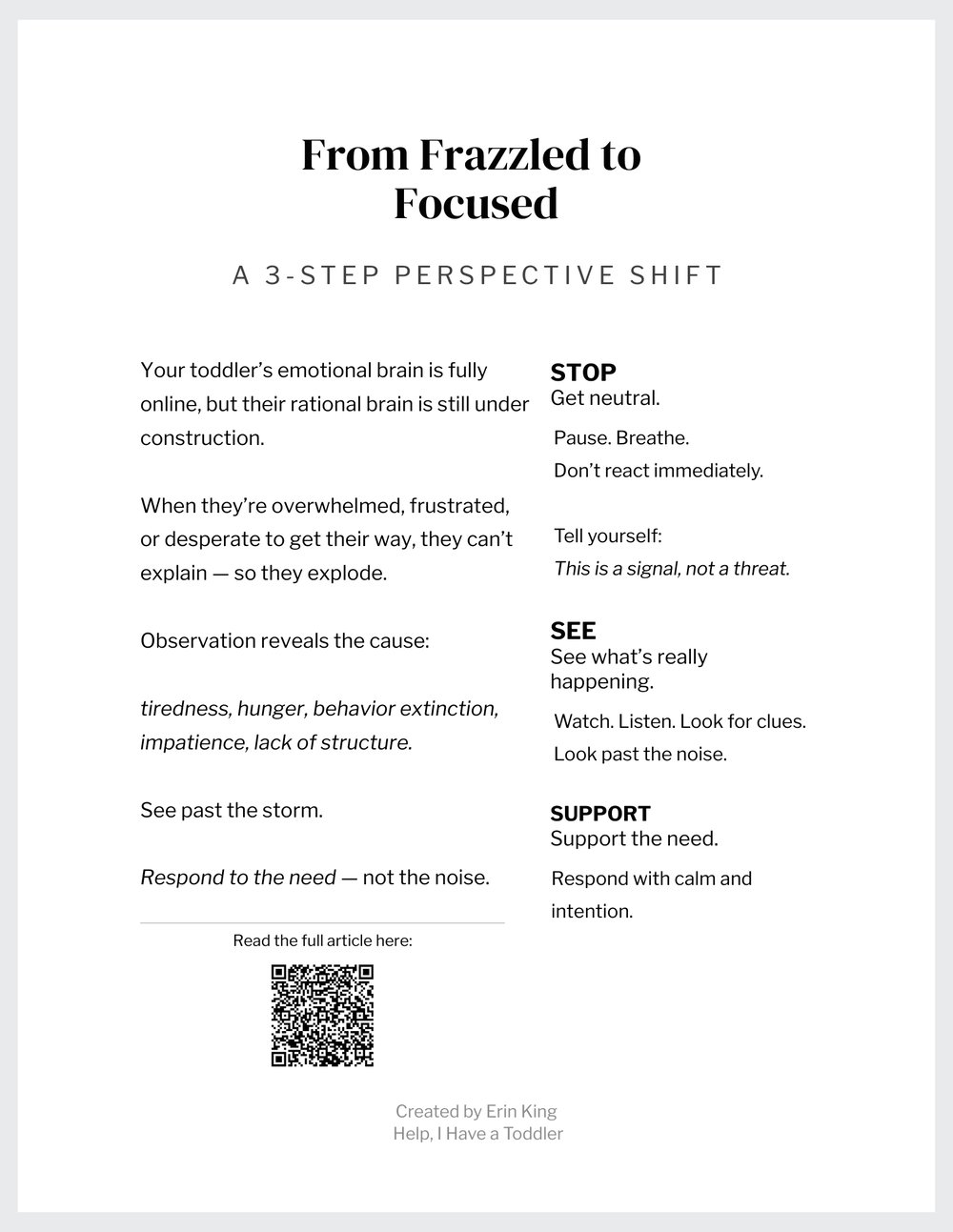
You won't find this in my regular resources section; this is a special private link just for toddler moms who read this post. A gentle reminder to print and post on your fridge.💗
I know you want fast solutions, and this can help you stay on track.
CLICK HERE for exclusive access to your very own FREE "Frazzled To Focused Cheatsheet."
Why This Works
This works because staying neutral helps you take what you're seeing and analyze it rather than getting freaked out and trying to fight it, and when you're calm, you can think.
🧘♀️A neutral approach means:
- ✅ You stay calm and grounded.
- ✅ You don’t take their behavior personally.
- ✅ You stay emotionally open.
- ✅ You get a clearer picture of what’s really happening.
- ✅ You teach emotional regulation by modeling it.
- ✅ You stop trying to control — and start connecting.
When you shift from reacting to your toddler’s behavior to learning from it, you begin to see your child not as a problem to fix, but as a little human whose development you can guide with empathy and confidence.
💡 Quick Tip: Start a simple paper or phone journal to remember what you notice — patterns, triggers, time of day, hunger cues, or transitions that set things off.
Over time, you’ll begin to see patterns to prevent meltdowns before they start, and understand what other behaviors really mean.
Remember: Being an observer doesn’t mean ignoring — it means staying neutral, curious, and compassionate so you can respond with intention rather than reacting emotionally.
You've got this, Toddler Mama!💛
And I've got you.
If you want a deeper dive into what can cause toddler meltdowns, try reading this:
If you'd like some FREE resources to help you parent through the behavior, these might help:
Check out my store for more resources to help you thrive through these important toddler years!