
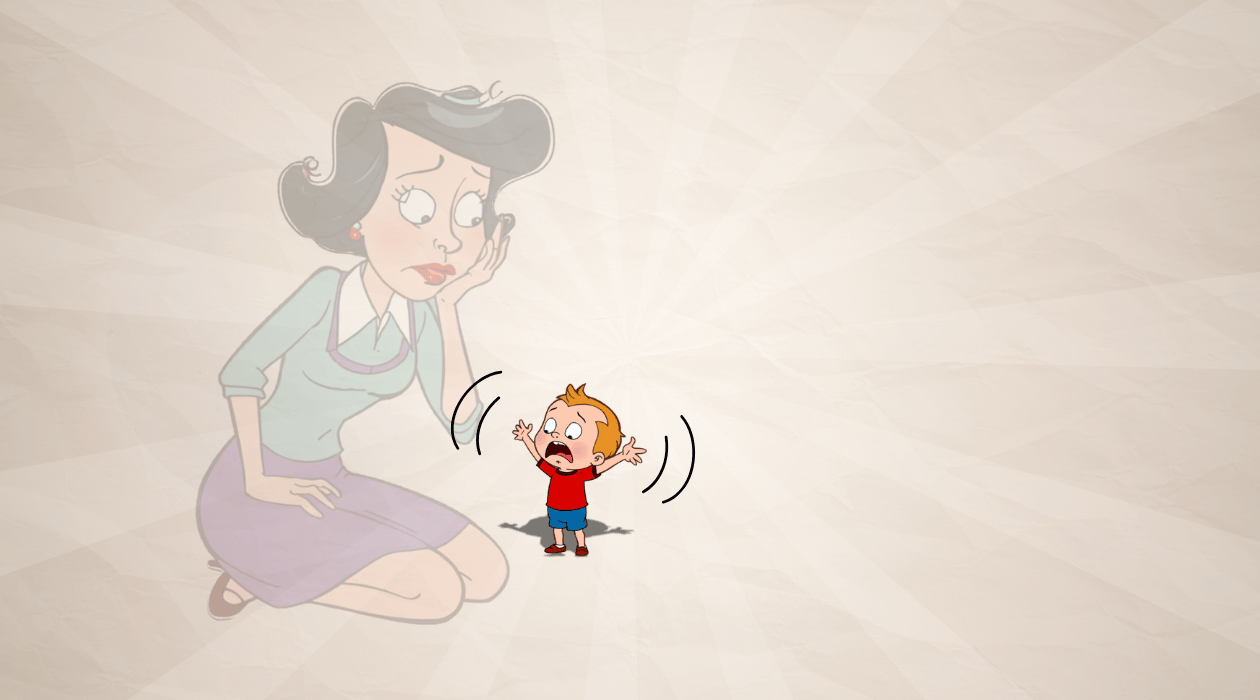
If you’ve ever asked yourself, “Why does my toddler meltdown about literally everything?” — you’re not alone.
When you're watching them go from "I LOVE you, Mommy!" to flailing on the floor screaming, "I WANTED THE BLUE CUP!!!" It's easy to feel like a terrible parent or, even worse, like there's something wrong with your child.
But what if I told you these meltdowns are normal and even serve a purpose for your toddler's development?
And understanding what’s happening can completely shift the way you feel about these meltdowns — and how you react to them.
The Toddler Brain Is Under Construction
Your toddler may look like a shrunken-down adult, but nothing could be farther from the truth.
In fact, their brain is still very much a work in progress, and it's during these toddler years that about 80-90% of their brain development will happen.
At birth, babies operate mainly from the brainstem, which controls basic survival functions like breathing and reflexes.
The amygdala, the part of the brain that processes fear and anger, also kicks into gear shortly after birth.
When you think about it, that's important if you’re a tiny, helpless baby with no language or communication skills and no way to interpret your world except through how things make you feel.
You need to be able to react big to everything that bothers you so that someone knows there’s a problem and will take care of you.
Remember how your newborn screamed when they were hungry or poopy?
That was your baby communicating with you the only way they could.
But here's the thing: the amygdala just reacts; it doesn’t manage those emotions.
And when you're dealing with a baby, this is the expectation.
Then, when those toddler years begin, things start shifting fast, and as your toddler starts to look more like a little grown-up, your expectations shift as well, but you may be expecting too much too soon.
It's easy to forget that their brains aren't quite there yet.
Because here’s the kicker: the prefrontal cortex — the part of the brain responsible for emotional regulation, impulse control, and reasoning — is still years away from being fully online.
So when your toddler has a tantrum, it’s not because they’re being manipulative or dramatic (although how you deal with it will determine if they become manipulative or dramatic) — it's just that their emotional brain is still running the show because the rational part isn’t ready to take over yet.
Big Feelings + No Filter = Meltdowns
Toddlers don’t have the language, self-awareness, or self-control to express their feelings calmly.
So when their brains get flooded with emotion, they can't hold it together because they haven't created the internal mechanisms necessary to manage themselves - yet. (Spoiler: That's what they're working on during toddlerhood.)
That’s why they cry, scream, hit, or throw themselves on the floor: They’re overwhelmed. They're not deliberately being "bad."
But emotional overload isn't the only thing going on.
This is also the time of life when they're trying to internalize and understand boundaries and how society works, so this is a massive, confusing learning curve for them that can be especially difficult if you're a disorganized or reactionary parent.
Even the slightest disruption — the wrong shoes, a skipped snack, a change in routine — can feel like the world is falling apart to a toddler with no experience to draw on for comfort.
Remember, they don't have a ton of memories built up in their brains to reassure them that things usually stay the same or will be okay.
To us, life isn't a big deal; we get it because we've lived it.
To them, it’s a vast, dangerous unknown.
Their internal world is still forming; every unfamiliar moment or unmet expectation can feel confusing and scary.
Brains Crave Predictability
Your toddler's brain is wired to find patterns, and so is yours.
We're all wired to find patterns; it's how we make sense of our world and how we evolved to cope with the enormous amounts of information we constantly take in.
Instead of remembering every single detail of our world, we identify and remember the general patterns.
Your toddler is in the process of analyzing their world to internalize (internally remember subconsciously) the patterns.
Keeping things consistent helps your toddler feel calm and secure. Knowing what to expect makes it easier for them to understand their surroundings and manage the expectations they’re learning to navigate.
You might think that keeping to routines and consistency will make your toddler more dependent on them, but it's actually the opposite.
Toddlers thrive on routine and sameness because it helps them cope in a world that feels very chaotic, but the paradox is that the more consistency they get, the less they need.
There's a reason for that.
I noticed at my daycare that the more consistency a toddler experiences over time, the more resilient they become. When things go off track, toddlers who have experienced consistency are more flexible and better equipped to bounce back.
This is because consistency helps them develop an internalized sense of organization, allowing them to reset themselves more effectively.
What that means to you as a parent is that if you can keep their world mostly consistent and organized during these toddler years, especially from about age 1 1/2 onwards, as they get older, and their neuropathways internalize structure and clear patterns (basically an understanding of the world and how it works), they are more able to tolerate their outer world being "unperfect" and can bounce back easier from within when life happens.
Believe it or not, when you move the furniture, change the order of bedtime steps, or take a different route home, it can short-circuit their little brain, flood it with fear, and cause them to overreact (because they haven't developed that prefrontal cortex yet that manages those big emotions).
And that, my friend, is how meltdowns happen.
They're not trying to drive you crazy, even though it can feel that way.
It's just that their developing brain is doing its best to build an internal map of how life works, and when things get too random, it's frustrating and scary, and so much harder for them to create that map.
Help Them Process Big Emotions, Don't Suppress
It’s also all too tempting to try to do whatever it takes to make a tantrum stop. (I get it, boy, do I get it.)
Bribing, begging, distracting, or negotiating can feel like the only lifeline when your toddler freaks out in the grocery store, but those aren't the only options.
DISCLAIMER: ***I'm not necessarily telling you to let them meltdown in the grocery store - I'm also not, not telling you to either - but it might be a good idea to have an escape plan or some other routine you implement that you've pre-planned for when public meltdowns happen that doesn't involve bribing, begging, distracting, or negotiating. Something you'll do not out of embarrassment or panic, and definitely NOT something that rewards the behavior, but a concise action to a safe place to allow your child to pull themselves together.***
Because here’s what I’ve learned after ten years of working with toddlers: The ones who are allowed to feel their big feelings — safely, without being cut off or "fixed" — are the ones who learn to regulate themselves faster in the long run.
But this isn't about ignoring the behavior; it's more about not feeding or getting drawn into the drama. Parents who know how to stay calm through a tantrum without rewarding the behavior have toddlers move through this phase the fastest.
And even though society seems to have forgotten this, your toddler will melt down in public every now and then, and that's nobody's fault.
Other people are allowed to be annoyed and to tut; there will always be someone who will, but that's just life. It's nothing you need to concern yourself with; just ignore them and get on with the act of parenting.
Because trying to cut off a tantrum disrupts critical brain development, when you try to stop this emotional processing from the outside instead of letting your child work through it and feel it right to the end.
This is because the brain needs to complete this important emotional cycle repeatedly to create the neural pathways that will eventually become emotional regulation.
Think of the brain as a big field of tall grass. The first time a toddler does something—like calming down after a tantrum or using a new word—it’s like walking through the grass and flattening a path just a little.
The more times they repeat that behavior, the more worn and clear the path becomes.
Eventually, it becomes a well-worn trail that’s easy to follow—this is a strong neural pathway.
I could always tell a child who was never allowed to ride out a tantrum because their tantrums would be totally out of control and very long.
It was like their brains got stuck in a loop because they'd never been able to get to the end of the cycle and move on to the next task.
Letting them process these difficult emotions is like giving their prefrontal cortex a workout - like your child going to the gym for their feelings.
I had many children who would have hour-long tantrums (sometimes more), and what I did was I made sure they were safe, then I sat back and let them go at it, didn't buy into the drama, and for sure, I didn't give them what they were tantruming for, I just let them get on with it.
When I did this (and it wasn't easy), that child's tantrums would become less and less severe as they learned and then mastered the ability to rein in their emotions. Over time, the tantrums would fade, and eventually, they'd pass through that phase and move on.
They would still throw tantrums for their parent if they'd learned that was how to get what they wanted at home, but they'd learn that there was a different expectation at my house.
At my home, the expectation was that we communicate our wants and needs appropriately.
So, staying calm, not giving in, and giving your toddler a safe and supportive place to have their tantrum without trying to fix it or make it stop actually helps your child’s prefrontal cortex practice regulation — and that’s the long game.
It might seem impossible, but if you do this, your toddler will move through this phase faster because their developing prefrontal cortex will get the workout it needs to tamp down those pathways and move on.
The real problem here could be that nobody mentally prepared you to handle your toddler's tantrums when they start.
It's Hard On Parents, Too
Tantrums aren’t just tough on toddlers.
Tantrums can also take a serious toll on you, especially if you're not prepared for how extreme they can feel and look.
Studies show that parents of toddlers, especially mothers, are more at risk for anxiety, depression, and burnout already, and daily meltdowns don’t help.
Not only that, you're probably still exhausted coming out of the baby phase.
You might have money problems, work stress, or marriage issues to deal with, too.
So, while you love your child more than anything, you may already feel overwhelmed with life when the tantrum phase begins.
If you've never dealt with them before, they can be a real shock to your system.
If you're particularly sensitive or were bullied as a child, you might feel like your toddler is bullying you because it churns up long-buried triggers.
If you're not used to being assertive or have problems trusting yourself and your instincts, the idea of giving them consequences might feel like you're bullying them.
If you were neglected as a child, you might feel like you have to laser focus in on every emotional outburst, or they'll feel like you're abandoning them.
If you've lived a life of learned helplessness, taking control of your toddler's behavior by creating and sticking to rules might feel unsafe.
There are so many reasons why the toddler years, particularly the tantrums, can leave parents feeling helpless and hopeless.
If your toddler’s outbursts leave you feeling defeated, ashamed, or like you’re doing something wrong, know this: you're not alone.
You're not a bad parent.
You might be parenting from your own broken parts, but you're not a bad person and can still be an effective parent, even if you're dealing with your own stuff.
All you need is a plan to stick to, even if your world feels like it's falling apart.
An operating manual of sorts that you can follow for a set of instructions to carry out that doesn't rely on your emotional state.
A toolkit to stop you from parenting reactively and get you parenting proactively.
The good news is that this is totally possible.
Because your child's brain develops in a very predictable way.
It needs certain things to complete specific tasks, and if you follow the instructions to the best of your ability, you should be able to get through this phase better than you would have if you were just winging it on how happy or angry your kid is making you at any given moment.
It's helpful if you can reframe this phase to remind yourself that right now, you're dealing with a person whose brain is still learning how to be human - how they're acting is about what's happening inside and around them, more than it is about you personally.
The great thing is that you can shape their surroundings and how you act to give them what they need to grow those incredible brains of theirs. You can help them feel emotionally stable, even if you’re not exactly feeling it yourself.
So What Can You Do?
💡 Create Consistency — With Routines, Tone, and Expectations
Why it matters: Toddlers are wired to find patterns. Consistent routines, responses, and expectations help them feel safe and reduce anxiety. When they know what to expect, they’re less likely to act out from confusion or overwhelm.
How to do it:
- Start small: Choose one or two parts of the day (like bedtime and meals) to keep as predictable as possible.
- Use simple language: Repeat the same short phrases for common transitions (“First bath, then book”). As they grasp simple concepts, you can elaborate on the ideas and introduce new, more complicated language.
- Use affirmative language: Toddlers' brains always hear the command. When you say "Don't do that!" their brain picks up on the "Do that!" part of the sentence, so instead of telling them what you don't want them to do, if they're doing something they shouldn't, just say "NO!" in an authoritative way, and then tell them what you want them to do.
- Match your tone to the moment: A calm, even tone—even when setting firm boundaries—helps signal safety. If they're doing something particularly dangerous or antisocial, you can use a mad voice to express urgency, but do this before you actually get mad and use an angry voice sparingly. Make sure whatever tone you're using matches your actions and the situation consistently. If you scream at them one day for climbing up onto the counter, but the next day you laugh and let them do it, that's not consistent. If you calmly tell them to get down and then put them in a time-out every time they climb onto the counter, they learn that when they do that action, the same thing happens every time. This helps them learn that you can mean business even when you're calm, and also that the expectation is that people don't climb on counters. Use your voice as a teaching tool rather than a weapon.
- Set clear expectations ahead of time: Toddlers aren’t great at on-the-fly redirections. Say things like, “We’re going to the store. We are not buying toys today.”
Self-Care Tip:
You don’t have to be a drill sergeant to be consistent. Consistency is about reliability, not perfection.
Build your own small rituals into the day too—like a cup of tea alone before bed or a podcast while folding laundry—to give yourself grounding routines.
💡 Stay Calm — Your Regulation Is Directly Connected To Theirs
Why it matters: Your nervous system sets the tone for your toddler; they have no life experience; they look to you to lead.
How you act, react and behave tells them how they should act, react and behave.
This is called co-regulation: they use your emotional state to learn how to handle theirs. When you stay steady during their chaotic tantrums, they learn that big feelings can be managed.
How to do it:
- Pause before reacting: Take a deep breath and hold it for 5 seconds to calm your response.
- Lower your voice when you want to raise it: It naturally draws attention and helps de-escalate.
- Narrate calmly: “You’re upset. I get it, but you still can't have it. If you want to scream about it, go ahead, I'll put you in your bedroom (or in the time out spot) until you're done, and then we'll talk.”
- Practice body awareness: Notice if your shoulders are tense or fists clenched. Relax your body to cue calm.
Self-Care Tip:
Find outlets to process your own emotions. Journaling, talking to a friend, or moving your body can help clear the stress so you don’t carry it into the next meltdown.
💡 Don’t Fear the Tantrum — It’s Development In Progress
Why it matters: Tantrums are not bad behavior—they’re a release of overwhelming emotion in a brain still learning how to cope. If you try to stop or fix every tantrum, you may accidentally reinforce them—or teach your child they can’t handle hard feelings.
How to do it:
- Normalize it to yourself: Internally remind yourself, “This is typical."
- Remember that it's a phase that passes: Internally remind yourself, "This is temporary.”
- Don’t take it personally: It’s not about disrespect; it’s about developmental capacity.
- Stop bargaining: Avoid bribing, threatening, or over-explaining. It often escalates the behavior. They're going to want what they want (which is everything they see), and that's okay; they can't help it. It's your job to teach them that just because you want something doesn't automatically mean you should have it, and also that screaming for something isn't the right way to ask. You do that by saying no and meaning it, no matter what. You shouldn't feel bad for giving your child a realistic picture of how the world works.
- Hold the boundary, hold the space: Do what needs to be done, say what you need to say, then stay present and calm even if they act out.
Self-Care Tip:
Tantrums are draining and loud. Buy some earplugs.
Remind yourself that your child is doing necessary work. Be proud when you see progress, when the tantrums get shorter and farther apart. When the tantrum is over and your child is calm, go sit with them and talk about what happened. Tell them that you're proud that they were able to calm down. If it was quicker than usual, tell them you're proud of them for that.
Ask them how they're feeling now and really listen. Use the post tantrum cool-down as a way to bond with and get to know your child better.
Then move on, you don't need to endlessly revisit each incident, you and your child have better things to do.
💡 Give Space To Process — Stay Close But Don't Engage
Why it matters: Toddlers need space to feel what they feel. Being close by but not engaged while they cry or rage teaches them that acting out is not a good way to get attention, while letting them feel what they're feeling until it passes.
After that, you can go and talk about what just happened calmly, and because you're not upset (because you didn't engage or take it personally), you won't be tempted to punish them for doing this natural work or shame them for feeling things they couldn't control. Loving detachment is definitely the way to go here.
How to do it:
- Go to a room close by: Make sure they're safe, tell them, “I'll talk to you when you're done.” Then go to a room close by where you can see them but they can't see you and let them think nobody's watching.
- Let them tell you when they're done: When they've worn themselves out or when they realize that the behavior is getting them nowhere, they'll finish. When this happens you can ask them if they're done, if they're really done you'll know. But beware, this is the time where they're watching to see if there will be any payoff at all from this behavior, so don't jump the gun, let them simmer for a bit even after they become quiet.
- Resist over-talking: Too many words can make things more complicated than they need to be. Sometimes, with toddlers, less is more.
- Offer support after the storm: Have a conversation when they're out of tantrum mode, ask them if they're feeling better, and encourage them to move on. Tell them you know they'll do better next time, tell them you're proud that they were able to calm down.
Self-Care Tip:
After a big tantrum, find a moment to reset your own nervous system. Try to settle your child into a quiet activity and take a moment for yourself. Journal about the experience, make notes of triggers, length, and intensity of the tantrum, and how it made you feel, and how you will reset yourself after.
Have a quiet cup of tea or maybe lie down if it's nap time and allow the fight or flight response, which hearing your child cry will have naturally switched on, to relax and release. Remind yourself that hearing a tantrum will have just set your nerves on edge, and that's normal.
Give yourself a pat on the back, you made it through the storm without breaking down.
💡 Take Care of Yourself — Your Nervous System Matters, Too
Why it matters: You can’t pour from an empty cup. Chronic stress in parenting can lead to burnout, anxiety, and resentment. A regulated parent is more patient, constructive, and connected.
How to do it:
- Simplify wherever possible: Lower the bar. A “good enough” dinner is still dinner.
- Accept help: Trade babysitting with a friend, ask your partner to handle bedtime, or say yes to a neighbor’s offer.
- Protect your sleep: Prioritize rest, even if it’s just a 20-minute power nap or going to bed a little earlier during the week.
- Give yourself grace: You are learning, too. Messing up doesn’t mean you’re failing. Children are resilient, and there's a lot of messing up that they can bounce back from. If you're operating from a place of love and you're trying to be self-aware, then start where you are and just try to do better when you can.
Self-Care Tip:
Pick one daily micro-care habit. A walk around the block, journaling a few lines, or a single deep breath before entering a room. Done regularly, these small things regulate your nervous system and shift your capacity. They may also lead to a few more self-care habits, which may lead to a few more...
Toddlerhood is messy, loud, and emotional — because that’s exactly what growing a brain looks like.
When you understand what’s really going on, it’s a little easier to respond rather than react and operate with empathy instead of exasperation.
Have a little faith in that tiny, tantruming human.
They’re doing the best they can.
And so are you.
You've got this, Toddler Mama!💛
And I've got you!
👀Want to delve a little deeper into understanding your toddler's tantrums and what you can do about them?
🚨😱Read this blog post to learn more: Why Do My Toddler's Tantrums Get Worse When I Try To Discipline? The Science Behind Those Big Reactions and How to Parent So They Stop
⏳And if you want to go even deeper, after that one, give this one a look: Do All Toddlers Freak Out When They Have To Wait, or Is My Kid Just "Bad"?
😊🌼✅Want To Stop Feeling Blindsided by Tantrums and Learn To Handle What’s Really Going On?
Download this FREE resource to help you understand and parent to shift the behavior extinction that could be driving your toddler's tantrums: The Grounded Toddler: Meltdown Management Manual FREE Download
My gift to you!
And to help you tackle those tantrums, I've created 🌿 The Grounded Toddler 7-Day Routine Reset Plan, A Simple, Step-by-Step Guide to help you introduce routine into your toddler’s day.
Click Here to download The Grounded Toddler Routine Reset Plan now absolutely FREE and start your 7-day reset today! 💫
Because toddler brains depend on routine and giving it to them is easier than you think, with a little guidance and the right plan!
CLICK HERE for more FREE resources made just for toddler moms, by someone who knows!!!