
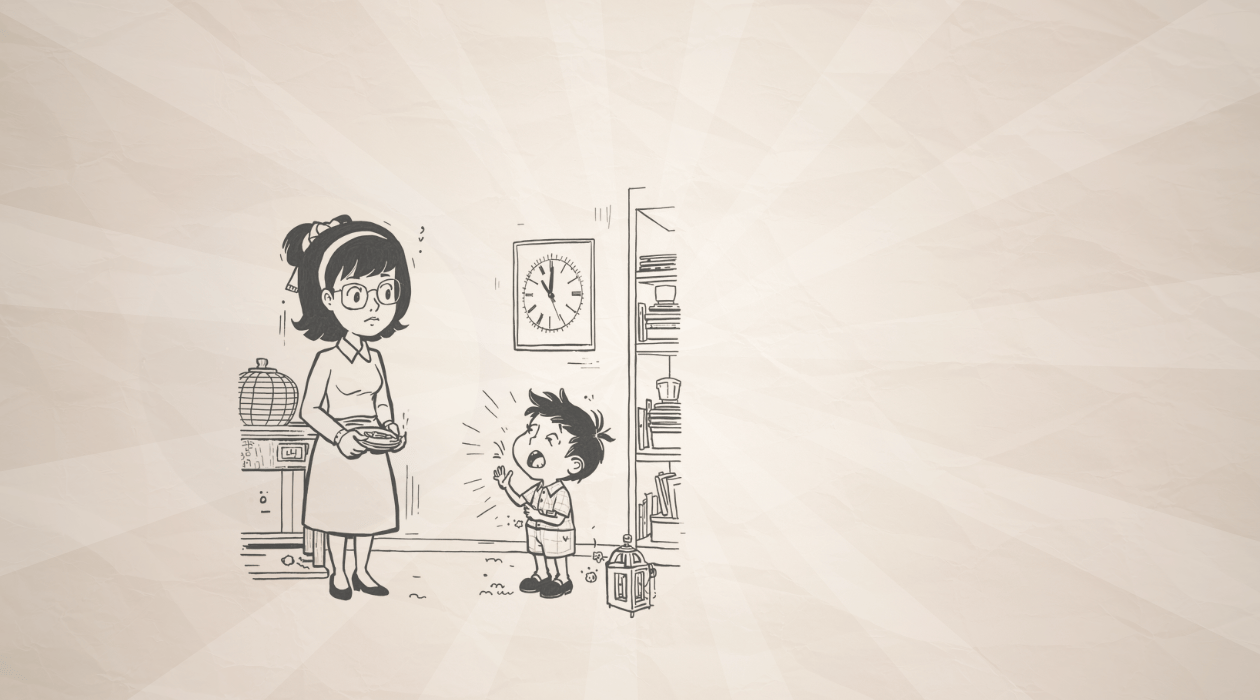
You finally decide to draw the line.
“No more hitting. No more screaming for snacks. We’re doing time-outs now. We’re following the rules. This. Is. it!”
And what happens?
😭Your toddler loses their mind.
Upping their tantrum game, harder, louder, and longer than ever before.
And this makes you second-guess yourself, right?
"Aren’t things supposed to get better once you start laying down the law?"
🍪So you give in (just this one time, of course), you'll try again tomorrow. Then tomorrow comes, and it happens again, but it's even worse.
So you start thinking...
"If they’re ramping it up every time I try to do the right thing… is it even worth it? I'm obviously doing something wrong; we're clearly not getting anywhere."
This is the exact moment where toddler parents make one of their biggest mistakes.
This is the moment where so many parents throw in the towel, not because they’re weak, and not because they like the behavior, but because they don’t recognize what’s really happening.
If you’ve ever tried to correct a toddler's behavior and it immediately got worse, like ten times worse, you’re not failing.
You’re actually on the right track.
Because what you're experiencing is something called behavior extinction, and understanding it could revolutionize the way you handle your toddler's meltdowns.
I'm going to break down the science for you, but I promise to keep it simple because I know you don't have time to waste.
What Is Behavior Extinction?🤔
Behavior extinction is what happens when a behavior that used to get a reward suddenly stops working.
So you’re not imagining it, it's a "thing," a well-documented pattern that’s been studied by psychologists for nearly a hundred years, but what it means might surprise you.
Back in the 1930s, a psychologist named B.F. Skinner did a bunch of experiments with animals to try to understand human behavior better.
🐭In one of his most well-known studies, he taught a rat to press a lever to get food. Press the lever, get a snack. Press the lever, get a snack...you get the idea.
But what Skinner really wanted to know was: what happens when the snacks suddenly stop?
It turns out that when Skinner cut off the rat’s food reward, the rat didn’t just give up and wander off.
Instead, it pressed the lever harder and faster, over and over again, trying to make the reward come back.
Only after ramping up its effort to the point where it seemed like it had tried everything and nothing worked, did the rat finally give up, and that final burst of determined effort is what scientists call an extinction burst.
This drive comes from a mix of things, like the brain chemical dopamine that makes us want to go after rewards, and the “fight or flight” response, which kicks in when our brain’s alarm system senses something dangerous is happening.
Together, they work to keep us going when something we want or think we need stops.
Essentially, it’s a survival instinct. Our ancestors couldn’t afford to quit too soon because, in an ancient world, that could have been dangerous or even fatal.
This is why your brain always pushes you into that last-ditch, frantic effort before finally letting go.
And if you’re thinking, “Okay, but I’m not a rat and we're not living in the Middle Ages anymore,” you’re right.
But as Skinner discovered, people still have many of these ancient, ingrained survival instincts, and we don't even realize it.
Think about when you press a button on a vending machine and nothing comes out.
What’s your first instinct? You press it again. Then maybe a few more times. Then maybe you shake the machine a little (or a lot).
That’s a very common example of an extinction burst; it's your brain saying, “This worked before! I need this thing! Try harder!”
Here are some examples of behavior extinction in adults:
- Trying to cut back on caffeine: You might crave coffee more or drink extra just before cutting back.
- Quitting smoking: The urge to smoke will spike just before your quit date.
- Trying to save money: You might go out for one last splurge right after deciding to tighten up your budget.
- Ending a relationship: Someone might make a last-ditch effort to save a relationship when they're about to get dumped.
But when your toddler experiences behavior extinction, there are a few key differences:
- Toddlers operate from a place of "I want" all the time, but it's not necessarily because they're greedy or spoiled (yet). It’s just how their brains are wired at this age. For a toddler, feeling good equals survival, which is the instinct carried over from their baby days. They don’t have the ability to think things through like you or I could, so if something feels good to them, they want it right now because they feel like they need it, and they're going to need it forever.
- They also don’t have the emotional control yet to stop themselves once they get caught up in that frantic, last-ditch effort to get what they want. In those moments, they’re working hard to process big feelings they don’t fully understand, all while trying to cope with the feeling that losing the reward is somehow dangerous. So it's a lot for them to handle.
- Their memories and learning are closely connected to their emotions right now, so how you respond to their behavior helps shape what they'll remember and how they'll react in the future. If a big outburst gets a payoff of any kind, their brain registers that as a win, and voila, there's that dopamine hit, and the behavior gets locked in.
Also, toddlers mainly operate from the brain's alarm system, the part of the brain that reacts quickly and emotionally, which is why you see those intense meltdowns when their usual “rewards” suddenly stop coming.
🦺🔨Their brains are still under construction, especially the part that handles self-regulation and calming down.
So instead of just pressing that button a few extra times, like you might do as a rational adult, their extinction burst might morph into a full-blown meltdown.
Kicking, screaming, hitting, and collapsing on the floor, that's their version of pushing the lever over and over again, desperately trying to get the result they’re used to.
😳🚨And even though it looks wild, it doesn’t necessarily mean anything's wrong or you're somehow failing in your parenting.
It actually means your toddler's developing brain is wrestling with coming to terms with the change from getting the "reward" to not getting it. (Think back a few paragraphs to those adult versions; every single one of them included an escalation in behavior before things calmed down, even when you were taking away something from yourself, that you knew was bad for you.)
So, believe it or not, this behavior is not just normal, but for your toddler, it's a good thing.
Because it means you're getting close to the end of the behavior, but only if you play your cards right in how you parent.
Because here’s where it gets interesting: toddlers' brains are wired to notice patterns with emotional weight.
Their amygdala (the brain’s emotional alarm system) helps store strong emotional memories, especially when something “works.”
So if screaming once made you cave and hand over the cookies, or made you stop what you were doing to yell at them to stop, that gets locked in as: this behavior gets a result.🔒
And here's the kicker: the result doesn’t even have to be “good” to get reinforced as a "reward". So parents can unknowingly be reinforcing bad behaviors by giving unintentional payoffs.
Toddlers don’t understand “positive” and “negative” attention the way we do.
To their developing brains, any response is attention, so if a behavior leads to them getting attention, it gets locked in and remembered. It goes into their files as something that works.
👀Here's what that looks like:
A toddler hitting, yelling, or dumping their snack on the floor is looking for attention, and any kind of attention means they're being seen. So if it gets a reaction, even if you're paying enough attention just to yell at them, their brain still registers it as effective. (Especially if you tend to ignore them when they're being "good".)
If you suddenly decide you're going to ignore this behavior because you think it will make them stop, if they're used to being yelled at (and that feels like a payoff for them), you might find yourself confused when that doesn't work straight away like you thought it would.
Because, when you suddenly stop reacting in the way that usually gives them the payoff (even if it's negative attention), their brain says: “Wait, this usually works… what gives?”
That’s when things escalate because the old pattern is being challenged.
😫Maybe they break something, or they dump something on the couch instead of the floor, they throw themselves on the floor screaming instead of just screaming on their chair. Toddlers can find endless ways of upping their game.
And that spike in behavior is the extinction burst.
Believe it or not, it can actually be a sign that you’re doing something right.
Because your toddler’s brain isn't built to just shrug it off and say, “Oh well, I guess we're done here.”
No.
They double down, and if you've been inconsistent, they'll triple down and more.
Why? Because in the past, that behavior worked.✅
Maybe not always, but even if it did sometimes, their brain remembers.
So how does this happen, exactly?
🧠A Behind-the-Scenes Look At The Toddler Brain:
I want to break this down a little more so you can understand exactly what's going on with your toddler the next time they lose it when you try to stick to a boundary you usually let slide or impose a rule you generally ignore.
So, let's look a little closer at the part of the brain that's in the driver's seat right now and how toddlers lock in a behavior.
Who's really running the show inside your toddler's head?
Right now, the answer is: The amygdala, the brain’s alarm system.🚨
It reacts emotionally, especially to stress, fear, and frustration.
Babies are born with it fully active, and it’s the reason newborns broadcast every discomfort at top volume.
Hungry? Scream! Wet? Cry! Uncomfortable? Scream and cry!!!
And don't stop until someone notices and fixes what's wrong and you feel better!
That’s the amygdala turning on the sirens to make sure a caregiver swoops in and fixes whatever's wrong. In other words, it’s a survival feature.
It's part of every baby's internal survival kit.🚑
But babies don't stay babies forever.
And as your toddler grows out of the baby stage, they begin toddlerhood with this alarm system fully online, but unfortunately, the part of the brain that’s supposed to help calm it down isn't quite up and running yet.
That’s the prefrontal cortex—and it's still under construction.
😊The prefrontal cortex is in charge of all the good stuff: rational thinking, impulse control, empathy, and understanding consequences.
But it’s still developing, so your toddler's brain can’t self-regulate just yet.
The prefrontal cortex is in its biggest growth spurt right now, and about 90% of its development happens during toddlerhood.
This means that while meltdowns aren't fun for anyone, each one is another chance for your toddler to practice managing big feelings.
And believe it or not, this is a skill that the developing prefrontal cortex needs to practice to get good at. (Like reps at the gym!)
Holding a boundary and not giving in, but letting them meltdown until they pull themselves together without getting a payoff (or you getting too involved or upset), actually helps your child learn to manage emotions from the inside out.
Because expecting a toddler to magically be able to handle their big emotions without practice is like expecting them to climb a mountain before they've learned to climb the stairs.
What you need to do is expect that their reactions will be big, dramatic, and totally out of proportion.
Think of their emotions like a car with no brakes and wobbly steering; they can speed up quickly, but don’t know how to slow down or stay in control, which leads to emotional crashes.
🚗Their prefrontal cortex is still developing their emotional “brakes” and “steering,” so with time and practice (like an emotional driving school run by you), they’ll learn to handle those big feelings more skillfully.
So for now, they're just driving the side roads, but eventually, with enough practice, they'll be ready to hit the highway of life. (Cheezy! I know, but I couldn't resist!)
Next, let's learn how toddler brains actually make memories.🔁
How does a toddler's brain decide what to remember?
Our brains are built to notice feelings in other people; it’s how we stay safe and get along.
🧠Our amygdala works with the prefrontal cortex to analyze what's going on around us in other people's emotions, helping us know when to stay calm, be careful, or reach out for help.
Your toddlers’ brains work the same way, but remember, their thinking part, the prefrontal cortex, is still growing.
So, they pay a lot of attention to the emotions of the people around them to understand what’s going on.
They’re like little detectives, watching people’s actions and reactions to figure out what’s safe, what's expected, and what works to get them what they want.
When something feels intense, it gets noticed. There is no judgment: if it feels big, it gets stored. This is why your toddler remembers that one time you gave in at the grocery store after a meltdown.🔊
Their brain connected that moment to an emotional memory:
Crying really hard = getting the thing.
So when you try not to give the payoff, they remember that crying really hard worked last time, or the time before, or that one time they did it two weeks ago.
That's what's been wired in, so that's what you're up against when you try to change the pattern.
Every time you enforce a new boundary and stick to it, even when it causes a big reaction, what you're doing in that moment is rewiring that memory.
And that's why it can take time for the escalation of the behavior to drop off.
But if you hold your ground and are consistent every time, eventually you'll teach them: This behavior no longer works.❌
If you give in, you teach them: I just need to go harder next time.
And one thing I will tell you from working with toddlers for 10 years is this: Toddlers have no concept of time.
If you eventually give in, even if you try to hold out for half an hour or even two hours, and then you give in while they're melting down, they'll keep going for as long as it takes the next time unless you shut it down.
And the only way you can shut it down is by letting them shut it down.
😫I've had toddlers have long, epic meltdowns over almost nothing.
Personal story time:
One child screamed at me for 45 minutes at the top of her lungs because the rule at my house was that you finish what's on your plate before you get more food. It was an across-the-board rule for everyone.
I served lunches "buffet" style, where the children got to pick what they wanted from a platter of many options, so they got to choose what they wanted.
I monitored what they took, but gave them freedom to choose.
This child had chosen apple slices as well as watermelon, but she liked the watermelon better, so she didn't want to eat her apples.🍉🍎
She hadn't finished her apple slices, but wanted more watermelon, and I said no. So she started screaming.
But I didn't panic or get upset, I just put her in a time-out in an adjacent room so the rest of us could eat in relative peace.
I let her go at it without giving any type of payoff; she was safe, I could see her, but she wasn't allowed to sit at the table while she screamed, and she still had to finish her apples if she wanted any more watermelon.
Period.
Eventually, (a very long time later) she stopped, so I went over and asked her if she wanted to come finish her apples so she could get some watermelon, and she said yes.🍉
I told her she could come back as long as she didn't start screaming again, and if she did, she'd go back in time out.
She sat down and ate her apples like nothing had happened. She realized her screaming couldn't change the rules, so she was done, and our day went on as usual.
But this gave me some good insight into how this child was parented.
This told me that her mother gave in to screaming.
I know this because it was this child's first go-to behavior, and it took her a very long time to understand that it wouldn't work.
👀That episode wasn't fun for any of us, but it was a good lesson for the other toddlers to see someone acting out and getting nowhere with it.
Because this behavior was reinforced at home, it was difficult at first for the child to understand that at daycare, the rules were different, but over time, as I reinforced my rules consistently with everyone, she eventually settled down.
This is exactly why cutting corners when parenting toddlers doesn't help in the long run.
Yes, it’s tempting to give in when your child is screaming, especially in public.
We’ve all watched someone at the grocery store say, "Absolutely Not!" and then immediately hand over the candy when the kid starts screaming.
That's where a lot of people sheepishly say, "Oh the terrible twos...", or parents want to "give each other a break, because we know how it feels..." there are a million excuses floating around the internet and believe me, you can find an influencer to validate any crazy parenting idea if you look hard enough.
But here’s the hard truth: when we only sometimes enforce a rule, when we’re consistent until we’re tired, or embarrassed, or late, we don’t erase the behavior.
We reinforce it.
And this is no joke, it's called intermittent reinforcement, and it actually makes behaviors stronger.
This kind of reinforcement is very powerful because it adds the element of "maybe."
Maybe if I do this this time it'll work, so why not give it a go? This is the exact reward system that keeps gamblers gambling! (Just one more coin in the slot machine...Just one more hand of blackjack...Just one more spin of the roulette wheel...I just know that this time I'll get lucky!)🎰🎲
If you sometimes give in to a behavior, your toddler learns that if they just push hard enough or long enough, maybe, the old reward will come back. Because sometimes it does.
🚨🔊Insider Information Alert: Toddlers have no concept of time, so if it took an hour to break you last time, they'll just go as long as it takes this time. They're not timing themselves; they're driven to just go as long as they have to. If you try to wait longer each time, but then you eventually still give in, what you're actually doing is building their stamina, so they develop the tolerance for longer and more intense tantrums. When this happens, you're teaching them how to outlast you and giving them the practice to get really good at it.
This is why consistency is so important with toddlers.
Because intermittent rewarding turns what could’ve been a short extinction process into a long, exhausting habit loop, this is how parents get fooled into thinking their child is "just like that," instead of looking at how their parenting is affecting the behavior.
And if this pattern continues over time, the behaviors will hardwire into the child's brain and at that point, you will have created a self-fulfilling prophecy because now, you're child actually is "just like that".
And there's one more very important reason why you want to get this right in the toddler years.
🎉You only get one chance to lay the foundation of your child's future self, and that's now.
From birth to around age 5 or 6, your child’s brain is in a phase called open-state learning, also called the beta state.
During this time, their brain takes in huge amounts of information and creates their lifelong internal “rules” about how the world works. It’s also highly plastic, meaning it can adapt and change quickly.
This means that right now, yes, even as they're screaming at you to get more cookies, you’re reactions are helping them shape:
- What they believe about boundaries
- How they think conflict works
- Whether they feel safe with limits
- And how much power they believe they have over the people around them
If you give in regularly, especially during extinction bursts, you unintentionally teach them:
- “Rules don't matter if I push hard enough.”
- "Mommy and Daddy don't mean what they say."
- "I'm in charge and don't need to play fair or care about others."
- "Only my needs matter."
If these get hardwired in, then these internal beliefs will form the basis of your child's internal subconscious world.
Because once that "beta" state closes at around 5 or 6 years old, the brain locks in what it's learned and moves onto another developmental phase.🧠✅
If we hold the line, even when it’s hard, especially when it gets worse, we help to rewire those self-centered baby brains to understand:
- Not getting everything I want is safe.
- Rules matter because safety (mine and other people's) is important.
- It's okay to control myself, even when I don’t like it.
- It's safe to consider other people's feelings and boundaries.
✨And THAT is a gift.
How to parent through an extinction burst.
When your toddler is mid-meltdown and you’re second-guessing everything, start by asking yourself this one question:
Could this be a behavior extinction episode? It's really the simplest question to ask and might give you all the answers you need. If you recognize it as behavior extinction, you know that all you need to do is let them be as mad as they want, but don't, under any circumstances, give them what they're demanding. DO NOT REWARD THE BEHAVIOR. They'll get over it eventually.
❓❔If you're still not sure, ask yourself these questions:
- Am I stopping something that my toddler perceives as a reward? What am I taking away from them right now? Attention, a thing, playtime? What are they losing/not getting?
- If I give in to stop the behavior, what will this teach my toddler about me, and what do words mean? Will it teach them that words don't matter, if I've already said no? Will it teach them that the word no doesn't actually mean no, it means maybe? Will it teach them that I can't be trusted because I don't follow through on what I say?
- What will they learn from what I do next? That rules matter and don't change just because someone is upset? That rules don't matter as long as you can bully someone into changing them?
- If I try to stop this behavior now, will it just reinforce it long term because it's been rewarded? Am I giving a reward to try to make them stop something? Might they learn that they need to do this behavior first in order to be rewarded for stopping it?
- How much more will my toddler push back before they give up if I hold firm? Has this happened before, when I held my ground? If my child could calm themselves down once, why can't they do it again, even if it takes time to process the emotions and do the work?
- Can I tolerate a meltdown knowing that it's serving a purpose and that interrupting it might backfire and cause more harm than good? Does the situation fit the criteria for a normal, expected toddler meltdown? Waiting, reacting to being told "no", or "don't hit," or getting the wrong plate at lunch? If it's just about them learning to accept what's expected or getting used to not having everything go their way, can I view it as their work rather than something that's traumatizing them or hurting me?
Remember: If it gets worse, it doesn’t mean it’s not working.
And some kids will scream like they're being murdered. If it gets a reaction, you bet they'll turn that volume up to 11.
💬Pro Tip: Every toddler has a "tell". Every single toddler in my care had a "tell" that told me that they were "faking it" for dramatic purposes. Some had a shifty sidways look, some had a little secret smile, if you watch your toddler close enough, you'll begin to be able to tell the difference between fake crying and the real deal.
This just means the old ways are being challenged, and they're fighting to save them with everything they have.
But this is the moment you hold firm, not harshly or not coldly, but with calm consistency. Because you're the one who knows everything is going to be alright.
And that's when the magic happens.
Eventually, the behavior disappears.
Not because you punished it away, but because you didn’t reward it.
🌼Final Thoughts
Behavior extinction is one of the most misunderstood parts of the toddler parenting journey, but one of the most important.
And I hope that by shedding a little light on it, I've empowered you to help guide your toddler through this difficult phase with more confidence and clarity.
Because parenting isn’t about perfection.
It’s about progress.
So the next time your toddler cranks up the drama after you set a boundary, pause, take a breath, and remember: this is just the storm before the calm.⛈🌪
They’re not plotting to ruin your day.
In their little world, they’re just trying to survive.
And it's your job to teach them that the things that keep us safe and help us get along, like waiting your turn, sharing, showing respect, and following the unspoken rules of life, are important non-negotiables.
And believe it or not, these are some of the hardest lessons for their growing brain to get.
Because here’s the twist: those very same things that help us feel safe and connected as a society can feel threatening to a toddler.
From their point of view, being the center of everything was how they survived as a baby.
So this is their starting point.
Your job now is to help them step out of that survival mode and into a world where they can trust others, share space, and still feel safe.
And one of the ways we do that is by removing the rewards that keep those baby-brain behaviors going.
Will they fight back?
You bet!
And they'll do it with everything they've got, right up until the bitter end.
And when they really believe a behavior won't get them what they want?
Poof! It goes away.🌞
Because that's how behavior extinction works.
Now that you know what it is, you'll be able to make informed parenting choices when you see these opportunities for growth and learning without getting pulled into the drama.
You'll be able to handle these emotional standoffs with grace and confidence because now you’re armed with understanding.
You've got this, Toddler Mama!
And I've got you!💛
🚨😭Here's how much I've got you, Toddler Mama! I've created a FREE resource just for toddler moms dealing with meltdown madness:
The Grounded Toddler: Meltdown Management Manual is your quick-reference guide for spotting and handling behavior extinction with confidence.
Inside, you’ll find:
✅ The Behavior Extinction Cheat Sheet: A fun and easy-to-understand visual printable for your fridge!
✅ Behavior Extinction Recap: Explaining what an extinction burst is in plain language.
✅ A Mental Checklist: To help you know if you're seeing a behavior extinction event and figure out how to handle it if you're unsure.
✅ Tantrum Journal: For better observations that will up your parenting game.
✅ Tantrum Tracker: To help you spot your toddler's tantrum patterns and make it easier to connect the dots.
Now, instead of feeling lost and reactive, you’ll have a plan—one that keeps you grounded, calm, and consistent, even when your toddler is anything but.
The Grounded Toddler: Meltdown Management Manual FREE Download
Delve a little deeper...
If you want to learn more about tantrums, check out this blog post next: Why Does My Toddler Have So Many Tantrums? And What Can I Do About It?
If you want to learn more about the growing toddler brain, check out this blog post: Are The First Five Years Really As Important As Everyone Says? Your toddler’s growing fast on the outside—but what’s happening on the inside is even more incredible.
Resources to help you parent with more intention and clarity:
Check out these FREE resources just for Toddler Moms! My gift to you!