
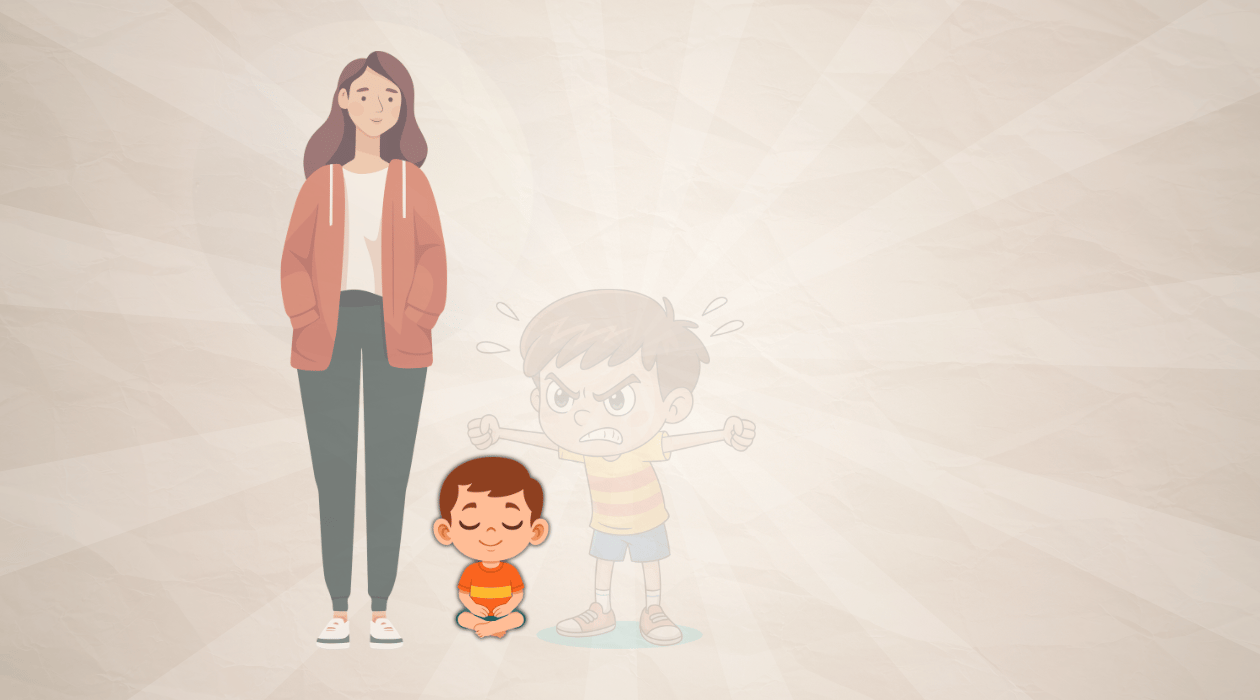
If your toddler melts down the second they have to wait, you’re not failing - and they're not either.
Your child's brain is going through something huge. And how you respond can quietly shape who they become — not just today, but long term.
This is more than just "impatience."
It's a developmental crossroads — and this noisy milestone holds a once-in-a-lifetime opportunity.
The good news is that you don't have to be a child psychologist to nail this one. It doesn’t have to be scary or overwhelming.
With just a little understanding of what’s happening in your toddler’s brain, this can be one of your easiest parenting wins—especially if you lean in and learn to support them.
In fact, helping your toddler learn to wait is one of the simplest (and most powerful) things you can do as a parent.
And after 10 years of running a home daycare — and spending over 23,000 hours with toddlers, I developed a method that works every single time.
And if you read on, I’ll explain exactly what that is.
And spoiler alert: I’ve created a resource to help you if you're not sure how to get started. You can find it in the "Free Resources" section of this website.
A famous Canadian hockey player once said, “When someone screams at me to hurry up, I slow down,” and that was the rule I lived by in my daycare.
It’s how I raised my daughter, too — even as an only child.
I made her wait on purpose, even when she didn’t have to, and especially when she didn't want to.
I trained myself not to jump at every request just because she was the only one asking.
I also set up playdates where she wasn’t the center of attention and had to share fairly and take turns, even though they were all playing with her toys.
And when a child came to my daycare who screamed at me for everything? I made them wait for everything.
If they lost it, that was okay. I stayed calm, and I held the line.
✨ And with time and consistency — it worked.
Every time.
There's a reason for that.
And to explain it, we're going to back it up a bit.
🧠 Why Waiting Feels Dangerous To Toddlers
Babies cry because that’s how they survive — they’re wired to react to discomfort and fear with urgency.
That’s the amygdala at work — the emotional brain.
😫This part of the brain kicks in right at birth. It’s loud, dramatic, and focused on just one thing - survival.
When your baby cries the moment they’re wet, hungry, cold, or uncomfortable, that’s the amygdala sounding the alarm.
It doesn’t ask questions or think about your feelings.
It just reacts — fast and big.🚨🚨🚨
This is an ancient part of the brain near the brainstem.
It evolved to keep humans alive in the wild — to make sure we screamed reflexively when something was wrong so we’d get help immediately. (Screaming was your 911 before modern technology.)
But even though your toddler isn’t living in a cave surrounded by wild animals, their amygdala doesn’t know that.
It still treats every delay, frustration, or unmet want like an emergency.
And here’s the part that most parents don’t realize:
The part of the brain that could help your toddler stay calm, think things through, or remember that everything’s okay...
That's called the prefrontal cortex — it's in charge of logic, planning, impulse control, and patience.
🧱🔨That part isn’t ready yet.
At birth, it's still very much under construction, but during the toddler years, it goes through a period of rapid growth and development.
So your child is actually "programming" the part of their brain that will take over the fear response, right now.
Between 1½ and 5, your child’s brain isn’t just growing — it’s wiring.
Your toddler isn’t just learning how to manage their emotions — they’re wiring emotional patterns into their subconscious — patterns they’ll carry with them for life.
During these early years, your toddler’s brain is in a special developmental phase—absorbing everything through deep, subconscious imprinting.
Scientists call this the “theta brainwave” stage — the same brain state you or I would enter during hypnosis (think of how you feel when you first wake up and you're not quite "with it" yet).
This state is closely related to memory, deep relaxation, and daydreaming. Which is why your toddler might seem a bit "out of it" sometimes or unable to focus.
They can't help it.
Their brain is open in a different way than yours right now.
(They will also go through a "sensitive period" for attention to detail, where they'll get urges to focus on one thing and exclude all others. This is when concentration takes root, but that's a topic for a different post.)
This means that your toddler isn't just hearing what you say, but they're also taking in everything that's happening around them.
But it’s not like a sponge soaking up water (where you can ring it out and the water and the sponge become separate again) — it’s more like mixing flour and water to make dough because once the ingredients combine, they turn into something new and different from what they were before.
You can’t separate them.
That’s how your toddler’s brain is working.
Every time your toddler has an experience, their brain makes connections between brain cells.
These connections, called synapses, are tiny links that help brain cells talk to each other and form habits.
That’s how the brain hardwires itself and how we all initially learn what to expect, feel, and how to respond.
The more often a connection is used, the stronger it gets. (Think of it like wearing down a path in long grass; the more you walk it, the more worn down it gets until the grass doesn't grow anymore and you have a path that's easier to follow.)
This process is called neuroplasticity, and it's the brain’s ability to physically change and adapt based on experience (remember that part, it's important).
In early childhood, the brain's plasticity is at its peak, and that's where your toddler's at right now.
Their brains are forming new connections at an incredible rate (about a million per second!!!) — and also trimming away the ones they don’t use.
This trimming away is called synaptic pruning (like you'd prune dead branches off a tree).
So, the thoughts, behaviors, and emotional reactions they repeat most often?
Those are the ones their brain will keep.
The less or unused ones will fade.
The more your toddler practices calm behaviors—like waiting (even just a little) or not falling apart when things don’t go their way—the stronger those brain pathways get. 🧠💪
Think of it like reps at the emotional gym: every time they stay calm, even for a bit, they’re strengthening the “I’ve got this” circuit.
On the flip side, if tantrums don’t get a payoff, the brain quietly starts pruning that reaction away, because it doesn't work, and if something doesn't work, a toddler won't keep doing it, and what we don’t use, we lose. 👋
And if there's one thing I know for sure about toddlers, it's that they’re efficiency experts.
If something really doesn’t work, they’ll drop it fast — but only if they know for sure it won't.
So, consistency is your best friend when trying to encourage or discourage any toddler behavior.
100% consistency on any issue will always give the best results when it comes to toddlers.
If they think there's even a 1% chance screaming will speed things up, they'll test that theory.
Again. And again.
And again—until their brain decides it either gets results or isn’t worth the effort, and at that point it will get wired in.
And once those patterns get wired in, that's what shapes how your child relates and responds to the world and the people in it for life.
This is because they’re internalizing these emotional patterns, behaviors, and responses as the default settings of their nervous system.
But by around age 5 or 6, this super-open, fast-growing, impressionable window closes.
Then, the foundation is laid.
Because at that point, the prefrontal cortex has done about 90% of its growing and changing.🧠(Yes! That much, in the toddler years!)
There's about 10% more growth to be done (a bit more happens between ages 18 and 25), but the subconscious wiring — the beliefs, habits, and emotional reactions — is embedded by about age 6.
And that's where you come in.
Because how you respond to your toddler's behavior teaches them more than just how to act — it shapes who they’ll become.
Toddlers don't have memories or life experiences to draw upon; that's what you're giving them now.
That's your job.
But sometimes, it can be hard to know what to do.
Especially when your toddler is screaming at you for a cookie like it's the end of the world, and you think that the faster you give it to them, of course, the better it will be.
But here's the thing with toddlers: Sometimes, they need to feel those hard emotions to give their developing brain practice handling them.💪
And learning to be patient is one of the hardest lessons that triggers some of the biggest emotions.
Because toddlers absolutely HATE waiting.
They’re not trying to be dramatic or difficult, but their brain are still under construction, and when you see this impatient, aggressive, "give it to me NOW" behavior, that's what they're experiencing.
They can't tolerate the feeling of waiting because they don't understand it and it triggers a danger signal.🚨
So what you're actually witnessing is their amygdala taking the wheel and reacting like it’s an emergency, making them really, really, really anxious.
They can't help it; they have no experience or memories built up (remember "built up" that's important) telling them it's safe to wait, and everything will be okay if they do.
That's why they need to practice waiting, so they can get used to the feeling of waiting and also experience coming out of it on the other side intact and okay.
🔁But it takes practice.
A lot of it.
And until they get used to it and build enough memories of it being okay that they can wire in, they might just scream and cry a bit, or even a lot.
Because for them, waiting feels uncomfortable.
And unfair.
And scary.
But if you panic and rush to get what they want, they don’t just learn that tantrums are effective and work—they also start to believe that waiting must be unsafe.
After all, if Mommy is freaking out and scrambling, something must be wrong… right?
And if you do this often enough, and your toddler’s brain wires that reaction in, that will become the default setting.
Remember those synapses we talked about earlier?
This is them at work, building a fast, easy pathway from discomfort to meltdown because that’s the route that’s getting reinforced and embedded as most efficient.
And the more this pattern plays out, the more your child’s subconscious internalizes it as “this is how I get what I want.”
And once it’s wired in, it becomes their go-to.
Because the brain doesn’t judge the information it's taking in — it just learns it.
Your child doesn't think: "Gee, I wonder how this is going to play out in society?" They don't have the slightest understanding of what "society" is yet, their brain is just trying to absorb and wire patterns in, there is no context, that's what you're supposed to be providing, through your actions.
And all your child can possibly process in any given situation (until they are taught otherwise) is what they want (which is everything) and what feels dangerous (which is everything.)
So if you don't provide context through expectations and guidance (yes, rules and routines), and how you act yourself, all they have to go on when trying to figure out what the best way to communicate is, is the feelings and emotions triggered in their amygdala by a given situation and then the action that gets the most effective response.
Because that's what the amygdala (the survival brain) needs to feel nurtured and safe.
😫And running around giving in to tantrums makes things worse, because:
Instead of giving the prefrontal cortex (the rational, problem-solving part of the brain that's in its peak development period right now) a chance to step in and process what's going on, the amygdala (the emotional alarm system) stays in charge—because it's getting the best workout.
It’s like those guys who only work out their arms — huge biceps but tiny, scrawny legs. It's obvious where they put their focus, you can see it.
Your toddler's behavior is the same way: you will see the behavior you are reinforcing.
💻 You can also think of it like running an outdated program instead of installing the system update.
If toddlers don’t get the chance to practice emotional growth, they’ll keep running their “communication software” on the Amygdala Operating System — the one they were born with (perfect for babies, not so much for anyone else).
Instead of upgrading to the Prefrontal Cortex — the part of the brain designed for managing emotions, making decisions, and thinking things through — they stay stuck in survival mode.
🧠 By around age 6, when the brain switches out of it's most plastic, absorbent state (that special “theta” wave phase that allows children to deeply internalize patterns and experiences) whatever habits they’ve practiced most will be embedded — forming the blueprint for how they handle frustration, express emotions, and interact with the world.
If you don't teach them otherwise, their brain will internalize the discomfort of not getting what they want — and getting it fast — to mean something is wrong.
So, things like waiting or not instantly getting what they want will trigger that belief, and the amygdala will automatically kick in.
(Remember that’s the brain’s emotional alarm system — it reacts with intensity, often through crying, hitting, yelling, or other “big” behaviors.)
And believe me, I know how tempting it can be to just brush it off as a typical toddler meltdown for now — the kind you quietly manage at home or apologize for in public with a half-joking “ugh, the terrible twos…” as you flee the scene.🏃♀️
But if tantrums are their go-to way of handling frustration, that reaction isn't going to age well.
As they get bigger, stronger, and more social, that behavior becomes harder (and more painful) to manage for everyone involved (including them).
🧠Because here’s the thing: their brain doesn’t separate who they’re reacting to — whether it’s you, their teacher, or a friend.
If tantruming is the strategy that's hardwired in, that'll be the default setting they’ll use with anyone who makes them wait, share, or handle a tough feeling.
So if another child says, “Wait your turn” or “Can I have that?” — your child’s brain will go straight into meltdown mode and that's not exactly a great way to make friends, is it?
The good news? You don’t have to let it get that far.
Your toddler is still in the sweet spot for learning and internalizing new emotional patterns.
And with calm, consistent responses, you can help them replace tantrums with resilience, one patient moment at a time.
❤️ Here's How To Teach Patience the Right Way
- You don’t need flashcards.
- You don’t need sticker charts or candy bribes.
- You don’t need to beg or plead.
(You might need a strategic time-out now and then — but that’s another topic for another day.)
What you really need is to let them have real-life experiences that gently teach:
✔️ Waiting is safe.
✔️ You’re okay.
✔️ You can handle this.
Here’s what this looks like in the moment:
Your child is screaming at you for their bottle, they want it NOW!!!!!!!😫🍼🍼🍼
1. Let them feel the discomfort of waiting. Let them get used to the feeling of "wanting" something without actually getting it, so they can learn to realize that this is a "thing" and they're not always going to get what they want just because they want it.
2. Don’t distract them or rush in — let the moment unfold. This gives them the chance to process (feel/analyze/learn how to think about) how certain situations actually should correspond with emotions. This gives the developing prefrontal cortex a chance to do that by inputting some information and creating neural links, taking the first steps towards wearing down that path between not getting what they want and being patient.
3. Stay calm. They're not dying, and neither are you. But you're the only one who knows this. If you show this in your actions and emotions, they'll follow your lead. Your emotional regulation helps them hone theirs (this is called co-regulation). They take all their cues from you at this point.
4. Follow through only after they've either waited calmly or calmed themselves down after a meltdown, then meet the need so they can experience safety and a payoff after waiting. It's important that they calm themselves down because this is more of that emotional processing going on, where the prefrontal cortex is getting a workout. I know, as a mother, you'll always want to fix everything for your child, but this is something that happens inside of them, and only they can do this work themselves. If you try to "fix" a tantrum, all you're really doing is disrupting the important work that's going on inside your child.
5. Skip the punishment and shame — they aren't being bad, they're just doing what they do at this age. Which is learning to handle their emotions. So, instead of being angry or upset or taking it personally, once the emotion passes, maybe have a little chat about what they were feeling. Praise their effort ("good job, I know that was hard...") and move on.
PRO TIP: If you want them to really understand the connection between the word and the concept, make sure to say the word "wait" when you're making them wait. Instead of saying "hold on" or trying to make it seem like they're not really waiting by distracting, make the lesson clear by saying the actual word wait when you're asking them to wait. For example: "I'll get your bottle, but you need to wait first."
👉 Important: You don’t need to “comfort” them after a tantrum when nothing is truly wrong. The less you make of it, the faster they’ll adjust.
🔍Just to be clear: I’m not saying don't ever comfort your child. I’m saying don’t offer extra cuddles or rewards right after a tantrum — that can actually reinforce the behavior.
Recap:
- Keep it simple - just make them wait for stuff.
- Stay steady, don't lose it, remind yourself, there's nothing really wrong (because there isn't.)
- Let them pull themselves together (that's their job in this whole thing, that's what they're actually practicing.)
- Give them the thing they were waiting for.
- Acknowledge their feelings (only after they've calmed themself down).
- Move on.
🚨🚨 The first few times might be intense, and their behavior might even escalate (it often gets worse before it gets better as they test your limits) — especially if you’ve given in before.
But that’s normal.
Just know this: If you cave during the meltdown, their brain logs that tantrums work — and that’s the behavior that sticks.
👶 Recap: Why This Matters
Between 18 months and 5 years, your toddler’s brain is wiring in behavior patterns they’ll carry for life.
If they learn: “Waiting is dangerous. I need to panic.”
They’ll internalize fear and impatience as their emotional default when something makes them uncomfortable.
But if they learn: “Waiting is a safe and normal part of life. My needs will be met. I’m okay.”
They’ll develop emotional resilience — a life skill that cultivates character and inner strength.
And this is the time to teach it, so seize the day!🎉
Waiting is hard — but let’s be honest, so much of life involves waiting.
The earlier your toddler learns how to cope, the easier their life (and yours) will be.
And right now, you can teach that skill with love, consistency, and calm.
Because when they’re older? The world won’t be nearly as gentle.
So yes — make them wait.
Let them freak out if they need to.
And keep showing them — quietly, confidently, again and again — that everything really is going to be okay.
🌱🌻 That’s how Patience is planted.
🧘♀️🌼That’s how it grows.
You've got this, Toddler Mama!💛
And I've got you.
Want to go deeper?
👀📚Start here with my FREE resource: The Grounded Toddler: 6-Step Patience Plan
An easy-to-use, common-sense (science-backed) system helps toddler moms create calm, consistent toddler waiting experiences that can lead to real behavior change (without yelling, begging, or giving in).
Click Here to read about why toddlers have tantrums — and what to do about them.
💥 Read This if tantrums bring up confusing or upsetting emotions for you.
✨ Or, if you’re ready to take action but don't know where to start, CHECK OUT all of my different resources specially designed for toddler moms — created to help you feel calm, confident, and in control in any toddler situation that might come up.
Trust me, I’ve been there — not just as a mom, but as a 10-year veteran in the trenches of my own home daycare.
And I’m here to help.