
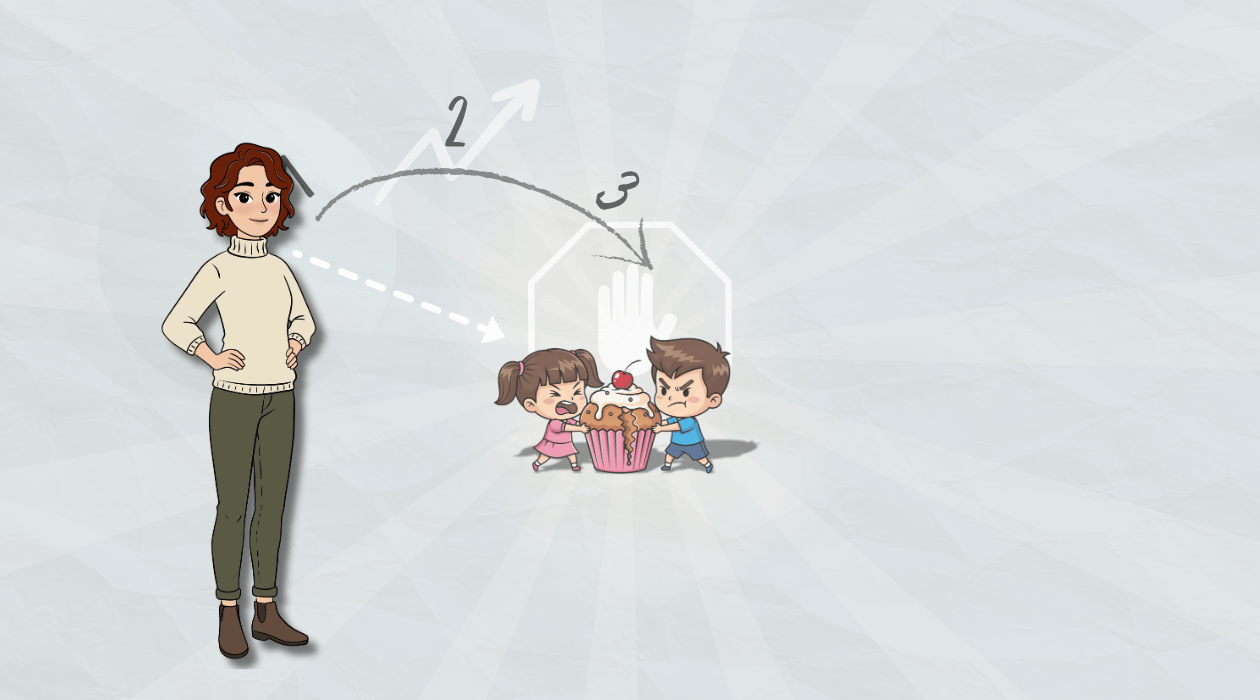
It's happened again.
Your toddler is doing something they shouldn’t.
Something unsafe or disruptive — something you know they shouldn’t be doing.
You don’t want to be mean, so you try to handle it “nicely.”
You smile and say:
- “Hey, stop.”
- “Please don’t do that.”
- “I already asked you.”
And they just… keep going.
So, you repeat yourself, trying not to show your irritation (after all, your parents used to get angry at you, and you don't want to be like them).
Then you say it again.
And again.
It’s like they hear the words you’re saying — but they don’t care.
Until eventually, after the tenth time, you snap.
- Your voice gets louder.
- Your tone changes.
- Your body reacts.
Now you're mad because the behavior has escalated to the point where you have to actually step in physically.
In that moment, it genuinely feels like your toddler was trying to make you mad.
And the truth is, they kind of were — but not for the reason you think.
Toddlers don’t push limits to upset you.
They push limits to get clear information.
And here’s the part many toddler parents don’t realize: 👉 Words don’t mean much to toddlers unless you back them up with actions.
This is something I saw with every toddler during my 10 years running a home daycare. It's how their brains learn what words — especially action words — actually mean.
Unfortunately for many parents, physically stepping in feels wrong — often because of their own childhood experiences with discipline.
So avoiding it altogether can feel safer.
But that avoidance isn’t helpful to your toddler’s learning process.
So when you keep using words without an action to back them up — especially if you’re trying not to seem angry — your toddler’s brain keeps asking:
- Is this really a no?
- Is this allowed?
- What happens if I keep going?
And when nothing changes, they don’t stop — they escalate.
Not because they're consciously trying to make you mad, but because they need clearer information.
Because what you experience as “being nice,” your toddler experiences as confusing.
So they push a little more, get a little louder, keep going a little longer — trying to force clarity.
They're looking for the physical actions that reinforce your words.
That’s why even though you try to avoid getting involved by stepping in physically to a situation, you often end up doing it anyway — but only once you're already angry.
And when action shows up through anger, the lesson you meant to teach usually gets lost, because now you’re reacting to your emotions instead of responding to the behavior.
This is a pattern that I call the passive/reactive parenting cycle.
It happens when you wait too long to step in, hoping the behavior will stop on its own — and then react emotionally once you’ve hit your limit.
The good news is that this is a really easy fix.
Because, if you'd stepped in earlier, you could have taught the lesson instantly, clearly, and intentionally — without yelling, guilt, or losing control.
And that’s exactly what the simple 3-step reset in this post can help you do.
But first, a quick recap on what the passive/reactive parenting cycle looks and feels like for you.
How The Passive/Reactive Parenting Cycle Plays Out
This cycle doesn’t start with yelling.
It starts with hesitation.
You might be thinking:
- I don’t want to be mean.
- Maybe it’ll stop on its own.
- I already said no.
- I’ll give it one more second.
From the outside, you seem calm at first — staying cool, being nice.
But the truth might actually be that intervening makes you uncomfortable (or maybe you don't even know that's an option).
But for some reason, your words aren't working; they won't listen.
So you get louder, more forceful — after all, they should automatically know you mean business.
Now, your internal thermostat rises, and pressure begins to build; your chest tightens, your heart races, but you try to ignore those uncomfortable feelings because you don't like getting mad.
But your toddler keeps pushing — they're not listening.
And eventually, something forces your hand. Things escalate until you can't just be nice anymore — someone gets hurt, things get too dangerous, a rule needs to be enforced.
Now you're actually mad. (Your natural fight or flight response is now activated.)
At this point, you’re no longer in control — your anger is.
You’ve hit your limit.
Now you’re reacting, trying to make a point, hoping your child will finally see how serious you are.
But making a toddler "regret" making you angry isn’t discipline — it doesn’t actually teach anything.
Yes, it finally gives your toddler the physical feedback they’ve been looking for — but not in the way you intended.
You waited too long to step in, and since your toddler’s working memory is still a work in progress, it’s hard for them to understand which specific action you’re reacting to.
Your reaction feels big and general, not specific.
So even though the behavior stops, your child may still struggle to connect the “punishment” to the exact action that caused it.
This isn’t a failure on your part.
Your response came from a place of love — from trying not to be harsh, not to overreact, and not to repeat old patterns.
But even well-intentioned choices can backfire when we’re unaware of their unintended consequences.
If this feels familiar, it doesn’t mean there’s anything wrong with you —this is an awareness gap, not a personal failing.
And my goal isn’t just to prevent anger — it’s to help you step in early enough to guide the moment calmly so you can teach a lesson rather than punish a behavior.
That's what this quick and easy reset does.
I call this 3-step reset:
SEE -> SENSE -> STEP IN
This method is about noticing your hesitation — so you can step in early before behavior escalates and you get angry.
It goes like this:
1️⃣ SEE the pattern
Notice your hesitation in relation to the behavior.
The passive phase usually includes:
- Repeated warnings
- Hoping words will work
- Uncomfortable feelings rising in your body
- Thinking, “Maybe I should do something… but not yet.”
- Feeling confused about how to proceed
That internal friction is your first cue.
If you find yourself waiting even though a behavior is getting noticeably worse, you’re probably in this cycle.
2️⃣ SENSE the outcome
If you feel hesitation about step one, ask yourself this question: “What will happen if I keep waiting?”
This step is about pattern recognition and learning to get a feel for or "sense of" what's going to come next if you do nothing.
Ask yourself:
- Does this look like it's going to stop on its own?
- Is there a question my child's brain is asking that I'm not physically answering regarding this behavior? (ie. Is this okay to do?)
- Am I trying to avoid the discomfort of acting even though it's going to make things worse?
Answering these questions helps you stay emotionally present and keeps your nervous system regulated, so you can figure out the most helpful way to intervene.
3️⃣ STEP IN early
Act early, calmly, and with purpose.
Remember: Stepping in straight away helps your toddler connect the dots between what you're asking them to do and how they can do it. It shows your toddler exactly what your words mean and how to act on them.
When your calm action backs up your words, the lesson lands.
Physically stepping in to stop a behavior doesn't have to be harsh if you do it calmly and with intention.
Consequences don't have to — and shouldn't — be given with anger, because when your child learns that you mean business even when you're not angry, they'll start to listen without you having to raise your voice.
(Spoiler: this takes practice getting used to doing and can feel weird at first, but as you get better at it, it will feel more natural over time.)
So this step doesn't need you to be angry; it just calls for better timing.
Because early intervention keeps:
- Your nervous system regulated
- Your response intentional
- The message clear and understandable
- Your child’s behavior from escalating
- The moment teachable
You’re not being mean — you’re being proactive.
And here's a little something special just for you, to help remember the lesson:
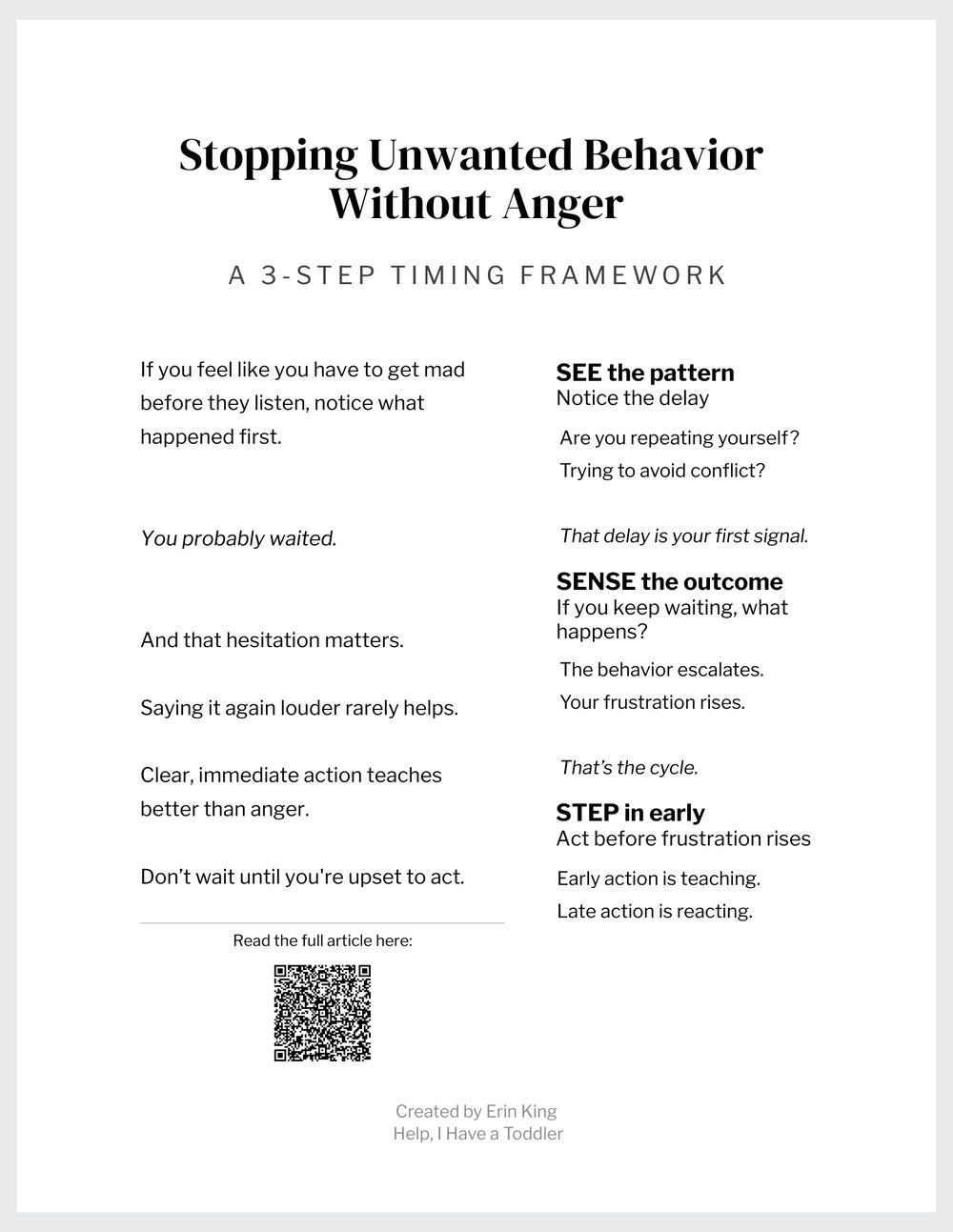
You won't find this in my regular resources section; this is a special private link just for toddler moms who read this post. A gentle reminder to print and post on your fridge.💗
I know you want fast solutions, and this can help you stay on track.
CLICK HERE for exclusive access to your very own FREE "How to Stop Unwanted Behaviors Without Getting Angry" Cheatsheet.
By stepping in sooner, you remove the need for your child to keep pushing.
- SEEING → creates internal awareness, “This behavior + my hesitation = a pattern starting.”
- SENSING → gives external insight + prediction, “I can feel where this is heading if I keep waiting.”
- STEPPING IN → allows for calm, intentional action, “I intervene now so I don’t have to react later.”
This process subtly retrains your brain to favor:
- Timing over Intensity
- Clarity over Expectation
- Intention over Reaction
Quick Self-Check:
Are You in the Passive/Reactive Trap?
Here's a quick little checklist you can use if you're not sure if this is you, and remember:
- Answer honestly -> No judgment.
- Regardless of how you answer these questions, it doesn’t mean you’re a bad parent.
- Let your answers inspire you to level up your awareness.
Passive Traits
☐ I give multiple warnings without doing anything
☐ I hope behaviors will stop on their own
☐ I delay stepping in because I don’t want to upset my child
☐ I feel uncomfortable enforcing consequences
☐ I say “no” but allow behaviors to continue
Reactive Traits
☐ I eventually snap and raise my voice
☐ I step in only once things feel unsafe or unbearable
☐ I feel out of control when I finally act
☐ I regret how I handled it afterward
☐ I feel guilty, drained, or frustrated after these moments
Results
- 3–5 checks → You occasionally slip into this pattern. With a little awareness, you can catch these moments even earlier and stop most escalations before they start.
- 6–8 checks → This pattern shows up fairly often for you. Try to identify the specific behaviors or situations that pull you into it most often, and focus on those first.
- 9–10 checks → You’ve likely been stuck in this pattern for a while, which can make it feel like your toddler just “never listens.” The good news? It’s not too late to become proactive.
👉 But be aware that when you start stepping in earlier and more consistently, you may see your toddler's behavior temporarily worsen before it improves.
This is called behavior extinction: a short-term escalation that often happens when you introduce limits where there weren’t clear ones before.
If this happens, you’re not doing anything wrong — it’s part of the process.
👉 Click HERE for a deeper explanation of behavior extinction, and HERE for a free resource to help you parent through it effectively.
Why This Reset Matters
When you catch this cycle early:
- Discipline happens without anger
- Your child gets clearer feedback
- Behaviors escalate less
- You create good habits that last (for you and your child)
- You stay in control
So remember: your goal is to respond sooner and more intentionally. Because when you act early, behaviors get resolved faster — without escalation or anger.
And a big part of that is just noticing when you need to step in quickly and being calm enough to carry out an intentional consequence.
And seeing where the passive–reactive pattern plays out in your parenting means you can choose something different when it does — calmly, consistently, and confidently.
That’s where real change starts.
You've got this, Toddler Mama!💛
And I've got you.