
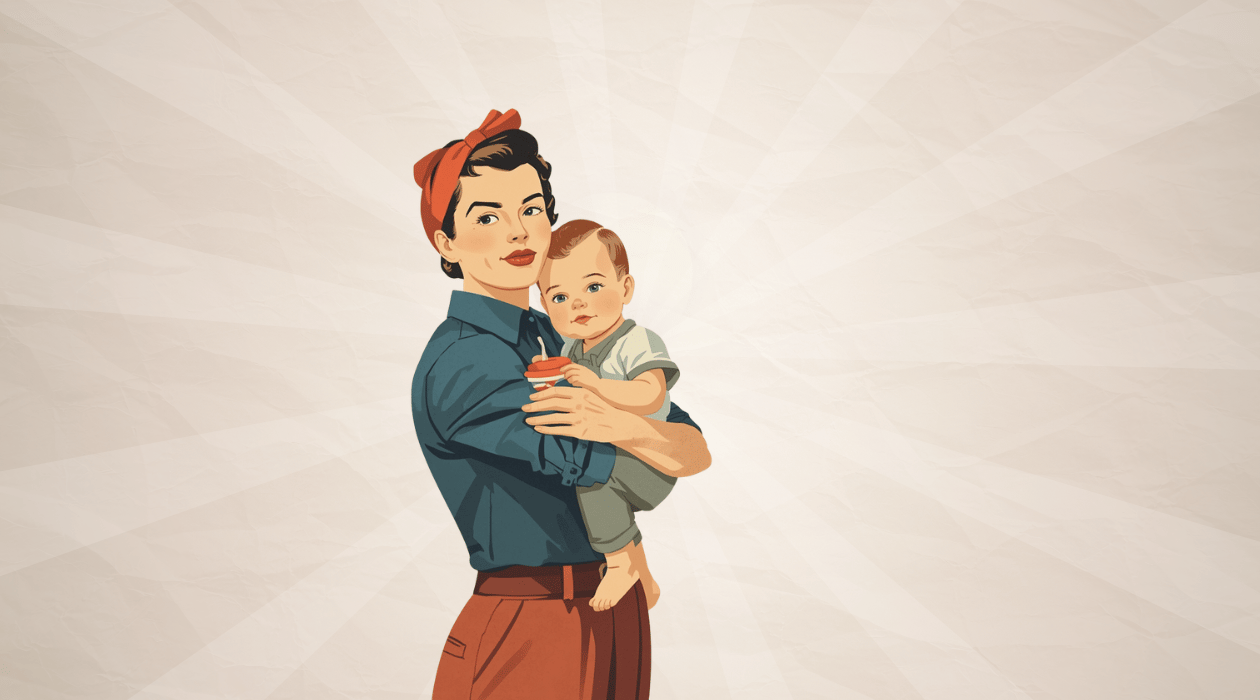
Does the thought of raising a brand-new human in a world that seems completely unhinged keep you up at night?
I get it.
The struggle is real.
It's hard not to obsess over how you're going to save your child from the 50 shades of crazy we're all living in right now, so they can grow up and become a decent, grounded human being.
Maybe before kids, you could ignore or brush off the noise and negativity?
But now — it hits different, right?
Because it's not just about you anymore.
Now you're looking at the world and thinking:
- 👉 "Is this really what they're growing up in?"
- 👉 "How do I protect them from this?"
- 👉 "How do I make sure they turn out okay?"
That feeling — that mix of protectiveness, fear, and responsibility — is real.
And it can be all-consuming.
It can make you feel helpless.
But here's a little secret, to help you feel better:
You don't have to control the world to keep it from controlling your child.
You just have to control how you show up.
Because right now, your toddler isn't learning from headlines or social media.
They're learning from you.
Every day they're:
- Using your nervous system to help manage theirs
- Copying your tone, reactions, and habits
- Absorbing the behaviors they see around them
- Learning what feels safe and what doesn't
- Building patterns that they'll carry internally for the rest of their lives
All of these things create their internal wiring around their understanding of relationships, communication, and emotional safety in this very important phase of development.
And that's where you come in:
Because whatever they see and experience the most becomes what feels 'normal' to them.
When you make kindness, patience, and respect feel normal and safe, your child doesn't just learn those things — they actually become part of who they are.
And that's good for you, them — and the world.
Research consistently shows that people who grow up with strong character traits — like empathy, self-control, and integrity — are more resilient, more independent, and more likely to think for themselves.
These are the traits that give people strength in troubled times, who don't need to punch down or take advantage of other people to feel powerful.
These are the traits that make heroes — and helping your child develop them is so much easier than you think and completely in your control.
So if you're feeling overwhelmed by everything that's happening "out there", start by bringing your focus back to what's happening right here.
Because if enough parents raise children who:
- Can handle hard moments.
- Feel safe choosing kindness.
- Understand how to treat people well.
- And don't need to dominate others to feel okay.
You're not just raising good kids —
You're quietly changing the future.
And the best part?
You don't need a big plan.
You don't need to overhaul your life.
This Revolution will happen through small, everyday moments.
Because that's the real way to change the planet.
So if you want a better world.
Start modeling it for your child.
You don't have to be perfect.
You just have to be consistent enough that this becomes the world they grow up in.
It's not complicated.
It starts with the small choices you make every day — how you speak, how you respond, and how you treat people.
You might not think so, but choosing to show up as the best version of yourself in everyday moments can shape the future far more than anything you're seeing on TV or social media.
Because doing the right thing also has a way of rubbing off on people, regardless of what they post or believe.
And sometimes, one simple act of kindness — especially when you don't agree — can shift something in someone and set off a transformation you'll never see.
You'll never know the impact you have on most people.
But we've all heard the stories — sometimes, one small moment changes everything.
That's how Revolutions start.
And right now, in these toddler years, everything you model is being wired into who your child is becoming.
Your child isn't just watching the Revolution.
They are the Revolution that will one day change our future and our world.
The world doesn't always change through big, dramatic events — sometimes it happens through ordinary but intentional daily choices.
So let's embrace the Revolution and start saving the world by modeling a better one, one small action at a time.
Because when you do that, you're not just showing your toddler that everyone has the power to make the world a little better — you're actually making it better — while they quietly absorb those lessons into their developing mind.
Here's how you can do that every single day...
15 Ways To Lead the Charge So Your Toddler Becomes The Change You Want To See:
1. Say please and thank you (and make sure they do too)
Good manners are more than just old-fashioned "etiquette" — they're a way of modeling respect.
When your toddler hears you use these words often (and you remind them to do the same), they start to learn a more mature way to interact with people. They notice that other people deserve kindness — and that manners can help us get along and get our needs met, not by forcing or bossing others, but through consideration and respect.
Your toddler was a baby not too long ago; they screamed and cried when they needed something because that's the instinct that made them safe and seen.
But they're not babies anymore, and they need to learn how to grow out of those old instincts.
When you model manners — and respond to your child with them as well — they learn that this way of communicating is safe — that there are different, more thoughtful and gentle ways of getting their needs met.
2. Listen more than you talk
When you truly listen to someone, you show them they matter.
Your toddler deeply needs to be seen and heard to feel safe — and listening when they talk to you helps them feel secure enough to learn to offer that same respect to others.
Yes, this is a skill they will need to practice, but if you show them how it's done — and model that listening when someone else is speaking can benefit both people — they'll learn and internalize this soft skill in a way that will benefit them for a lifetime.
Active listening is a simple but powerful way to do this.
This means:
- Pausing what you're doing.
- Giving your full attention.
- Making eye contact.
- Not interrupting.
- Responding in a way that shows you understand.
For toddlers, this builds emotional safety and teaches them that communication is a two-way street — that when one person speaks, the other listens, and both roles matter.
If you can do this consistently, they'll learn that people aren't just there to be talked at — they're there to be understood.
And that's the kind of skill that shapes how they'll connect with others for the rest of their lives.
3. Be a kind and courteous driver
Keeping your cool in traffic might not feel like a parenting moment, but it is — more than you think.
When you lose it behind the wheel — yelling at the car in front of you with your toddler in the back seat — it teaches a few things (and none of them are helpful):
- It models an impulsive, negative way to handle stress.
- It can make your toddler feel unsafe. The person who cut you off isn't in the car — but your child is, and it will feel like your anger is directed at them.
- It actually makes driving less safe. When you're overwhelmed and reactive, the thinking part of your brain goes offline.
On the other hand, staying calm keeps you in control—and keeps your child feeling safe.
And being intentionally courteous? They notice that too.
When you let someone in, slow down instead of speed up, or choose patience over reaction, you're showing your child something powerful:
- 👉 Inconvenience doesn't have to turn into anger.
- 👉 Frustration doesn't have to take over your body.
- 👉 You can stay in control, even when things don't go your way.
These lessons might feel invisible to you in the moment, but they're not.
Because your toddler is quietly absorbing it all — learning how to handle stress, how to treat others, and how to stay steady when things get frustrating.
And that's a lesson that will follow them long after they leave the back seat.
4. Hold the door for someone
Babies aren't born understanding what it means to be considerate.
They don't say, "Excuse me, Mommy, can I please have my bottle?" — they cry, and they scream because that's how they get their needs met.
But your toddler is starting to learn that there's another way to move through the world.
When you hold the door open for someone, your child notices something important:
🫶That paying attention to other people — and anticipating their needs — is a "thing".
They begin to see that life isn't only about "me."
It's about us.
This is how toddlers start to understand what it means to live alongside other people.
When they watch you do something as simple as holding a door, they learn that it's okay — and safe — to think about someone else first.
They see that kindness feels good, and that noticing people matters.
When you notice people and respond with care — you're teaching your child to do the same.
And over time, that awareness becomes part of who they are.
5. Help someone carry something or give up your seat for someone
When you offer your seat or lend a hand, your toddler learns something simple but powerful:
👉 People look out for other people.
Not because we have to — but because we can.
Maybe you see someone struggling with their groceries, and you stop to help. In that moment, your toddler is learning that helping others brings people closer — and that it feels good to do it.
And it really does.
Because science says that helping others is just as rewarding for you as it is for them, and because your toddler is co-regulating with you at this stage, their nervous system benefits when you do something that feels good and grounded.
So you're not just helping someone else —
You're showing your child a world where kindness feels good — and where helping, connecting, and caring are simply part of what it means to be human.
6. Smile at people
Smiling might feel small—but it's one of the oldest social signals we have.
Long before words, humans used facial expressions to communicate safety. A relaxed face and a smile signaled "I'm not a threat" — and helped groups live and work together without constant conflict.
That instinct hasn't gone anywhere — we're still wired to read faces first.
So when you smile at someone, you're being more than just polite —you're sending a signal of friendliness that helps keep social interactions calm and cooperative.
Of course, this doesn't mean teaching your toddler to trust everyone blindly.
Safety matters.
Boundaries matter.
But here's the key: Modeling this behavior teaches your child that they can hold boundaries even while being friendly.
"No" can still mean "NO" even if you're not upset.
Because there's a big difference between teaching awareness — and modeling suspicion or hostility toward everyone around you.
Friendliness shows your child that not everyone is a threat — and that they're allowed to decide for themselves who is.
And here's where it gets even more interesting:
Research shows that smiling doesn't just affect the person you're looking at — it affects you, too.
Studies on facial feedback suggest that when you smile, even if it's a bit forced, it can actually shift your mood in a positive direction. Other studies have found that smiling can lower stress responses and make social interactions feel less tense or hostile.
So basically...
Smiling helps your body feel safer — and that safety carries into your interactions with others.
And your toddler picks up on all of it.
When they see you smile at people, they'll feel safer because you'll be showing them that the world isn't just something to be afraid of — it's a place people can move through feeling safe and comfortable.
- They learn that friendliness is normal.
- That connection is safe.
- That people aren't automatically a threat.
- They learn that you don't have to be aggressive to hold boundaries.
Remember: You're not telling them to be friendly or to smile at people, especially those who make them uncomfortable; it's not about making them do something.
You're showing them that, as the adult in their life, you feel safe enough in the world to be friendly as you move through it, and over time, this small action introduces the idea that strength, safety, calmness, and kindness can all exist in the same place.
7. Let someone in front of you in line
Letting someone go ahead of you in line shows your toddler something powerful:
👉 "I can notice how I impact someone else — and choose to make it easier for them, even when I don't have to."
You might have a full cart of groceries, and the person behind you only has a few things.
Letting them go ahead of you so they don't have to wait demonstrates consideration.
That's how you plant the seeds of thoughtfulness.
In that small moment, your child sees that it's possible to stop, notice someone else, and put their needs ahead of your own — even when nobody's making you.
In this way, they learn that the world isn't just a place where we're all "against" each other.
It's a place we move through together.
And that sometimes it's safe to put someone else first.
Because generosity isn't always easy — sometimes it'll cost you something, even if it's just a minute of your time.
These small actions are what make that idea start to feel normal — and safe to act on — teaching them to choose connection over urgency, awareness over "me first," and kindness over convenience.
And over time, those choices become part of who they are.
Because consideration isn't something you can make a toddler feel—it goes against their natural "me first" instincts.
But it is something they can learn to tolerate, understand, and eventually embrace — when they see it modeled often and intentionally.
8. Don't belittle or criticize people
When you hold back judgment, refuse to make fun of or ridicule someone behind their back, or refrain from belittling people, your child learns that tearing people down isn't how we feel powerful.
They learn restraint as an actionable form of respect and that everybody— not just the people who they like the looks of or agree with — deserves it.
In that moment, your child sees that just because you could say something — doesn't mean you should.
They learn that not every thought needs to be spoken, and not every flaw needs to be highlighted.
That matters more than it seems.
Because criticizing others can feel powerful in the moment — but what it really teaches is comparison, judgment, and insecurity.
When you choose not to go there, you're showing your child a different way.
You're showing them that you can notice something and let it go, and that you don't need to make someone else feel worse so you can feel better.
And over time, that will become how they operate, too.
- They learn to pause.
- To filter.
- To choose kindness over cruelty
- Intention over impulse.
Because this kind of self-control isn't something your child was born with — it's something they learn by watching you decide what not to say.
And those quiet decisions will shape how your child learns to treat other people — and themselves.
9. Say kind things out loud
Complimenting someone teaches your toddler how to notice the good in others — and express it.
It's one of the easiest ways to turn kindness into a habit.
When your toddler sees you acknowledge something nice about someone and actually say it out loud, it shows them that uplifting others doesn't take anything away from you.
In that moment, your child sees that choosing to say something nice to someone is a "thing", something we can do that makes others feel good.
And that matters.
Because life isn't just about our thoughts, it's about how we act on them.
When you do this regularly, your child starts to understand that kindness isn't something you should keep to yourself — it's something you share.
They learn that their words have the power to make someone feel seen, appreciated, and valued.
And over time, that changes how they see other people.
Instead of scanning for what's wrong, they start to notice what's right.
Instead of holding in kindness, they learn to speak it.
Because expressing kindness isn't automatic at this age — it's learned.
And when your child grows up seeing that saying kind things is regular, everyday behavior, it becomes something they'll do without even thinking.
That's how the seeds of this kind of "active kindness" are planted so they'll grow into a habit rather than just being something they're told to do.
10. Acknowledge other people's efforts, not just their successes
When you tell someone they did a good job, whether or not they "won" or accomplished their goal, your child learns to value action — not just outcome.
They learn it's the effort that matters — and to respect that in others and in themselves.
They see that trying, showing up, and doing your best should all be acknowledged.
And that matters more than you might think.
Because sometimes, no matter how hard you try, things just don't go your way, sometimes you try and fail, and that's just how life is — in these toddler years when they're learning so many new skills from scratch, failure is going to be inevitable for them a lot of the time so modelling appreciating effort and intention is a really important thing for them to see.
This can also help model positive coping skills.
"No, Daddy didn't get the job — but he worked really hard and learned things that will help him next time."
That's how you teach them to respect the process — by finding hope and optimism even in disappointment.
In this way, you're teaching them to respect the process — not just the outcome.
And over time, that will become their default.
- They learn to value their own efforts as well as other people's.
- To keep trying when things are hard.
- And feel proud of what they put into something — not just what they get out of it.
Modeling this helps them appreciate and develop qualities like resilience, courage, and determination in themselves and encourages them in others.
11. Help someone without them asking for it
Do you know someone who's struggling but won't ask for help?
See if there's anything you can do for them, without them having to ask.
It doesn't have to be a big deal; you might have an elderly neighbor or a friend who's in between jobs right now.
Find a way to help that won't hurt their pride or feel invasive.
And when you do, let your toddler see it — and talk to them about it.
- "Those bins are really heavy. I'm going to take out her garbage for her when I do ours."
- "Auntie Patty is looking for a job, let's see if she wants a ride to her interview, we're passing by that way anyway."
These kinds of actions model social awareness by highlighting that we are all responsible for one another.
It also teaches them something deeper:
You don't have to wait to be asked to help.
Because a lot of people won't ask.
- They're tired.
- They're overwhelmed.
- They're proud.
When you take that first step, you're teaching your child that they don't need to wait for permission to do good things.
And over time, that becomes how they will move through the world.
- They learn to pay attention to other people.
- To check in.
- To offer support without needing a reason or a reward.
Because caring for others isn't just about reacting — it can be about noticing and then choosing to act.
12. When you help other people, don't keep score
When you help someone, let it be a gift — no strings attached, no expectation of anything in return.
- 👉 That's how your child learns that kindness isn't transactional.
- 👉 It's just part of being human.
In that moment, they see that not everything has to be a trade — that you don't only help when there's something in it for you.
But this doesn't mean being a doormat.
You're not teaching them to let people take advantage of them, or to ignore their own needs.
What you're showing them is something much more powerful:
That helping is a choice.
Show them that you can say no to people when you can't or don't want to do something, and that's okay, too.
But when you choose to help, you can do it freely — without keeping score, without expecting something back, and without attaching conditions to it.
That distinction matters.
Because it teaches your child both generosity and self-respect.
- They learn that they're allowed to say no.
- That their time and energy have value.
- And if they do choose to say yes, it's not about control or what they'll get back, or approval — it's just about choosing to help.
They learn to give because they choose to and because they can.
13. Support other moms
If you know someone who could use a break but can't afford extra childcare, offer to have their kid for a playdate.
Even something simple — an hour to go for a walk, grab a coffee, or just sit in silence — can make a huge difference.
And let your toddler know.
"We're helping her out today so she can have a little break."
Because when you help another mom, you're not just helping her.
- You're giving her child a safe space away from home.
- You're helping your child with their socialization.
- You're giving yourself a break because managing a playdate can be less intense than being alone with your toddler.
And you're showing your child something powerful:
We don't do this alone.
- People show up for each other.
- Community is something we can build.
In a world that often feels disconnected, this is how we connect our little ones while creating our own communities and "family".
They may not fully understand it yet — but they'll feel it.
Being surrounded by familiar, caring people creates a quiet sense of safety and belonging.
And that's what teaches them how to bring others in — and that builds stronger, more connected communities.
14. Cook for someone/take someone some food.
Do you know someone who's struggling right now?
- Someone going through a loss?
- Dealing with mental or physical health challenges?
- Or an older friend or relative who needs a little extra care?
In those moments, even simple things — like figuring out what to eat —can feel overwhelming.
So if you can, bring them some food.
Set aside leftovers or make an extra portion while you're already cooking— it doesn't have to be fancy.
And let your toddler see what you're doing — and involve them if you can.
Frame it in a way that lets the person keep their dignity. Not as "charity," but as simple, human support:
- "We made extra dinner — let's see if my friend Patty wants to bring the kids over for dinner tonight. She's always super tired after work, and this way she won't have to clean her kitchen."
- "Mr. Jones likes pasta — let's bring him some. He's been a bit sad since Mrs. Jones passed away."
- "I noticed Mary didn't have a sandwich in her lunch yesterday at preschool. Let's make an extra one in case she wants it today. If she has one, see if someone else wants it, or just bring it home, and you can have it tomorrow."
Because in that moment, your child is learning something important:
When people are struggling, we move toward them — not away.
But this goes even deeper than that.
For thousands of years, sharing food has been one of the most natural ways humans connect:
- We gathered.
- We cooked.
- We shared meals.
It's how we:
- Built trust.
- Created belonging.
- Made communities and held them together.
So when you cook for someone — or bring them food — you're not just helping in a hard moment.
You're tapping into something ancient.
You're showing your child one of the most basic ways humans care for each other.
And over time, that shapes how they see the world.
They learn to step in, in regular everyday ways — because that's what feels normal.
Because kindness doesn't always look big or dramatic.
Sometimes, it looks like a simple meal — shared, delivered, or offered at the right time.
15. Give people your full attention
When someone is talking to you, just give them your full attention.
- Don't half-listen.
- Don't scroll.
- Don't nod while thinking about something else.
Because when you do this — when you pause, make eye contact, and really listen — you're showing your child what it looks like to make someone feel like they matter.
It's a small thing, something you might not think has anything to do with them — but it does.
Because when you do this, they'll see:
- How the other person responds.
- How it softens the interraction.
- They'll pick up on body language and tone of voice.
Disclaimer:
(👉Yes, if you're listening to someone else, your toddler might interrupt because they won't like that you're not paying attention to them. This definitely happens in this phase, but it's the perfect opportunity to teach your toddler about respect by making them wait, which is a skill they're just learning, so they might not be good at it. It might take a few times for them to realize that they're safe, even when you're listening to someone else talk. Don't let that discourage them from teaching the lesson. So take the time to make them wait and give them consequences if they don't, so your child gets the opportunity to learn to listen.)
Because in that moment, your toddler is learning something powerful.
That attention is:
- A way we show respect.
- A form of care.
- How we learn to understand other people.
- How we connect.
- And that letting someone else have attention instead of us can be safe.
Giving your toddler that same kind of attention (like not interrupting them or letting someone else interrupt when they're talking to you) is also how you plant the seeds of empathy — because research shows that children learn to understand others by first being understood themselves.
And there are more benefits as well.
When you give your toddler your undivided attention, when they're speaking to you or showing you something — you're also giving them something else they deeply need.
Because to them, your attention feels like safety.
It tells them:
- 👉 You matter.
- 👉 You're seen.
- 👉 You're worth listening to.
- 👉 You belong here.
That feeling gets wired in.
And over time, it shapes how they move through the world.
They don't just expect to be heard — they also know how to listen.
They can pause, take in someone else's words, and really understand what they're saying — and that's a skill that can change the world.
This Is How We Break The System And Take Back The Future
The Revolution won't just be fought in the streets.
It will be lived out in kitchens, playrooms, shopping malls, and parks.
It will be built through love, kindness, respect, and integrity.
Led by people who don't need to tear others down to feel strong — who can listen, who have empathy, and who know how to build real community.
And it starts with you, Toddler Mama.
- You don't need a perfect script.
- You don't need to "teach" kindness in some big, formal way.
You just need to live it in real time — right in front of them.
Because your toddler isn't learning from what you say.
They're wiring their brain around what you do.
- They're not on social media.
- They're not watching the news.
- They don't care who's doing what to whom.
They're watching you.
- How you act.
- How you treat people.
- How the world feels when they're in it with you.
That's a superpower.
And it's all yours.
Right now, your behavior is shaping how they will:
- Handle stress
- Treat people
- Build relationships
- Respond to challenges
- Show up for others
Because what you do becomes their normal.
That's what wires their brain.
And shapes their future.
It's not about the times we're living through.
It's about how you carry your child through these times that will make them the person they become.
So if the world feels heavy right now, and you're worried about the future.
Take a breath.
You're not on the sidelines.
You're leading the Revolution.
And it starts right there — in that highchair in front of you.
So:
- Start small.
- Start at home.
- Start with yourself.
Because how you show up today doesn't just shape your child in this moment — it also shapes the human your child will become.
And it's that human who will lead us all into the future.
And that's how the Revolution unfolds.
One modeled moment at a time.
You've got this, Toddler Mama. 💛
And I've got you.
To read more about better parenting practices, start here:
- 7 Ways to Be a More Skilled and Centered Parent
- 4 Reasons Why Consistency Is Your Toddler Parenting Superpower
- Is Your Protective Instinct Sabotaging Your Toddler’s Independence?
Put these ideas into practice, with these free resources:
- The Grounded Toddler: 7 Days To More Skilled And Centered Parenting
- The Grounded Toddler: 6 Step Patience Plan
- The Grounded Toddler: 5 Step Empowerment Plan
Upgrade your parenting skills with these free resources:
- The Mindful Mama Reset: Awareness Tools For Teaching Toddler Social Skills
- The Mindful Mama Reset: Awareness Tools For Mom Rage Recovery
- The Mindful Mama Reset: Awareness Tools For Co-Regulation