
When a child is struggling with anxiety, overwhelm or school avoidance, adults often feel pressure to find solutions quickly. How do we get them back to school? How do we stop the panic? How do we help them catch up? How do we build confidence again?
These are understandable questions.
But recovery from anxiety rarely begins with pushing forward. It often begins by slowing down.
When adults are struggling with mental health issues, they take time out for work or face burnout. Children are the same. They often need rest and calm. When their stress bucket is full, it takes very little to tip it up. When their stress bucket is full, there is often little room for anything else, formal learning often has to wait.
There is also a subtle but important distinction between, 'my child is refusing to attend school' and my child is not well enough to attend school. One is an attendance issue, the other is a health issue. A break from formal education is sometimes essential.
Anxiety Changes How A Child Experiences The World
When children become overwhelmed, their brains are not focused on learning, socialising or taking risks.
Their brains are focused on safety. This is not a choice. It is a survival response. The anxious brain becomes highly alert to potential threats, worries and uncertainties. Things that once felt manageable can suddenly feel enormous.
A busy classroom.
A noisy corridor.
A difficult friendship.
A homework task.
Even getting dressed for school.
Children may look defiant, withdrawn, emotional, angry, exhausted or unwilling to engage.
But underneath many of these behaviours is the same message:
"I don't feel safe enough right now."
Recovery Often Starts With Calm
One of the biggest misconceptions about anxiety recovery is that children need more pressure to overcome it. In reality, many children first need opportunities to experience calm. The nervous system cannot learn that the world is safe if it never experiences what they perceive to be safety. That is why calm spaces can be so important.
What Does A Calm Space Look Like?
Many people imagine a calm space as a quiet sensory room. Sometimes it is. When my daughter first had anxiety I thought her bedroom would be her safe space. A year previous she had asked for her room to be painted red. As loving parents we complied. When anxiety and overwhelm set in my daughter did not want to be in her red room. She had felt herself declining in there and so it was a space full of dread. Obviously we repainted it once we new and removed lots of clutter. This helped and she returned to her room.
Often it isn't just a room that provides calmness .
A calm space might be:
- Walking beside a river.
- Sitting in a garden.
- Drawing.
- Building Lego.
- Listening to birds.
- Reading.
- Photography.
- Baking.
- Being with a trusted adult.
- Sitting with a pet.
- Looking at clouds.
- A favourite chair.
- A blanket and a book.
The activity itself is often less important than how the child feels while doing it. Calm spaces reduce pressure. They allow the nervous system to settle. They create room to think.
Why Nature Can Help
Many anxious children naturally seek calm through nature. There is no expectation. No test. No performance. No judgement. Nature simply invites distraction for a busy mind and curiosity rather than pressure. Children begin noticing things again.
A feather.
A beetle.
A strange cloud.
A bird's nest.
A winding stream.
These small moments may not look like recovery, but they are part of a bigger journey - finding calm spaces and times and creating space and place for the mind to rest. Distractions found in the natural world do not require work, they simply spark inquisitiveness and curiosity. That curiosity can provide a welcome rest from overwhelm.
Recovery Is Rarely A Straight Line
Parents often hope recovery will look like a staircase.
One step.
Then another.
Then another.
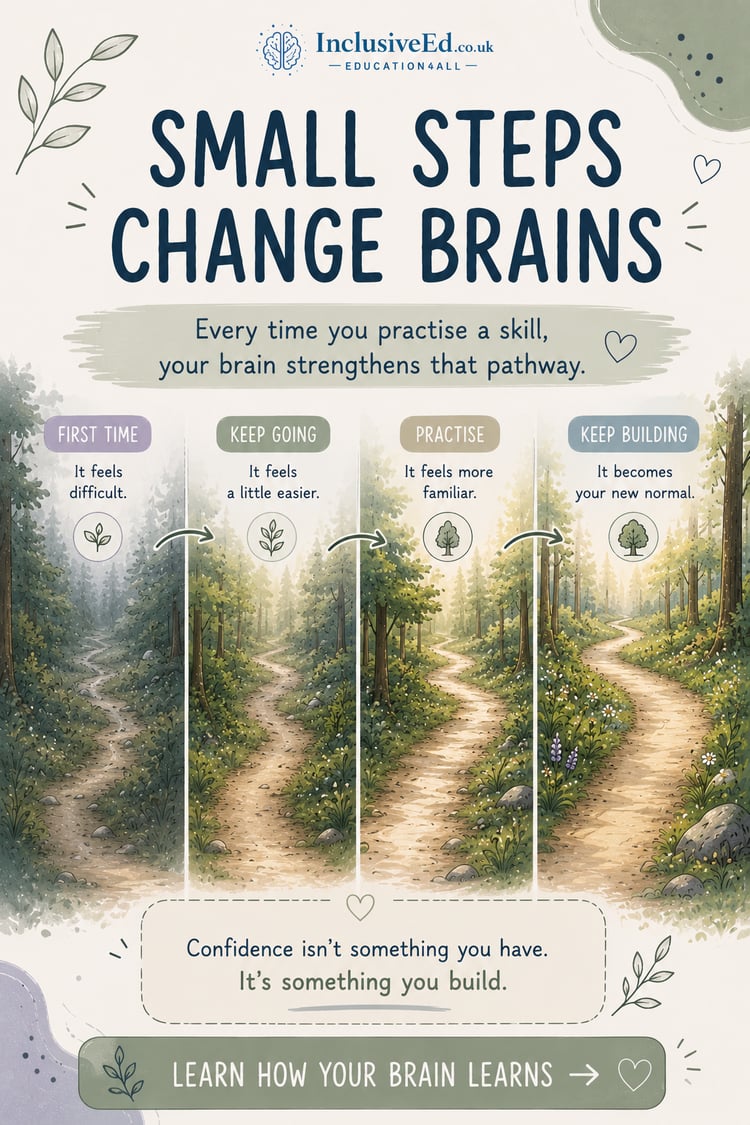
In reality it often looks more like a winding path. Good days. Difficult days. Progress. Setbacks. Breakthroughs. Exhaustion. More progress. Children may revisit old worries. They may suddenly seem anxious again after weeks of improvement. This does not mean recovery has failed. It means recovery is happening. Growth is rarely linear and so providing those safe places, spaces and experiences regularly can slowly start to provide a different perspective. Something children can draw upon, often unwittingly, but tentatively over time.
Obviously children wont think 'I need a safe space and it's here' but they might ask, 'can we go to the park today' or 'can we walk in the woods or beach'. Our role is to give them the opportunity to identify spaces that work for them. For many parents, these experiences are often useful for our own regulation too. We experience calm together, we build curiosity together, we have a safe conversation together around discovery and curiosity.
Confidence Returns After Safety
Many adults want to help children become confident. But confidence is often the result of accomplishment which can sometimes include a journey to recovery. Today is a better day. I am feeling stronger today. I have felt better the last week, less panic more calm.
Children become confident when they experience:
- Safety.
- Understanding.
- Small successes.
- Acceptance.
- Encouragement.
- Opportunities to try again.
Confidence grows from evidence. Evidence that they can cope. Evidence that they can recover. Evidence that difficult feelings do not last forever.
Small Things Matter More Than We Think
Recovery is often built from moments that appear insignificant. A child leaving the house. A conversation.
A walk. A question. A photograph. A new interest. A tiny brave step. These moments can accumulate when children are given the opportunity to feel calm.
They become the foundations of resilience. They see that they can have calm times, times where they forget their worries for a while, and through that time they are beating down a more positive path in their minds.
The Goal Isn't To Remove Every Worry
Anxiety recovery is not about creating children who never worry. All children worry sometimes. All adults worry sometimes. The goal is something different. To help children understand themselves. To recognise their feelings. To know what helps. To believe they can cope. To remember that difficult moments pass.
And to rediscover the confidence to engage with life again.
The Journey Back
Recovery often begins quietly. Not with a dramatic breakthrough. Not with a perfect plan.
But with a child feeling safe enough to breathe. Safe enough to notice. Safe enough to wonder. Safe enough to explore. And from there, step by step, confidence begins to grow.
The journey back from anxiety is rarely about rushing forward.
It is about creating enough calm for children to find themselves again.
A Gentle Next Step
Every child's journey through anxiety is different.
Some children need rest.
Some need understanding.
Some need opportunities to rebuild confidence one small step at a time.
The Calm Code series was created to support that journey. Rather than focusing on pressure, performance or quick fixes, the books help children understand anxiety, work with worries and thoughts, create calm spaces, rebuild confidence and rediscover curiosity at their own pace.
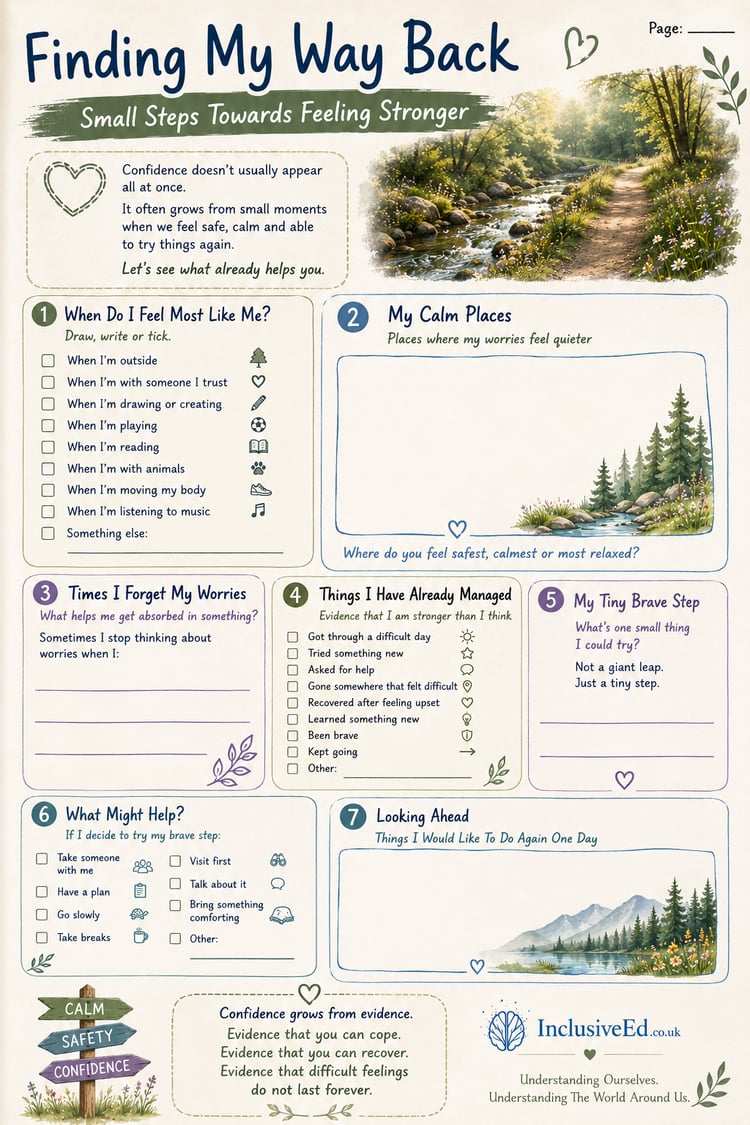
Download this FREE PRINT AT HOME WORKSHEET HERE - FREE Child Anxiety Recovery Worksheet | Building Confidence After Anxiety, EBSA & Overwhelm | Printable PDF for Parents, Teachers & Home Educators - Payhip
Helping Children Create Their Own Safe Place
Reading about calm spaces is one thing. Helping a child create one that feels personal and meaningful is another.
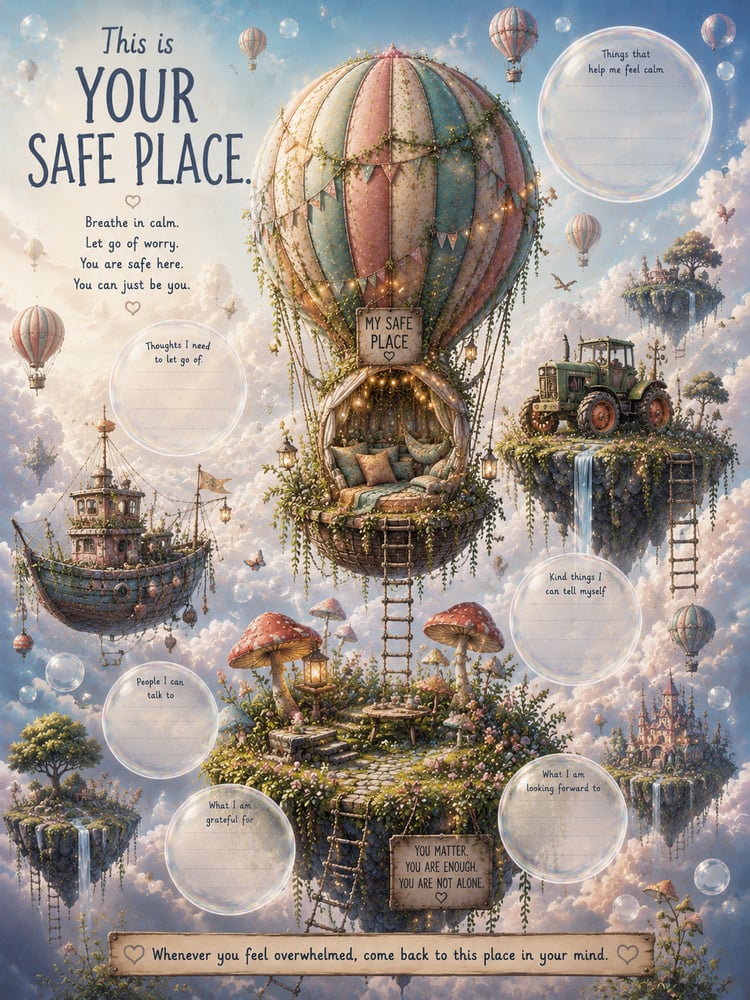
One gentle way to begin is by encouraging children to imagine or design places where they feel completely safe. For some children that might be a woodland den beneath an old tree. For others it might be a hot air balloon floating quietly above the clouds, a peaceful beach, a cosy reading nook, a lighthouse, a favourite boat or somewhere entirely of their own creation.
The important thing isn't whether the place is real or imaginary.
It's whether the child feels calm when they think about it.
That sense of safety gives children somewhere to mentally return to when life feels overwhelming. Over time, these places can become familiar anchors that help them slow their breathing, organise their thoughts and remember that difficult feelings will pass.
A Gentle Activity To Begin
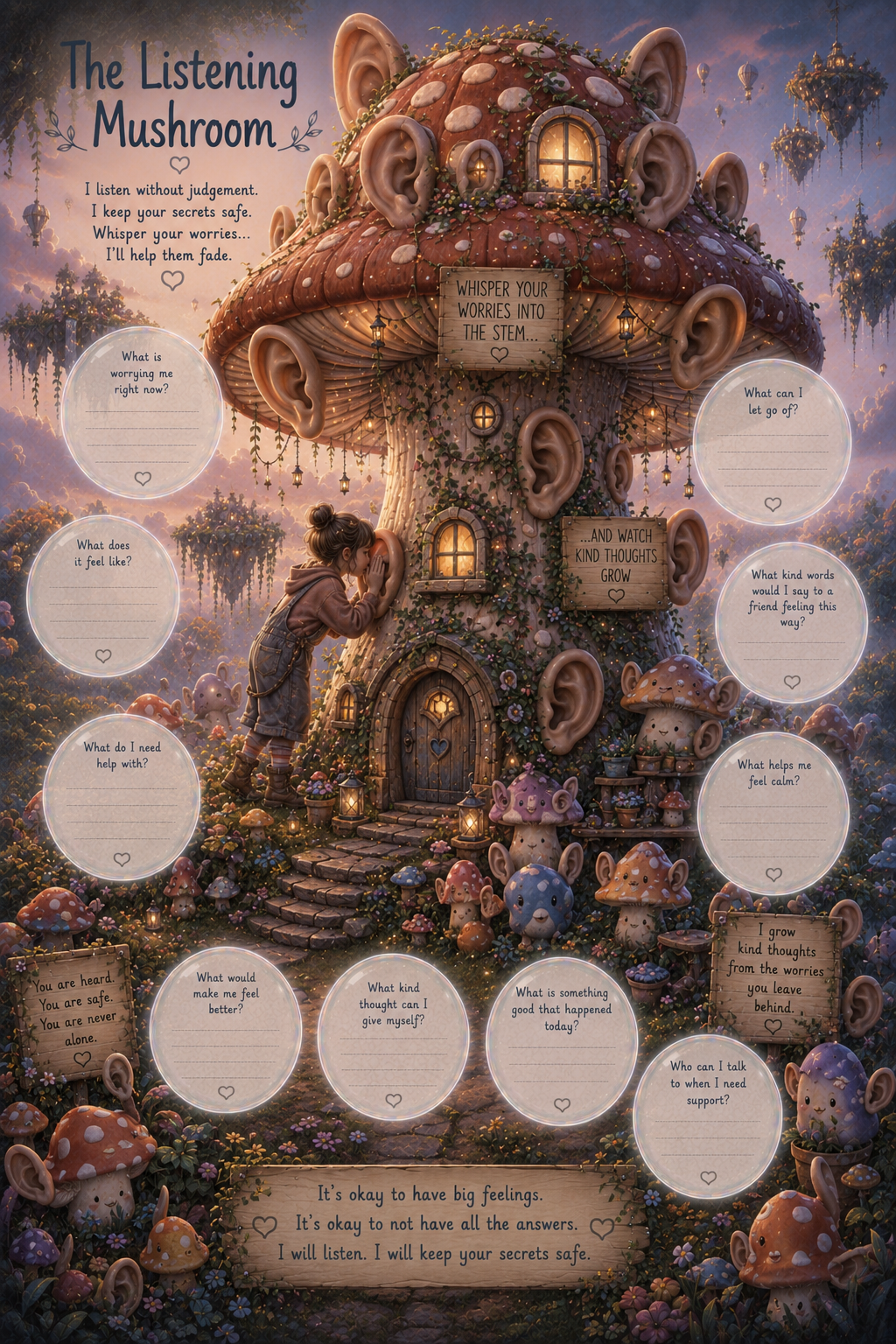
If you'd like to help a child explore this idea, I've created My Safe Places — a printable collection of beautifully illustrated reflection pages designed to encourage children to imagine, draw and describe places where they feel safe, calm and able to simply be themselves.
Rather than telling children where they should feel calm, the workbook invites them to discover what safety looks like for them.
Inside they'll find imaginative settings including:
- floating hot air balloons
- woodland dens
- treehouses
- willow hideaways
- peaceful boats
- cosy reading spaces
- cloud islands
- gentle fantasy landscapes
Each page includes simple prompts that encourage reflection, curiosity and conversation without pressure.
Whether you're a parent, teacher, ELSA, counsellor or home educator, the activities can be used as gentle conversation starters, calming activities or simply quiet moments where children can reconnect with feelings of safety.
👉 Download "My Safe Places" on Etsy here.
If you'd like to learn more about the thinking behind the series, you can read:
How The Calm Code Helps Children Move From Anxiety To Confidence
A closer look at the ideas, activities and gentle approach behind the books. A Gentle Next Step
Every child's journey through anxiety is different.
Some children need rest.
Some need understanding.
Some need opportunities to rebuild confidence one small step at a time.
The Calm Code series was created to support that journey.
Rather than focusing on pressure, performance or quick fixes, the books help children understand anxiety, work with worries and thoughts, create calm spaces, rebuild confidence and rediscover curiosity at their own pace.
If you'd like to learn more about the thinking behind the series, you can read:
How The Calm Code Helps Children Move From Anxiety To Confidence
A closer look at the ideas, activities and gentle approach behind the books.
How Calm Code Helps Children, Parents & Schools Understand Anxiety & Overwhelm - Payhip