

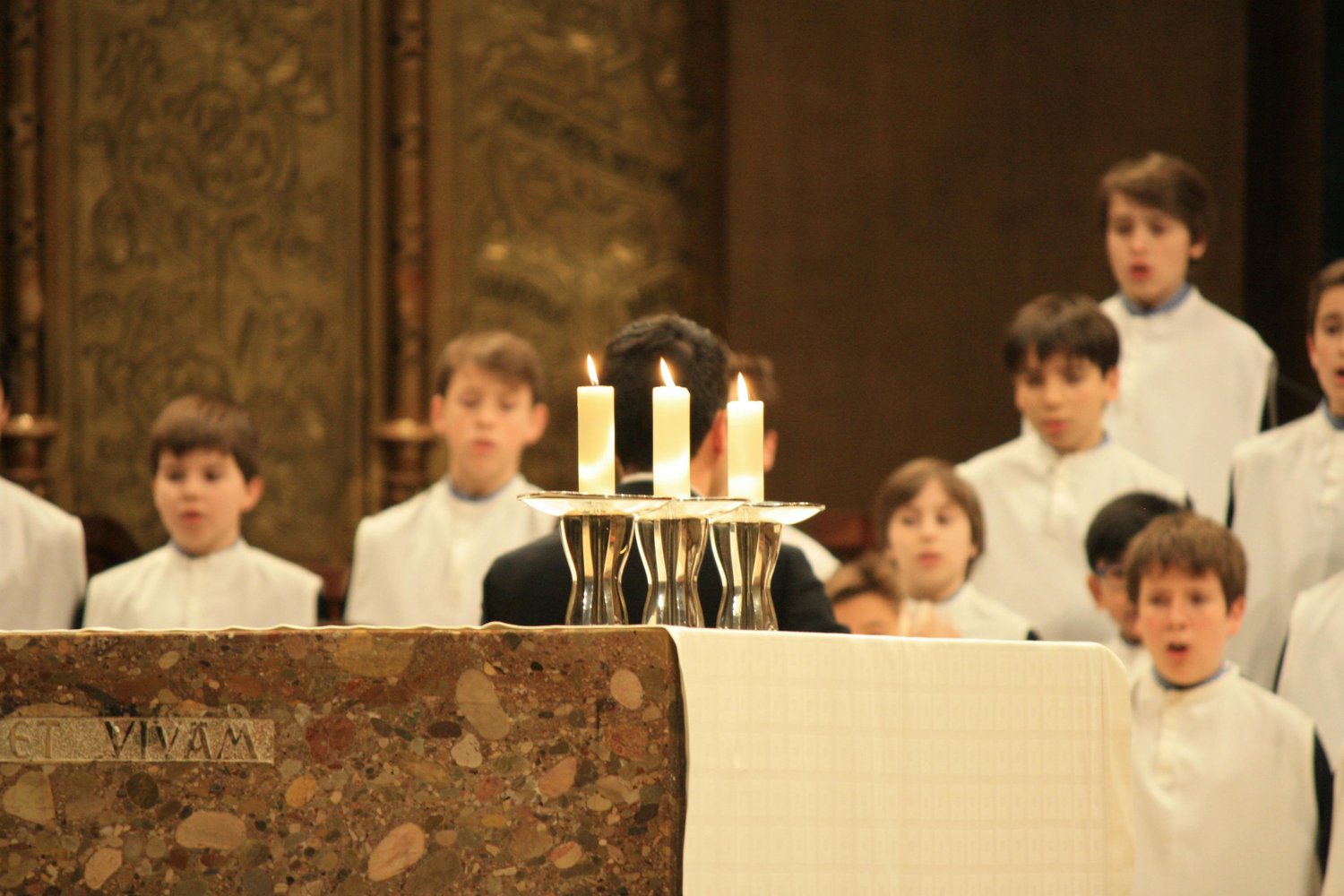
One of my favorite memories of singing in the KwaZulu-Natal Youth Choir was performing the Miserere by Gregorio Allegri. There is something truly special about this work, and the memories of that sound will last my whole life.
1. The "Forbidden" Legend
For a long time, this piece was only allowed to be performed in the Sistine Chapel. Then, a young Mozart heard it, transcribed it, and in doing so, helped preserve the beautiful ornaments that we now consider the "standard" version of the piece. This act made the masterpiece available to the world.
However, the problem with this piece today isn't secrecy; for community choirs, it is often nearly impossible to sing because:
- It requires a double choir (S1, S2, A, T, B) plus a separate soloist group (S1, S2, A, B).
- It is traditionally performed a cappella (unaccompanied).
- The unmetered chanting is a significant rehearsal challenge.
- Most notably, the soloist group requires a soprano who can hit a High C.
That is why I have created an arrangement that can be sung in the local parish church just as beautifully as in the Vatican!
2. The Solution: The "Director-First" Arrangement
Community choirs often struggle without large tenor and bass sections. Because men are often reluctant to join these ensembles, filling multiple low-voice parts becomes a hurdle. This version is arranged for Soprano, Alto, and Baritone for both the main choir and the soloist sections.
This provides the director with flexible opportunities:
- The Soloist Section: Can be sung by a quartet, a small "Schola," or the full choir depending on your numbers.
- The Men's Section: By using a Baritone part, you remove the stress of finding high tenors and low basses, allowing your men to sing with a unified, confident sound.
The goal is to provide a solid structure for the musical director, who can then decide how to best use their specific resources. Additionally, the piece has been shortened to approximately 4 minutes to ensure it fits perfectly into a liturgical setting. It includes an organ or piano accompaniment (preferably organ) which supports the harmonies and boosts the choir’s confidence and tonality.
3. Taming the "High C" and the Falsobordone
The major challenge for any community choir is finding a soprano for that High C. This arrangement provides several creative options:
- Soprano Descant: A small sub-section of strong sopranos can take the part.
- Soloist: A single confident singer.
- Instrumental: A soprano instrumentalist (Flute, Violin, or Oboe) can play the line. A separate part in C is included.
- Keyboard: The organ or piano can simply play the high part to support the texture.
To address the unmetered rhythmic chanting, the score provides clear guidance by incorporating rhythm into these sections. To assist further, my Director’s Resources include an example of appropriate chanting. I have also provided Part-Dominant MP3s for all voice groups and a suggested Latin Pronunciation Guide.
4. The "Small Church Resource" Advantage
This score is specifically written to ensure it is singable by community vocalists, avoiding vocal extremes whenever possible. While some compromises are necessary to bring such a masterwork to a smaller choir, I believe that by using the organ and voices effectively, the joy of performing this vocal tour de force is within any choir’s grasp.
The music has been engraved using best practices to ensure it is easy for the organist, choir, and instrumentalists to read.
A Note on Licensing: We’ve all been there—trying to stretch a budget by making "just one more copy." The Ensemble License at my Payhip store removes that guilt. One purchase covers your whole choir, forever.
5. Experience the Miserere with Your Choir
I believe that every choir, regardless of size or high-soprano availability, should have the chance to perform this masterpiece. To help you get started, I have prepared two resources:
1. Free Resource: "Were You There" (SAB) If you are looking for a soul-stirring Lenten anthem to test the "Johannis Antonius" sound with your ensemble, you can download my SAB arrangement of Were You There for free. 👉 Download "Were You There" for Free (Note: Replace with your specific link for the freebie)
2. The Miserere Complete Resource Bundle (SAB) Ready to take on the Allegri? The full bundle includes the master score, the C-Instrument part for the "High C" soloist, and all the professional rehearsal tracks and organ accompaniments discussed in this post.
- Launch Offer: Use code EASTERSALE123 at checkout to receive 33% off the retail price.
- Ensemble License: Your purchase covers unlimited copies for your specific choir or organization.
👉 Get the Miserere Complete Resource Bundle Here
Johannis Antonius Publishers is committed to making sacred masterworks accessible. We believe in making music accessible to everyone; if you are a director in a developing nation or a mission parish where the USD exchange rate is a significant barrier, please contact us directly for adjusted regional pricing.