
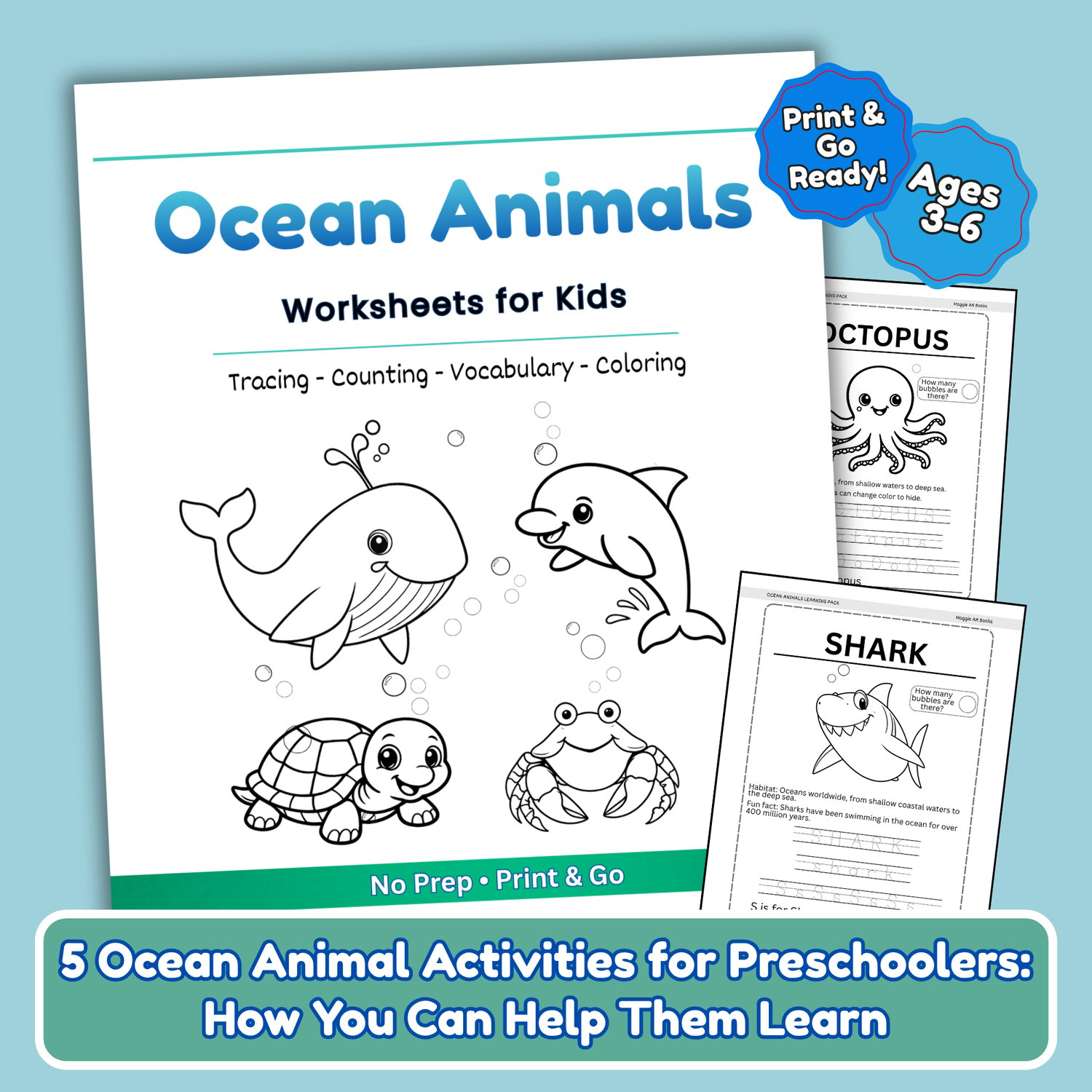
5 Ocean Animal Activities for Preschoolers: How You Can Help Them Learn
Have you ever wondered how to turn a simple coloring activity into a learning opportunity?
You don't need to be a marine-life expert or an experienced teacher to introduce preschoolers to ocean animals. A little curiosity, a few good questions, and simple activities can help children build vocabulary, practise early writing skills, and discover the world beneath the waves.
Whether you're a parent, grandparent, teacher, or caregiver, here are five easy ways to help children ages 3–6 learn through ocean animal activities, without complicated preparation or more screen time.
1. Build Vocabulary Through Everyday Conversations
Children learn new words when they hear them, see what they mean, and have opportunities to use them.
Start with familiar ocean animals such as dolphins, sharks, whales, and turtles. Show a picture, say the animal's name, and invite the child to repeat it. Then talk about one thing that makes the animal interesting.
For example, ask:
- What is this animal called?
- How does a dolphin move through the water?
- Which animal has a shell?
There are no complicated lessons to prepare. A picture and a short conversation can be a wonderful starting point.
Try this: Use an ocean animal vocabulary poster as a visual reference. Point to an animal, say its name together, and invite the child to find it again.
2. Make Early Writing Practice More Meaningful
Before children become confident writers, they need opportunities to develop pencil control and become familiar with letters and their shapes.
Tracing an animal's name connects letter practice to something the child already finds interesting. Instead of practising letters in isolation, children can trace a word such as DOLPHIN while looking at the animal it names.
Keep the experience relaxed. Encourage children to follow the letters at their own pace, and remember that early attempts don't need to be perfect.
Try this: Say the animal's name aloud, trace the letters together, and ask the child to identify the first letter. For children who aren't ready to trace independently, demonstrate the movement first.
3. Turn Counting into a Little Discovery
Early math skills develop through simple, repeated experiences with numbers and quantities.
Ocean animal activities offer an easy way to introduce counting. You might count bubbles, count pictures, or ask a child to point to one animal and then another.
Ask questions such as:
- How many bubbles can you count?
- Can you find two ocean animals?
- What happens when we count them again?
Let the child point, touch, and count aloud. Making mistakes is part of learning, so give them time to try again.
Try this: Count together on the worksheet or draw a few bubbles on a separate sheet of paper. Keep the numbers small and manageable for your child's stage of development.
4. Encourage Curiosity About Ocean Life
Learning animal names is a good beginning, but children can also start discovering how animals live and what makes them different.
A dolphin, a crab, and a seahorse are all fascinating, but they don't move in the same way or have the same body features.
You don't need to explain everything about marine biology. Introduce one simple fact at a time and invite the child to observe the picture.
Ask:
- Which animal has a shell?
- Which animal has eight arms?
- What do you notice about the whale?
Use age-appropriate facts and welcome questions. If you don't know an answer, you can look it up together. That shows children that learning is an ongoing adventure.
Try this: After coloring an animal, invite the child to tell you one thing they remember about it. A simple observation is a meaningful beginning.
5. Use Coloring to Develop Focus and Creativity
Coloring can be more than a way to keep little hands busy. It gives children opportunities to practise controlling a pencil or crayon, make choices, observe shapes, and express their ideas.
You don't need to insist that every animal use realistic colors. Let children choose their own colors and talk about their decisions.
For example:
- Which colors would you like to use for your turtle?
- What part of the picture would you like to color first?
- Can you tell me about your finished picture?
Some children will enjoy talking throughout the activity; others will prefer to work quietly. Both approaches are fine.
Try this: Let the child choose the animal and decide when the picture is finished. The goal is to enjoy the activity while practising skills, not to produce a perfect page.
You Don't Have to Plan Everything Yourself
By now, you can see that introducing ocean animals doesn't require an elaborate lesson plan. A picture, a question, a few minutes of tracing, or a counting activity can provide a starting point for learning.
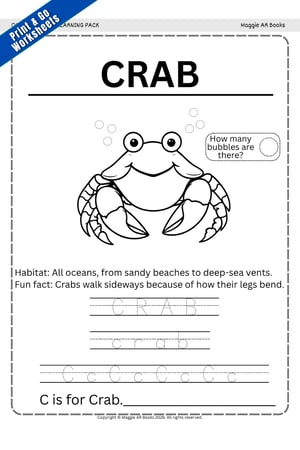
If you'd like some guidance and ready-to-use materials, the Ocean Animals Coloring & Tracing Worksheets by Maggie AR Books bring several of these ideas together in one printable PDF activity pack designed for children ages 3–6.
The pack includes:
- 8 ocean animal worksheets: Dolphin, Shark, Whale, Octopus, Turtle, Crab, Seahorse, and Starfish.
- Coloring and tracing activities: Children can explore each animal while practising uppercase and lowercase letters and animal names.
- Counting and observation opportunities: Simple activities encourage children to look closely and practise early math skills.
- Ocean Animal Vocabulary Poster: A visual reference to help children recognize and name the animals.
- Parent & Teacher Activity Guide: Guidance to help adults use the worksheets and support learning.
- Extension Activity page: Additional ideas for continuing the learning beyond the worksheet.
You don't have to be an expert or invent activities from scratch. The guide gives you a starting point, and you can adapt the experience to the child's interests and abilities.
Ready for Some Ocean Animal Learning?
Choose an animal, get out the crayons, and start with one simple question. You might be surprised by how much conversation and discovery can grow from a single picture.
If you'd like the activities and guidance ready for you, explore the Ocean Animals Coloring & Tracing Worksheets from Maggie AR Books.
Less screen time, more meaningful learning connections.💙
Put away the screens, pick up some crayons, and make room for curiosity, conversation, and time together. Sometimes, the simplest activities create the most meaningful opportunities to learn.