Your Cart
Loading

Better nutrition decisions start with better information.

A nutrition scientist and Army veteran's grocery playbook: 119 food swaps, meal plans for $50, $75 or $100 a week, and the cost-per-gram math behind every choice.

Instant download · eBook, printable toolkits, 5-day meal plan and interactive Swap Guide

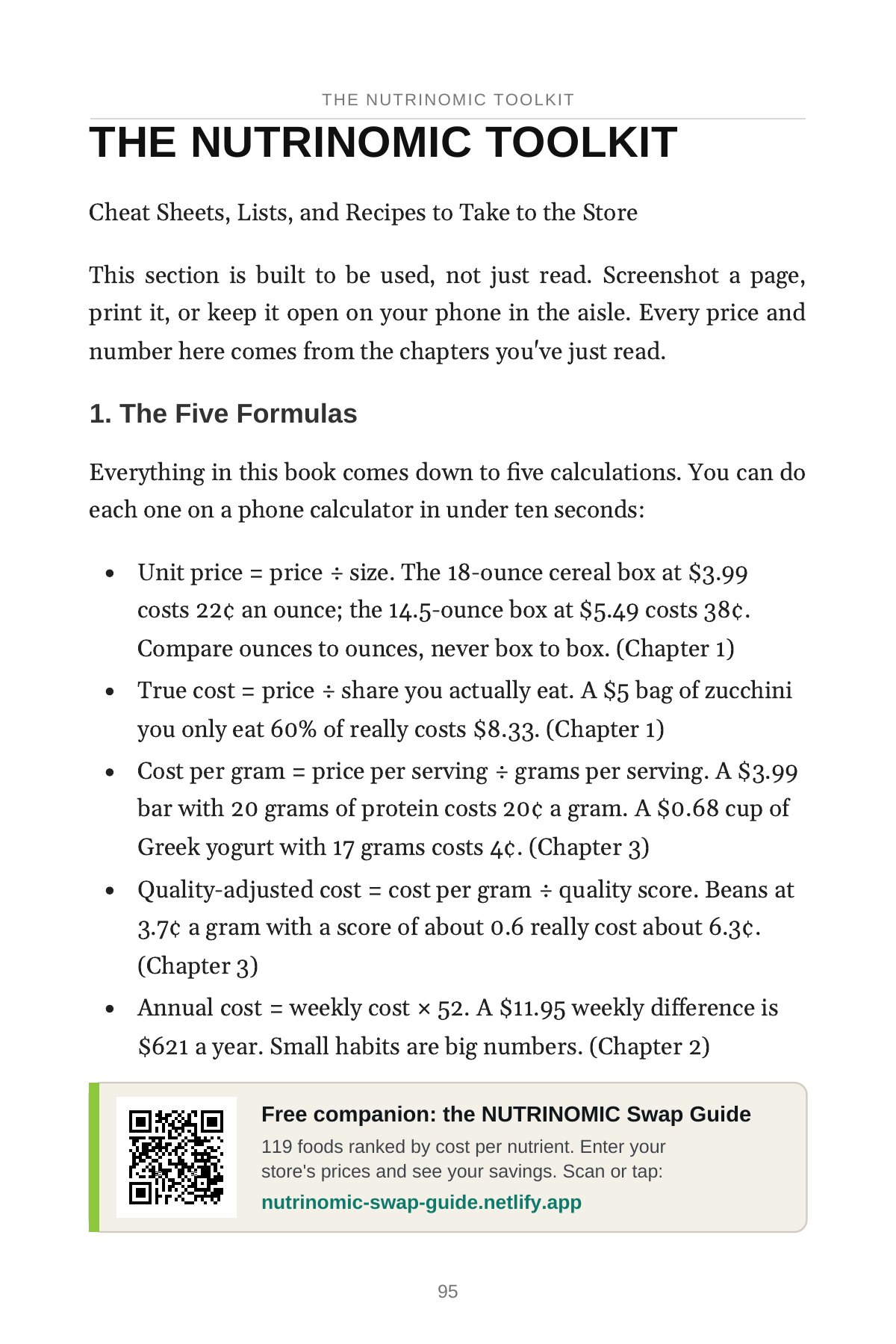
The Math Behind Every Grocery Run

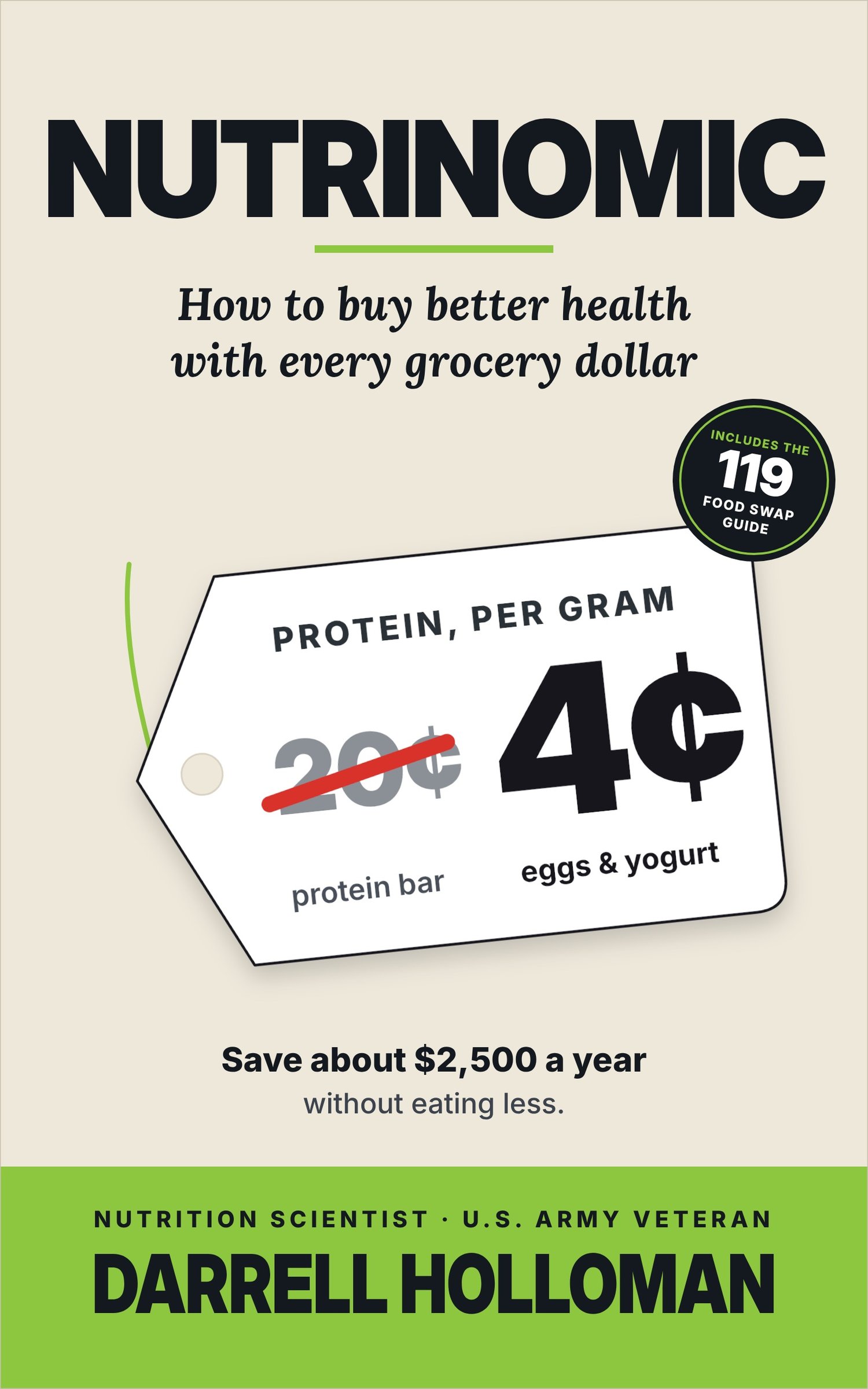
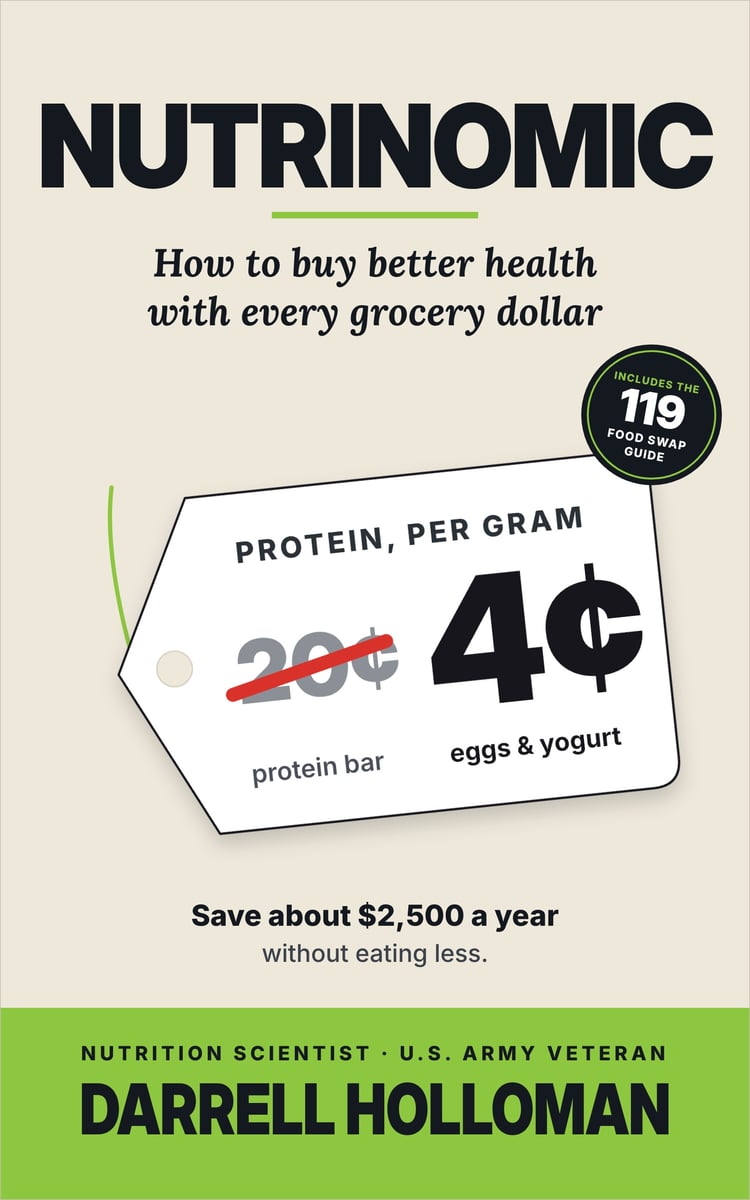
4¢ vs 20¢

Protein per gram: eggs and yogurt vs a protein bar.

119 Swaps

Food swaps that cost less and feed you better.

$50 · $75 · $100

Weekly grocery plans built for real budgets.

What Eating Well on a Budget Looks Like

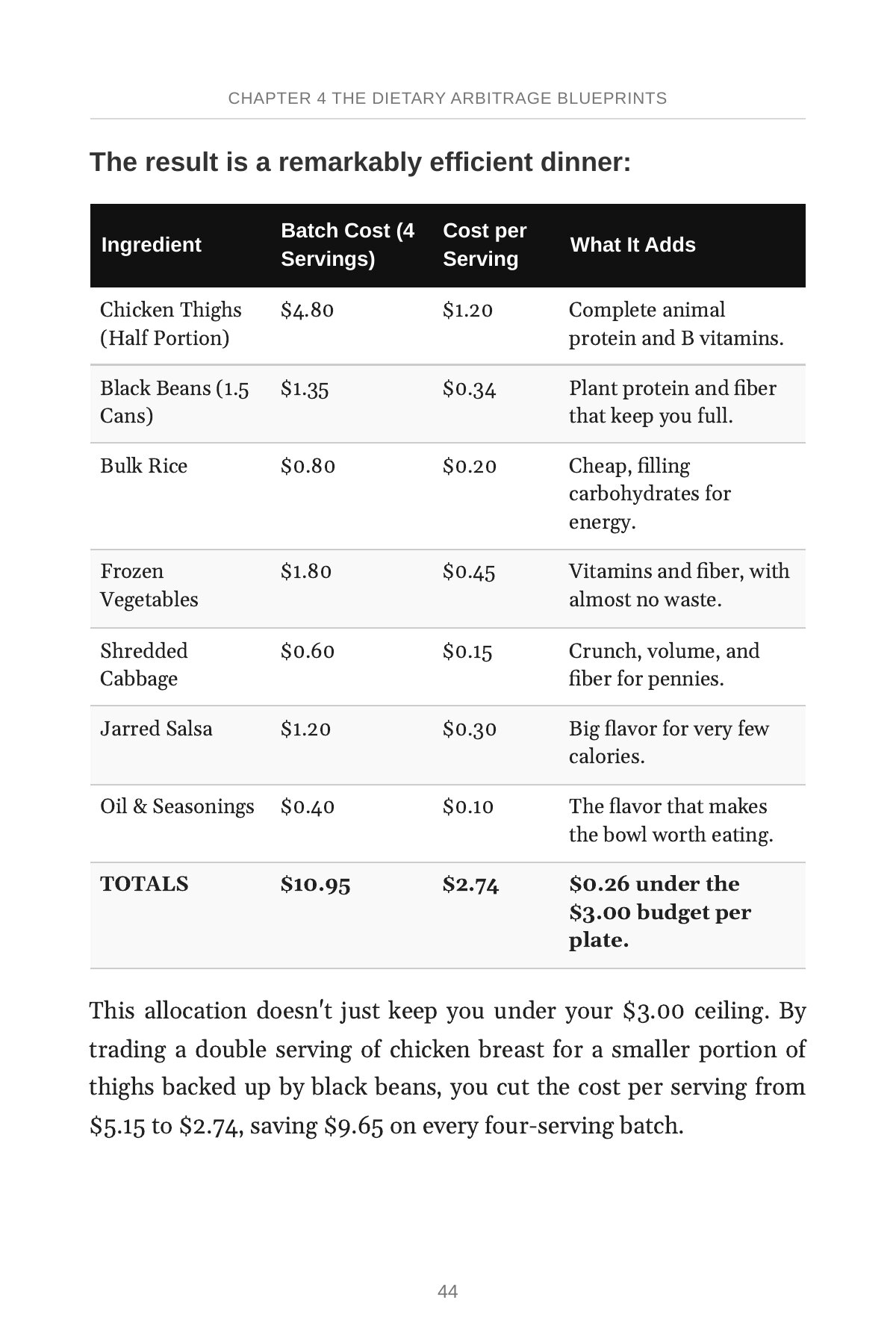
High-Protein Taco Bowl: $2.74

A filling, high-protein bowl for $2.74 a serving, vs $5.15 for a fitness bowl. That saves $9.65 on every four-serving batch, or about $500 a year.

The Protein Swap: 4¢ vs 20¢

Eggs and Greek yogurt deliver protein at a fifth of the cost per gram of a protein bar.

6 Recipes Inside

NUTRINOMIC includes 6 recipes that beat the convenience premium, so eating well never means plain rice and beans.

Chicken, Black Bean & Broccoli Rice Bowl

About $2.73 per bowl · 57 g protein · 25 minutes


A budget-friendly dinner from page 56 of NUTRINOMIC, made with chicken thighs, black beans, rice, broccoli, and onion. Shown with optional salsa. Recipe estimates exclude the topping.

What's Inside NUTRINOMIC

The eBook

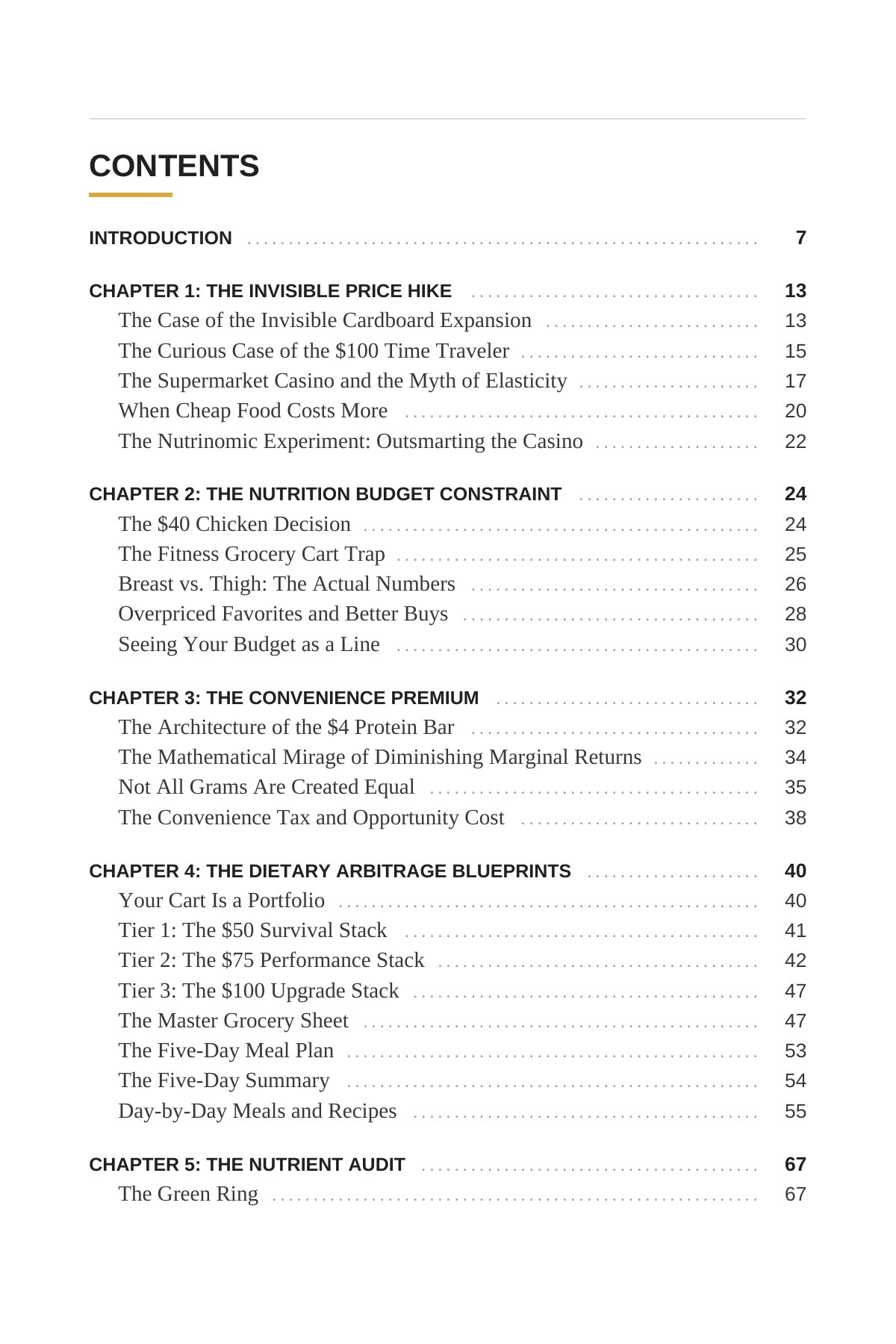
110 pages of nutrition science and grocery strategy, written so you can use it in the store.

Printable Grocery Toolkits

Lists and planners you fill in before you shop.

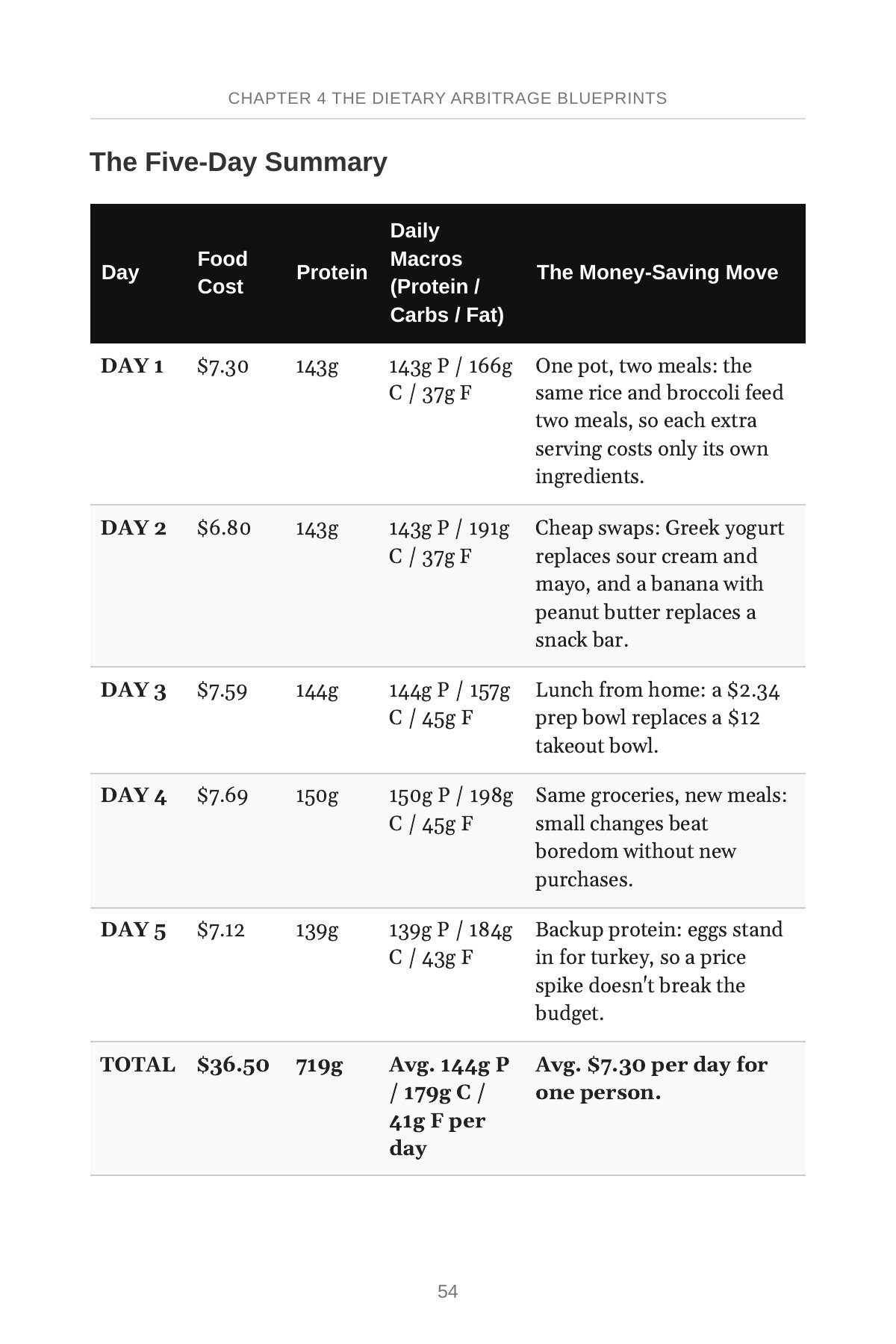
5-Day Meal Plan

Five days of meals, planned around a real grocery budget.

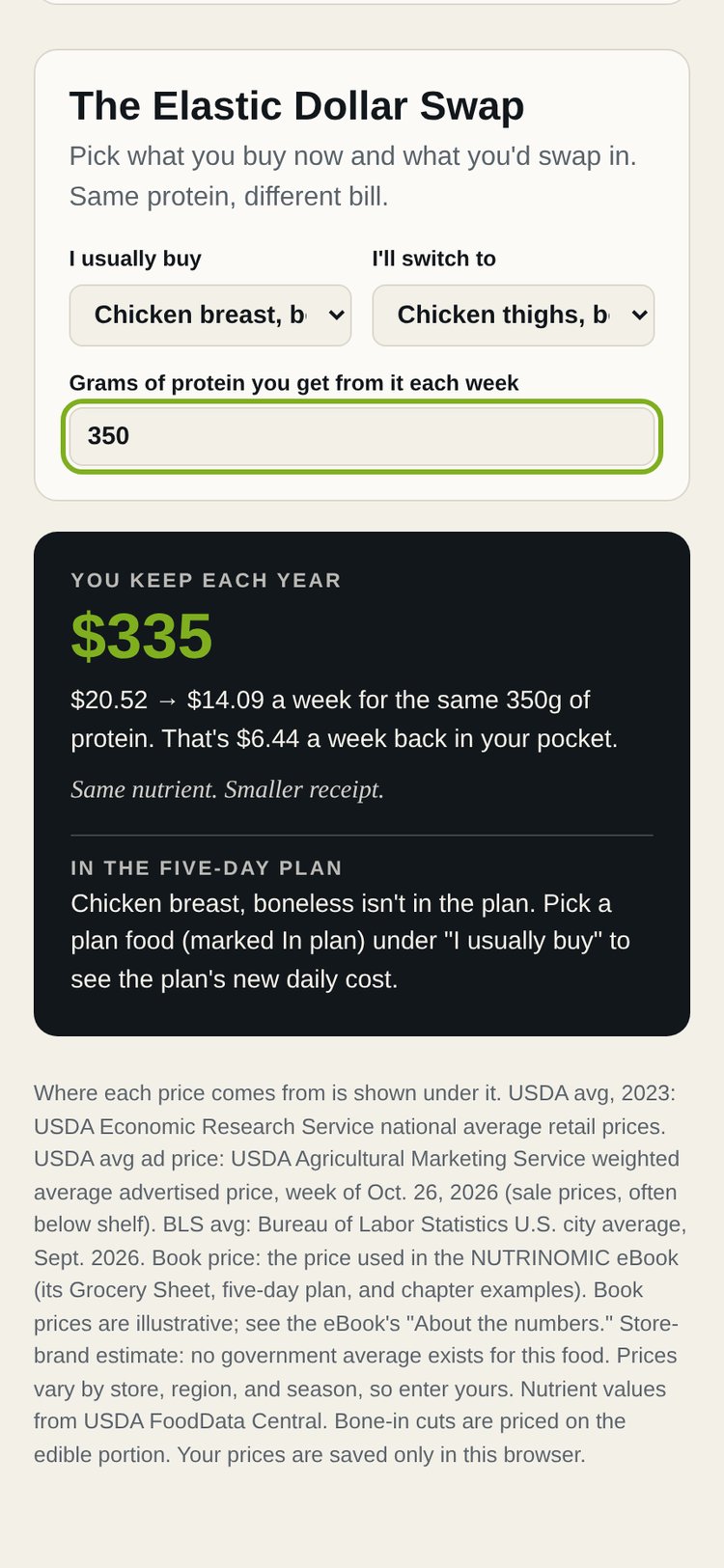
Interactive Swap Guide

119 swaps you can search on your phone, right in the grocery aisle. Enter your own store prices to compare the cost per gram of protein and estimate what a swap could save.

Take a Look Inside

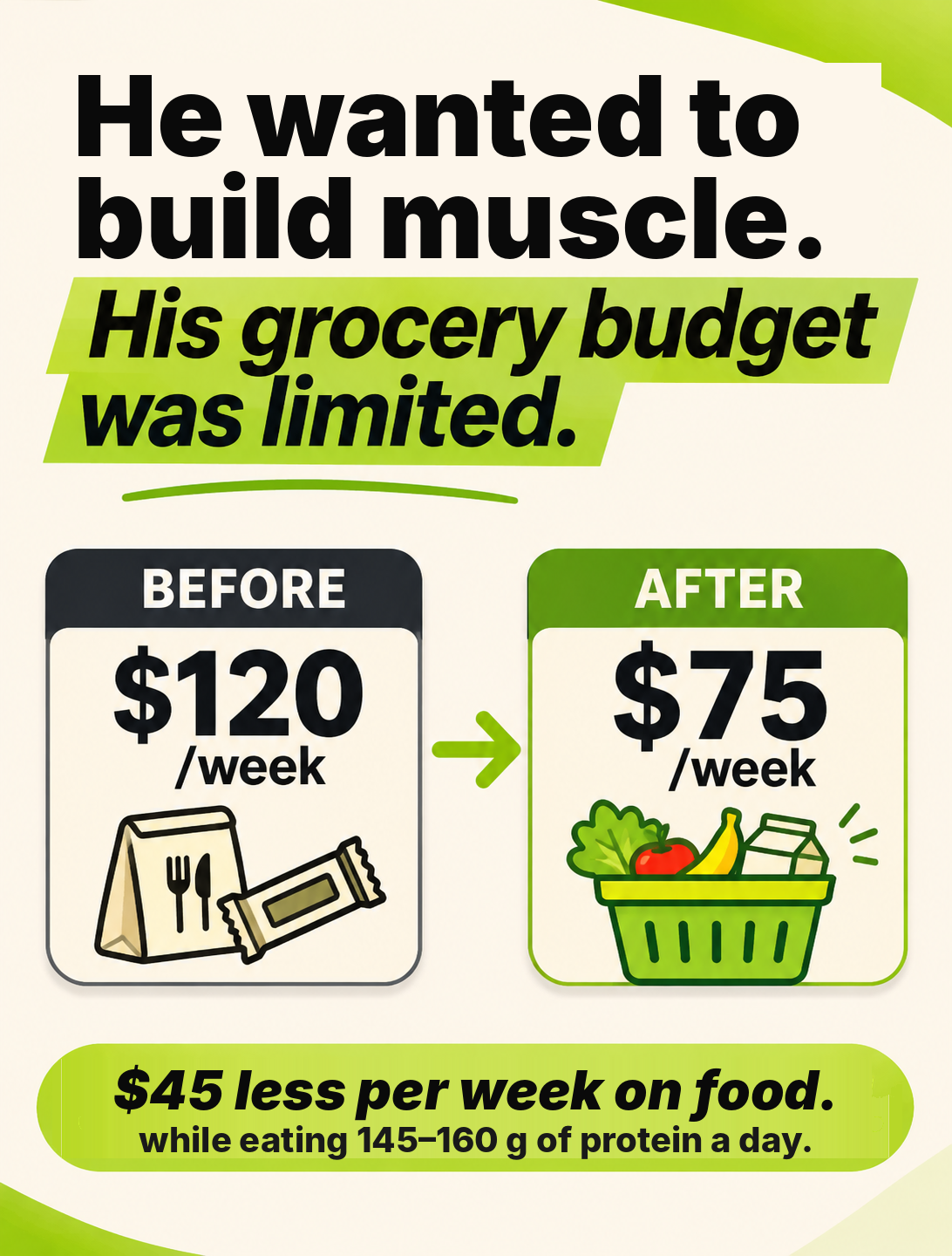
How One Grad Student Cut His Weekly Food Spending From $120 to $75

Why I Wrote NUTRINOMIC

During my fitness modeling days, I wanted to stay in shape without spending a fortune at the grocery store. I’d look at the prices of the foods experts recommended and wonder, What could I buy instead that would give me similar nutritional benefits for less?


My background in economics gave me a way to answer that question. I used what I knew about nutrition to compare foods by what I got for the money, like how much I was paying for each gram of protein. That helped me find affordable foods I could keep buying week after week.


I brought the same approach to my coaching clients. When someone had a tight grocery budget, we started with what they could afford and built meals around foods they could buy regularly. As I thought more about how inflation and tariffs can affect grocery prices, I refined the approach so it would still work when prices changed.


That’s why I wrote NUTRINOMIC. I wanted to share the grocery math I used for myself and my clients, so you can compare what’s on the shelf, spot a better deal, and make swaps that fit your budget.

Darrell Holloman-Nutrition Scientist and Geneticist

Meet the Founder

Most people spend decades planning for their financial future while leaving their biological future to chance. Generic diet templates and trendy supplements fail because they ignore your individual genetic code.Founded by nutrition scientist, geneticist, and U.S. Army veteran Darrell Holloman, Meta Salus bridges the gap between molecular science and everyday health. Our blueprints and coaching protocols focus on measurable biological age reversal through precision nutrigenomics—helping you build lasting energy, strength, and physical independence for the next 30 years.

Questions, Answered

Your Next Grocery Run Can Cost Less and Feed You Better.

119 swaps, budget meal plans and the cost-per-gram math, ready to use on your next trip to the store.

Budget Stories

Jennifer’s $60 Grocery Budget

Before I wrote NUTRINOMIC, I coached Jennifer. She had about $60 a week for groceries. We built her meals around foods she could afford to buy again the next week.


The Grad Student’s Grocery Budget

A grad student I coached was spending about $120 a week, much of it on takeout and protein bars. We looked at what he was paying for protein and planned meals around affordable staples. He brought his weekly grocery spending down to about $75.


Try it on your next shop. If two options each make four servings and one costs $2 less, that’s 50¢ saved per serving. NUTRINOMIC’s 119-Food Swap Guide lets you compare prices from your own store.

Budget Stories

Jennifer’s $60 Grocery Budget

Jennifer, past coaching client. Before I wrote NUTRINOMIC, I coached Jennifer. She had about $60 a week for groceries. We built meals around foods she could afford to buy again the next week.

The Grad Student’s Grocery Budget

A grad student I coached was spending about $120 a week, much of it on takeout and protein bars. We planned meals around affordable staples and compared what he was paying for protein. He brought his weekly grocery spending down to about $75.