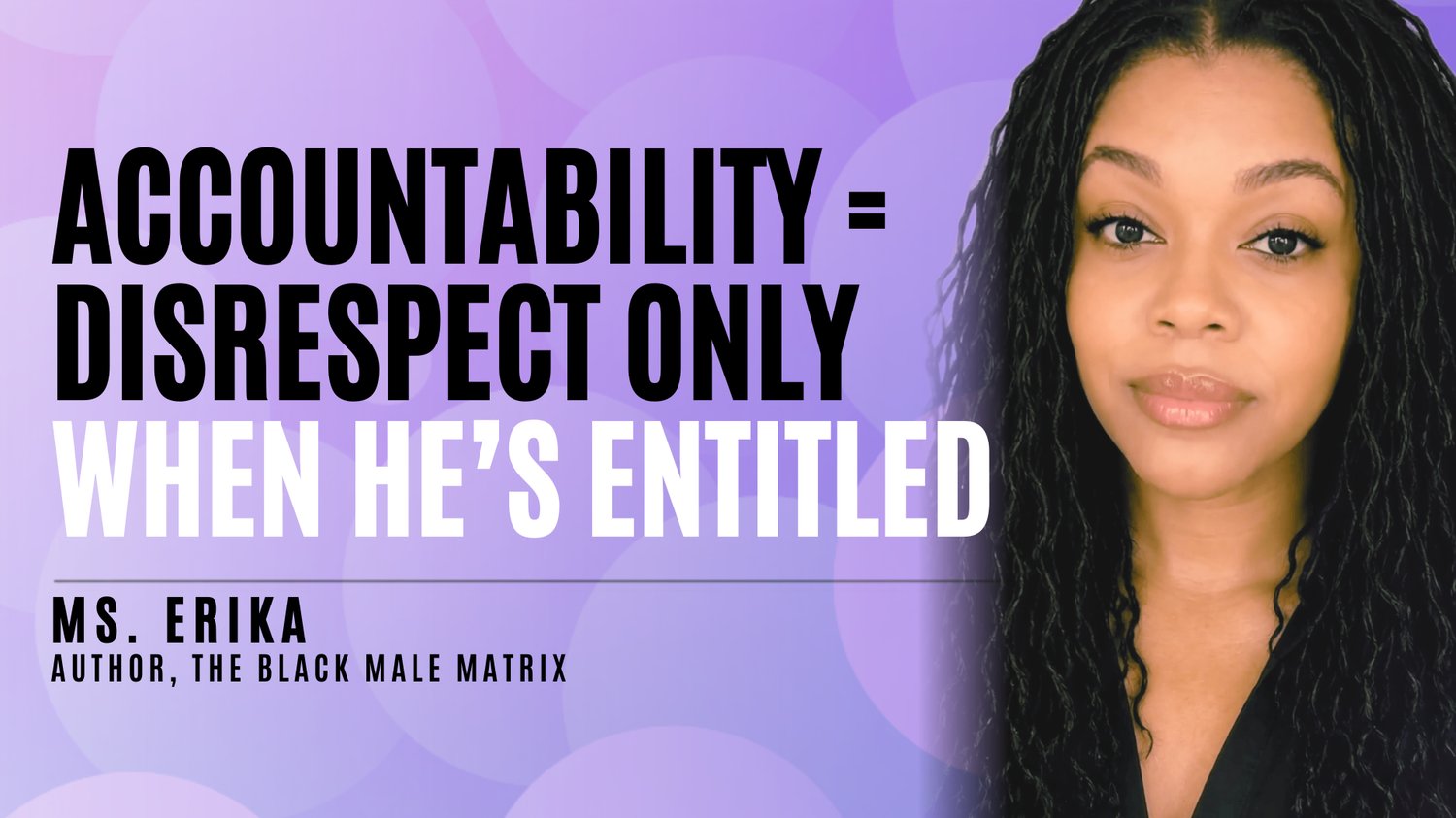
There is a certain kind of man who can explain everything he did, but he cannot take responsibility for any of it.
He can tell you why he lied. He can explain why he disappeared. He can give you the full history of every disappointment, betrayal, and hardship that shaped him. He always has a reason. What he rarely has is repair.
The moment you ask him to account for the harm he caused, the conversation changes. Now your tone is the problem. Your timing is wrong. Your expectations are too high. You are attacking him. You are embarrassing him. You are making him feel like he can never do anything right.
Somehow, his behavior disappears from the conversation, and your response to it becomes the crime.
That is not accountability. That is an escape route.
What Accountability Actually Means
Accountability is the ability to face what you did without making someone else carry the weight of it.
It sounds like this:
“I did that.”
“It hurt you.”
“You did not deserve it.”
“I understand why you no longer trust me.”
“I am going to change my behavior.”
Accountability does not require humiliation. It does not require begging. It does not require a man to call himself worthless. It requires honesty, ownership, and repair.
An entitled man often hears something completely different.
He hears disrespect.
He hears rejection.
He hears a woman challenging his authority.
He hears a woman refusing to protect his image at the expense of her own reality.
The issue is not always that he fails to understand what you are saying. Sometimes he understands you perfectly. He simply does not believe you should have the right to confront him.
That is the part Black women are often pressured not to name.
He Wants Understanding Without Responsibility
Black women are taught to consider what a Black man has been through before we consider what he has put us through.
We are told to understand the pressure he carries. We are reminded that the world does not give him room to be vulnerable. We are encouraged to see the wounded boy inside the grown man who is lying, cheating, controlling, exploiting, or neglecting us.
Context matters. Pain matters. Racism matters. Trauma matters.
None of those things erase responsibility.
A man’s pain may explain some of his behavior, but it does not give him permission to make you pay for it. His wounds do not become your sentence. His history does not cancel your right to safety, honesty, or peace.
Still, many women are trained to keep searching for the explanation. We believe that once we understand why he behaves this way, we will finally know how to love him into behaving differently.
That is where empathy becomes unpaid labor.
You become the interpreter of his pain, the manager of his moods, the keeper of his potential, and the defense attorney for behavior that is breaking you down.
Meanwhile, he receives understanding without correction. Comfort without change. Access without responsibility.
That arrangement works for him.
Why Your Tone Suddenly Becomes the Main Issue
One of the oldest accountability escapes is the tone argument.
You ask why he lied, and he says you are yelling.
You ask where he was, and he says you are acting like his mother.
You explain that something hurt you, and he says you always want to argue.
You ask a direct question, and he accuses you of being disrespectful.
Now you are defending your delivery instead of discussing his behavior.
Yes, tone can matter. Cruel language is still cruel language. Disrespect does not become healthy simply because a woman is hurt.
But your imperfect delivery does not erase the original issue.
You are allowed to be emotional when something has wounded you. You are allowed to sound disappointed. You are allowed to ask a question without wrapping it in enough softness to protect the ego of the person who created the problem.
When he only accepts accountability conversations when you are calm, sweet, quiet, and careful, he is not asking for respect. He is demanding emotional service before he will consider your pain.
Even then, he may not consider it.
Accountability Threatens the Arrangement
Entitlement is not just believing that you deserve good things. It is believing you deserve access to another person without honoring the responsibilities that come with that access.
An entitled man may believe he deserves your loyalty while remaining disloyal. He may expect your patience while giving you none. He may demand privacy while monitoring your every move. He may want forgiveness before offering the truth.
The rules protect him. The consequences belong to you.
Accountability threatens this arrangement because it introduces a standard. It says his desires are not the only needs that matter. It says being hurt does not give him the right to cause harm without consequence. It says love does not place him above examination.
That is why your clarity can feel dangerous to him.
Once you can name the pattern, he has less room to hide inside confusion. Once you stop debating what you clearly saw, he loses the advantage of making you prove your own reality.
He may call that disrespect because “disrespect” sounds better than admitting that you stopped protecting him from the consequences of his choices.
Watch What Happens After the Apology
An apology is not always evidence of accountability.
Some apologies are resets.
The purpose of a reset is to calm you down, restore access, and return the relationship to its previous arrangement. He says enough to keep you from leaving, but not enough to require him to change.
He may say:
“I’m sorry you feel that way.”
“I already apologized. What else do you want?”
“I said I was wrong, so why are we still talking about it?”
“Nobody is perfect.”
“You act like you have never made a mistake.”
These statements do not center repair. They center his desire to end the discomfort.
Real accountability survives after the conversation. You can see it in the next decision, the next disagreement, and the next opportunity to repeat the behavior.
An apology without changed behavior is not repair. It is management.
How to Tell Whether He Is Capable of Accountability
Stop measuring accountability by how emotional he becomes during the conversation.
Tears are not accountability. Anger is not accountability. A painful childhood story is not accountability. Silence is not accountability. A dramatic apology is not accountability.
Watch what he does with the truth.
Can he repeat your concern without twisting it?
Can he admit what happened without adding a reason that makes it your fault?
Can he care about the impact even when he disagrees with your interpretation?
Can he accept that forgiveness does not automatically restore trust?
Can he change without requiring you to supervise the change?
Can he respect a consequence he does not like?
These questions reveal more than another three-hour argument ever will.
A man who is capable of accountability may feel embarrassed, defensive, or ashamed at first. He is human. The difference is that he does not use those feelings to punish you for telling the truth.
He works through his discomfort instead of making it your responsibility.
You Do Not Have to Earn the Right to Name What Happened
Black women are often expected to present pain like a court case.
We gather evidence. We remember dates. We rehearse our words. We remove every trace of emotion because we know one raised voice may be used to dismiss the entire issue.
Then we enter the conversation hoping that perfect communication will produce honesty.
Sometimes it will.
Sometimes the problem was never your communication.
The problem was that clarity threatened an arrangement built on your confusion, patience, and willingness to keep giving him another chance.
You do not need a flawless presentation to recognize mistreatment. You do not need his agreement before you trust what you experienced. You do not need to keep explaining the wound to the person committed to protecting the weapon.
Accountability feels like disrespect to an entitled man because accountability removes his special exemption. It places his behavior under the same light he uses to examine yours.
He may not like that light.
Keep it on anyway.
Read The Black Male Matrix
The Black Male Matrix examines the patterns that teach Black women to carry male pain, protect male ego, and question their own clarity.
This is not about hating Black men. It is about refusing to confuse loyalty with self-abandonment.
Read The Black Male Matrix and learn how to name the machinery before it makes your life its fuel.