

Short version: No number on the building does not mean no building. It means you prove it twice — a GIS map with the asset outlined, plus a written justification that says plainly why there is no number on it.
Real property isn't real estate.
In real estate, no house number is a delivery problem.
In real property, no building number is an existence problem.
Here is the little scene.
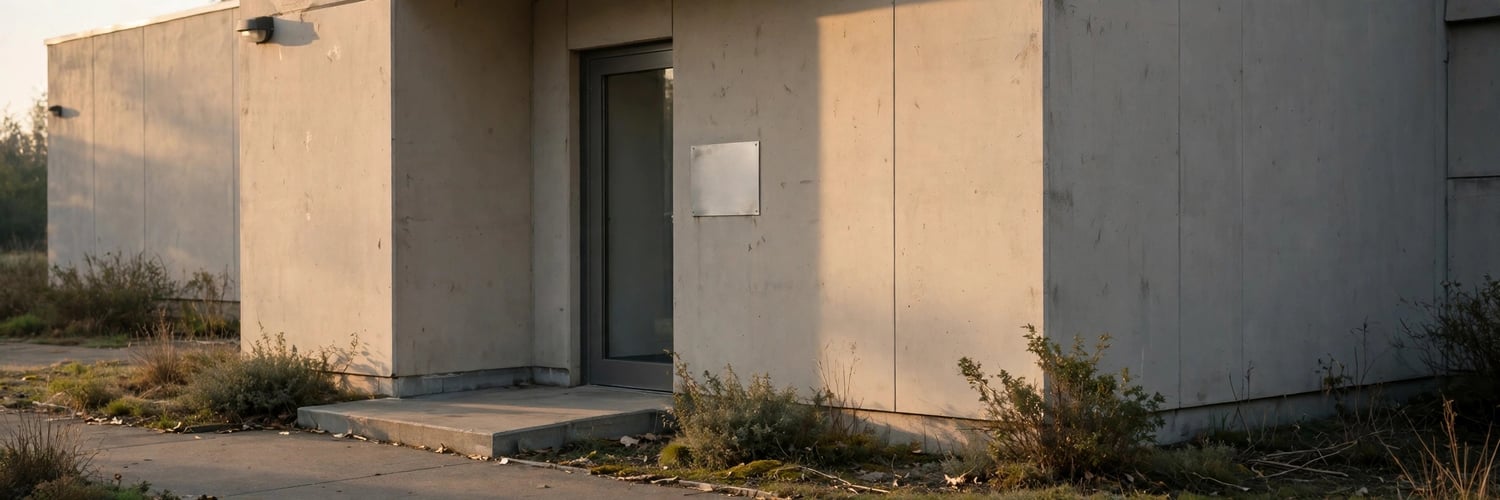
You are standing in front of a building. It is right there. Roof, doors, the works.
You look for the number. Nothing.
You walk around it once, like the number is hiding from you personally. Still nothing.
Congratulations. You just found the one building that makes everybody's paperwork harder — including yours.
A number physically affixed to a building is the easy proof. A reviewer can match the photo to the book and move on.
No number, no easy match. So the proof has to do the work the number would have done.
Current guidance on this is plain, and we worked it into our own checks this week:
A building with no number gets double verification. Only two things carry it — GIS mapping, and a written justification.
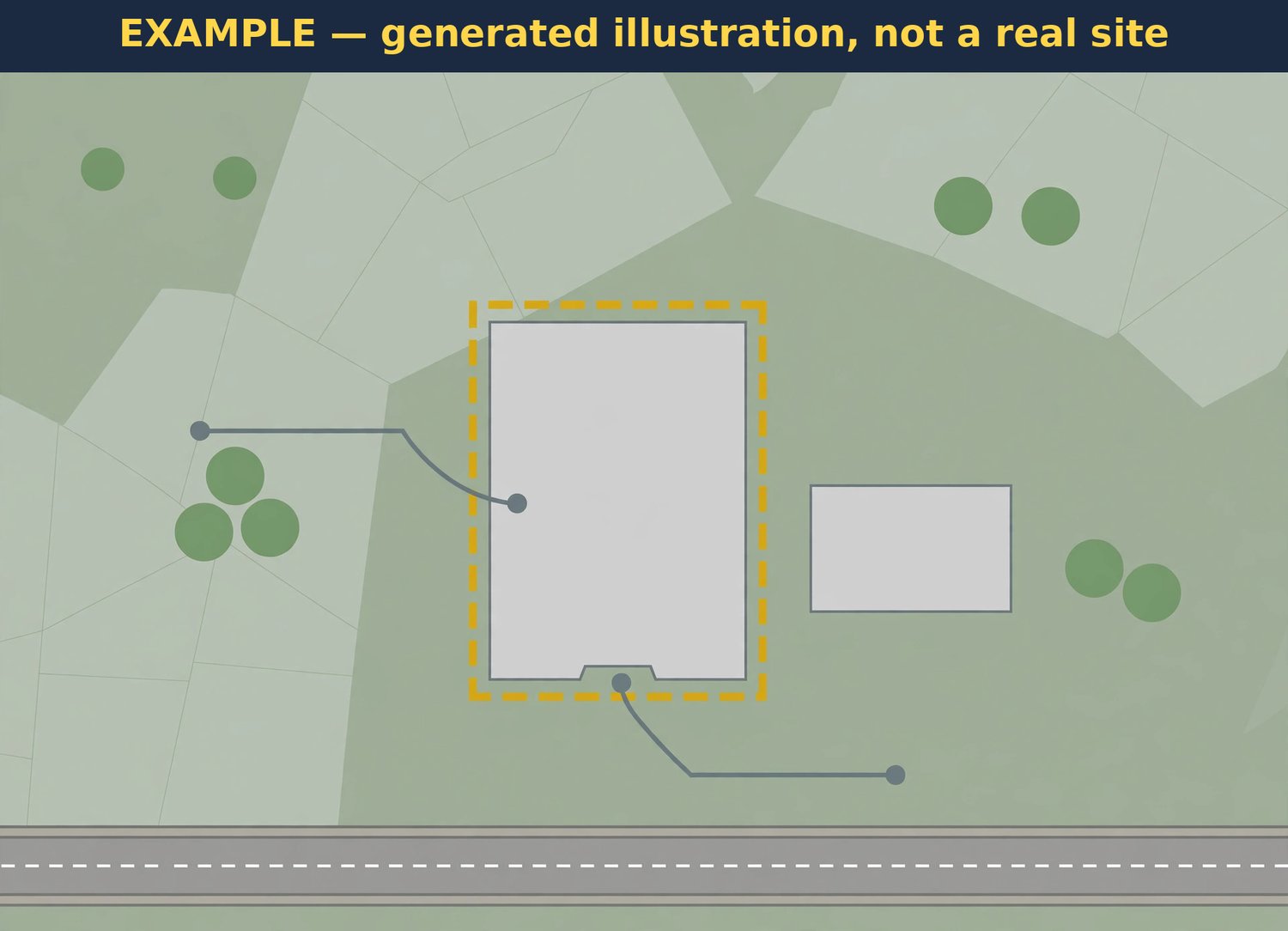
- The GIS map, with the asset outlined. Not a dot in a field somewhere. The actual footprint, drawn, so a reviewer who has never stood where you stood can see exactly which thing on the ground you are talking about.
- The written justification. It has to explain why the building has no number affixed. Not "no number found." Why. Too small? Never numbered? Number would not survive where it sits? Say the real reason, in plain words.
- Photos that back it up. A shot of the building, and a close-up of the entrance. The map says where it is. The photos say what it is.
And that justification does not live in a loose memo floating around the packet. It belongs on the existence checklist itself, where the reviewer is already looking.
Now here is the part people get backwards.
Not every asset needs the double treatment.
A linear structure — a line running underground, a run of pipe or cable — is different. For those, the GIS map alone is sufficient. No floor plan. No extra justification memo stacked on top.
Different asset. Different proof. Knowing which one you are standing in front of is the job.
That is also why tagging matters, and why we phase it buildings first. An affixed number, photo-verified after it goes on, is tomorrow's easy proof. Every building that gets its number is one less building that needs the double-verification dance later.
So if you find one with no number, do not shrug and do not guess.
Map it. Outline it. Photograph it. Write down why the number is not there.
Prove it twice, and it counts the same as any numbered building in the book.
Nothing dropped — not even the building with no name tag.
Field tested, field graded — by the people doing the job, not experts on a shelf. If you find something different, leave it in the comments so we can fix it. That's how this gets better.
— Patrick G. Ledbetter Jr., Nothing Dropped California Real Property
https://payhip.com/NothingDroppedCaliforniaRealProperty