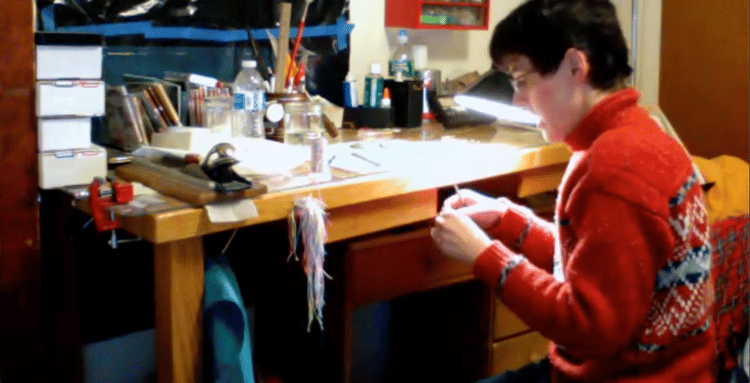
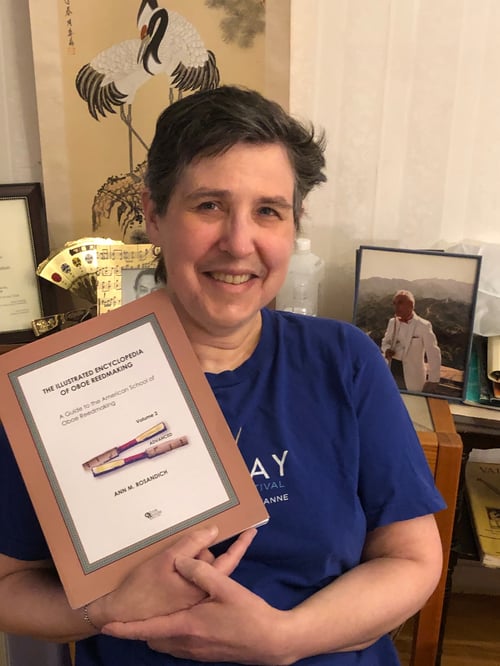
I began teaching oboe and reedmaking in my late teens, shortly after winning my first professional orchestral position. I realized the standard reedmaking texts were failing my students. Some students followed the instructions literally: scraping the tip "as thin as possible" resulted in removing the entire cane portion from the staple on the first scrape. The illustrations were not drawn from the perspective of the reedmaker, nor to scale, and confused the students. Surprisingly, some illustrations were not physically possible! There was no comprehensive guidance on finishing reeds or gouger adjustment. At one point 60% of my students were left-handed, and there were no texts devoted to teaching them.
Some students purchased reeds with a wide range of quality and serviceability. Some reeds were so stiff that even an athletic, largely-built swimmer could not sustain a note for more than a few seconds without turning red and getting dizzy. Other reeds had lovely tones and were so unstable and flat that they hindered progress on the oboe. I did not want to spend valuable lesson time adjusting these reeds. I thought the ideal course of action was their becoming self-sufficient reedmakers — or at least able to adjust purchased reeds.