
Introduction
When most people come to the gym, their goal is to get stronger, build more muscle, or perform better. All of those are great goals, but I think a lot of people start in the wrong place.
Strength, hypertrophy, and performance aren’t isolated. As you add load and increase intensity, you need the ability to move through an appropriate range of motion with good stability and control. That is why I believe movement quality is the foundation you build upon.
In this article, I’m going to explain what I mean by movement quality, how to improve your movement efficiency, and why I believe it’s the foundation you should start with.
What is Movement Quality
When it comes to movement quality, I think of three main aspects: mobility, stability, and control. When all three work together, that is where true movement quality comes from.
Mobility is your ability to actively move through a range of motion. When performing a movement, you should have access to the range of motion needed to perform it effectively.
Stability is your ability to maintain a position with control while resisting unwanted movement. When going through a movement, you should be able to maintain a stable base without feeling like you're going to lose your balance or position.
Control is your ability to manage a movement and guide yourself through it. During an exercise, you should be able to control the load rather than letting the load control you.
Movement quality isn't about performing an exercise with no problems or having perfect technique. It's about being able to control a movement through an appropriate range of motion while maintaining a stable base.
How Do You Improve Movement Quality
To improve movement quality, we need to focus on those three aspects: mobility, stability, and control. As you improve these qualities, your movement efficiency and overall movement quality can improve as well.
If you have a hard time achieving a certain range of motion, you may need to work on your mobility. For example, when performing a squat, you could be limited by your ankle dorsiflexion. To improve this, we can focus on the ankle's ability to move into the position we need with an exercise like ankle rockers. Performing these for around 12 reps with a 2–3 second pause can be a simple way to work on your ankle mobility.
Once you can get into a position, ask yourself: Can you maintain that position, or do you feel unstable? If maintaining the position is difficult, you may need to focus on stability. Stability can be trained in several ways, including unilateral exercises, carries, and isometrics. Performing these exercises while focusing on maintaining a stable foundation is a great way to improve your overall stability.
Now ask yourself: Can you maintain control throughout the entire movement? If not, you may need to work on control. Just like stability, control can be developed in a variety of ways. Slower tempos, pauses, and simply practicing the movement pattern can all be useful. The goal is to move intentionally and maintain control throughout the movement rather than rushing through it or letting the load dictate how you move.
Putting all of these qualities together is what can help you truly improve your movement quality:
Achieve the range of motion. Maintain a stable foundation. Control the movement.
Movement Quality Doesn’t mean Perfect Technique
When I talk about movement quality, I don’t mean perfect technique. Movement patterns are going to look slightly different for each individual, so I’m not saying you have to perfect a technique before you can start adding weight.
What I’m saying is that you should be able to achieve an appropriate range of motion, maintain a strong and stable foundation, and control the load you’re moving. There is no such thing as one perfect technique that works for everyone.
Movement quality and efficiency can continue to improve while you’re getting stronger. These qualities don’t have to be developed separately. As your movement improves, you can progressively increase the demands you place on your body.
Once you’re able to demonstrate good movement quality, adding load and focusing on progressive overload can become a priority, while continuing to maintain the mobility, stability, and control you’ve developed
Movement Quality Doesn’t Mean Avoiding Load
Just like with technique, I’m not saying you shouldn’t add load. Progressive overload is an important principle of training. It means progressively placing greater demands on your body, whether that’s increasing the load, adding more reps, increasing volume, or changing other training demands depending on your goal.
Movement quality can also improve as you add load. If control is one of the pillars of movement quality, then learning to control progressively heavier loads can help improve your overall movement quality and efficiency. Progressive overload isn't separate from developing better movement—it can be part of the process.
The key is making sure that you're progressing at a rate you can control. Adding more weight isn't necessarily progress if the quality of the movement completely falls apart.
Focus on progressive overload, but don't sacrifice movement efficiency just to put more weight on the bar.
Building on the Foundation
Movement quality can provide a foundation for whatever training goal you are trying to reach. Whether you are training for strength, hypertrophy, or performance, having good movement quality can help you get more out of your training.
Strength can benefit greatly from movement quality. If you have a solid foundation in movements like the squat, hinge, push, pull, and carry, you can focus on progressively increasing the amount of force you can produce. Being able to move efficiently and maintain control as the load increases can play an important role in developing overall strength.
Hypertrophy can also benefit from good movement quality. Being able to train through an appropriate range of motion while controlling the weight allows you to effectively challenge the muscles you're trying to develop. The goal isn't just to move the weight from point A to point B, but to maintain control while creating enough tension and demand on the muscle.
Performance is where everything starts to come together. Mobility, stability, control, and strength all play a role in athletic movements like running, jumping, landing, and changing direction. As the speed and complexity of a movement increase, your ability to control and coordinate your body becomes increasingly important.
Improving your movement quality gives you a foundation to build strength upon, and that strength can eventually be expressed through higher levels of performance.
What Does This Look Like in Training
Improving movement quality can happen in many different ways. One way is by progressively increasing the demands of a movement pattern, and you can do this with pretty much any exercise.
For example, with the squat, you could progress from a bodyweight squat to a goblet squat and eventually a back squat. For the hinge, you could start with a banded hip hinge and progress to an RDL. Even with a push, you could progress from an incline push-up to a loaded press. Each progression increases the demands of the movement while giving you an opportunity to continue developing your mobility, stability, and control.
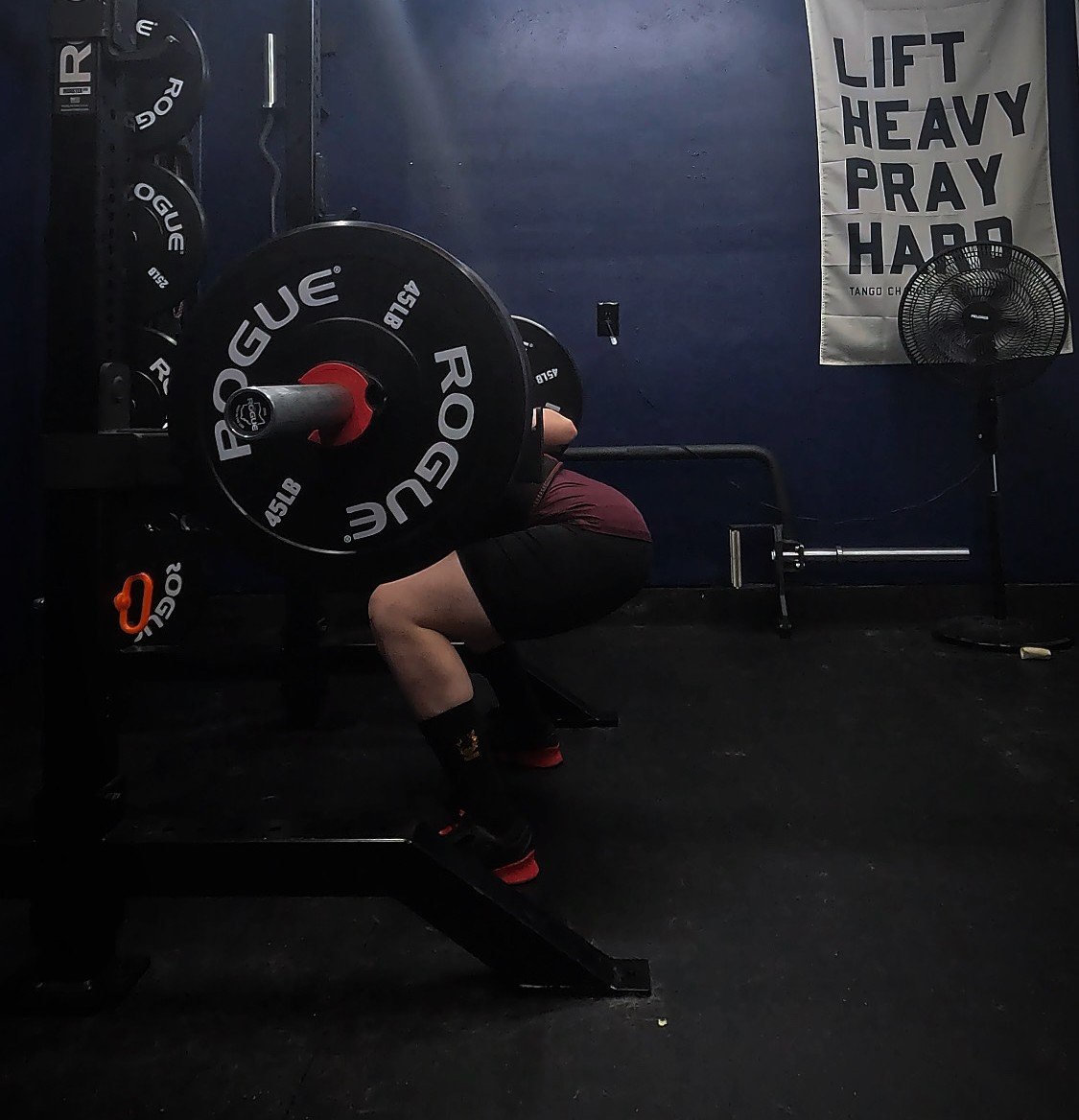
Another option is using tempo work, such as slow eccentrics. One of my favorite variations is controlling the weight on the way down during a back squat and then exploding on the way back up. This forces you to focus on control and stability while moving through an appropriate range of motion.
These are just a few ways you can train movement quality. The main key is to focus on range of motion, stability, and control in every exercise you perform. Movement quality doesn't have to be something separate from your training; it can be something you continue to develop throughout it.
Apply it to your Own Training
Next time you're in the gym training, ask yourself a few questions:
- Am I reaching an appropriate range of motion?
- Am I maintaining a stable foundation throughout the movement?
- Am I actually controlling the weight?
- Am I ready to add more load?
I'm not saying you need to stop what you're doing if the answer to one of these questions is no. Instead, it might be time to put a little more focus on that area.
Make range of motion, stability, and control a focus throughout your training. You don't need a completely separate workout to improve your movement quality. You can work on it with every rep you perform.
Build From the Foundation
Strength, hypertrophy, and performance are all important.
But all of those qualities require you to move. By improving your movement quality, you can build a stronger foundation from which you can focus on progressive overload and gradually place greater demands on your body.
Movement quality doesn't mean chasing perfect technique or avoiding heavy loads. It's about developing the mobility, stability, and control you need to move efficiently and continue progressing.
Just remember:
Move Better. Build Strength. Perform Higher.
Comments ()