
There are people who don’t just wear one mask.
They wear several.
One for work.
One for family.
One for friends.
One for dating.
One for predominantly White spaces.
One for predominantly Black spaces.
One online.
One in therapy.
One alone.
For many people of color, code-switching began as protection.
Speak differently.
Dress differently.
Smile more.
Don’t sound “too Black.”
Don’t sound “too emotional.”
Don’t make people uncomfortable.
For neurodivergent people...
Masking often meant studying other people’s behavior just to fit in.
Learning eye contact.
Practicing conversations.
Suppressing stimming.
Pretending not to feel overwhelmed.
Appearing “normal.”
Both code-switching and masking can be necessary forms of survival.
The problem is when survival becomes identity.
Eventually you begin asking...
“Which version of me is actually real?”
Living behind masks is exhausting.
Not because you’re pretending.
Because you’re constantly calculating.
Monitoring.
Editing.
Performing.
Protecting.
The Shadow asks,
“Who would I be if I no longer had to earn safety?”
Healing isn’t about never code-switching again.
Sometimes it’s necessary.
Healing is making sure there is at least one place in your life...
Where no mask is required.
Reflection Questions
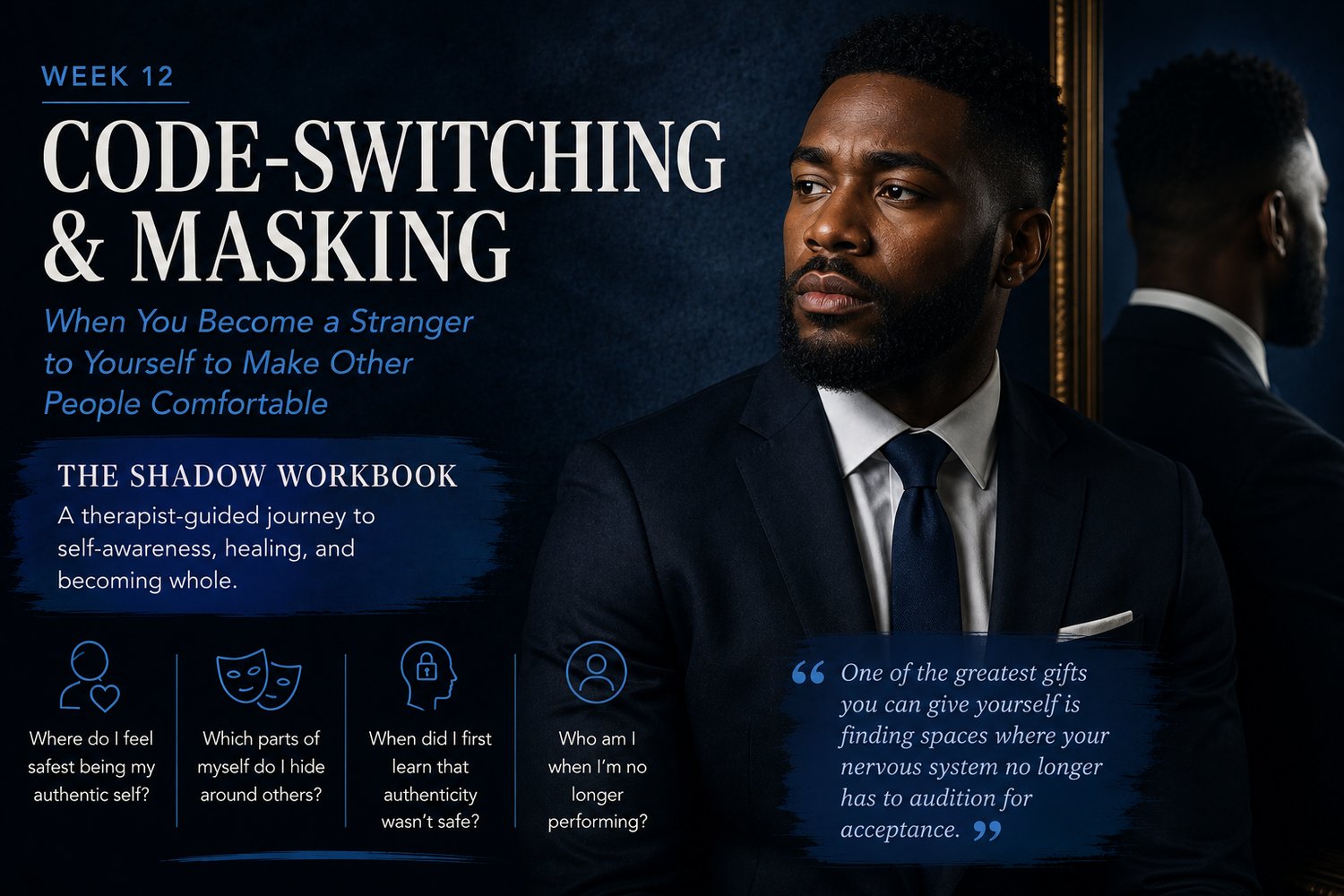
- Where do I feel safest being my authentic self?
- Which parts of myself do I hide around others?
- When did I first learn that authenticity wasn’t safe?
- Who am I when I’m no longer performing?
Continue exploring Code Switching and Masking in the Culturally Responsive Shadow work section of The Shadow Workbook: A Therapist-Guided Journey into Shadow Integration, Healing Old Wounds, and Reclaiming Your True Self.
Available for digital download at: https://payhip.com/SelfLoveIsTheKey
Also available via Kindle, Paperback and Hard Copy on Amazon.
Comments ()