


When most people start preparing for emergencies, they often think of stocking up on canned food, buying flashlights, or creating a first aid kit. Those are valuable steps, but they overlook one critical fact: without water, none of the rest matters. You can survive weeks without food, but only days without water. That’s why water storage must come first in any preparedness plan.
Emergencies like natural disasters, power outages, or supply chain disruptions can cut off your access to safe, clean water in a moment. And once it’s gone, it’s gone—there’s no substitute. Storing water isn’t optional; it’s the foundation that every other step builds on. Here are three life-saving reasons why water storage must be your first priority.
1. Water Is Essential for Survival

No matter your age, lifestyle, or health, water is non-negotiable. Your body depends on it for every major function—from regulating temperature to carrying nutrients to your cells. Without enough water, dehydration sets in quickly, leaving you weak, confused, and unable to make sound decisions when you need clarity the most.
- You can live weeks without food, but only about 3 days without water.
- Dehydration increases stress on the heart, kidneys, and brain.
- In emergency conditions, you actually need more water than usual because of stress, heat, or physical exertion.

Food storage doesn’t help if you don’t have water to prepare it or wash it down. That’s why water is step one—because nothing else matters without it.
2. Water Supports More Than Drinking
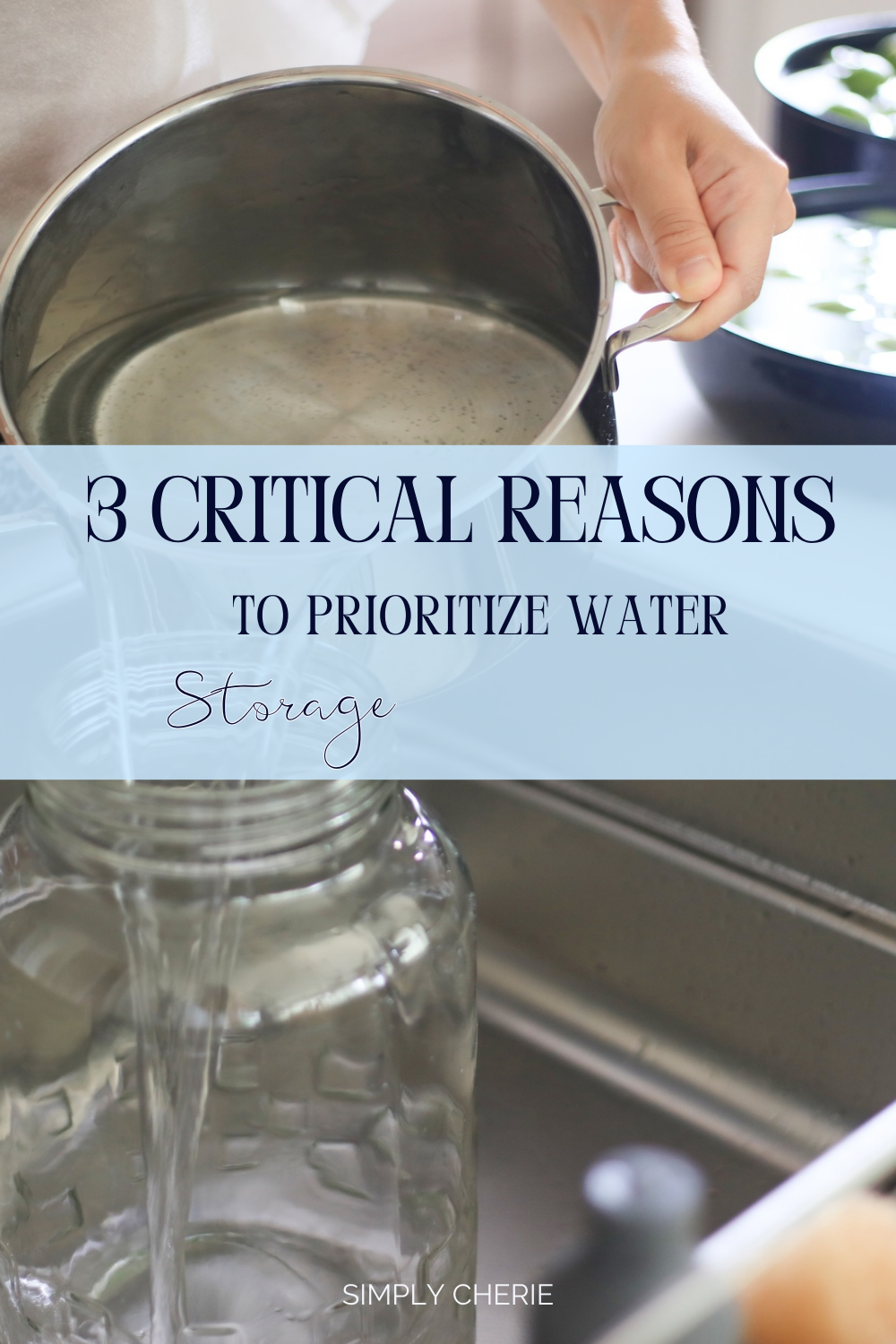
When we think about water, we think about thirst. But in a crisis, water is required for so much more than staying hydrated. Cooking, cleaning, and sanitation all depend on having safe water available.
- Cooking: Even basic foods like rice, beans, or pasta require water to prepare.
- Hygiene: Handwashing, brushing teeth, or cleaning wounds prevents illness from spreading.
- Sanitation: Flushing toilets or cleaning surfaces reduces contamination risks.
- Medical Needs: Treating cuts, rinsing eyes, or mixing medications requires clean water.
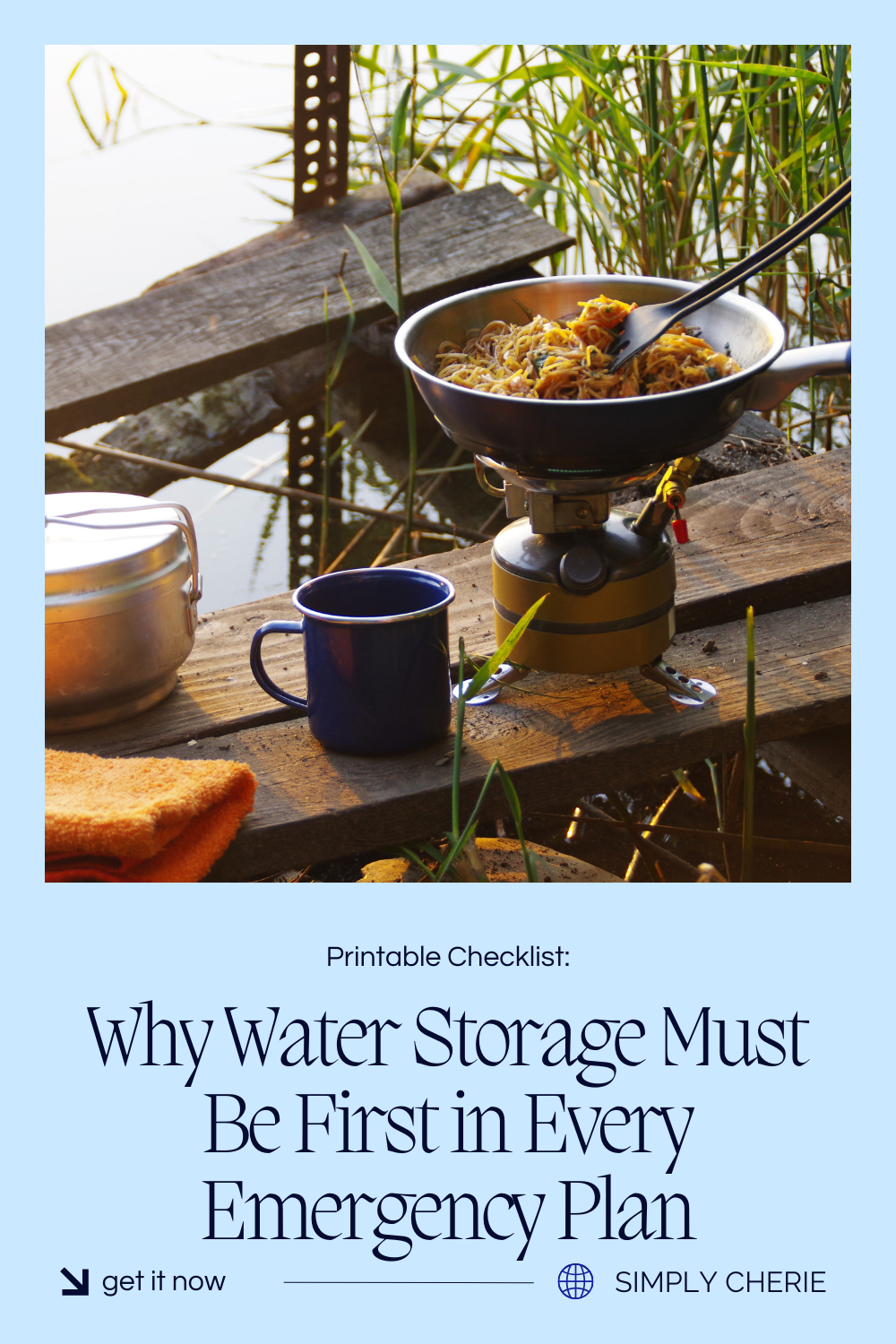
Water storage means life doesn’t come to a standstill. You can still cook meals, stay clean, and keep your family healthy. Without it, even small daily tasks become overwhelming.
3. Emergencies Disrupt Water Access Faster Than You Think

We take running water for granted, but in an emergency, that comfort can disappear instantly. Water lines can break, pumps can fail, or contamination can make your tap unsafe to use.
- Power outages stop the pumps that deliver water to your home.
- Storms and floods can damage or contaminate public water systems.
- Boil orders leave you with unsafe tap water unless you’ve already stored clean supplies.
- Store shelves empty in hours once a crisis begins.
Water is the first thing to disappear when emergencies hit. By storing it now, you guarantee your family won’t be left scrambling or dependent on unreliable sources.
Final Thoughts
Preparedness is about peace of mind, and nothing brings more security than knowing your most basic need is covered. Water storage must come first—before food, flashlights, or gear. It sustains life, powers daily routines, and ensures you can weather disruptions without panic.

Start small by storing at least three days of water for each person in your home, then build from there. To make it easier, I’ve created a simple step-by-step guide: 3 Days to 3 Days of Water Preparedness. It walks you through exactly what to do without the overwhelm.

Don’t wait for an emergency to realize how important water is. Storing it now is one of the most life-saving steps you can take for yourself and your family.
You may also enjoy these:
- Why Water Storage Is the #1 Step in Emergency Preparedness
- 3 Easy Ways to Add Water to Your 72-Hour Kit
This post may contain affiliate links, which means I may earn a commission if you purchase through them (at no extra cost to you!) Portions of this content may be generated by AI.
Comments ()