Your Cart
Loading

Training Built for the Real World

Speaking two languages is only the beginning. Professional interpreters must also understand accuracy, ethics, confidentiality, terminology, technology, and professional boundaries.


Watch the video to discover why TLCLab was created—and how our practical training helps aspiring and working interpreters build the knowledge, confidence, and skills needed to succeed.


TLCLab training—created by interpreters, for interpreters.

About TLCLab

Learn from interpreters who have actually done the work.

Before we became instructors, we were the voice on the phone, the face on the screen, and the professional standing beside someone during one of the most important moments of their life. (did we mention that we are still working in the industry)


For more than 26 years, our team has interpreted in hospitals, courtrooms, schools, government proceedings, business negotiations, military conflict zones, and countless conversations where accuracy, composure, and trust truly mattered.


Together, we bring:

  • More than 32,000 hours of interpreting experience
  • Experience across onsite, over-the-phone, and video interpreting
  • Hundreds of hours of professional education and certification preparation
  • Decades of experience training, hiring, and evaluating interpreters

We created TLCLab because too many courses teach students how to complete a program—but not how to confidently perform the job.


Here, you will learn what interpreting is really like. You will practice realistic situations, develop professional judgment, strengthen your delivery skills, and prepare for the challenges that cannot be learned by simply reading a textbook.

We will not only teach you how to interpret. We will help you understand the industry, build your confidence, and prepare for what comes next.

TLCLab — created by interpreters, for interpreters.

TLCLab - No Fluff, just Training


Language Prerequesite

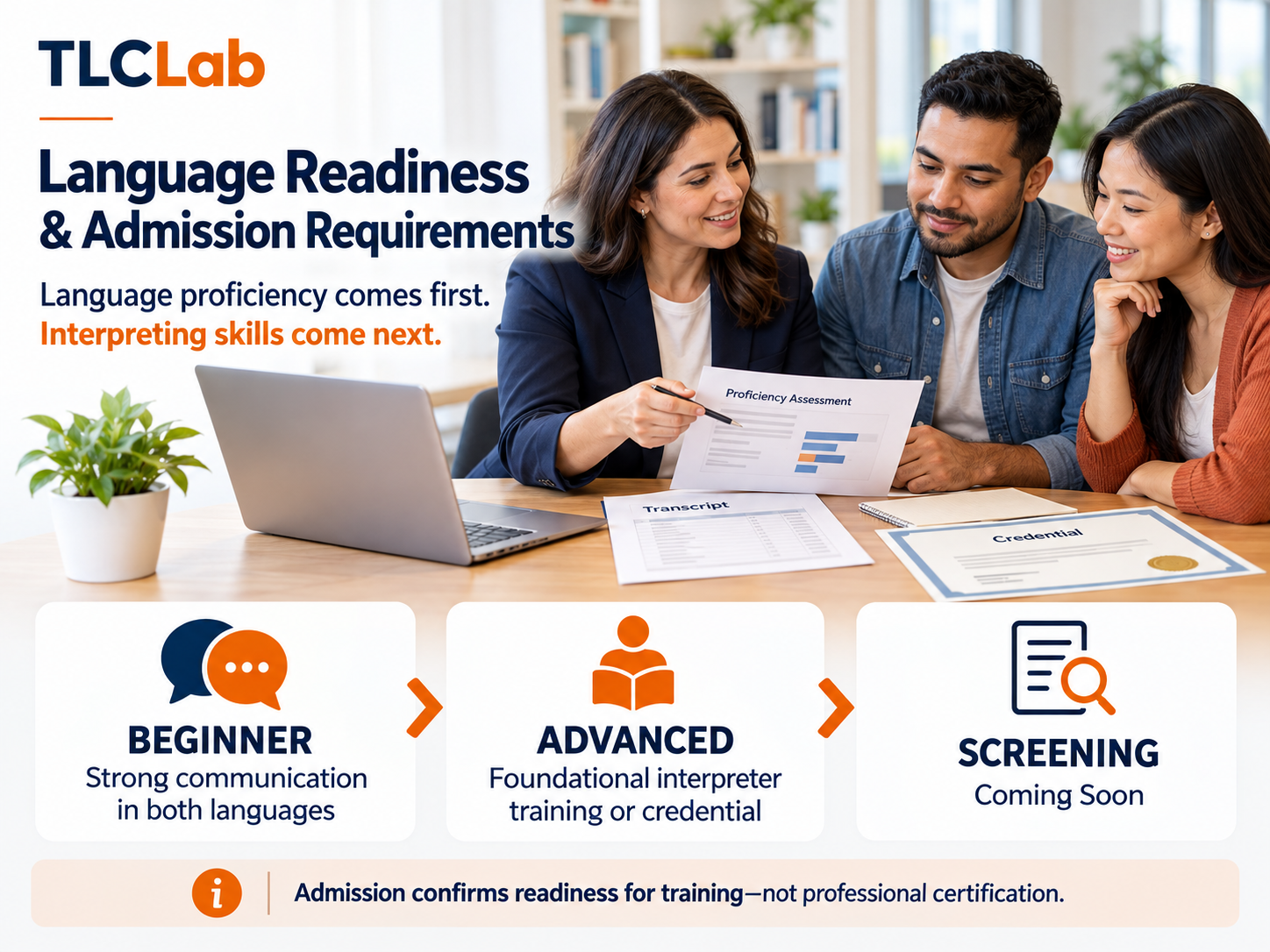
TLCLab teaches interpreting skills. Students should already be able to understand and communicate effectively in English and their other working language before beginning training.

Language proficiency and interpreting ability are different. Our beginner program helps bilingual students develop interpreting skills; it is not a language-learning course.


Ways to Demonstrate Language Readiness

Applicants may provide one or more of the following for review:

  • Education in both working languages: Diplomas or transcripts documenting education conducted in English and the applicant’s other working language. The language of instruction matters more than the country where the applicant studied.
  • Existing language proficiency results: Official assessment reports demonstrating proficiency in the relevant languages and skills.
  • Independent language proficiency assessment: Results from an established assessment provider, such as ACTFL assessments administered through Language Testing International.
  • Existing interpreter certification: A verifiable interpreter credential that includes a language-specific performance examination. A training completion certificate alone does not establish language proficiency.
  • College or university evaluation: A documented language evaluation completed by a qualified language instructor or university language department.
  • Documented professional or community language use: Evidence of substantial use of both working languages, supported by references or other documentation. Additional evidence may be requested.

Documentation is reviewed individually. Submitting a document does not automatically guarantee admission.


TLCLab Admission Screening — Coming Soon

TLCLab plans to offer a recorded language-readiness screening evaluated by qualified assessors. This will provide an additional option for applicants who do not have suitable documentation.

This screening is not currently available. Details and instructions will be published when it launches.


Beginner Program

Applicants should be able to follow detailed explanations, communicate ideas clearly, and understand ordinary written materials in both working languages.

Prior interpreting experience and specialized medical terminology are not required for admission to the beginner program.


Advanced Program

Applicants should also provide evidence of foundational interpreter training or a recognized interpreter credential. Relevant experience may support an application, but years of experience alone do not establish readiness for advanced coursework.


Not Sure Whether You Are Ready?

Contact TLCLab before enrolling to discuss your language background and available documentation. Self-assessment exercises can help you consider your readiness, but they do not independently verify language proficiency.


TLCLab admission approval establishes readiness for our training. It does not award professional interpreter certification or guarantee eligibility for an external certification examination.