

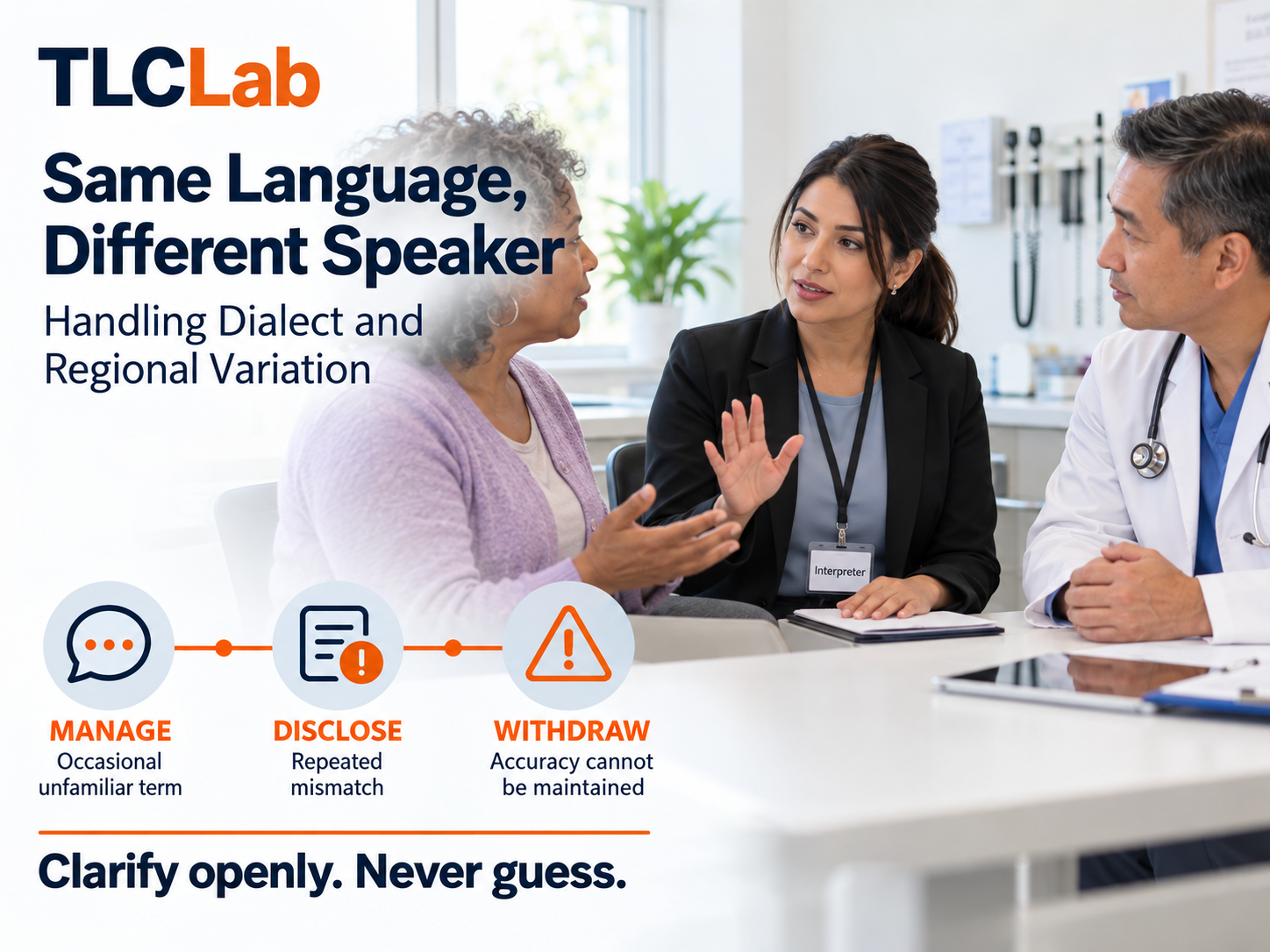
A patient describes her symptom using a word you have never heard. You speak the same language. You have interpreted for fifteen years. And you do not know what she just said. This is not a rare event. In a 2026 study of professional Spanish-languag...
Read More

The assignment ended three weeks ago. You interpreted for ninety minutes. You were accurate. You maintained your role. You went home. And you are still thinking about it. This is completely normal if you are human. I have several cases where after 2...
Read More
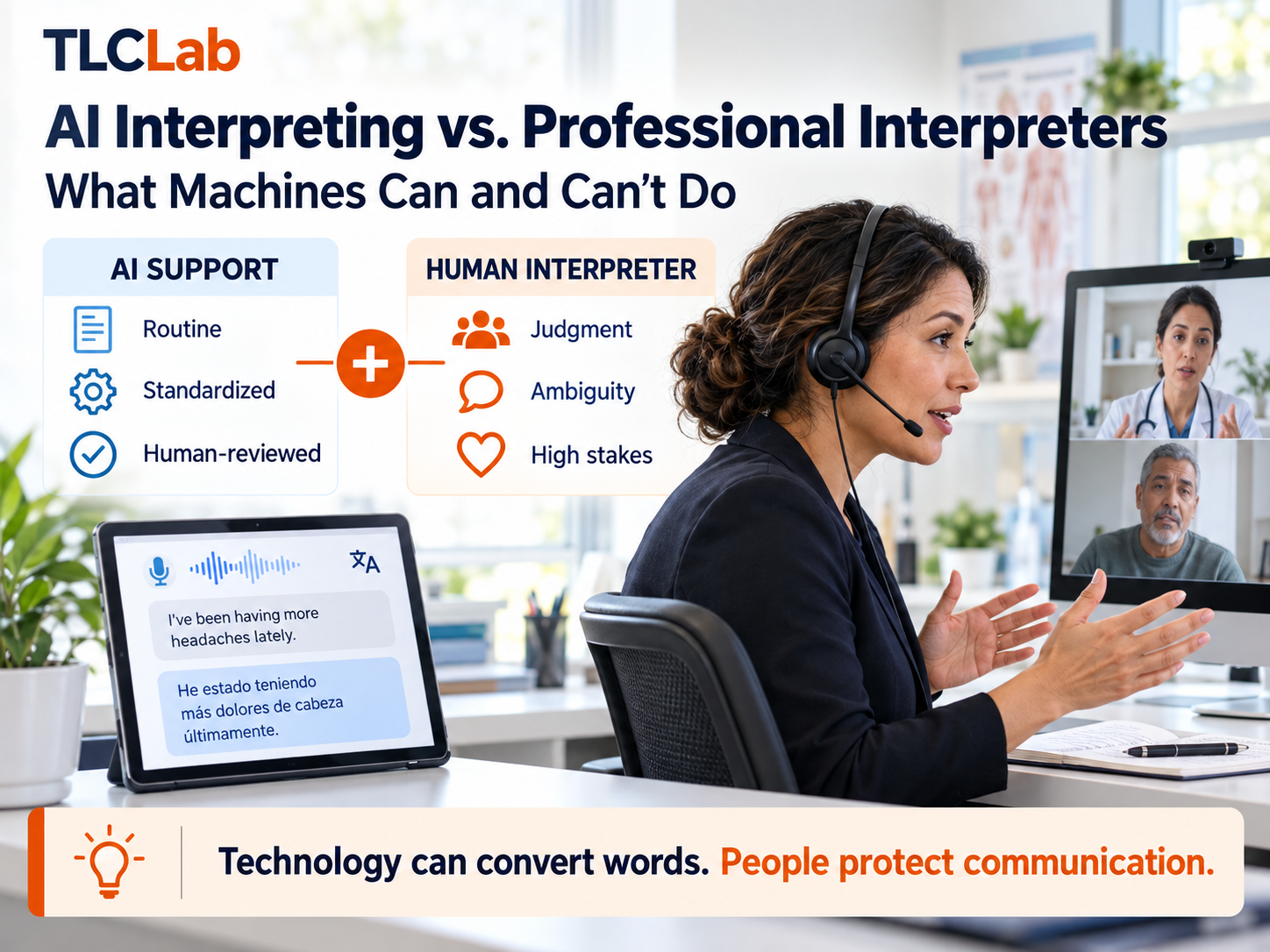
Every interpreter has now had a version of this conversation. A client asks whether they still need to pay for interpreters. A hospital pilots an AI tool. A colleague forwards an article predicting the profession will be gone in five years. Someone ...
Read More
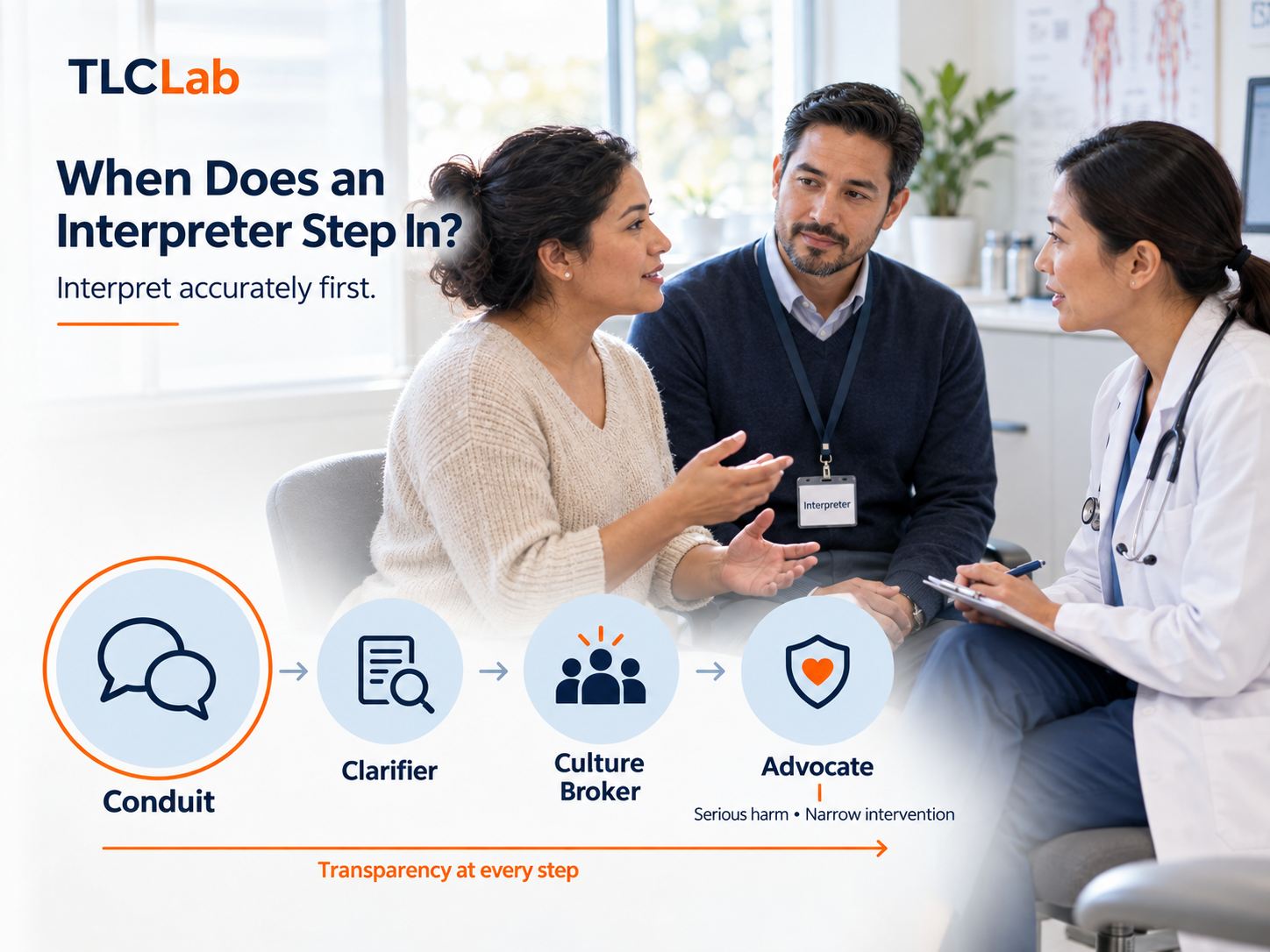
A patient says she has been taking her medication "when the pain is bad." The prescription is for twice daily, every day. The provider has already moved on to the next question. You are the only person in the room who noticed. Most interpret...
Read More
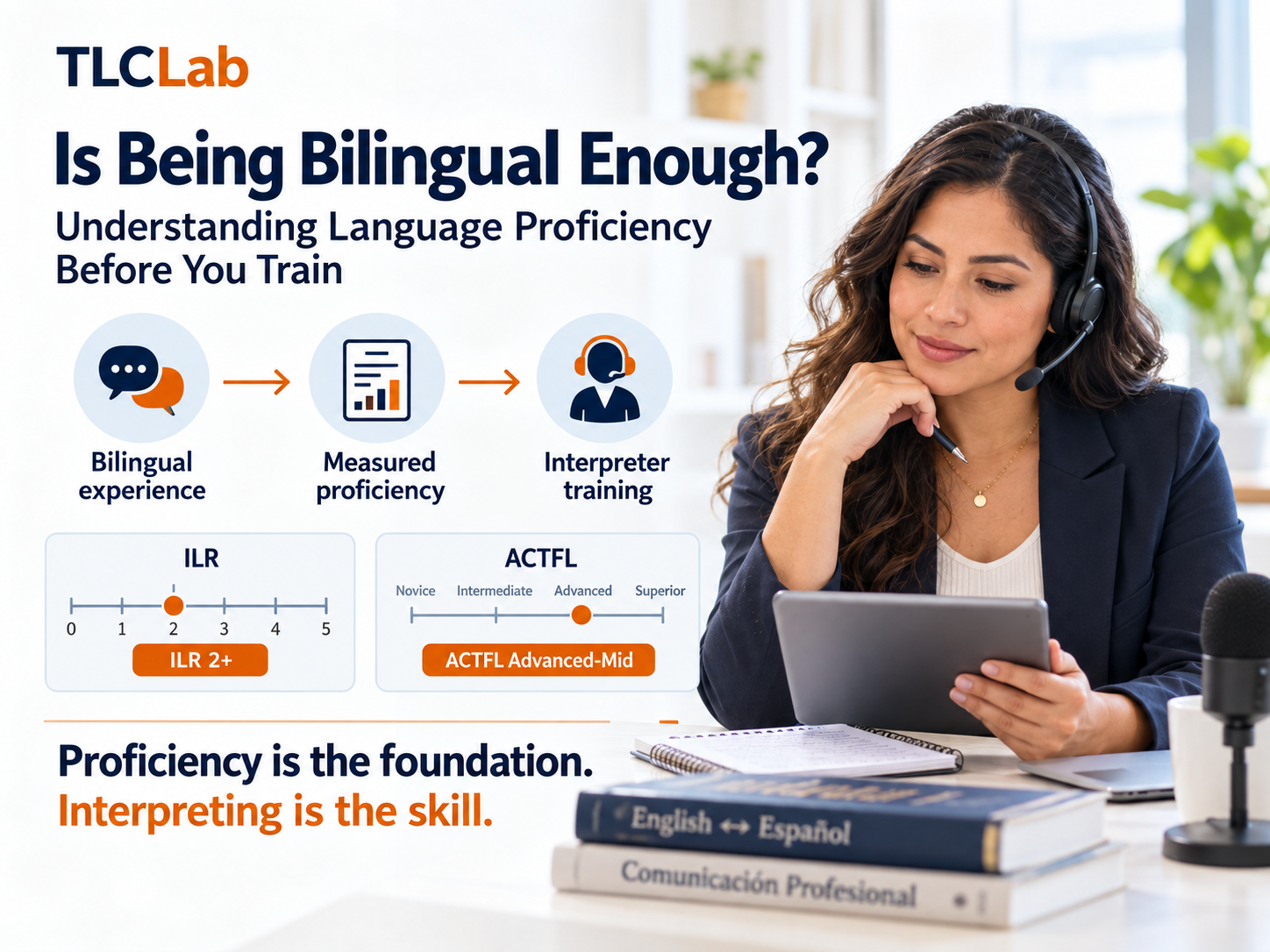
"I've spoken Spanish my whole life." "I grew up translating for my parents." "I'm fluent in both." These are the most common answers people give when asked about their language ability, and none of them is a measure...
Read More
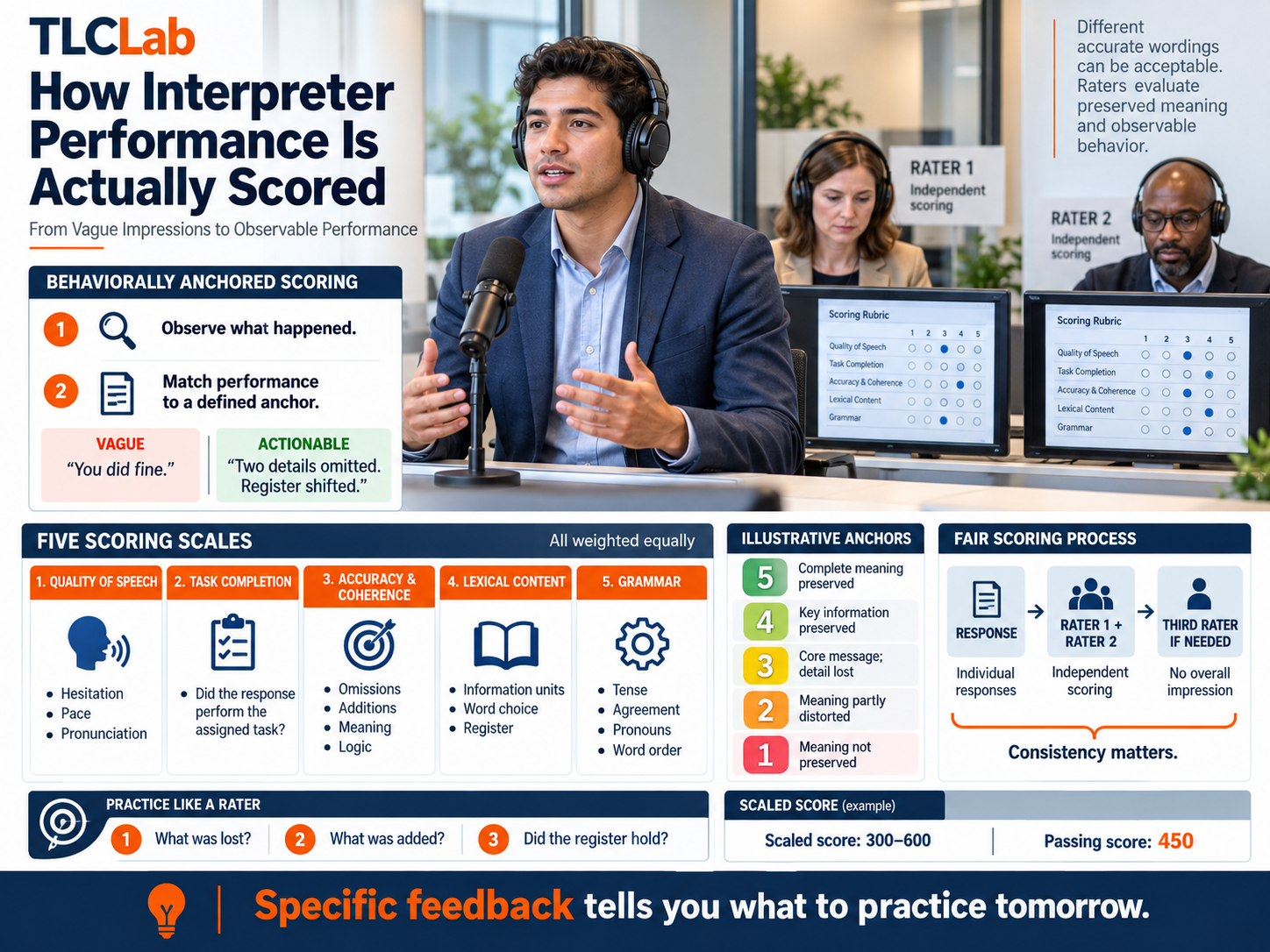
How Interpreter Performance Is Actually Scored "That was good." "You did fine." "Your English is excellent." Most interpreters have received feedback like this, and none of it tells you anything. It does not identify what you...
Read More
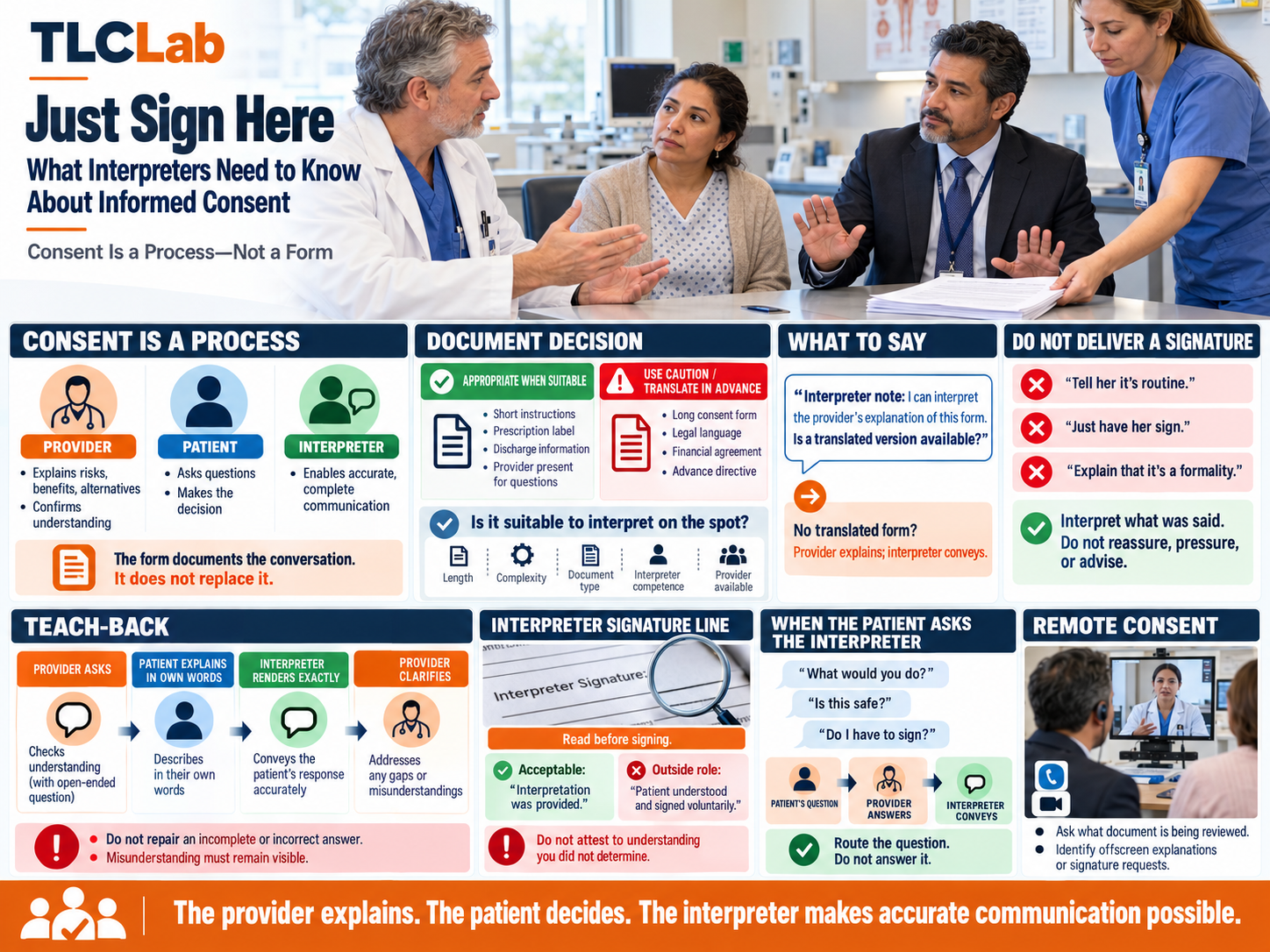
A surgeon finishes explaining a procedure. A nurse slides a four-page consent form across the table and says to the interpreter: "Can you just read this to her and have her sign it?" The patient is waiting. The room is busy. The form is in E...
Read More
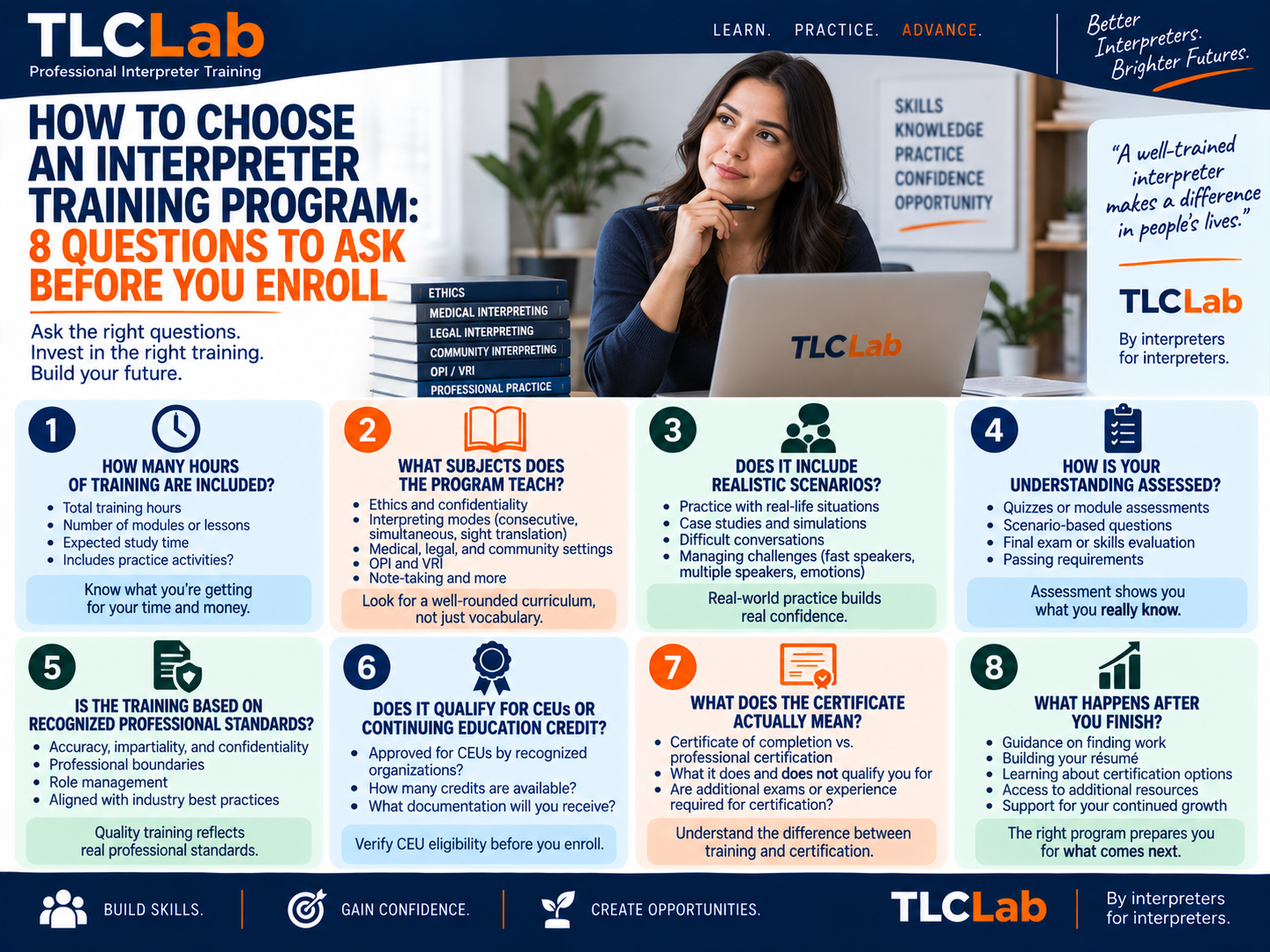
Choosing an interpreter training program is an important decision. A quick online search may produce dozens of courses promising to prepare you for medical, legal, community, OPI, or VRI interpreting. Some programs last only a few hours. Others requ...
Read More
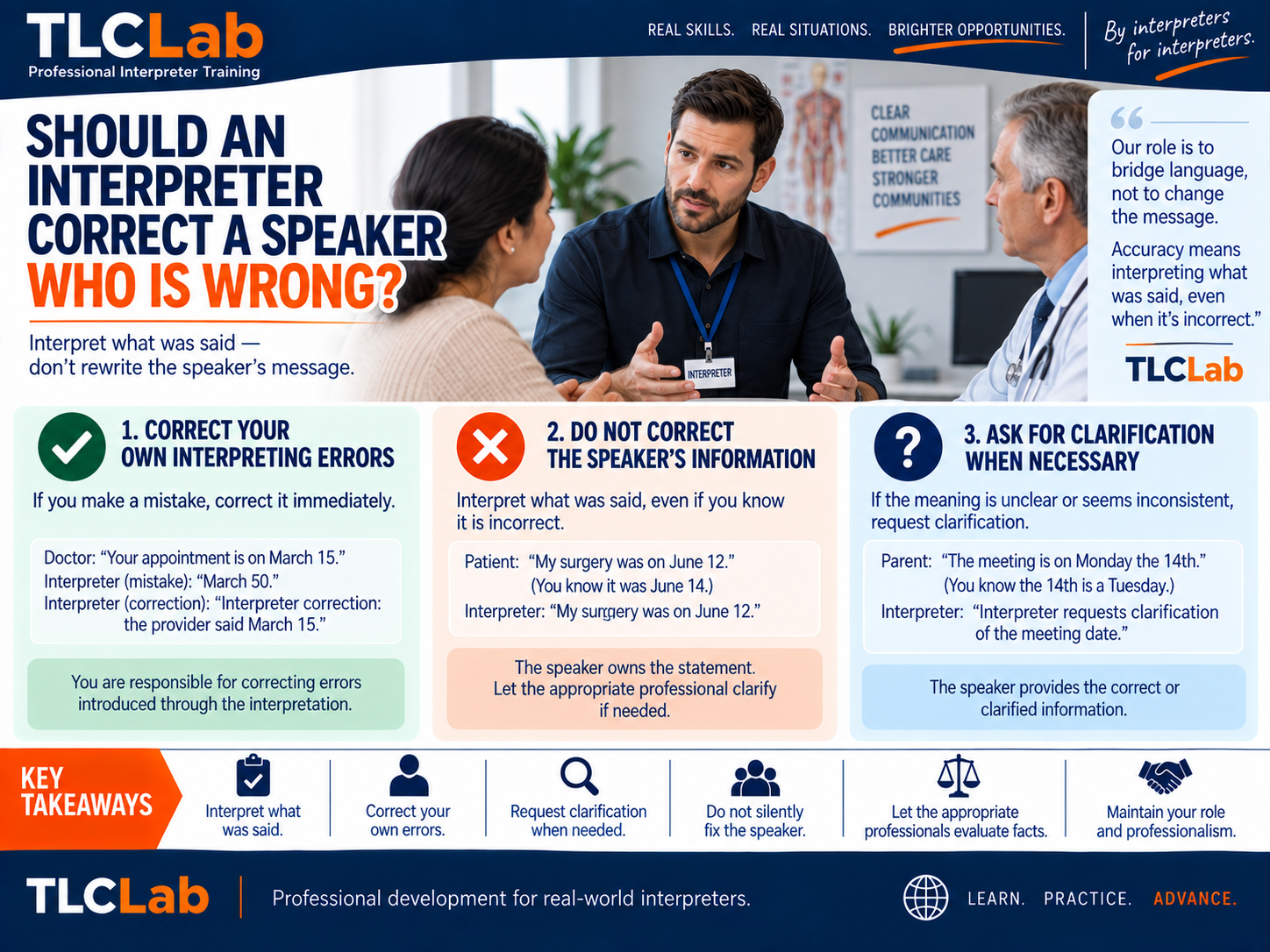
Professional interpreters are responsible for accuracy—but that does not mean correcting everything that sounds wrong. This distinction can be difficult for new interpreters. A patient may give the wrong date. A witness may contradict something they...
Read More
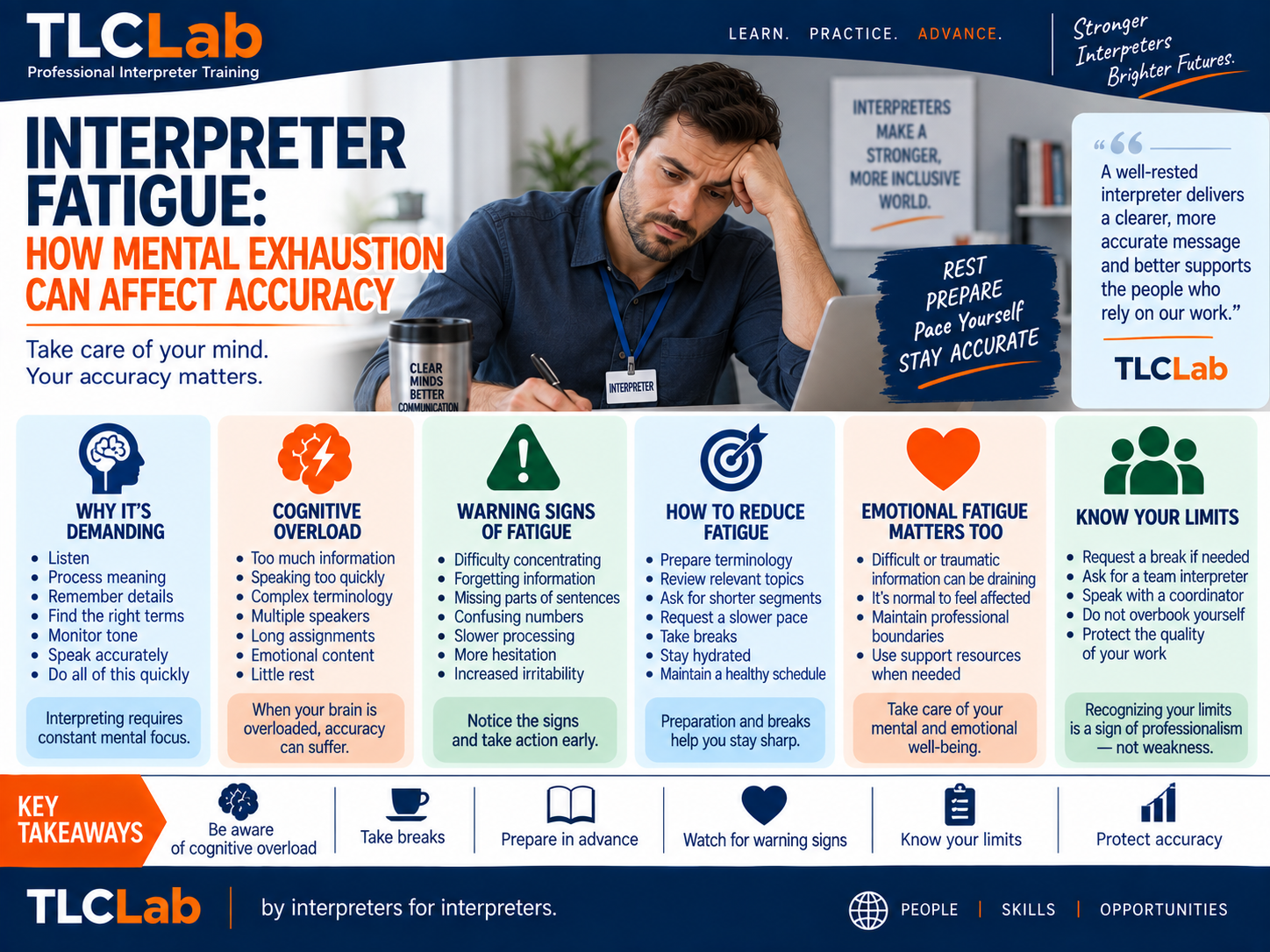
Professional interpreting requires intense concentration. An interpreter may be listening, processing meaning, remembering details, choosing the correct terminology, speaking clearly, monitoring tone, and preparing for the next sentence—all within s...
Read More
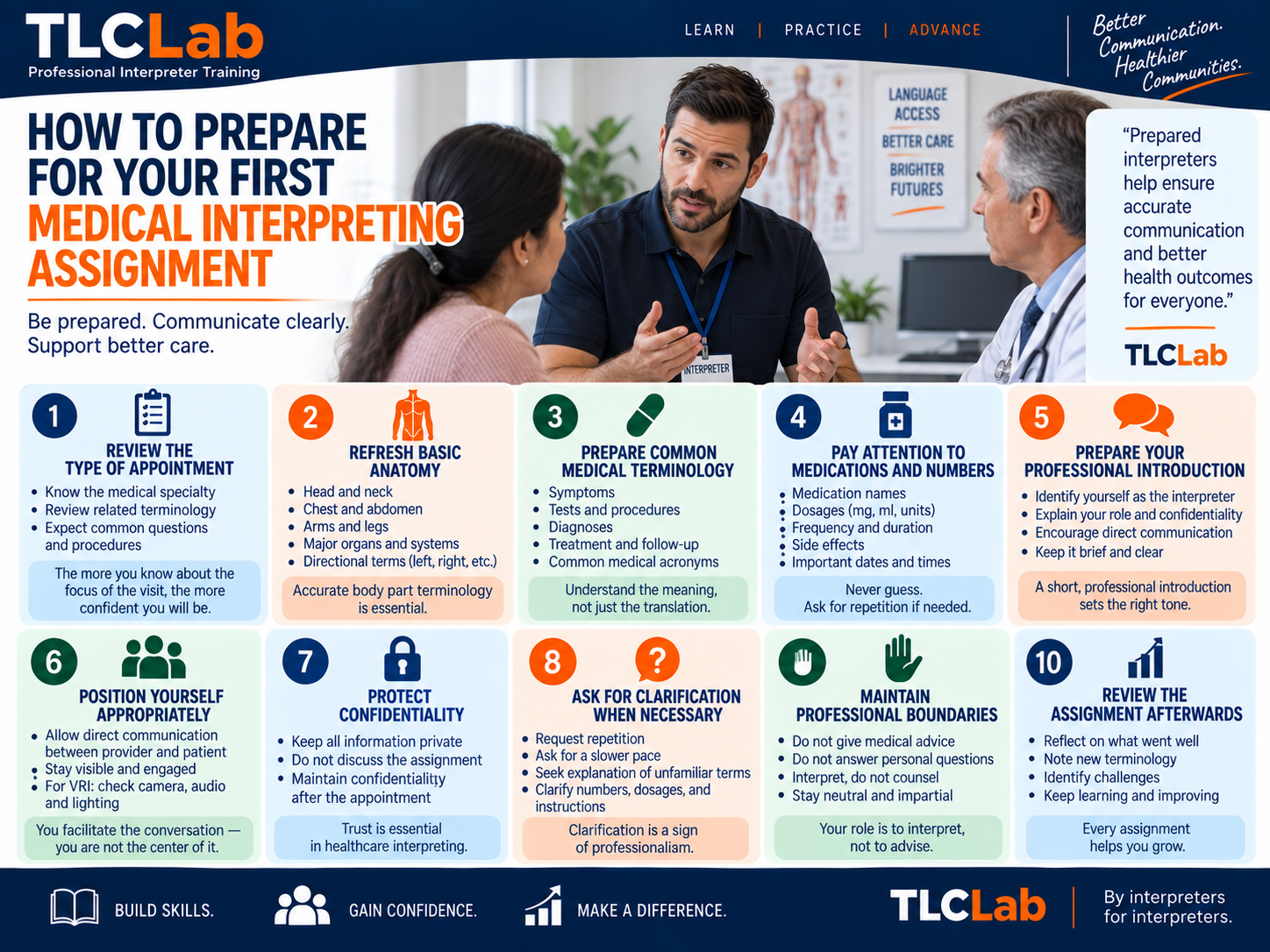
Your first medical interpreting assignment can feel intimidating. You may be walking into a hospital, clinic, physician’s office, or telehealth appointment where unfamiliar terminology, fast-paced conversations, medications, symptoms, and emotional ...
Read More
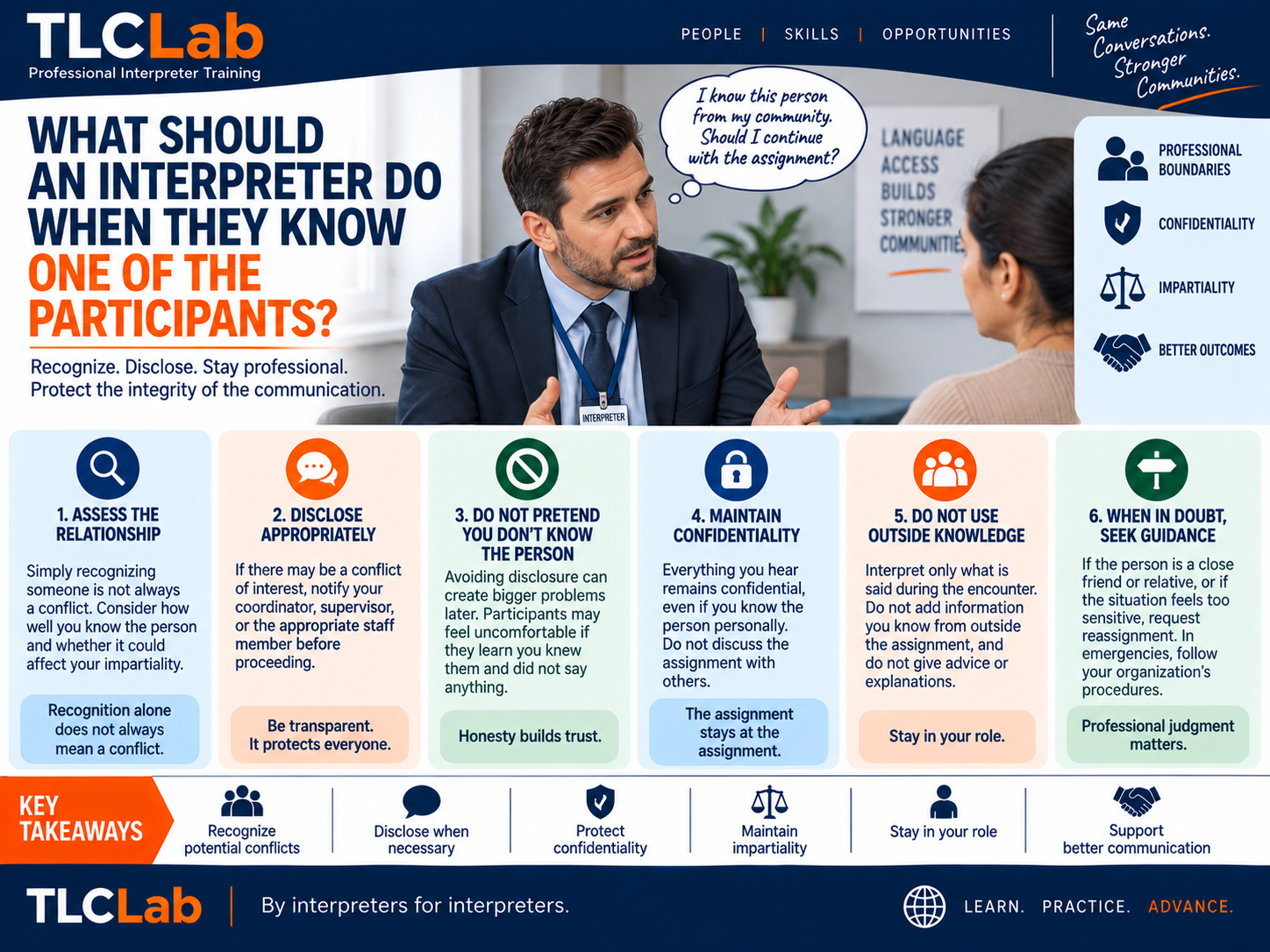
Professional interpreters sometimes work in small communities where it is possible to recognize a patient, parent, teacher, attorney, client, or other participant. You may discover that the person is a neighbor, former coworker, family acquaintance,...
Read More
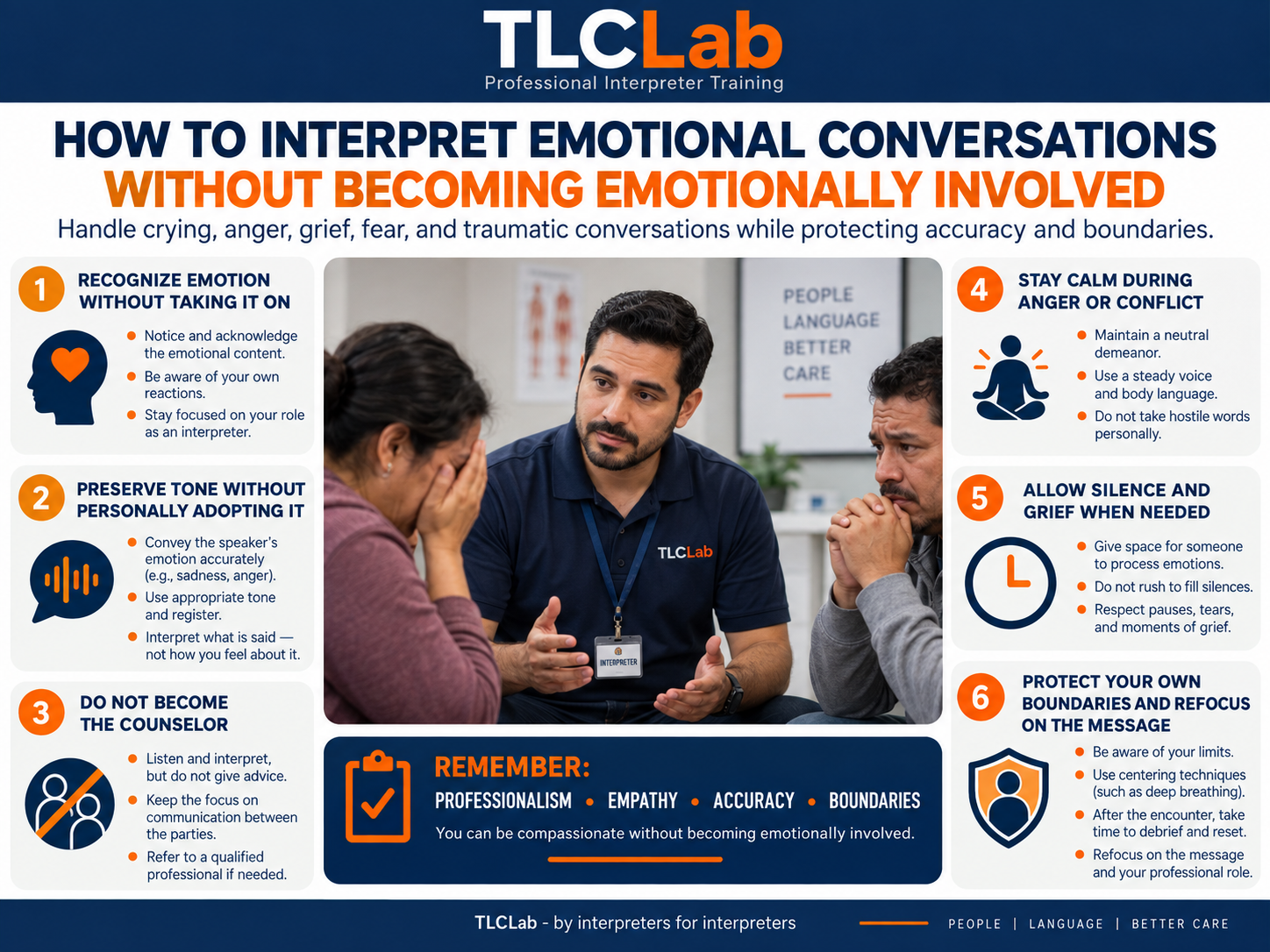
Professional interpreters often work with people during some of the most emotional moments of their lives. A patient may begin crying after receiving difficult medical news. A parent may become angry during a school meeting. A client may describe a ...
Read More
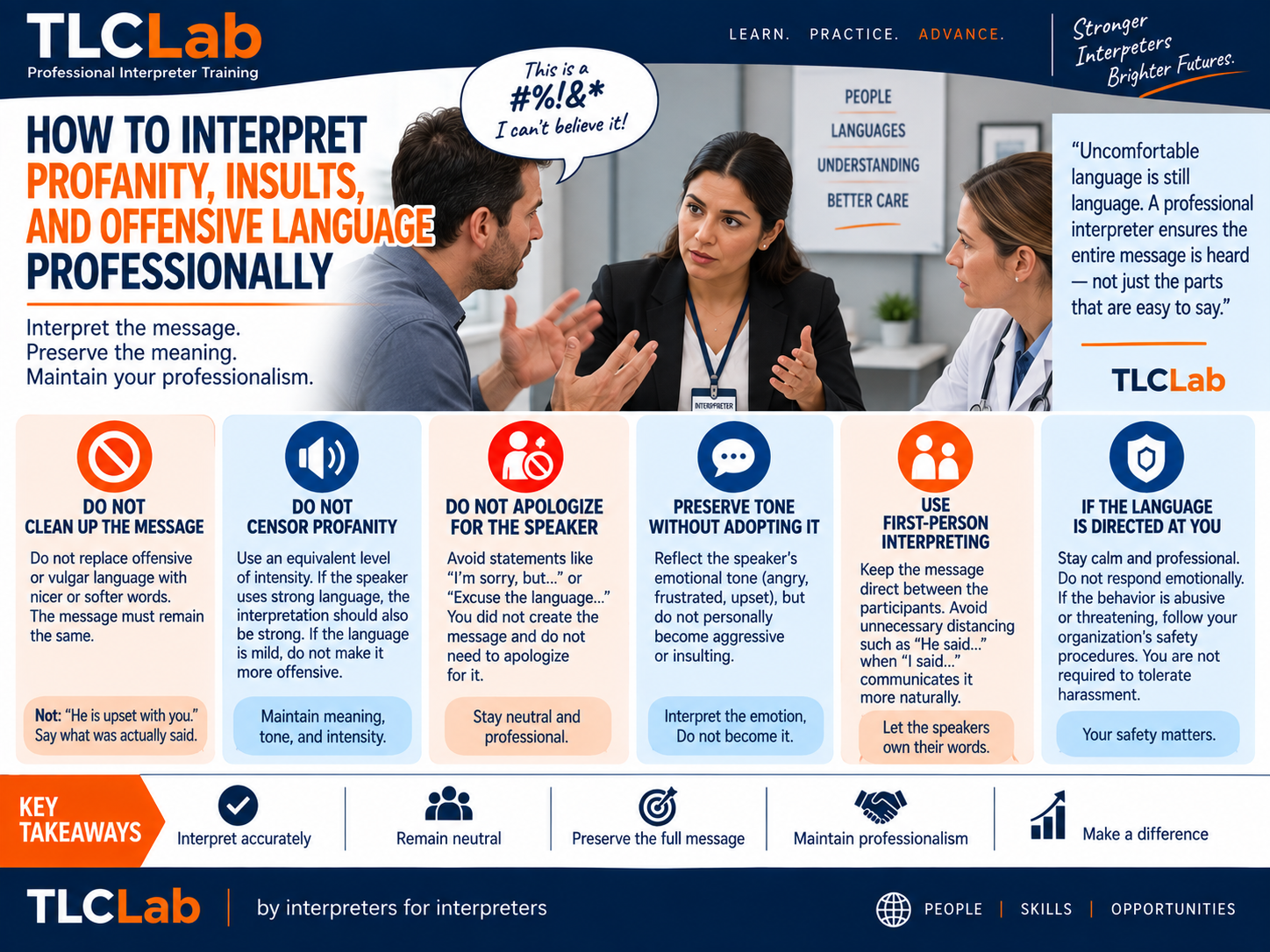
Professional interpreters sometimes hear language that is uncomfortable, insulting, vulgar, discriminatory, or emotionally charged. A patient may swear at a provider. A witness may use an offensive term. A parent may insult a teacher. A caller may b...
Read More
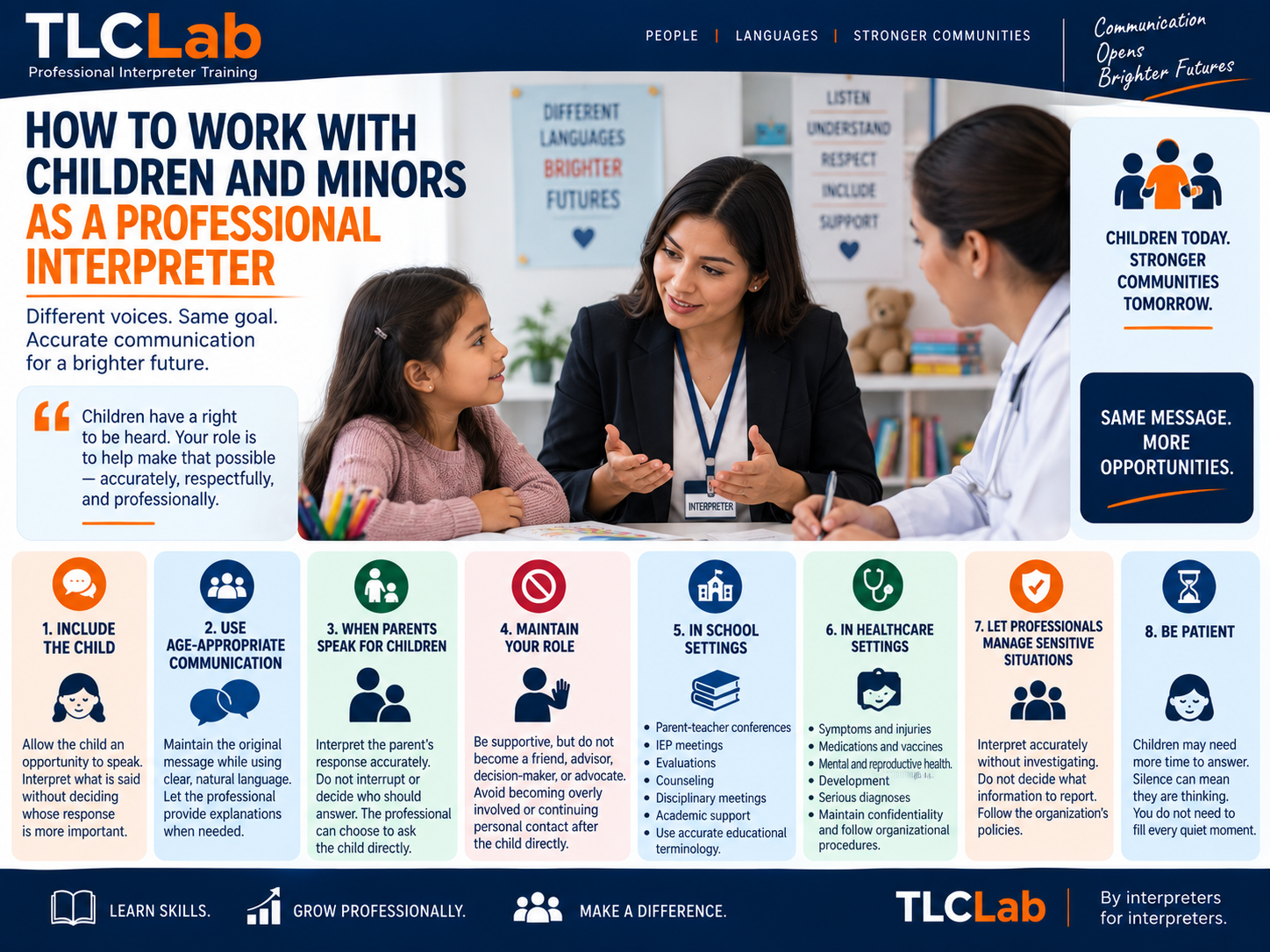
Interpreting for children and minors can be very different from interpreting for adults. A child may use simple vocabulary, answer with only a few words, become distracted, look to a parent before responding, or struggle to explain what they are fee...
Read More