
A video assignment can become difficult before anyone says a word. The patient may be on a tablet with poor audio. A family member may step into view. The provider may speak while looking away from the camera. The interpreter may need to manage a platform they have never used while preserving accuracy, confidentiality, and professional control. That is why video remote interpreting training must address far more than bilingual ability.
Speaking two languages is only the beginning. Professional video interpreting requires you to listen, analyze, render meaning, manage technology, and maintain ethical boundaries at the same time. When the conversation involves a diagnosis, a court matter, a school meeting, or a government service, a small lapse in judgment can affect trust and access.
Why Video Changes the Interpreting Task
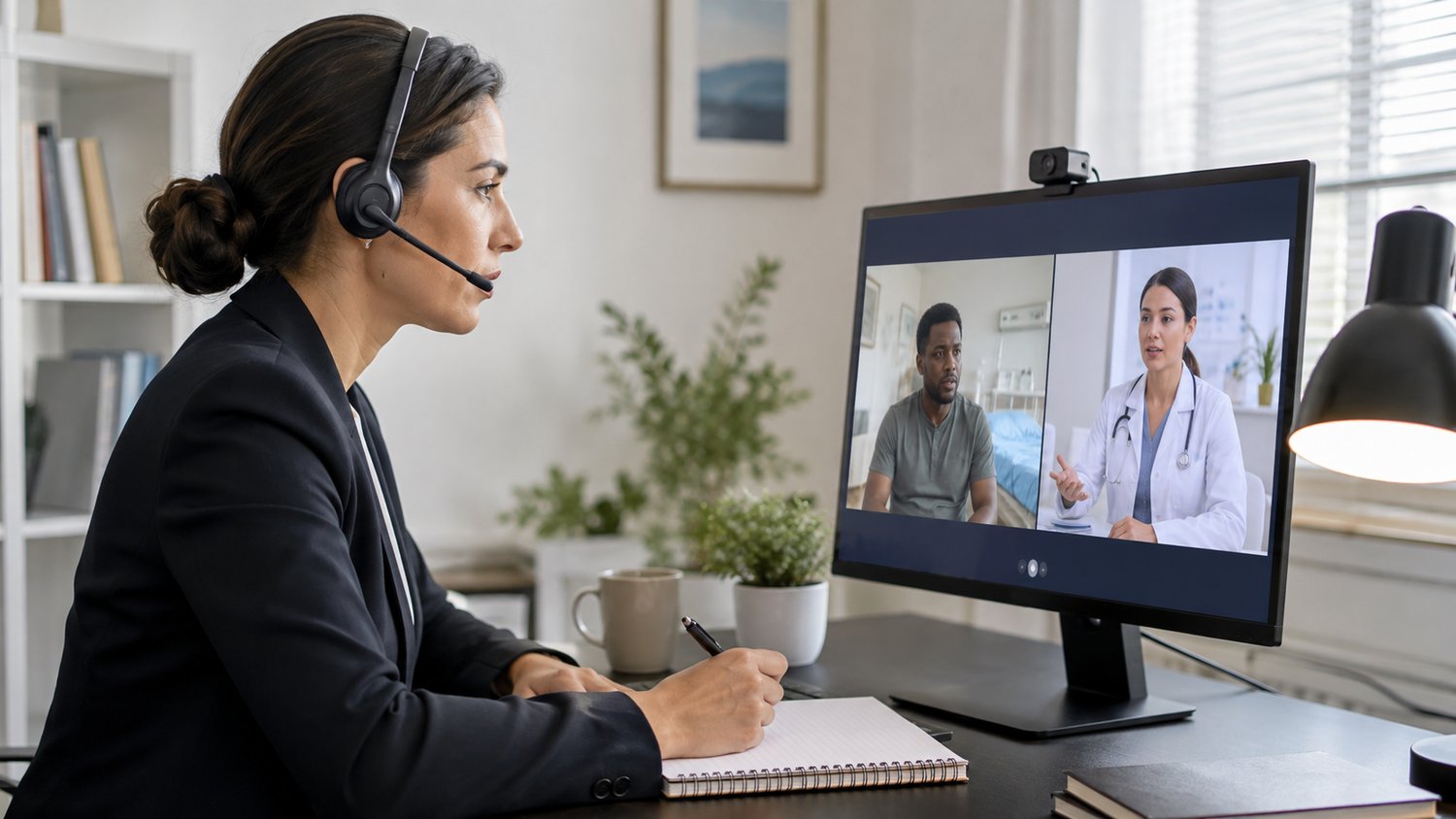
Video remote interpreting, often called VRI, gives interpreters visual information that a telephone call cannot provide. You can see facial expressions, gestures, documents held to the camera, and whether participants appear to understand one another. That visual access can support accuracy, but it also creates additional demands.
You are now responsible for how you appear on screen. Camera placement, lighting, background, posture, eye line, and facial expression all affect the interaction. A distracted glance toward another monitor may be read as disengagement. Speaking too quickly can make your audio difficult to follow. Looking down continuously may leave participants unsure whether you are present and tracking the exchange.
Video also introduces a false sense of informality. Participants may treat a remote encounter like a casual call, speaking over one another, walking away from the device, or inviting an unapproved person into the room. The interpreter cannot control every condition, but must recognize when the conditions threaten communication, privacy, or accurate interpretation.
The goal is not to make the technology invisible. The goal is to use it with enough skill that it does not become the central problem.
What Video Remote Interpreting Training Should Teach
Training is valuable when it prepares you for the decisions that arise during live work, not merely when it explains how a video platform operates. A qualified interpreter needs technical readiness, language performance skills, ethical judgment, and a clear professional presence.
Technical readiness is part of professional readiness
Before a session begins, an interpreter should know how to test audio, camera, internet stability, headset settings, mute controls, and the viewing layout. Those tasks sound basic until an assignment starts late, the sound is distorted, and several people are waiting for help.
Practical preparation includes creating a workspace that protects privacy and supports concentration. Use a stable connection whenever possible. Wear a reliable headset. Keep your background neutral and free from confidential material. Make sure the camera frames your face clearly. Have a backup plan for a dropped connection and understand the agency or platform protocol for reporting technical problems.
Technology fluency does not mean pretending that technology never fails. It means responding calmly when it does. If audio is unclear, say so promptly. If a participant is off camera or cannot be heard, request an adjustment. Continuing through poor conditions may feel efficient, but it can produce an inaccurate record of a serious conversation.
Accuracy under pressure requires a method
Remote settings can encourage rushed delivery. A clinician may move quickly through a discharge plan. An attorney may ask a long series of questions. A school team may use acronyms and specialized terms without pausing. The interpreter must keep pace without turning the assignment into a word-for-word exercise.
Accuracy means preserving the speaker's meaning, register, tone, and intent as faithfully as possible. It includes interpreting first person, asking for clarification when meaning is unclear, and managing turn-taking when overlapping speech prevents a complete rendition. It does not mean smoothing over confusion, summarizing because the speaker is fast, or substituting a more convenient term when a precise one is needed.
A strong training program gives you repeated practice with realistic speech patterns and teaches you how to intervene professionally. A concise request such as, “The interpreter requests that one person speak at a time,” can protect the exchange without taking ownership of the conversation. The exact wording will vary by setting and organizational policy, but the professional purpose remains the same: create conditions in which accurate interpretation is possible.
Ethics and confidentiality do not become optional on video
Remote work can feel less formal because the people involved are not in the same room. The ethical obligations are no less serious. Confidential information may be discussed in a medical appointment, legal consultation, special education meeting, benefits interview, or workplace investigation. The interpreter must protect that information before, during, and after the assignment.
That includes working from a private location, preventing others from hearing the session, securing notes, and following the applicable rules for documentation and platform use. It also means recognizing conflicts of interest and maintaining boundaries when a participant attempts to pull the interpreter into an advocacy, advisory, or personal role.
There are situations where the best professional decision is to pause and report a concern rather than press forward. If another person is listening off camera, if the platform appears inappropriate for the assignment, or if you cannot hear enough to interpret accurately, your judgment matters. Professionalism is not silence in the face of an unsafe condition.
Practice the Conditions You Will Actually Face
Many bilingual adults develop language skills through family, community, school, or work. Those experiences are valuable. They do not automatically teach the split-second choices required in paid interpreting assignments.
Video remote interpreting training should include role-play that reflects real pressure: a speaker who interrupts, a poor connection, unfamiliar terminology, an emotional participant, multiple people on screen, or a request that crosses a professional boundary. Practice should also include feedback that identifies what happened, why it mattered, and how to respond differently next time.
For example, an interpreter may accurately render every sentence in a short practice dialogue but struggle when a provider uses a long explanation while sharing a document on screen. The issue may not be vocabulary. It may be note-taking, chunking information, managing the request for repetition, or deciding when a visual document needs to be read aloud or clarified. These are performance skills, and they improve through focused practice.
It helps to rehearse the beginning of an assignment as well. A professional introduction establishes your role, language direction, and expectations for direct communication. In many settings, it is also appropriate to ask participants to speak clearly and pause as needed. Starting with structure can reduce avoidable confusion later.
Build a Routine, Not Just Confidence
Confidence is useful, but it should rest on preparation. Before each video assignment, take a few minutes to check the platform, your environment, and the assignment details. Confirm the language pair, setting, expected length, and any available terminology. Keep a notepad ready if it is appropriate to do so under the applicable confidentiality requirements.
During the session, stay visible, attentive, and neutral. Interpret everything that is said that is relevant to the interaction. Do not let visual familiarity lead you into casual conversation or assumptions about a participant's needs. If you need clarification, make the request clearly and briefly.
Afterward, reflect on the assignment. Were there terms you need to study? Did audio quality affect your performance? Did you hesitate to manage an interruption? Brief reflection turns each assignment into targeted professional development rather than a vague feeling that it went well or poorly.
This is where career-focused instruction can make a measurable difference. At TLCLab, training is shaped by active practitioners who understand the standards employers, evaluators, and clients expect when conversations carry real consequences. The purpose is not completion. It is better judgment when the work is happening live.
The Standard Is Trustworthy Communication
Not every remote assignment will be technically smooth. Some will require more intervention than others. A short business call and a complex medical encounter do not place identical demands on the interpreter. It depends on the setting, the platform, the participants, and the stakes.
What should remain consistent is your commitment to accurate communication, ethical conduct, and calm professional delivery. Video work asks you to bring language ability and human judgment into the same frame. Train for that responsibility, then let your preparation speak through the quality of your work.