Your Cart
Loading

What Is the CLSM Framework?

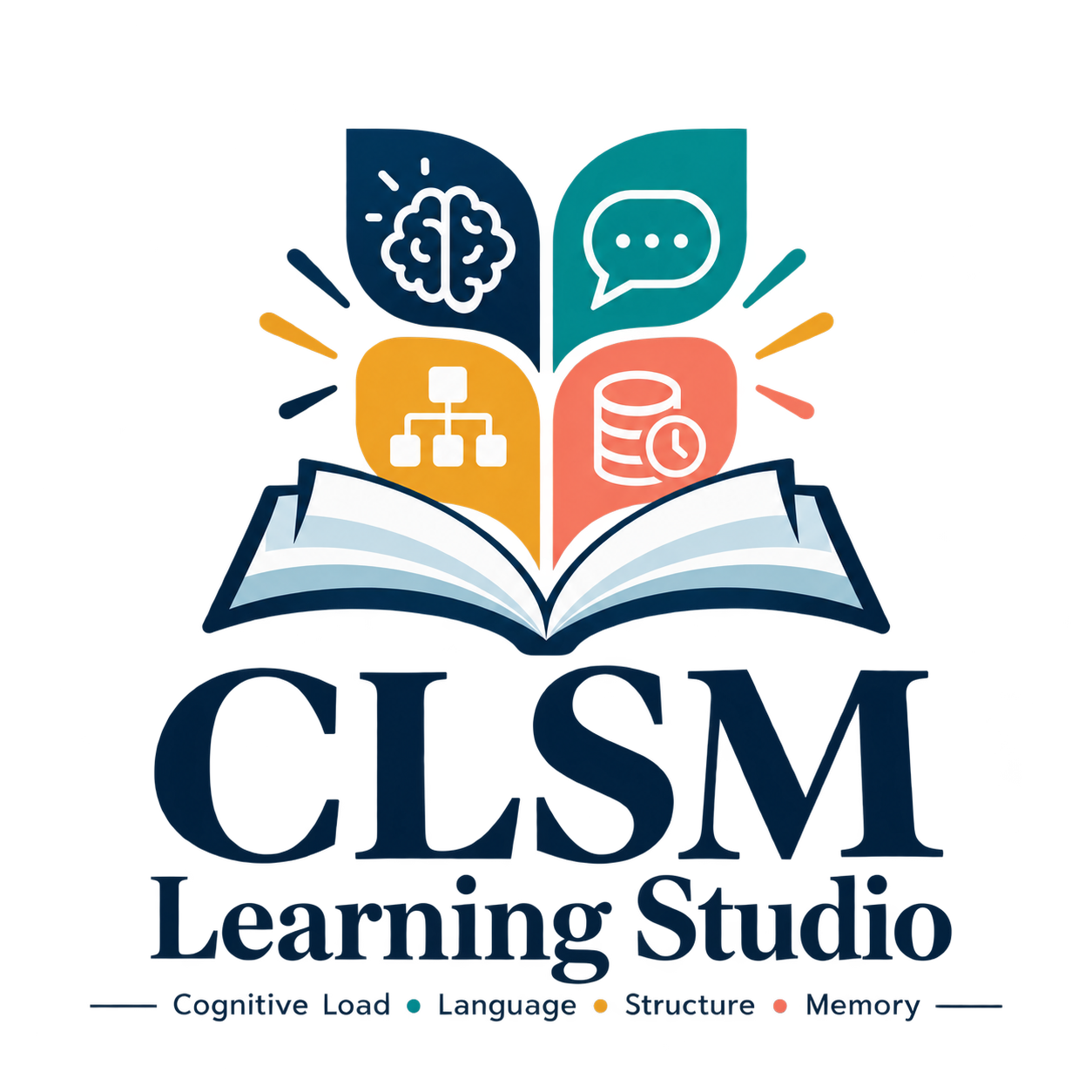
CLSM stands for Cognitive Load, Language, Structure, and Memory. It's an instructional framework I've been developing based on my experiences in the classroom and my interest in how students learn.


Through teaching both special education and high school social studies, I've seen how students can struggle with more than just the content itself. Sometimes it's the amount of information being presented, the academic language, how a lesson is organized, or simply not having enough opportunities to remember and apply what they've learned.


CLSM brings those four areas together to guide how I design my lessons and classroom resources. My goal isn't to make the content easier, but to make learning more accessible, organized, and meaningful while keeping expectations high.

Four Areas, Working Together

Cognitive Load

Give students room to think. I break information into manageable parts, pair useful visuals with explanations, and keep directions clear. Guided notes help students organize essential ideas while leaving space for the thinking the lesson requires.

Language

Keep the thinking challenging and make the language accessible. Key vocabulary, clear explanations, sentence supports, and bilingual scaffolds help students work with academic English. Students still explain ideas, use evidence, and build subject knowledge.

Structure

Make the next step clear. Predictable routines, numbered directions, timelines, and visual organizers help students follow a lesson and see how ideas connect. Supports can be adjusted as students become more confident and independent.

Memory

Plan for learning to last. Daily recall, spaced review, and opportunities to explain ideas help students revisit learning over time. Practice includes unfamiliar sources and scenarios so students work toward recognizing and applying concepts beyond the original lesson.

What This Looks Like in a Lesson

A lesson might begin with a short recall question, move into guided notes with a timeline or visual organizer, and give students supported practice with a source or scenario. Students then explain their thinking and return to important ideas in later lessons.


I pay attention to where understanding breaks down: recognizing a concept in an unfamiliar passage, choosing evidence that actually supports an answer, or responding to the exact question being asked. Those moments guide the next round of instruction and resource design.


CLSM continues to develop through classroom use, student work, and my ongoing study of learning and instructional design. Its four areas remain the foundation; the ways I put them into practice grow as I learn more.