
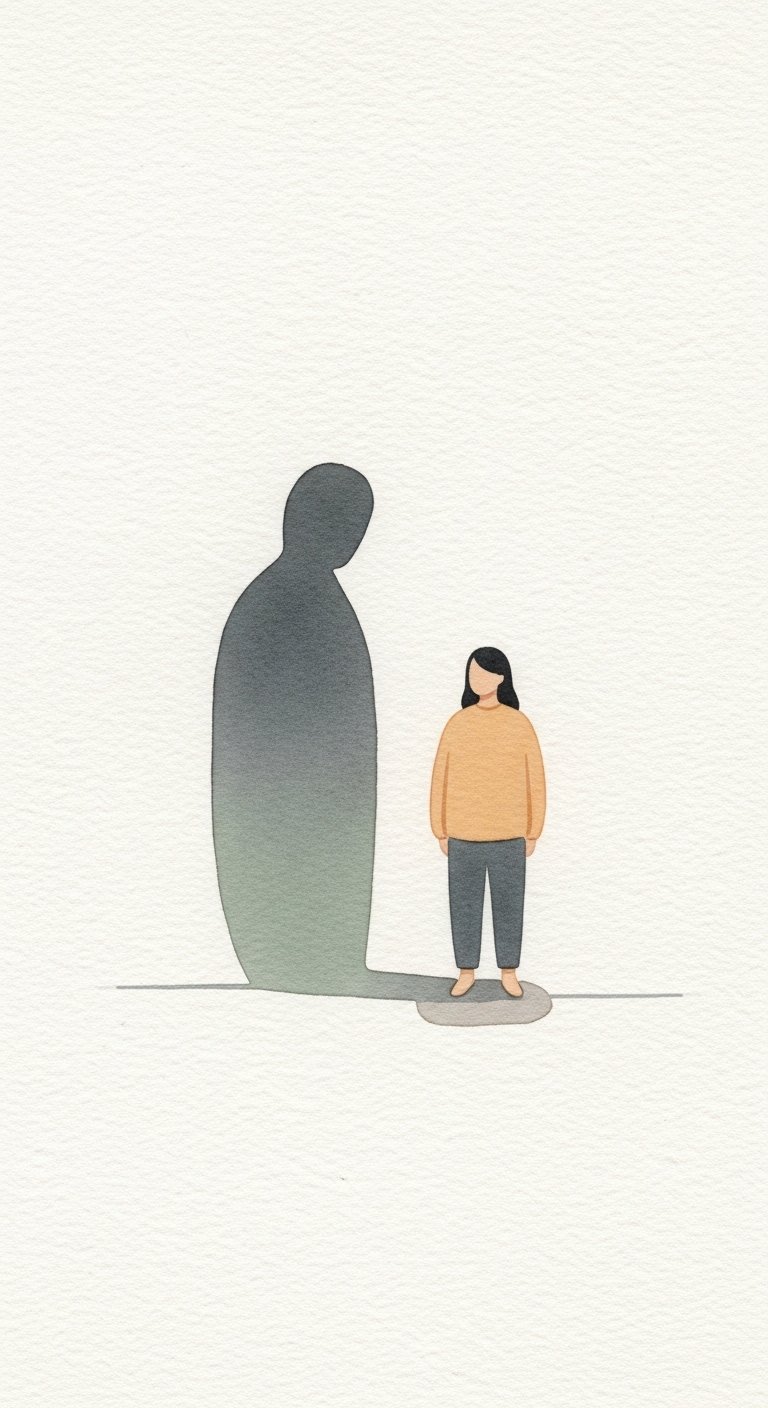
There are parts of my story that don’t show up in highlight reels, follower counts, or clean origin stories. They live underneath the work—quiet, unresolved, shaping how I move through the world and how I create inside it.
My dad leaving was one of the first lessons I learned about absence.
Not just the physical kind, but the emotional kind—the way someone can be gone long before they officially disappear. That absence didn’t announce itself as trauma at the time. It became something subtler: a background hum of needing to be enough, of trying to prove worth without fully understanding why.
When you grow up learning that love can be inconsistent, you start to build yourself around anticipation. Anticipation of disappointment. Anticipation of being misunderstood. Anticipation of having to carry things alone.
That anticipation followed me into everything—including creativity.
Wanting to Be Seen, Afraid of Being Known
For a long time, I thought my struggle as a creator was about discipline, confidence, or motivation. I told myself I just needed thicker skin. More consistency. Less emotion.
But the truth is quieter and harder to admit:
Creating meant being seen, and being seen had never felt safe.
Chapter 1 of The Aware Creator talks about the emotional exposure that comes with releasing work into the world—how the body prepares for judgment even when nothing has gone wrong. That line hit me because it named something I had been carrying without language
Every time I posted, performed, streamed, wrote, or shared, my nervous system reacted like I was stepping back into a familiar room—the one where approval could disappear without warning.
That reaction wasn’t weakness.
It was memory.
Family, Acceptance, and the Shape of Silence
Family can love you and still not fully see you.
Sometimes they want stability when you are becoming something uncertain. Sometimes they want tradition when you are chasing expression. Sometimes they don’t know how to hold the version of you that doesn’t fit the roles they understand.
For years, I felt like I was explaining myself just to exist. Like my choices needed justification. Like creativity was something I had to defend rather than inhabit.
That pressure doesn’t always turn into conflict. Often it turns into silence. You stop sharing ideas early. You soften your excitement. You learn to carry your vision privately.
And then, one day, you decide to share anyway.
The Emotional Cost No One Warns You About
What Chapter 1 names so clearly is that the cost of creating doesn’t always show up as failure—it shows up as fatigue
Fatigue from caring.
Fatigue from hoping.
Fatigue from interpreting silence as meaning something about you.
I’ve worked long hours in environments that taught me how to stay alert, how to manage situations, how to read people quickly. Hospitality, security, survival work—it trains you to stay composed no matter what’s happening inside.
But creativity doesn’t work that way.
You can’t numb yourself into meaningful expression. You can’t brute-force authenticity. The same sensitivity that makes the work real is the thing that gets exhausted when ignored.
For a long time, I mistook that exhaustion for failure.
Becoming a Creator Wasn’t a Career Choice — It Was a Reckoning
I didn’t become a content creator because it was easy or trendy. I became one because eventually the alternative—not expressing—became heavier than the fear of being seen.
Creating forced me to confront questions I had avoided:
- What happens if I’m ignored and survive?
- What happens if I’m misunderstood and keep going?
- What happens if I stop trying to earn permission to exist?
The book talks about curiosity instead of judgment—about pausing long enough to ask what’s happening internally instead of assuming something is wrong with you
That shift changed everything.
Instead of asking, “Why am I like this?”
I started asking, “What am I protecting?”
Staying With Myself Instead of Abandoning the Work
There were moments I wanted to quit—not because I didn’t care, but because I cared too much without support. There were stretches where posting felt like exposure without safety, where metrics felt like verdicts, where silence echoed louder than criticism.
But awareness gave me something discipline never did: permission to stay.
To rest without quitting.
To hesitate without collapsing.
To feel discomfort without turning it into a story about my worth.
I didn’t need to become fearless.
I needed to become self-trusting.
Why I Keep Creating Anyway
I keep creating because it’s the one place where I stopped abandoning myself.
Not because it guarantees success.
Not because it’s always rewarding.
Not because it’s easy.
But because every time I choose to express honestly instead of shrinking, I rewrite something old.
I create for the version of me who learned early that love could leave.
I create for the part of me that was told stability mattered more than truth.
I create for the people who feel the quiet tension of being visible in a world that reduces everything to numbers.
And I create because staying with myself—emotionally, creatively, imperfectly—is the most grounded thing I’ve ever learned to do.
Closing Reflection
Before you share your next piece, ask yourself:
- What am I feeling right now, beneath the urge to post or pull back?
- Where have I mistaken emotional fatigue for failure?
- What would it look like to stay curious instead of critical?
You don’t need to be tougher.
You need to be more present.
That’s not weakness.
That’s how creators last.