

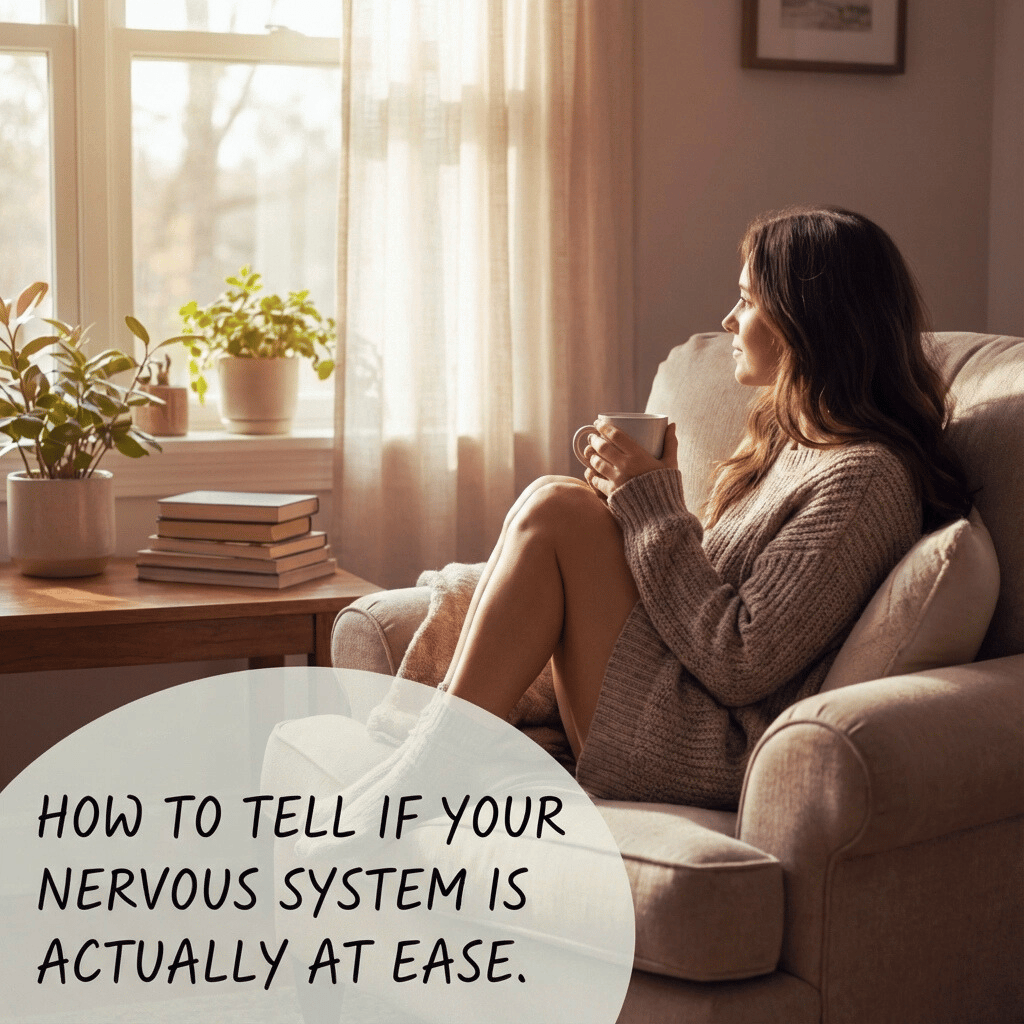
Your nervous system doesn't send you a memo when it finally relaxes. No notification pops up saying "Congratulations! You've reached baseline calm." Instead, the signs are quiet, almost mundane, the kind of shifts you might not even notice until someone points them out.
If you've been working on your mental health, practicing mindfulness, or simply trying to feel more at ease in your own skin, you might be wondering: How do you actually know if it's working? The answer isn't as obvious as you'd think.
Your Body Knows Before Your Mind Does
The first place your nervous system shows its cards is in your body. When you're truly at ease, your breathing changes without you trying to change it. You're not forcing those deep inhales or reminding yourself to exhale fully; your body does it naturally.
Your shoulders drop away from your ears. Your jaw unclenches. You might catch yourself sitting normally instead of perched on the edge of your chair like you're ready to bolt. These aren't earth-shattering moments, but they're profound in their simplicity.
Sleep becomes less of a battleground, too. You're not lying awake running through tomorrow's to-do list or replaying today's awkward conversation. Your body actually believes it's safe enough to rest, which is no small thing if you've spent years in survival mode.

The Stillness Doesn't Feel Scary Anymore
Here's something thought-provoking: When your nervous system is genuinely at ease, quiet moments stop feeling threatening. You can sit without immediately reaching for your phone or filling the silence with mental chatter. The stillness becomes a friend rather than an enemy.
This shift is huge for mental health, though it happens so gradually you might miss it entirely. One day, you realize you can drink your coffee without scrolling through news headlines, or you can take a walk without needing music or a podcast to distract you from your own thoughts.
That's your nervous system saying, "Hey, we're okay here. No need for constant entertainment or escape routes."
Your Reasoning Gets Clearer
When you're not operating from a place of chronic stress, your thinking becomes remarkably clearer. Problems that once felt overwhelming start to feel manageable. You can see options where you used to see only obstacles.
It's not that life becomes easier: it's that your brain stops treating every decision like a life-or-death situation. You can weigh pros and cons without your thoughts spinning into worst-case scenarios. Your reasoning becomes your ally instead of something that works against you.
This mental clarity extends to your relationships, too. You can have difficult conversations without feeling like your entire world is collapsing. Disagreements become discussions rather than threats to your safety.
The Vulnerable Moments Feel Different
When your nervous system is truly at ease, vulnerability stops feeling like exposure therapy. Sharing something personal doesn't send you into an immediate spiral of "Why did I say that?" or "They probably think I'm weird now."
You can be open without feeling like you need to prepare for rejection. This doesn't mean you become reckless with your heart: it means you trust yourself to handle whatever response comes your way.
The shift happens in your body first. That tight feeling in your chest when you share something meaningful: it's still there, but it doesn't feel dangerous anymore. Your system recognizes the difference between healthy vulnerability and actual threat.

You Stop Checking for Problems
One of the most telling signs of a settled nervous system is when you stop constantly scanning for what might go wrong. You're not mentally preparing for disasters that haven't happened yet or creating backup plans for every possible scenario.
This doesn't mean you become naive or unprepared. It means your default setting shifts from "What could hurt me?" to "What's actually happening right now?" Your awareness becomes focused on the present rather than scattered across a dozen potential futures.
You might notice this shift in small ways first. You stop triple-checking that you locked the door. You don't immediately assume the worst when someone doesn't text back quickly. Your mind gets to rest from its job as chief worry officer.
Your Energy Matches Your Days
When your nervous system finds its rhythm, your energy starts to make sense again. You're not exhausted after low-key days or wired after relaxing weekends. Your body's energy output actually matches what you're asking of it.
This is different from forcing yourself to feel energetic or pushing through fatigue. It's your system naturally calibrating to what's actually needed. You can be active when activity serves you and restful when rest is what's called for.
The malfunction that once had you feeling completely drained after social events or strangely amped up during quiet evenings starts to smooth out. Your energy becomes reliable rather than unpredictable.
Small Setbacks Don't Become Big Stories
Perhaps the most significant shift happens in how you handle the inevitable bumps in the road. When your nervous system is at ease, a bad day doesn't automatically become evidence that you're falling apart.
You can have a rough morning without assuming the entire day is ruined. A difficult conversation doesn't send you into a shame spiral that lasts for weeks. Your system knows the difference between a temporary challenge and a genuine threat.
This resilience isn't about being tough or pushing through everything. It's about your body's wisdom, knowing that most storms pass, and you don't need to brace for impact every time clouds appear.

The Quiet Signs Matter Most
The truth about nervous system regulation is that the biggest changes often feel the smallest. You might not wake up one morning feeling dramatically different, but you'll start to notice that life requires less effort than it used to.
Conversations flow more easily. Decisions feel less heavy. Your body becomes a place you want to be rather than something you're trying to escape from or fix.
These shifts happen gradually, often so subtly that you only recognize them in retrospect. You'll realize that you haven't felt that familiar knot in your stomach for weeks, or that you've been sleeping through the night without really thinking about it.
Your nervous system's journey toward ease isn't marked by fanfare or dramatic breakthroughs. It's marked by the simple, profound experience of feeling at home in your own life: no extra effort required.
If you're noticing even a few of these shifts, trust that something real is happening. Your system is learning what safety feels like, and that's worth celebrating in all its quiet, unassuming glory.