
Why pornography works against you if you're trying to last longer:
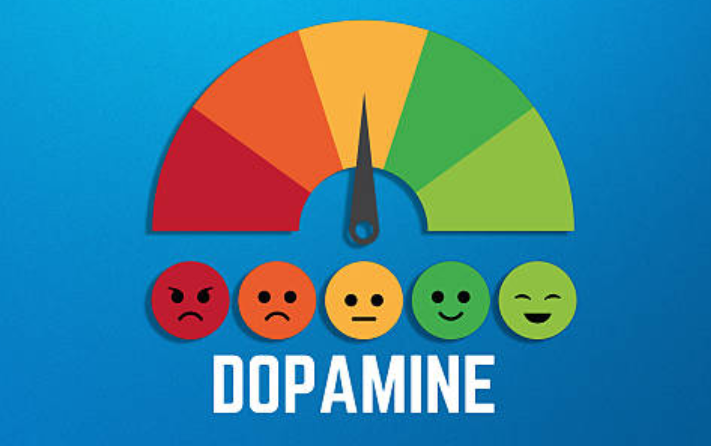
- It blunts your dopamine system — and your ejaculatory reflex pays the price. Chronic p*rn use downregulates dopamine receptor density (your brain literally reduces its own receiving equipment). The prolactin spike after ejaculation suppresses dopamine further — and when guys are finishing daily to pornography, that suppression becomes semi-chronic. In my client data, men with heavy use patterns improved at roughly half the rate of those who stopped during training. Devon, 26, could masturbate to porn for 30–40 minutes but couldn't last 60 seconds with his girlfriend. Classic desensitized dopamine system — the real-world stimulus couldn't clear the threshold his brain had been calibrated to expect.
- It trains your body toward fast release — literally. The habit of quick masturbation to ejaculation conditions the ejaculatory reflex to fire fast. Neurologically, it's the same tolerance loop as any addiction: the brain learns "get the hit fast" and optimizes for it. I track a simple variable with clients — time since last ejaculation before a sexual encounter. On days my client Aaron (31) had masturbated within 24 hours, his average duration was 3.2 minutes. At 48+ hours, it was 7.1 minutes. Same guy, same technique training — just the prolactin reset window making the difference.
- It loads performance anxiety on top of an already stressed system. Men who've been watching porn walk into real sex carrying an invisible benchmark — pornography actor stamina, actor body, actor reactions from their partner. That anxiety is itself a sympathetic nervous system trigger, the exact thing that accelerates ejaculation. It's psychological pressure, physiology and neurochemistry - all combined to cause premature ejaculation. The moment performance anxiety spikes, your nervous system shifts gear and the ejaculatory reflex moves closer to the edge. Removing the pornography benchmark is part of what removes that trigger.
If you want the full system I use with clients — breathing protocols, the reverse kegel sequence, arousal scale training, all of it — it's laid out step by step in my course - "Last Longer Naturally: A Men's Health Guide to Overcoming Premature Ejaculation".
I used to think p*rn was a red herring in the PE conversation. Like, okay, obviously it’s not great for relationships, obviously there’s all this moralizing content about it online — but stamina? I figured that was about pelvic floor strength, breathing, anxiety management.
The usual suspects!
I didn’t think a guy’s Netflix queue of adult content had much to do with why he finished in two minutes.
I was wrong. And it took a client named Devon — 26 years old, had been watching p*rn daily since he was about 14 — to make me understand how badly I was misreading this.
Devon came to me because he could barely last 60 seconds with his girlfriend. Sixty seconds. He was mortified, she was confused, and the relationship was quietly deteriorating the way relationships do when there’s an elephant in the bedroom nobody’s naming.
The interesting thing — the thing that stopped me mid-session and made me go back to my notes — was that Devon could masturbate to p*rnography for 30 to 40 minutes without finishing. Not with effort. Comfortably. Like it wasn’t even a challenge.
That asymmetry doesn’t make sense until you understand what’s happening inside his dopamine system. And once you do, the whole picture of PE looks different.
Here’s the thing about dopamine that nobody in the PE space explains properly. Dopamine isn’t really a “pleasure chemical” the way it gets described in pop science. It’s more of a motivation and reward prediction chemical — it’s what makes you want things, what drives you toward them, and what governs how much of a reward signal your brain assigns to an experience.
When you get a dopamine hit, your brain files that activity under “worth pursuing.” When that system gets flooded repeatedly by a superstimulus — and pornography, with its infinite novelty and zero-friction access, is one of the most potent superstimuli ever invented — something ugly starts to happen.
The brain adapts. Specifically, it downregulates dopamine receptor density (reduces the number of receptors available to receive dopamine signals). This is the same mechanism that makes a drug addict need more of their substance to feel the same high. It’s tolerance, and it works identically whether you’re talking about heroin or high-speed internet pornography. The signal coming in stays the same; the brain just turns down its own receiving equipment.
So Devon, after twelve years of daily use, had a dopamine system that was — I’m not being dramatic here — genuinely blunted.
Real sex, with a real person, with all its noise and imperfection and lower stimulation threshold, couldn’t generate enough dopamine signal to match what his brain had been calibrated to expect. His ejaculatory reflex, which is modulated in part by dopamine signaling, was sitting on a hair trigger trying to compensate. His brain was essentially starving for the hit and overreacting the moment actual physical stimulation arrived.
When I mapped this out for him, his response was: “So my brain is basically broken?”
Not broken. Miscalibrated. There’s a difference, and the difference matters for how you fix it.
I keep a spreadsheet — nothing formal, just a Google Sheet I’ve maintained since I started doing this work — with anonymized client outcomes. Training variables, sleep, stress levels, p*rn use, baseline duration, eight-week duration. The correlation between daily pornography consumption and rate of improvement is the most consistent finding in the whole dataset.
Clients who were willing to stop during the training period improved at roughly twice the rate of clients who weren’t. Not a small margin. Twice. The three clients who made the least progress in my tracking sheet were all daily users who weren’t interested in stopping. I’m not here to moralize at anyone. That’s what the data shows.
The protocol I used with Devon was specific, and I want to be honest that I got parts of it wrong before I got it right.
My first instinct was to approach Devon the way I’d approach any client with a sensitivity and timing issue — start with the breathing work and arousal scale training, layer in pelvic floor conditioning, and assume the rest would follow.
That’s what I’d done with Marcus, my first serious PE client, and it had worked well enough. With Devon, it didn’t move the needle. Two weeks in, he was still finishing under two minutes during sex. The breathing was helping — he told me he felt calmer — but the underlying trigger was still firing fast.
That’s when I went back to the dopamine piece and realized I’d been treating symptoms. The ejaculatory reflex was the symptom.
The desensitized dopamine system was the cause. Trying to train ejaculatory control on top of that was like teaching someone to walk on a broken ankle — they can try, but until the underlying injury heals, you’re working against yourself.
What Devon actually needed was a period of what I now call dopamine recalibration. The core of it was a 90-day elimination of pornography, combined with structured edging practice using physical sensation only.
No screens. No visual stimulus. Solo sessions with attention on the physical sensations, learning to ride arousal at a seven or eight on the ten-point scale I use with clients, without the high-stimulation visual context his brain had learned to require.
Devon called it “the most boring three months of my life.” He texted me that verbatim at around week six. But by month two, he was lasting eight to ten minutes during sex. By month three, fifteen-plus. His dopamine receptors were re-sensitizing — the receiving equipment was turning back up — and his ejaculatory threshold was rising with them.
I want to pause on the why of this more carefully, because “stop watching p*rn and you’ll last longer” sounds like the kind of advice a disapproving uncle gives you. The mechanism is more interesting than that.
Dopamine governs the ejaculatory reflex in a specific way: it modulates the threshold at which the ejaculatory center in the spinal cord fires.
Higher dopamine sensitivity — meaning your receptors are responding well to normal levels of dopamine — is associated with better ejaculatory control. Lower sensitivity means the system is dysregulated, and it tends to express that dysregulation as a hair-trigger response.
So the recalibration period isn’t about willpower or abstinence as a moral choice. It’s about giving your receptor density time to normalize. The research on this puts full receptor recovery somewhere between 30 and 90 days depending on how long and how heavy the usage was. For Devon, it was closer to 90.
For clients with lighter or more recent use patterns, I’ve seen meaningful changes by week four or five.
There’s also the testosterone connection, which took me a while to fully integrate into how I work with clients because it felt like a separate conversation. It isn’t. Testosterone and dopamine are wired together in a feedback loop: testosterone upregulates dopamine receptor density (the number and sensitivity of receivers for dopamine signals), and dopamine in turn stimulates the hormonal cascade that drives testosterone production. They feed each other. When one goes up, the other tends to follow. When one is suppressed, it pulls the other down.
Excessive pornography use disrupts this loop. The dopamine desensitization from chronic high-stimulation content tends to blunt the whole reward system, and there’s evidence that prolactin — the hormone that rises after ejaculation and inhibits dopamine — stays chronically elevated in men who are masturbating to ejaculation frequently.
This study has successfully tracked increase in prolacin levels after sexual intercourse.
Chronically elevated prolactin suppresses testosterone. Lower testosterone means fewer dopamine receptors. Fewer dopamine receptors means worse ejaculatory control. You can see how this becomes a self-reinforcing spiral that has nothing to do with technique.
I had a client named Ryan — 44, worked in tech, the kind of guy who was doing everything wrong for his body and had been for years — who illustrated this testosterone-dopamine-PE connection better than any textbook could.
He came to me lasting about 90 seconds. His morning erections had been absent for months. He was sleeping five hours a night, drinking four cups of coffee before noon, hadn’t exercised consistently in two years.
He wasn’t using p*rn heavily, but the lifestyle damage had achieved the same neurochemical result through different means. Chronic sleep deprivation suppresses testosterone. Chronic cortisol elevation from unmanaged stress suppresses testosterone. A sedentary lifestyle reduces dopaminergic tone. Ryan’s system was running on fumes, and his sexual function was showing it.
I didn’t start with breathing techniques. I started with what he considered completely off-topic: 30 minutes of moderate cardio four days a week, lights out by 10:30 PM, magnesium glycinate before bed. He thought I was dodging his actual problem. “I came to you because I can’t last in bed and you’re telling me to go for walks and take magnesium?”
Four weeks later, his morning erections were back.
His duration had already crept up to three or four minutes without a single technique session. Just the lifestyle baseline restoring his hormonal function. Then we layered in the real work — breathing, arousal scale training, reverse kegel protocol — and he was at fifteen minutes into "delaying ejaculation" by week eight.
Regular aerobic exercise, for what it’s worth, is one of the most potent natural dopamine regulators available. Six weeks of consistent training increases dopamine D2 receptor density (the specific receptor type most relevant to motivation and reward processing).
Endurance exercise specifically creates what researchers call a hyperdopaminergic state — your brain becomes better at utilizing dopamine across the board, not just during exercise. This is why athletes tend to have better baseline sexual function than sedentary men of the same age. It’s not just fitness. It’s the neurochemistry that the fitness produces.
Back to the p*rn piece, because I want to be clear about something that gets muddled in these conversations: elimination doesn’t mean permanent abstinence. With Devon, the 90-day period was a recalibration window, not a life sentence.
What changes after recalibration is that pornography use — if it returns — needs to be genuinely moderate, genuinely varied, and not used as the primary dopamine source in a man’s life. The clients who relapse into heavy use after completing the program are the ones who didn’t build anything to replace that dopamine source: exercise, real-world social connection, creative work, things that produce earned reward rather than delivered reward.
The prolactin-dopamine balance is worth understanding specifically. After ejaculation, prolactin rises sharply and inhibits dopamine activity — this is the biological basis of the refractory period and that “just want to sleep” sensation.
In men who are ejaculating frequently through masturbation to pornography, this prolactin spike is happening daily or multiple times daily. The dopamine suppression becomes semi-chronic. Then when real sex happens, the dopamine system is already partly inhibited and trying to get enough signal to function normally — which contributes both to the sense that real sex “isn’t as good” as pornography, and to the disinhibited ejaculatory reflex.
I explain this to almost every client who mentions daily or near-daily masturbation habits, regardless of p*rn use, because the frequency issue exists on its own separate from the content.
The recommendation I use is a minimum of 48 hours between ejaculation and a planned sexual encounter during the training period. Some clients find this feels arbitrary.
I explain that we’re managing prolactin and allowing dopamine baseline to restore between sessions. It’s not about saving up arousal — it’s about giving your neurochemical system enough time to reset its receiving sensitivity.
A client named Aaron, 31, pushed back on this pretty hard at first. He told me he’d read somewhere that more frequent ejaculation was protective against prostate problems and he wasn’t going to stop masturbating daily.
Fair enough — I’m not going to fight someone on their health priorities. What I told him was: let’s just track what happens to your duration numbers and see what they tell us. Over the next four weeks, on days he’d masturbated within 24 hours of a sexual encounter, his average duration of intercourse was 3.2 minutes.
On days he’d gone 48 hours or more, it was 7.1 minutes. He came back and said, “Okay, I see the point.” That’s the conversation I prefer — client’s own data, not my authority.
The summary of what I’ve learned after working through this with enough clients to have real patterns in the data: dopamine dysregulation from pornography is a real, physiological barrier to ejaculatory control, not a moral or psychological one.
The mechanism is receptor desensitization, prolactin dysregulation, and the downstream effects on testosterone. The fix is time — usually 60 to 90 days of reduced stimulation — combined with exercise that rebuilds dopaminergic tone and lifestyle changes that restore the hormonal foundation.
No breathing technique in the world fully compensates to help early ejaculation, for a neurochemical system that’s running on degraded equipment. I learned that with Devon, and I’ve seen it confirmed enough times since that I now make it part of the intake conversation with every new client.
It’s not the most comfortable thing to bring up. Some guys get defensive, some are relieved someone finally named it, some just go quiet. But it’s the conversation that determines whether the technique work that comes after is going to stick — or just be a temporary patch on a deeper problem.
Comments ()