

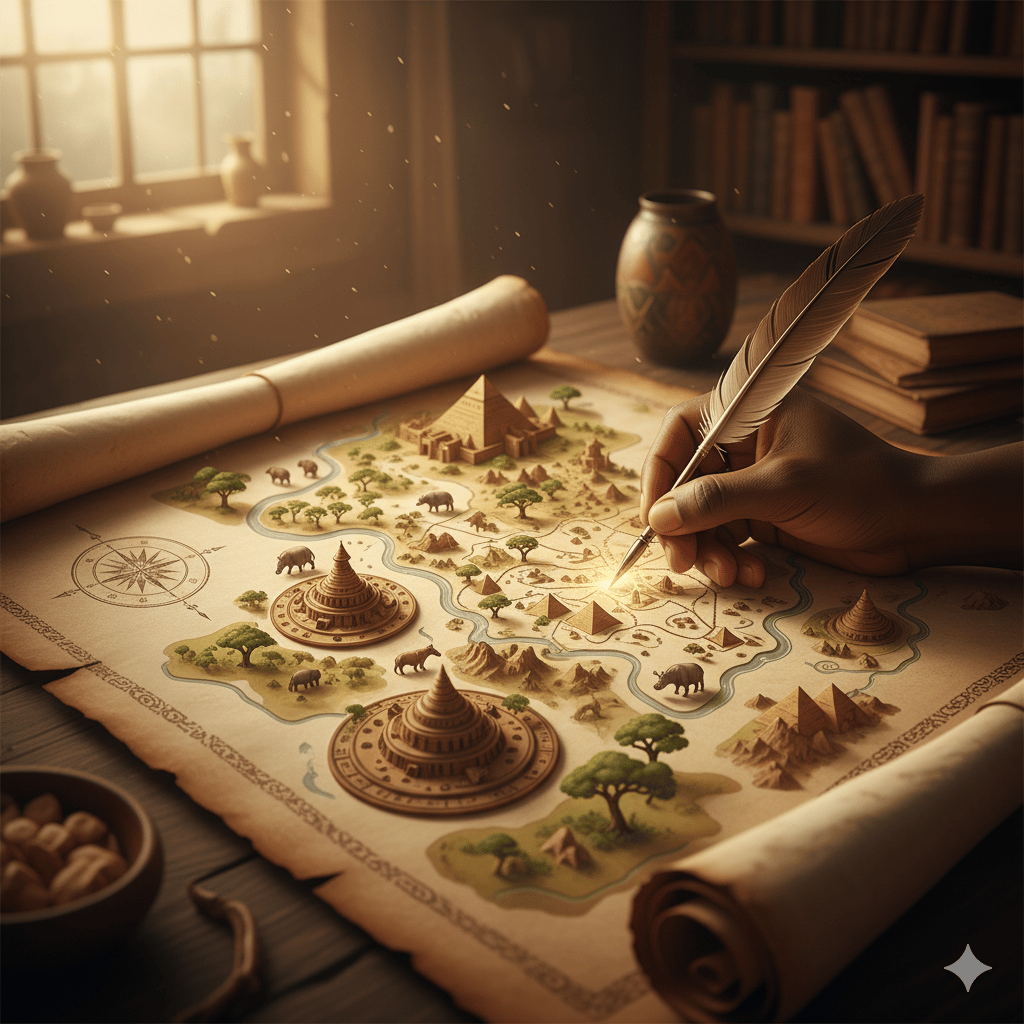
When I started writing my novel, Pariah Princess, I had no idea the amount of work that needed to go into it. My first few drafts were fine story-wise, but they lacked one crucial thing: showcasing the world to the reader. I was writing an ancient African fantasy, with its own rules and systems, but hadn’t taken the time to draw the reader into that world. That was until my beta readers told me they couldn’t immerse themselves because the world was so vague. The world-building was not sufficient to paint a picture. Here are three lessons I learned from the experience:
Don’t assume the reader can see what is in your head
Your world must come to life on the page because if it doesn’t, the only one who will get to experience its wonders is you. It doesn’t have to be on the nose. World-building can be incorporated through descriptions, dialogue, language…sometimes a simple event or circumstance occurring in the story is enough to subtly let the reader know what kind of world it is. They has no idea what they are getting into, so as the author you must guide them through.
Just because it is fantasy doesn’t mean you can make it illogical
At some points in the story, I found myself falling into the trap of making certain rules or cultures that did not make sense, thinking that I could get away with it in the name of, ‘my world, my rules’. But the truth is, even as I make my own rules, they have to make sense to the story, and to the reader. Take Pariah Princess, for example. It is an African fantasy novel, so it would be illogical to give them names like Janet and Kevin. It is based in ancient times, so having them use guns and lasers would be illogical…unless I made it make sense - perhaps people from the future came and introduced these things to them. The language itself cannot be dripping with slang and other modern terminologies. My characters would never use terms like ‘whatever floats your boat’, or ‘check out’. Things like beer and coffee would stick out like a sore thumb if I included those elements in their diet.
World-building never ends, so just do what is necessary
Sometimes we can get so engrossed in world-building that it can prevent us from actually writing the story. You need to know what is important to the story, and to what extent. For example, I needed to create the procedure of betrothal ceremonies for my novel, but I didn’t need to work on the wedding ceremony. I worked on the settlements in the kingdom, but I only dove into the details of a few that would feature in the book. Another important thing is this: not all the world-building we do needs to show up on the page. A lot of it plays a part in the background - helping us writers to understand the story and characters better. In Pariah Princess, one of the concepts I had to invest time in was The Gainan Way - the foundational philosophy of the kingdom. That concept comes up a lot in the narrative, so I needed to build on that to understand it, but I do not dive deep into what it is in the novel. Having the lore written out in my notes helped me understand why the kingdom is the way it is, and why the people behave as they do, which allowed me to write better characters and a stronger story.
Necessary hard work
World-building truly is crucial to any story as it helps to set the stage, build characters the readers can make sense of, and make a believable story that readers enjoy. Don't skip the hard work - it's what makes a fictional world feel real.
Comments ()